
Necrosprout Swarm
Overview
The Necrosprout Swarm are the oldest named presence on Vesperfall that still walks its own ground. How far back their history runs is unclear, because the Necrosprout do not share it and have never offered reason why. What is known is that they were there before several of the current orders had drawn their first banners, and that they have remained largely as they were since. They are associated with rot, reclamation, and evolutions that most observers find difficult to categorize. Where things have broken, fallen, or died, the Necrosprout have been known to arrive afterward; not to mourn, and not to restore, but to reshape. What comes of that reshaping is often unfamiliar, and occasionally unsettling. Communication with the Swarm is limited. They speak when they see reason to, and they generally do not.Purpose & Beliefs
What the Necrosprout believe is a matter the Necrosprout do not broadcast. What can be inferred from their actions is that they hold a deep and patient relationship with decay, transformation, and the long arcs of renewal that most faster-moving cultures do not notice in their own time. They do not appear to view death as ending. They do not appear to view rot as waste. What they take from the fallen, they use. What they cannot use, they leave to the longer cycles beneath the world. This is not mourning and it is not celebration. It is simply how they operate. Their guiding principles, as best as outsiders have read them: Nothing is finished that has not been rememberedThe surface holds what it is ready to hold; the rest moves below
Patience is the only craft the cycle rewards
What returns is not always what was lost, and that is not a failure
These are not proclamations. The Necrosprout do not proclaim. They have been observed behaving as if these statements were true, for long enough that they may as well be.
History & Founding
The Necrosprout have no recorded founding. There are older accounts that speak of their presence, there are accounts from several generations ago that speak of their presence, and there are current accounts that speak of their presence. The Necrosprout themselves offer no meaningful clarification. Whether they descended from an older people, emerged from a transformation of one, or arose from something else entirely, is not a question they have felt any particular need to answer. Their continued existence is offered, apparently, as explanation enough. What the current orders know of them begins long after they had already become what they are now. Beyond that, the history belongs to the Swarm, and the Swarm keep it.Structure & Leadership
The Necrosprout maintain something like leadership, though it does not resemble leadership as the other orders understand the term. Decisions appear to move through the Swarm along channels outsiders have not been able to map, and by the time decisions arrive, they seem already to have been accepted by those carrying them forward. There are elders. There are those who speak, when speaking is called for. There are those who direct the cultivation of the deeper works beneath the cities, and those who tend the surface. None of these roles are formally announced, and the Swarm do not appear to find this inconvenient. Membership is not a matter of admission. It is a matter of belonging, and belonging is a thing the Swarm recognize in their own time.Culture & Identity
Necrosprout culture is not easy to describe from outside, because the Swarm do not perform it for outside audiences. What observers have been able to document suggests a deeply communal way of living, woven through the same underground architecture they use for cultivation and shelter. Their bodies are marked by the natural armor of bone that has become their most recognizable physical trait; plates, ridges, and protective growths that identify the Swarm on sight and that have given rise to more speculation than any of their other features combined. What the bone means, how it grows, and what it hides, are questions the Swarm decline to take up. What can be observed among them includes: An almost complete absence of hurryA tolerance for silence that other cultures find uncomfortable
Close, quiet bonds within the Swarm that do not seem to require explanation
A patience with decay that borders on reverence
Those who have spent extended time near the Necrosprout describe them less as secretive and more as simply uninterested in performing for anyone outside the Swarm.
Strongholds & Territory
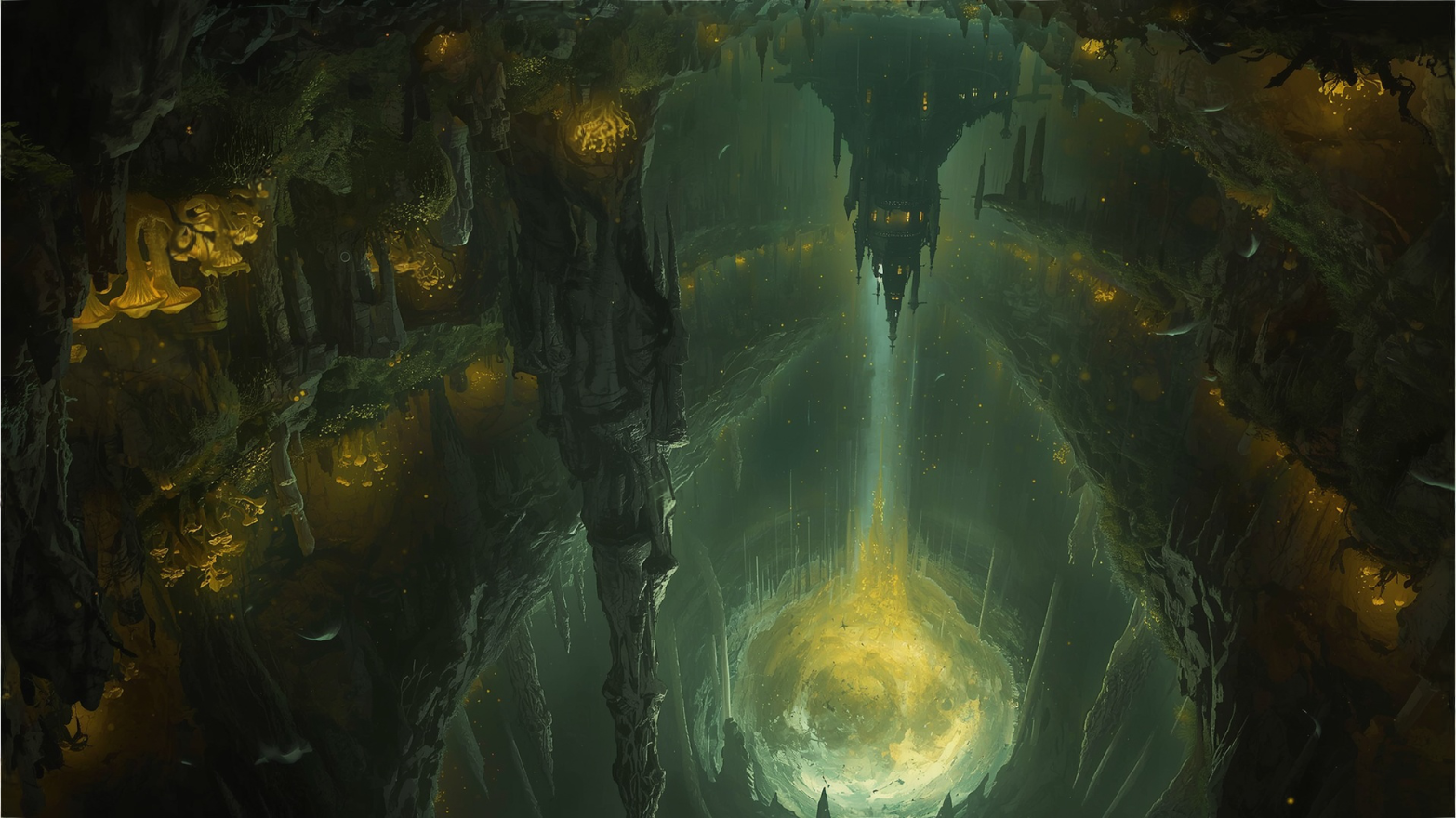
The Necrosprout hold territory in the eastern reaches, a terrain of caverns, underground networks, and surface growth that has never been fully mapped by any order but their own. Their cities are built of bone, stone, and the long, slow work of cultivation; structures that have grown into their final shapes over generations and that continue to grow still. The surface of their territory appears largely quiet. Their presence seems to move below it, in depths the rest of Vesperfall has neither the tools nor the inclination to reach. What happens in those depths is not generally discussed. The Swarm do not discourage visitors, exactly. They simply do not go out of their way to accommodate them.Combat & Methodology
The Necrosprout do not seek open conflict, and those who have attempted to bring it to them have generally found the effort more costly than the returns justified. Their approach favors: The terrain of their own territory as first and final defenseSlow operations that extend well past the patience of their opponents
Cultivated resources; spores, growths, and compounds; applied with practiced familiarity
A willingness to allow a conflict to age until the opposition has forgotten what it wanted
They do not move quickly. They move inevitably. This distinction has not always been clear to those opposing them until after the fact.
Role in the World
The Necrosprout occupy a position that most of Vesperfall has chosen to leave largely undisturbed. They hold their territory. They engage with the council through representatives whose patterns of attendance are their own. They trade where trade is useful to them, and they decline where it is not. To the common people, they are an uneasy subject; known by reputation more than contact, and generally given the space that reputation has earned them. To the other factions, they are a known quantity in one sense and an unknown in every other. Whatever the Swarm are doing beneath their cities, they have been doing it long enough that most orders have concluded that interrupting the work is probably not worth whatever outcome the interruption would produce.
The Necropolis: Petra Kuyu

Comments