
Crimson Carnival
Overview
The Crimson Carnival are not what their name suggests, and those who mistake them for a spectacle of joy tend to leave that assumption at the door. The Carnival traffic in ritual, not revelry. Their work is older than most of the orders around them, shaped by rites that predate the current council, and carried forward with a conviction that does not flinch from what those rites require. They see themselves not as cruel, but as compulsory. Vital. A necessary part of a world that, in their view, has never been willing to face what it owes. The rest of Vesperfall is welcome to disagree. The Carnival will continue regardless. What they do is precise. What they believe, they have carved in stone.
Purpose & Beliefs
The Carnival hold that transformation requires an honest price, and that honesty is paid in the oldest currency the world recognizes. Their work centers on the invocation of forces few dare to name, and the passage of those forces through willing hands. To them, this is not violence. It is purpose given shape. They honor the crimson and the black—two states, two substances, two necessary halves of a greater working. One gives, the other takes. One is offered, the other is drawn. Between them lies the transformation the Carnival believe their purpose demands. Their creed, as best as outsiders have been able to document: What is given freely is the only offering that holds
Transformation without cost is deception
The crimson and the black are one working, not two
Conviction is carved, not spoken
The Carnival do not recruit with these beliefs. They do not defend them. They live by them, and consider any further explanation unnecessary.
History & Founding
The Crimson Carnival's origins are tied to rites older than Vesperfall's current political structure—practices that survived through generations of practitioners who saw no reason to abandon them simply because the surrounding world had grown uncomfortable. Their formal organization as the Carnival came later, once those practitioners had drawn together enough numbers to defend their territory and their methods against orders that would rather have seen both disappear. What they built over the following generations is a faction unusually consistent with itself—one whose internal traditions have changed remarkably little, even as the continent around them has shifted considerably. The Carnival rarely speak of their own history in detail. What they preserve, they preserve through the work itself. What is remembered is what continues.
Structure & Leadership
The Crimson Carnival is organized as a Vitsa—a clan in the oldest sense. Their governance is not modeled on guilds, councils, or military hierarchies. It is familial, traditional, and rooted in customs that were old before the Carnival had a name.
The Vajda
The Vajda is the leader of the Carnival. Not a king, not a commander—a head of clan. The Vajda carries the weight of every decision that shapes the Carnival's direction, and that weight is understood by all who follow. The title is not inherited by blood alone. It is held by the one who can hold it.The Phuri Dai
The Phuri Dai is the matriarch—the Vajda's counterbalance, advisor, and in many matters, conscience. Where the Vajda acts, the Phuri Dai guides. Where the Vajda commands, the Phuri Dai counsels. The two are meant to lead together, and in the old traditions, no significant decision was made without both voices present. The Phuri Dai's authority is not lesser than the Vajda's. It is different in kind, and the Carnival's oldest members remember a time when that difference was the order's greatest strength.The Kris
The Kris is the tribunal of elders—a council of experienced voices who advise, challenge, and when necessary, push back against the leadership. In the old traditions, the Kris served as the Carnival's collective memory and moral compass, ensuring that the rites were observed correctly and that the Vajda did not stray from the path the clan had agreed to walk. Their authority was earned through long service and the respect of those they served alongside.The Degesa
The Degesa are the people. The rest of the clan. The many. In the old structure, the Degesa were not a rank to be looked down upon—they were the body the leadership existed to serve. Workers, practitioners, families, artisans, and those who carried out the daily life of the Carnival with the same care the elders brought to its direction. The word itself carries humility, but in the old traditions, that humility was a point of pride.The Balance of the Vitsa
In its intended form, the Carnival's structure is a circle, not a ladder. The Vajda leads, the Phuri Dai guides, the Kris remembers, and the Degesa sustain. Each part depends on the others. When the balance holds, the Carnival operates with a unity that few orders in Vesperfall can match. When it does not, the consequences tend to be felt by the Degesa first, and by the rest of the world shortly after.Culture & Identity
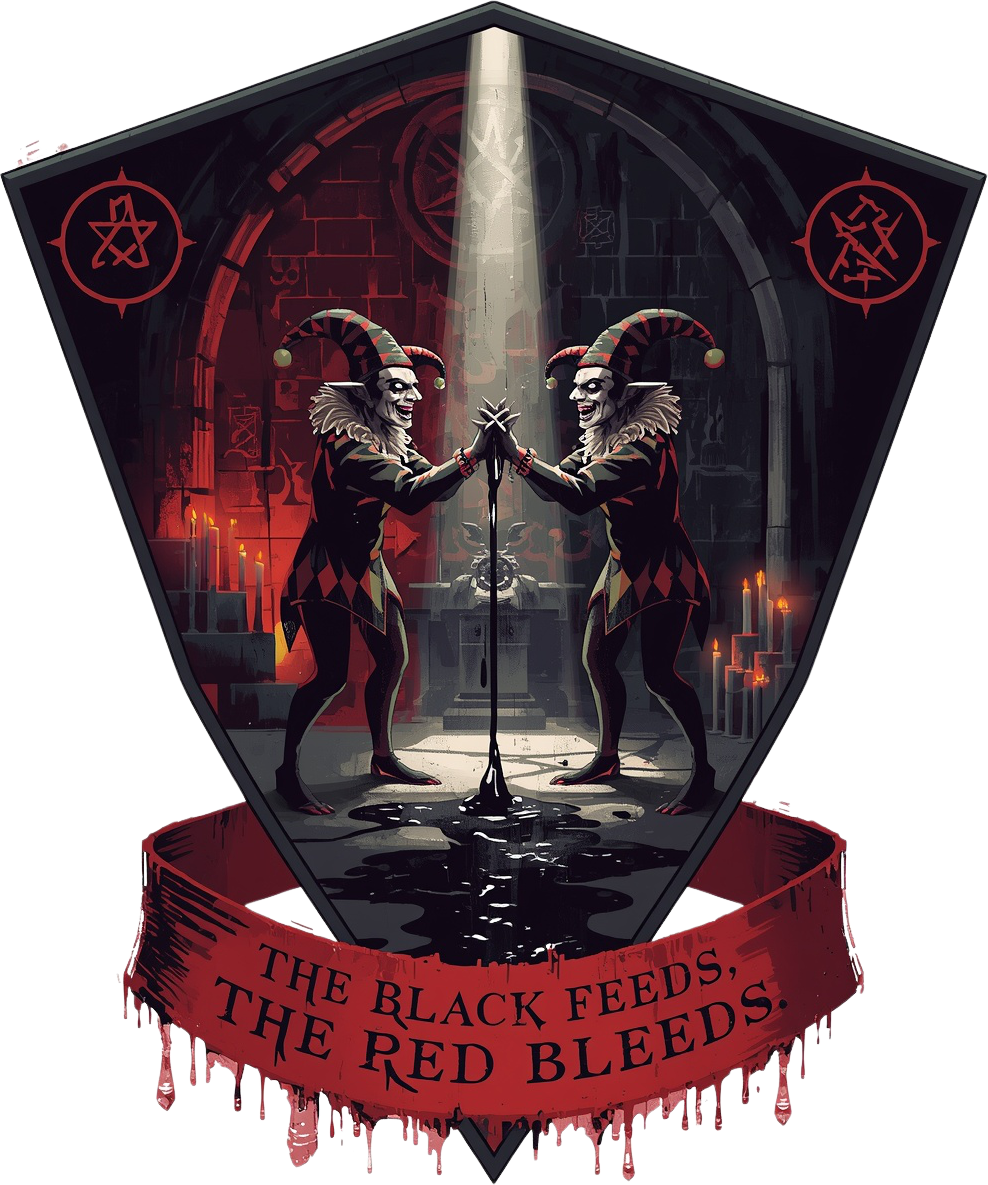
Daily life within the Carnival blends the ceremonial with the practical in ways outsiders often find disorienting. Ordinary meals may be preceded by small invocations. Workshops double as altars. The distinction between labor and rite, so clear in most cultures, does not hold the same meaning among Carnival members. Outward appearance favors theatricality—motley patterns in black and crimson, masks and sharp-pointed caps worn by those engaged in specific work, implements of ritual craft carried openly. To outside observers, this suggests celebration. To those inside the order, it signals preparation. The Carnival's traditions are deeply communal. Identity within the Vitsa is carried through shared practice, shared memory, and the understanding that the clan is older than any one member and will outlast them all. What you owe the Carnival is not service—it is participation. You are part of the body, and the body moves together. Members hold by a handful of guiding principles: The work is done when the work is done
Conviction unpaid is conviction unproven
Silence before the rite; silence after
Those who flinch learn to stop flinching, or they leave
Among themselves, the Carnival are said to be unexpectedly warm—bound by the shared weight of what they do, and by the understanding that few outside their walls would ever truly grasp it.
Strongholds & Territory
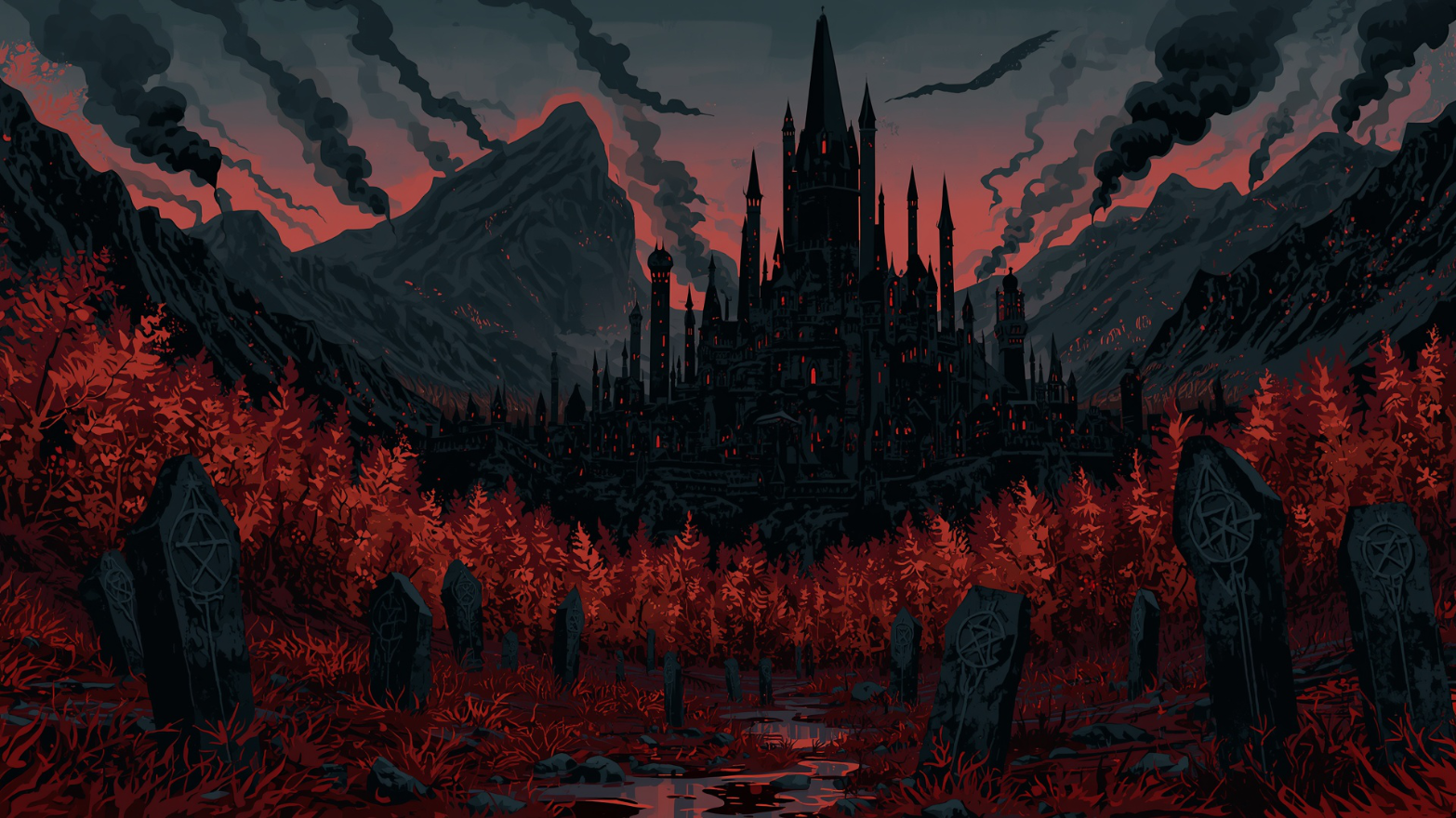
The Carnival hold lands in the central-west of the continent, a deeply forested region marked by the distinctive crimson canopy that has given the order much of its visual identity. Their central holdings sit within that canopy—a city of dark stone, narrow spires, and interior ritual halls built for the working of their rites. At the heart of this territory lies Anthra Oasis—the Carnival's capital and the center of their way of life. In better years, Anthra Oasis was known to those few outsiders who had seen it as a place of strange beauty—dark architecture softened by the warmth of its people, ritual fires burning in open courtyards, the hum of ceremony carried on the wind. In recent years, Anthra Oasis has gone quiet. Communication with the outside has thinned to near silence. Traders who once dealt with the Carnival report that their contacts have stopped responding. Travelers who approach the territory's edges are turned away, or simply find no path forward. And yet the smoke still rises from the city's stacks. Activity continues. Something is happening within Anthra Oasis. What that something is, the rest of Vesperfall does not know. The Dawnsteel Legion has stated that the Carnival is acting accordingly, and has offered no further detail. The territory itself is not welcoming to casual visitors. Paths lead in more easily than out, and those who travel there without invitation often find themselves redirected long before they reach anything of consequence.
Combat & Methodology
The Carnival are not soldiers in the traditional sense, but they are not unprepared for conflict. Their approach to it is shaped by the same principles that shape the rest of their work—deliberation, preparation, and the willingness to commit fully once committed at all. Their methods favor: Ritual magic woven into practical combat
Prepared workings that unfold over longer engagements
Small teams of specialists rather than mass formation
Decisive action, timed to moments the opposition has not recognized as decisive
They do not seek open warfare. They are generally considered to have the resources and the craft to make themselves unpleasant to pursue, and most factions have chosen, over time, to let the Carnival's territory remain the Carnival's problem.
Role in the World
The Carnival occupy a complicated position within Vesperfall's broader order. They sit on the council in name, though their attendance is inconsistent and their contributions to council debate are minimal. They are neither exiled nor embraced, and they appear to prefer the arrangement. To the common people, they are a topic approached in lowered voices—understood more through rumor than experience, and generally left to their own affairs. To the other factions, the Carnival are an acknowledged, uncomfortable constant. Their presence in Vesperfall is older than most institutions that might wish to see them changed, and the Carnival have given no indication that change is on the table. The recent silence from Anthra Oasis has not gone unnoticed. Whether it is cause for concern or simply the Carnival being the Carnival is a question that has been raised in more than one council session. No answer has been agreed upon. The smoke continues to rise.
The Castles of Anthra Oasis

Comments