

Bathhouse of Gomi
History
One of the most beloved buildings to come out of the era in which Museborn and mortals mingled freely was the subterranean bathhouse of Gomi.
The Museborn have elaborate baths in their home city, and they like to be clean. They did not approve of the primitive washing options offered them when they first visited the mortal lands and would bathe only in the sea.
When the people of Gomi mastered more advanced building techniques, the Museborn helped them plan and build a bathhouse over the hot springs at the northeastern end of the city, on the same property where the later kings of Gomi would establish their family residence.
Construction began in 806 UC (see History in the Southern Reckoning timeline) and finished several years later.
Experience
You're a visitor to the court of Gomi around 1350 UC. You feel honored that you were invited onto the First Estate in the first place, and anxious to make a good impression.
Communal bathing is a thing in Gomi. You knew that before you got here. It's not, where you're from. You're a proper citizen of Meret , and you think bathing should be private, but again--anxious to make a good impression.
You cross the eastern yard of the estate with some councilors and several princes, dressed only in a towel. The night air of the mountains in winter is chilly on your shoulders. The evergreen branches of holm oaks toss in the breeze. The air smells of rosemary. The bathhouse looks smallish from the outside, a columned stone porch built against a hillside. Threads of steam curl from the windows. You're focused on preparing to drop your towel in front of a bunch of other guys without seeming bothered, so you don't think much about the steam. A family retainer opens the heavy, intricately carved oaken door within the portico, and you follow the others through.
You forget about the towel thing the second you walk inside. Clouds of acrid steam send you into a coughing fit. You feel like your lungs are full of knives. The men laugh and slap you on the back and tell you that you obviously need practice.
You're sure you're being poisoned. Your lungs are going to start bleeding. They're going to be scarred by acid vapors.
How are these guys not even wheezing? Their eyes aren't watering. They might be standing out in the clear night air of the courtyard, chatting about nothing.
You make a valiant effort to stifle the coughing and look around. You're in a little antechamber with benches. Everyone hands their towel to the servant and files down the steps into the low-ceilinged chamber where the pools are.
It's a huge, crypt-like space, lit by alabaster pillar lanterns that seem to burn smokelessly (or maybe you can't tell the difference between smoke and steam here). You focus on finding the shallow stone steps down into the bath without tripping, and as you ease into the water, you discover that either the quality of the steam is different down here, or you're finally getting used to it. Your gasps turn into labored but steady breaths.
Is it--cleaning your lungs? Flushing the years of ash from fires burning indoors and the dust of desert roads?
The water is piping hot. The men explain that it flows out of hot springs from the heart of the mountain, into these stone channels that feed the baths. The baths closest to the back wall are the hottest, and the ones closest to the entrance are the coolest. Which surprises you, because you're in the one closest to the entrance, and it's plenty hot.
You do your best to relax. Maybe, just maybe, you could see how someone would get used to this.
Architecture
The bathhouse has a stone portico with six columns supporting a high roof. There are two antechambers inside the main door, one on the left, for the men, and one for women on the right. The womens' baths are square receptacles built into a stone floor, with south-facing cutouts in the ceiling that allow natural light during the day. The mens' baths are in a deeper room that is built within a natural cave, shaped expertly with stones and wood so as not to diminish the feeling of being in a natural place. Since there is no natural light anyway, it's typically used at night, but the pools are large and the ventilation is surprisingly good. Chimney passages allow the controlled capture or release of steam, and keep smoke from the recessed lanterns out of the air.
Healing Waters
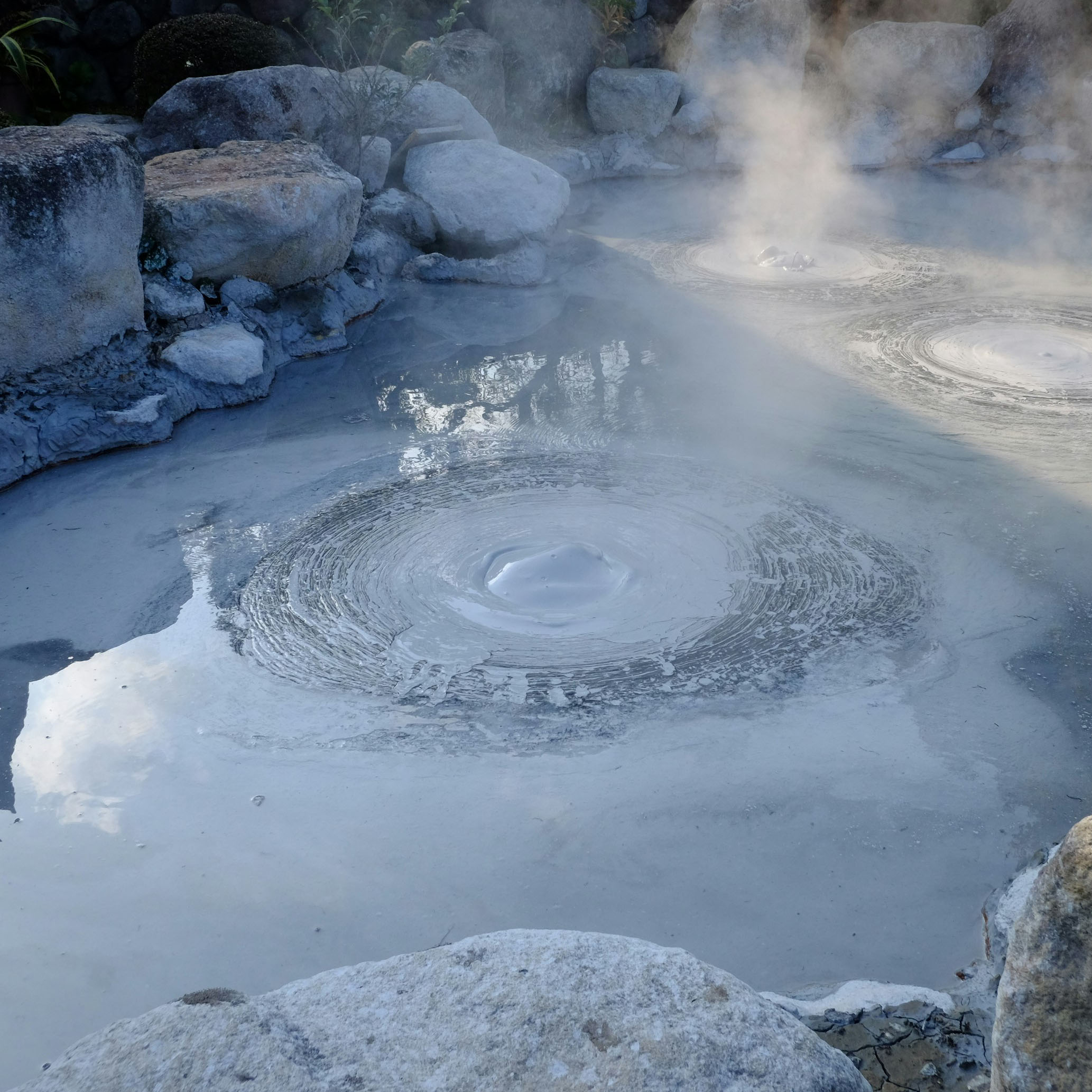
There is something special about the water of these hot springs. It has a strong, camphoraceous smell that can be unbearable to those who aren't used to it, and thin rings of resinous oil can be seen floating across the surface of the water. But regular exposure to it is said to offer powerful protection against diseases of the lungs.

Comments