Topography:
The mountains and tundras of Ferodrill are usually encased in a thick layer of snow. Boreal forests full of evergreen trees dot the tapestry of white.
To the east of Ferodrill lies the Winter Bay, containing Red Island and the smaller Grey Island.
Much has been written about Red Island, as it used to be the head of a giant magical beast which was thought to have been slain before The Fall. Certain magics have been put into place to prevent this head from rotting.
While the island of Urtok is mostly controlled by
Anuaran, the Treaty of 3816 gave the southern coast to Ferodrill. A similar situation occurs with Nautda, where the land south of the Wyrm River and The Thorned Mountain is split between Ferodrill, Balan, and Talamh.
Moving westward, The Moonfall Mountains split Ferodrill in half. While a majority of Ferrine land is west of these pillars of stone, a majority of the population lives in the land east of these mountains.
At the far west of Ferodrill are The Lakes of Dusk.
Flora and Fauna:
Ferodrill is home to an extensive number of mammals such as wolves, bears, sabre-toothed tigers, and various species of rodents.
There are still animals from different classes. Birds such as crows and ravens are very common.
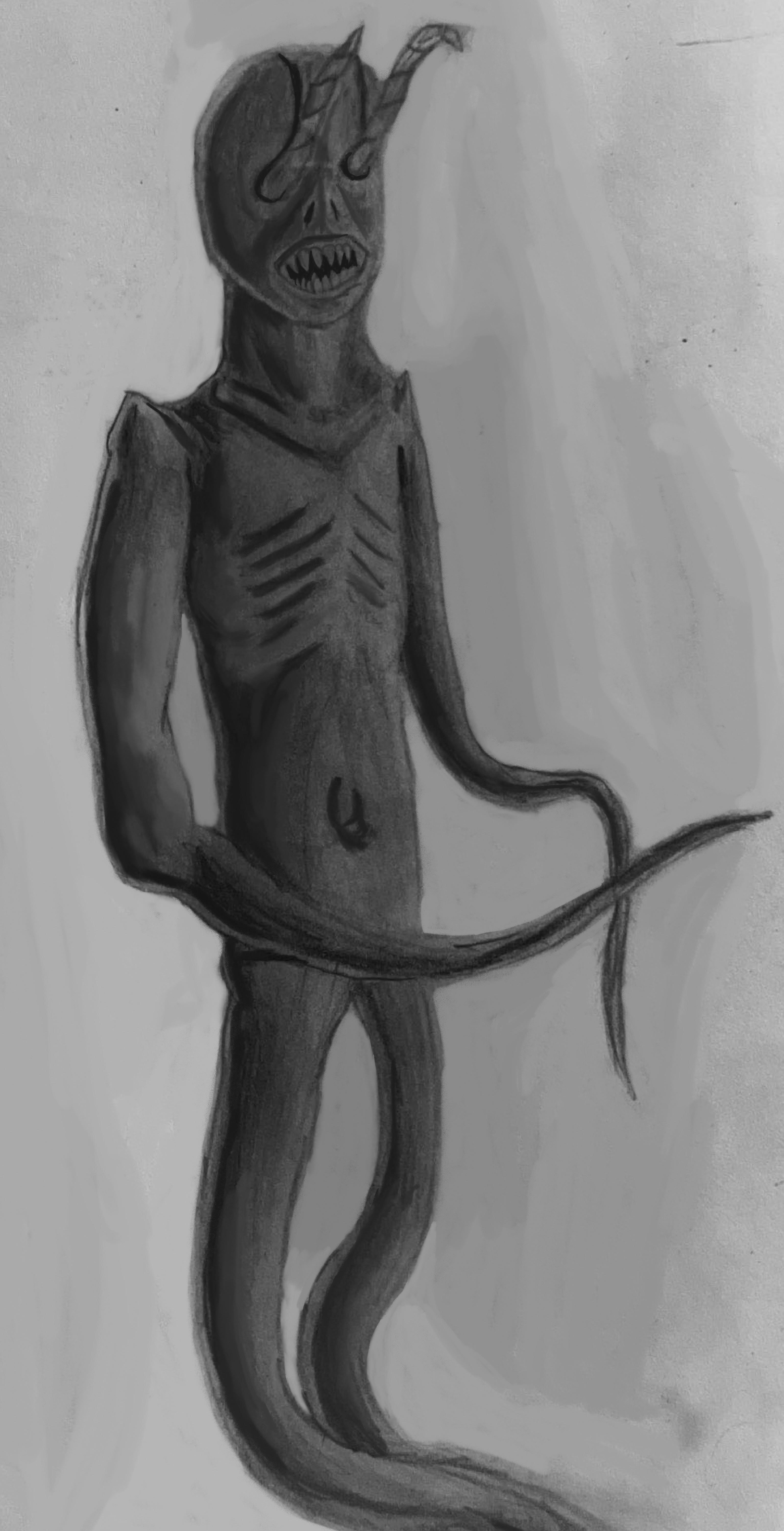
One particularly noteworthy breed of fauna are the Ehuinni. From a distance, they look almost human but get a closer look, and you’ll see they have no eyes, with massive white tendrils coming out of their sockets. These are used to see.
The Ehuinni live underground, only coming up to feed on rodents and other small animals. They are particularly pale and flexible, known for contorting themselves into bizarre positions. Instead of hands, their arms are merely long tentacles with claws at the end, perfect for digging through dirt.
Ehuinni can speak, but they only seem to be able to mirror snippets of what others have spoken. Some believe they are related to the dwarves, but there is little evidence beyond both of them being blind and living in the ground.
An old Ferine legend claims Ehuinni are dwarves who were cursed, but this is mere superstition.
It does appear that Ehuinni are not sapient, which is why they are listed under fauna.
An Ehuinni
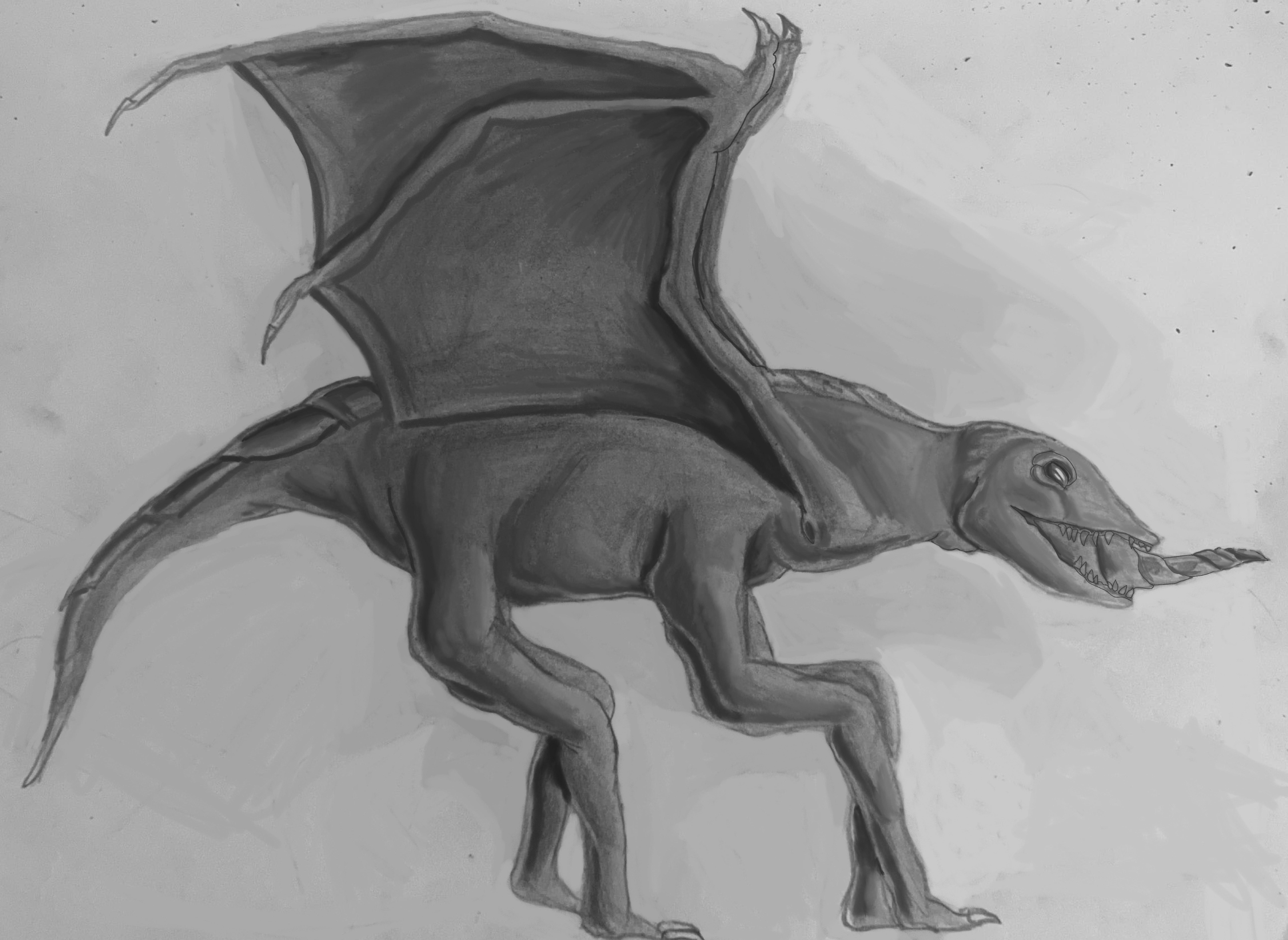
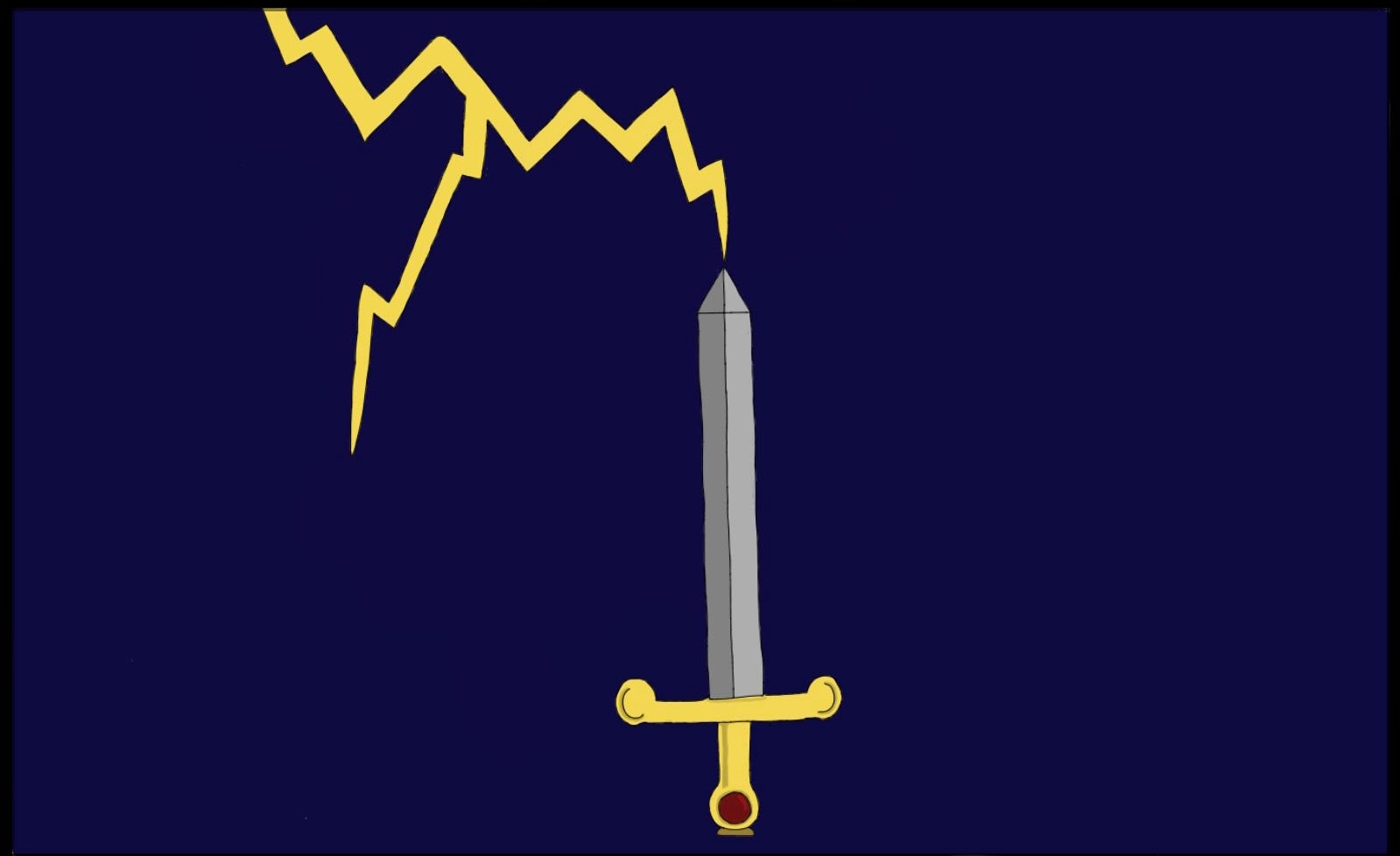
One animal which is important to the Ferrines are Thidrols. They are similar to dragons, having both wings and scales, but one unique trait of theirs is the eating of lightning. Small growths on their tongue catch and store the electricity, which can be converted to energy. In place of eyes, Thidrols have a single antenna which produces electromagnetic pulses that they use to navigate. They usually live in caves, going out to feed on various animals such as deer and moose.
A Thidrol
A species similar to the Thidrols are Lightning Dragons, who are not actually dragons. These creatures look similar to Thidrols, but instead of eating lightning, the growths on their tongue simply absorb lightning and then redirect it at their prey.
There are also a small number of actual dragons in Ferodrill, including Ice Dragons, which are dragons who shoot blue mist freezing entire lakes solid. Ice Dragons are few and far between, living mostly in the north-western regions.
Another important animal in Ferodrill are domesticated dogs, as well as domesticated woolly mammoths, who have purposes similar to horses in some remote regions in western Ferodrill.
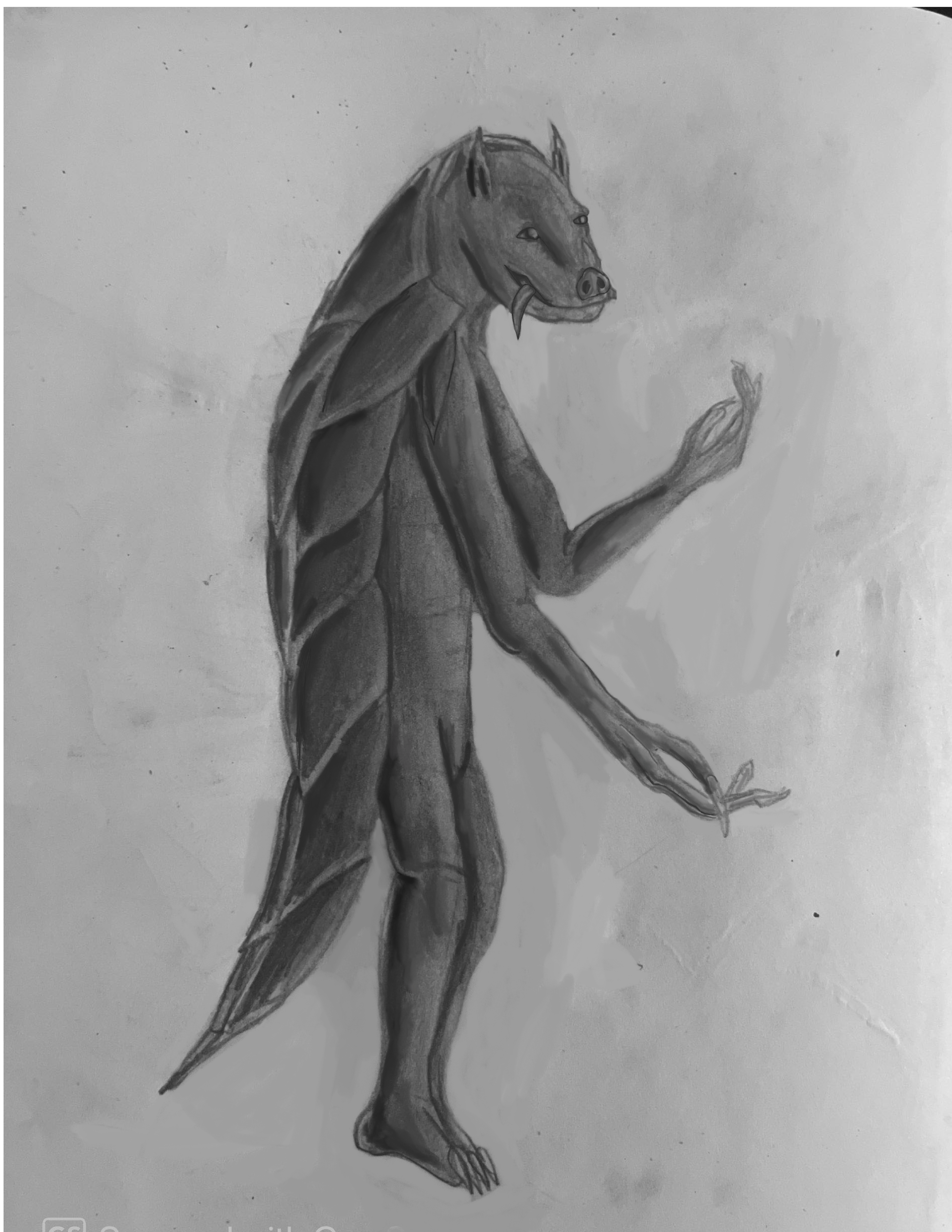
Trolls are a species endemic to Ferodrill, living near the Lakes of Dusk. Despite being mammals, they are covered in a thick exoskeleton. A troll can use this exoskeleton to form a ball and roll down mountains and hills.
Trolls usually spend the summer months near ponds and streams, but will move upwards when winter comes, spending the colder months inside caves.
An average adult troll is twice the size of an adult human, with legs and arms like tree trunks. Their eyes are small and dark blue, and their mouths overflow with knife-like teeth.
Due to them being bipedal, many have suggested they might be considered sapient, but a majority of scientists disagree with that hypothesis. While it is true that trolls do activities such as bury their dead and make art within their caves, this is probably merely an impersonation of the activities done by humans nearby.
A Troll
Moving on, in the waters of The Winter Bay lurk a variety of different aquatic fauna, including sea serpents, krakens, and Raugholns.
The spider-like Raughols use their stilt- like legs to walk on the ocean floor. On top of their heads are large lights, used for attracting prey.
The flora of Ferodrill isn’t particularly noteworthy. Its tundra climate means there are large amounts of pine and hemlock trees, mosses, and lichens.
In the southwest, a great deal of maple trees grow. The sap these trees produce is used to create syrup and as well as alternative versions of gasoline.
On Red Island, both the grass and the leaves are permanently red, giving the trees the names Everreds. Above Red Island fly Blimpwhales, whales with hollow bones who store helium in giant pouches, allowing them to act as giant biological blimps. They are regularly covered in barnacles and various other small parasites.
There are other creatures on Red Island which have yet to be correctly documented. Whispers of strange bipedal wolves with laughing faces are common, but should not be taken seriously.
Grey Island is far more desolate, with the most common plants being algae and moss.
People:
About 79% of the population are a race of humans known as Ferrines, 9% are
Elves, 5% are a race of humans known as The Northern Yeks, 4% are a human race known as the Tungish, the Moose People who also live in Anuaran make up 3% of the population, 1% are a human race known as Sdinites, and 1% are various other groups such as goblins, dwarves, and orcs.
Ferrines are pale, usually with hair that ranges from blonde to red hair to dirty blonde, and eyes that are often shades of blue and green and hazel. Even among the Ferrines, there are a variety of smaller ethnic groups too vast to name here. However, a few general notes include that the Ferrines in the western area are known for being much taller than their eastern ancestors. Many of the aristocratic people in the eastern area claim descendancy from both the native Ferrines and an ancient seafaring people, which give them the traits of slightly webbed hands and feet.
Moving on, the Northern Yeks immigrated to Ferodrill in the late 2000s following various political developments in the central regions. They’re mostly nomadic, often living in massive caravans lead by rhinos- giant horned beasts. The Northern Yeks are known for wearing bright colourful garb (much different from the Ferrines), and for often making their living as merchants, performers, or a mix of both. The Northern Yeks have features which resemble the Iraljins, with brown hair and honey coloured eyes.
The Sdinites are an isolated group living in the Sdinite Valley within the Moonfall Mountains. They usually have very pale skin, dark hair, and monolids, being close in appearance to Uanites.
The Tungish are distantly related to the Sdinites, living in the north west of Ferrodrill by the Lakes of Dusk. They have skin almost as white as the Huawents, hair as red as fire, and dark blue monolid eyes.
The humans who live in the Red Island are known for their rather unique features, with ash-coloured hair, blood coloured eyes, sharp fangs, and unusually large tongues and mouths.
The citizens of Grey Island have yellow eyes like an octopi and drooping skin.
There are also a variety of small ethnic human groups living in far-west Ferodrill, too many to list here.
Moving on to non-humans, a small number of werewolves live in Ferrodrill, but as to what they are will be discussed later.
Up until about 400 years ago, a sizable number of giants lived in Ferodrill. These beings were covered in thick white hair, with long tusks and fangs making them look like crosses between woolly mammoths and sabre toothed tigers. Speaking of mammoths, instead of riding on horses, they would ride on Spider-Mammoths, beings similar to woolly mammoths, but twice the size, and with six legs. Now, spiders have eight legs, so the name is misleading, but that’s not important. Obviously, giants were named after their size, as they could grow up to 24 meters tall.
They would live entirely on the island known as Giants Island, but this island would sink due to an earthquake in 2657. Some giants would survive, and their fates will be discussed later.
Culture:
When many people outside of Ferodrill think of a Ferrine, they imagine a fierce warrior who lives for fighting and drinking, but Ferrine culture has many nuances within this.
Armor is very important to Ferodrill culture, with all Ferrine men getting their own personal armor at age 16. According to tradition, upgrades will be given to armor when the Ferrines win battles. Nowadays, only a small percentage of Ferrines see battle. As such, new additions to their armor may be given as gifts on birthdays or other important holidays. These upgrades are usually aesthetical, except for those who do participate in battle. Ferrine generals often have electric armor which can shoot lightning, with a gun or a flamethrower attached to them.
Ferrines wear their armor almost all of the time- to the point where it basically becomes a second skin. When they die, they are buried in their armor.
Some Ferrines specifically enchant parts of their armor so that it burns through and replaces their skin, meaning they can never take it off. Other enchantments include giving the armor powers, such as fire or energy production. Some armor even has electric components to it. Recently, Ferrine mages have developed armor which can grow apparel like helmets and gauntlets.
Ferrine armor is made of steel mixed with the bones of a Thidrol. The Ferrines believe that a creature's soul is in its bones- and so the soul will become part of the armor.
The tradition for Ferrine men is that they must singlehandedly slay a Thidrol as part of a ritual when they are 16. Once the Thidrol is slain, a blacksmith will use the bones to make the slayer’s armor. However, that tradition is not as common nowadays due to the general fears associated with sending 16 years to slay large beasts. Generally, it is only performed in small villages in the western areas of Ferrodrill. Everyone else will simply have a domesticated Thidrol be killed, and the bones then used to make armor.
Often, whatever bones are left over from the armor process will be used to make other items for the slayer, usually a bone sword or a piece of jewelry. Jewelry made out of bones is a common sight in Ferodrill.
The last part of the tradition of the Thidrol slaying is a large feast. The Ferrines are known for their massive parties, with music, feasting, and various shows of strength. The sharing of food and alcohol with someone is important to the Ferrines, as it shows respect. When you visit a Ferrine, it is customary to offer them food and drink, and the guest must then accept.
During the feast after the Thidrol slaying, the slayer will be expected to speak, and all of the guests will be given a piece of hollowed-out bone. The clanging of this bone on a table or other surface takes the place of clapping.
Ferrodrill culture is very focused on the idea of honour, with duels being common. Historically, these duels were fought with swords, but recently, guns have become a fixture.
Trial by combat is still part of the legal system in Western Ferodrill. Even in Eastern Ferodrill, various political disputes have been solved with duels. This practice is less common nowadays, but certainly not extinct.
In olden times in certain parts of Western Ferodrill, losing one's honor was considered a fate worse than death, and many defeated soldiers would often kill themselves rather than live with their dishonour. While this is no longer custom, it is still emblematic of the values of the Ferrines.
Strength is also very important to Ferrine culture. Games of strength, such as wrestling, are commonly practised. Other common games include skiing, knife juggling, and knattleik, a game played with a ball on a smooth surface of ice.
Despite Ferrines often being stereotyped as filthy savages, the culture of those living in eastern Ferodrill do place importance on cleanliness and appearances. Most poorer Ferrines can not afford to dress in silks and bathe everyday, and so it becomes a symbol of wealth for the aristocrats to be pleasant in appearance and smell.
Ferodrill culture is rather patriarchal. The Poetic Erat contains passages such as “It is the task of every man to be strong, and the task of every woman to do as her husband says.”
Women rarely get to choose their husbands in Ferodrill.
However, women are generally the ones who are given jobs as healers and craftsmen.
The distinction between Eastern and Western Ferrine culture is how much of an emphasis is placed on these values. Western Ferrodrill is generally more traditional, while Eastern Ferodrill’s recent industrialization has led to a more modern society, with some stepping away from the more “traditional” values.
Western Ferodrill is also much poorer.
There are various pockets within Ferodrill with certain practices. The dying of one’s hair is common among many women in the regions of south-west Ferodrill in what was once Wamoitia. Those living near the eastern coast place a great importance on swimming races. One major swimming race will be done every year among the younger members of a community, and the winner will be presented with an award by the community leader. The award differs based on community.
In the pocket of Ferodrill nuzzled between the Moonfall Mountains and Agavarot, th
A common tradition in western Ferodrill is that the body parts of those slain in combat are often taken and kept as trophies, preserved using a variety of potions. These are usually fingers or ears, but can sometimes be the entire skin of the person.
Kites are common in many different places throughout Ferodrill.
Courtship and marriage in Ferrine culture depends on the location. In eastern Ferodrill, a marriage will be arranged by both the families of those getting married. In western Ferodrill, a man must ask the permission of the father of his would be pride and pay an acceptable dowry. Part of this dowry will be the skin of an animal the Ferrine man has recently slain. The bride will then turn the skin into two separate cloaks, with the couple placing the cloak on each other’s shoulders during the wedding.
A more eastern wedding custom will see both the bride and groom cutting off a strip of their hair and then placing it in a fire.
In both west and east Ferrodrill, a wedding ceremony will include a grand feast with singing and drinking.
As for treatment of the dead, Ferrines living inland will wrap the deceased in white cloth and hang from a tree. If the deceased is a man, weapons will be tied to the white cloth to aid the person in the afterlife. If the deceased is a woman, cooking equipment will be tied to the white cloth so her husband can be properly nourished in the afterlife.
Ferrines living by the Winter Bay will place people in burial sacks with stones tied to them, and then toss them into the water.
As for the Northern Yeks, their culture is similar to Iraljin culture, but with a much smaller religious aspect, and a greater focus on song and dance. They are also known for their weaving skills, with Yekish women often using the loom as a meeting place.
The Northern Yeks are nomadic, travelling throughout Ferrodrill in caravans. They’ll often stay near a town, offering services to those there and trading, and then leave.
Moving on to the Sdinites, most Sdinites live in small towns. At the centre of this town is a domed circular building where meetings are held. Next to this building will be the town grill, a massive construction for cooking meat during important ceremonies.
Sdinites are also known for their fluffy white dogs known as Clouddogs, who are often treated as equal to sapient beings. Clouddogs get full religious rights upon their death.
Another interesting part of Sdinite culture is that they practise cremation, something rarely done in the northern area of The Continent.
Tungish culture is similar to both Sdinite and Mo’on culture. Similar to the Sdinites, they live in small communities with domed community centres in the middle and they practice cremation. The Tungish associate fire with the end of life and water with the beginning, which is why women give birth in ponds are tubs of water. Similar to the Mo’on, Tungish communities will meet up for Potlucks every year.
Moving on, the many complexities of the culture of those on Red Island is far too nuanced and complicated to be discussed here. Many sensationalised reports claim the people who leave are all mad cannibals who worship giant black stone statues of wolves they offer human sacrifices to. Now, it is true that there are many large black stone statues of black wolves. However, all sacrifices given to them are animal sacrifices. The people who live there do not commit cannibalism. However, one strange eating habit of theirs is the consumption of raw meat, as they appear to be immune to the natural consequences of such an action. The consumption of raw meat comes from the fact that usage of fire is frowned upon in their culture, as it is believed to be the source of evil.
The citizens of Grey Island are rather similar to those on Red Island. Due to their island being unable to grow crops, they have long traditions of raiding. These raids have slowed in the last couple hundred years, with the Grey Islanders now mostly known for their ship building and metallurgy skills.
Government:
Ferodrill is a monarchy.
Within Ferodrill is a loose clan system that is a remnant of its distant history of being multiple different kingdoms. In the early days after unification, Ferodrill resembled more of a confederacy, but the various states grew closer together over time.
Members of clans are the aristocracy, while the common folk are people who are sworn to clans.
As of this writing, there are 24 different Great Clans in Ferodrill. Each of the clans has a clan leader, as well as a clan representative.
Sworn to these Great Clans are hundreds of different Clans.
Clan territory is mostly vaguely defined, but most cities and towns will pledge allegiance to a particular clan. This is done mostly due to the presence of a large number of bandits in Ferodrill. A majority of Ferodrills formal military is busy patrolling the borders, so the clans are the ones tasked with dealing with local threats. The waving of a clan’s banner on the edges of a town may be enough to keep certain bandits away.
Travelling through the Ferrine countryside, one will also find that most farms will be waving the banners of a clan. This is so that the farmers are protected from bandits, and in return, the members of the clan will tax the farmers.
If a peasant commits a crime, they will be charged by the clan they are sworn to. If they are not sworn to a clan, they will be charged by the clan who owns the land they were on.
Upward social mobility is extremely rare. The only way for a clan to be created is if a Great Clan wills it.
The 24 Great Clans each have their own Minor Assemblies to handle internal issues between the various clans sworn to them. These usually have twelve members chosen by the Great Clan.
Of course, all of the 24 Great Clans swear fealty to the monarchy.
Each of the 24 Minor Assemblies nominate one person to the Major Assembly, a group of 24 people whose stated task is to “deal with matters beneath the king”. The monarch has the power to remove any members of the minor assemblies. Legally, there are no limits to the monarch’s power. However, the great clans each having their own military means that the monarch's decisions can still be influenced by fear of rebellion.
Up until 3678, there could only be kings. It was in that year when queens were allowed to inherit the kingdom, but only if there were no men left in the line of succession.
Religion:
There are three main religions present within Ferrodrill:
Illvidrism, Ptoth Worship (
The Lavone Belief System ), and
Pentonism.
Let us start with Illvidrism. This is devoted to Illvidri, the god of storms. It’s mostly practiced in the east of Ferrodrill. This religion is not organized, with no head of religion. For thousands of years, this religion was simply a collection of myths and beliefs shared by different groups of Ferrines.
This was until the late 2000s, when The Poetic Erat was created. The Poetic Erat is a collection of both epic poems detailing stories of their religion as well as various mandates for living. Generally, these mandates are vague morals and not hard rules.
The Poetic Erat is not to be confused with The Prose Erat, which is a historical document written at around the same time
.
Most practices within Illvidrism involve praying to Illvidri to not send down storms. Offerings are also given to poles adorned with Illvidri’s faces. These offerings are usually parts of hunted animals.
These poles are usually made with copper, allowing them to absorb electricity. Materials with those features are important within Illvidrism, such as amber, which is often worn as amulets.
The copper poles are attached to copper meshes at their bases. When lightning hits the copper poles, it travels to the meshes and alights the coals beneath them. This will start a fire, incinerating the sacrifices.
According to the Poetic Erat, Illvidri was not the first deity. Before him there were many beings such as the goddess of earth, the sky god, the fire god, and the ice goddess. The goddess of earth protected her five children by turning them into snakes and placing them in eggs in the form of five moons. However, one of her children didn’t like that, so he broke out of his egg. This great serpent tore through the universe, and no one could stop him, until the son of the sky god and the ice goddess, Illvidri, slew the serpent, with its body falling to earth, where it became metal.
Since Illvidri saved the universe, he became king of everything. The four other deities all faded away, no longer interested in the goings on of the mortal plain.
The Illvidrist pantheon also holds many minor deities beneath Illvidri. Firstly, there is Nasilm. She is a half wolf said to have been formed from one of Illvidri’s eight eyes, and is a representation of his wrath. Illvidri first created her by taking his eye out when he saw that people were not worshipping him enough. However, Nasilm was so angry, she almost ended up destroying the entire world, so Illvidri then took out another of his eyes, and this one became the owl god Auret. Auret was able to calm down Nasilm, and all was well. Nowadays, both Nasilm and Auret both work as protectors of the virtuous.
However, it is explicitly stated in The Poetic Erat not to worship these two, as it will make Illvidri jealous.
Other figures one is not supposed to worship include Illvidri’s wife, the harvest goddess Ulema. There is also Nasilm's son, the trickster god Emognan, who often takes the form of a fox. The father of Emognan is never mentioned in The Poetic Erat, but he is mentioned in various other stories, as not all legends are in The Poetic Erat.
These differ, but most claim this father was a Nightpawn. What are Nightpawns? These are beings made of pure darkness who live for thousands of years. It is said that stars are their eggs.
The Nightpawns are neither good nor evil.
When they die, they are absorbed into the moon.
Speaking of death, Illvidrists believe that when humans die, they become wind spirits, beings made out of wind. These wind spirits are expected to fly behind Illvidri as he leads his night chariot through the sky on a great hunt. The boundaries between the wind spirits souls are thin, so they occasionally combine with each other. Souls will quickly become smashed together with other souls, and the individual will eventually cease to exist, however, these fragments will still remain within the wind.
Those who live with honour and frequently give offerings to Illvidri end up at the front of the line, meaning it will take longer for them to be combined with others, and they are more likely to get what is being hunted. As to what this prey is, no one knows.
All throughout Ferodrill are a number of folktales.
Those on Red Island have a legend of The Wolf Women, women with the head’s of wolves who eat children.
In the south-east area of Ferodrill are tails of the Soulless, these are said to be the bodies of the dead who search to find living people they can steal the souls from.
People who live in north-west Ferrodrill will tell you that a human who eats the flesh of another human turns into a Zekat, a monster who can only eat the flesh of humans.
The other common religion is Ptoth Worship, dedicated to the god of life and nature.
This is practiced mostly in the lands west of the Moonfall mountains. Ptoth Worship is unorganised, and the beliefs of its followers are a tapestry of hundreds of colors.
The Tungish, Sdinite, and Moose People all worship Ptoth. Their legends often reflect the extreme situations they live in, with the Sdinites having tales of cannibals who take the form of those they devour, the Tungish having stories of seductress wolf skinchangers, and the Moose People having stories of unfaithful wives being cursed with giving birth to worms. The moral of these stories is often that survival depends on various different rituals being performed, with lessons on how to survive in the north, such as not following strange noises in the woods, not speaking too loud while walking on mountains, and not going out alone at night.
Pentonism will be discussed later. It is practiced by some Ferrines, as well as a majority of The Northern Yeks. A few Northern Yeks also practice Light Worship or Indrictism.
Art:
The Ferrines have a tradition of storytelling through both song and epic poetry. Music has its own specific importance- both spiritually and as a method of entertainment. Recently, devices known as electric guitars, metal guitars powered by electricity, have taken their part in the music of Ferrodrill. However, they are generally only used for commercial music, with spiritual songs still using acoustic guitars.
In Ferodrill, black makeup is seen as masculine, while coloured makeup is for women. However, black clothing is seen as fitting for everyone.
In certain places in the northwest, people only wear black makeup, except on special occasions.
Ferrine soldiers often wear black eyeliner while going into battle.
Ferrine fashion also often includes black clothing adorned with bones.
Trade:
Ferrines are known for their shipbuilding skills and metallurgy. Many trains are built in Ferodrill.
One of the biggest reasons for this metallurgy skill is the importance of armor within Ferrine culture.
Other exports of Ferodrill are various alcoholic drinks, seal skin, and troll exoskeletons. The exoskeleton of a troll is not tough enough to be used as military armor, but it’s often used in factories due to its flame resistance.






Comments