Topography:
Perched at the top of the continent, between the Cerulean Sea and The Liquid Wastes, stretches a land of forever white.
In the east of Anuaran, one will find the Okwan Bay, bordered on the east by the rather uncreatively named Ice Marshes, a sea of mud and ice.
On the other side of the Ice Marshes lie the Liquid Wastes and the islands of Huelvskot and Narwal Island. Lapping against the eastern shore of west Anuaran is the Winter Bay, in which lie the islands of Nautda (pronounced now-t-duh) and Urtok.
On the other side of Anuaran is The Nolerean Sea and Cerumisk Island.
In terms of land, the Anuaran Mountains act as the boundary between Anuaran and the rest of the continent.
Flora and Fauna:
The long nights, perpetual freezing wind, and rocky soil encased in snow makes life on Anuaran a constant struggle. It is this struggle that shapes all life there.
One animal uniquely fit for the struggle are Fireworms, a species of burrowing worms which have evolved the ability to produce large amounts of heat, causing them to glow a bright orange.
An adult Fireworm will usually be as thin as a human finger and long as a human hand.
Their thin shape means that when a large amount of Fireworms are near each other, they can knot themselves into a worm clump. These clumps can grow to be up to 40 metres in radius. The regular snow fall within Anuaran often buries these clumps in layers of white. Many small animals, and even some people, find themselves falling into these clumps, where they become stuck within a lake of squirming flesh. The Fireworms can then wait for the unlucky victim to die and then decay so they can feast on it.
Other animals within Anuaran include penguins. These are flightless birds of varying appearances. The largest are Queen Penguins, who are twice the size of an adult human with feathers of black and white. The smallest are Blue Penguins, who are the size of a squirrel on its hind legs, on their feathers are shades of blue in place of black.
In terms of flying birds, there are Naujoks. These avians are massive, with a wingspan of 7 meters, and their beaks are full of teeth sharp as knives to cut the flesh of prey such as seals and walruses.
Another predator is the polar bear, a massive white bear.
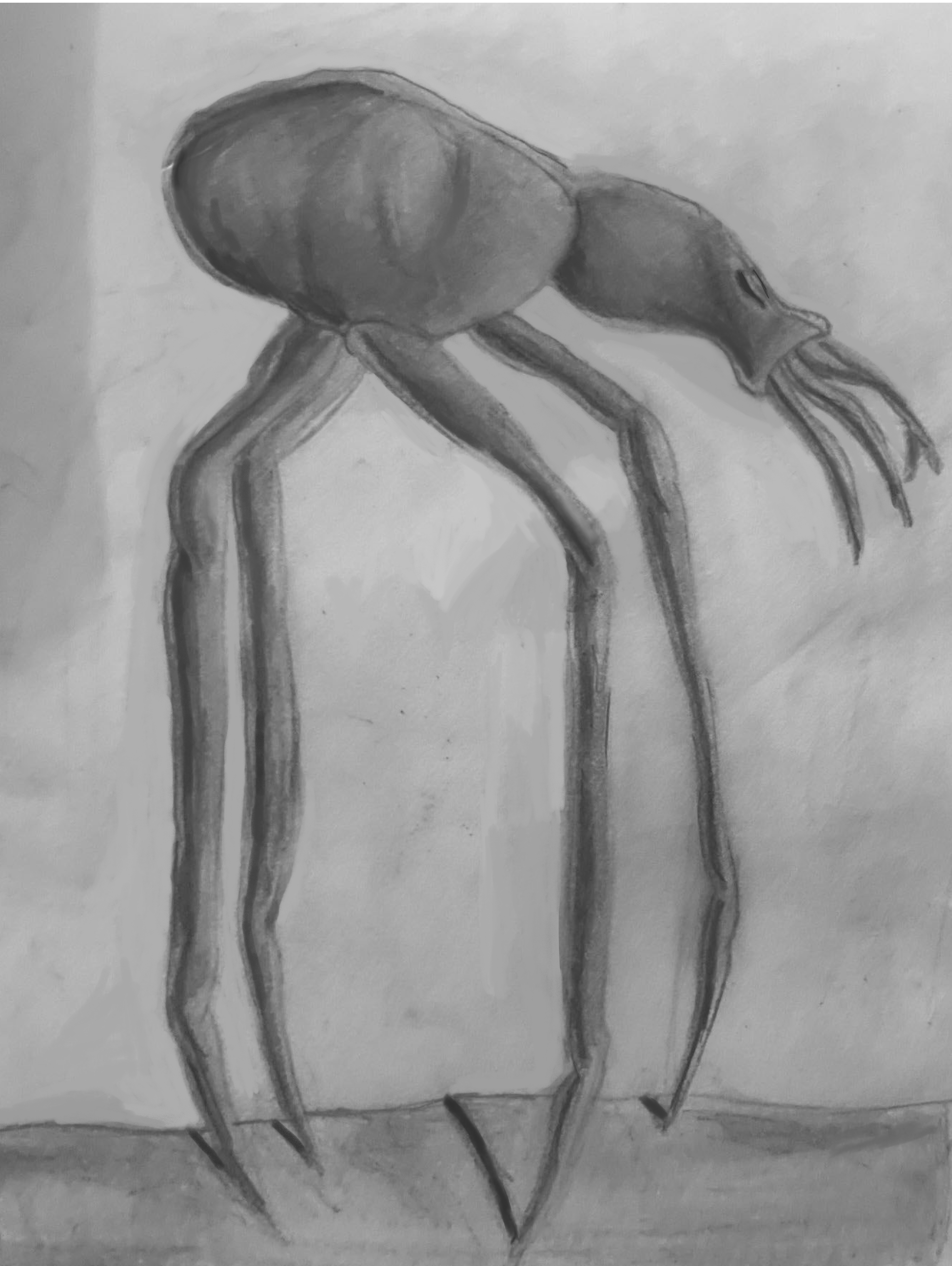
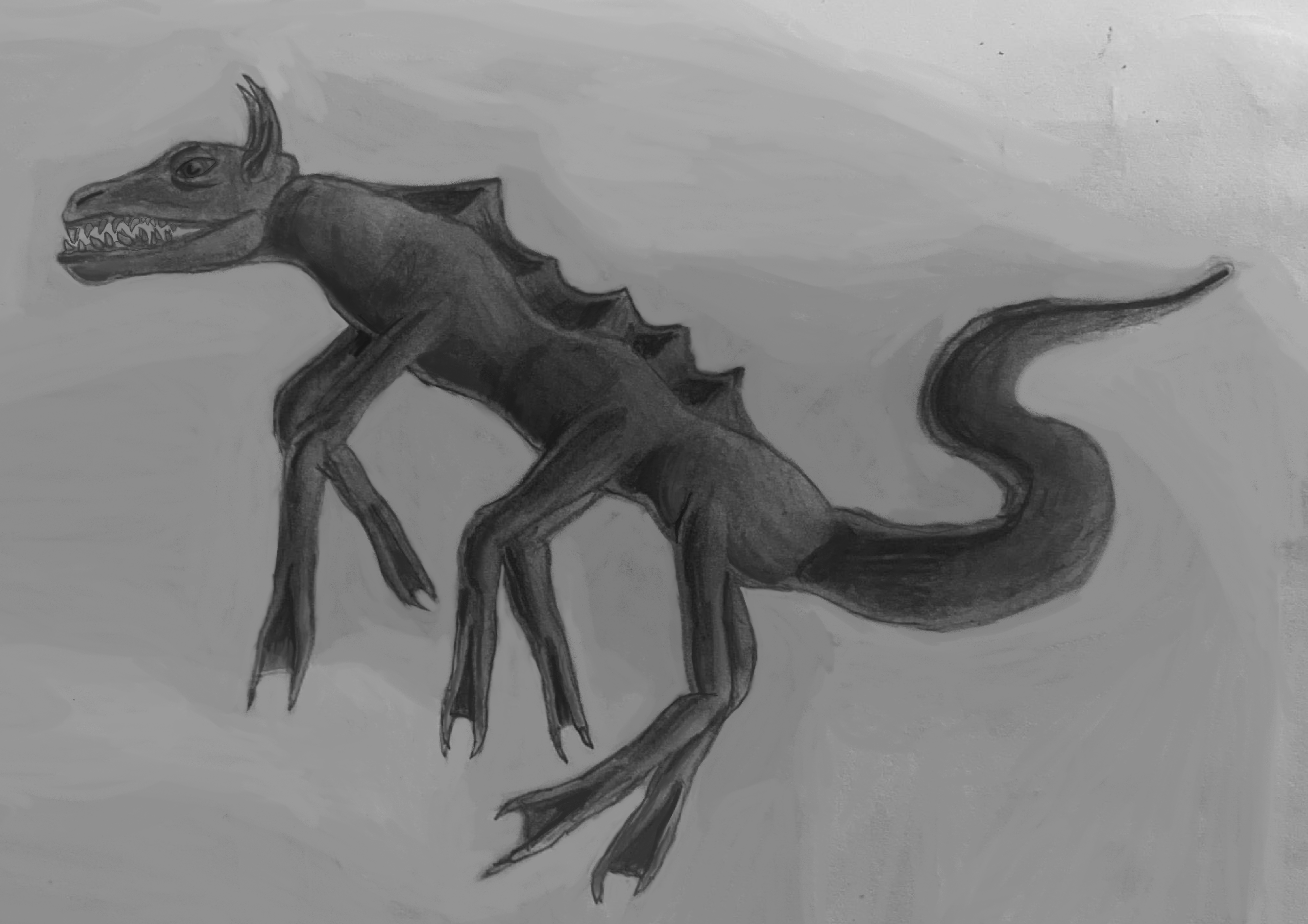
In the far north of Anuaran are exceptionally rare creatures named Screamers, massive beings with eight long legs and a head shaped like a vase surrounded by tentacles. Their names come from their frequent low-pitched wails they use to communicate with each other. Screamers live for hundreds of years, subsisting on the corpses of animals.
A Screamer
Another rare species is the Skeljask. This is a bear the size of a hippo covered in blue scales with a bioluminescent mouth. It lives in the ocean and uses its claws to anchor itself to the ocean floor.
One species contained to the north-west area of Anuaran are Giant Ice Snails, who are exactly what they sound like.
In the south of Anuaran are moose and cariboose.
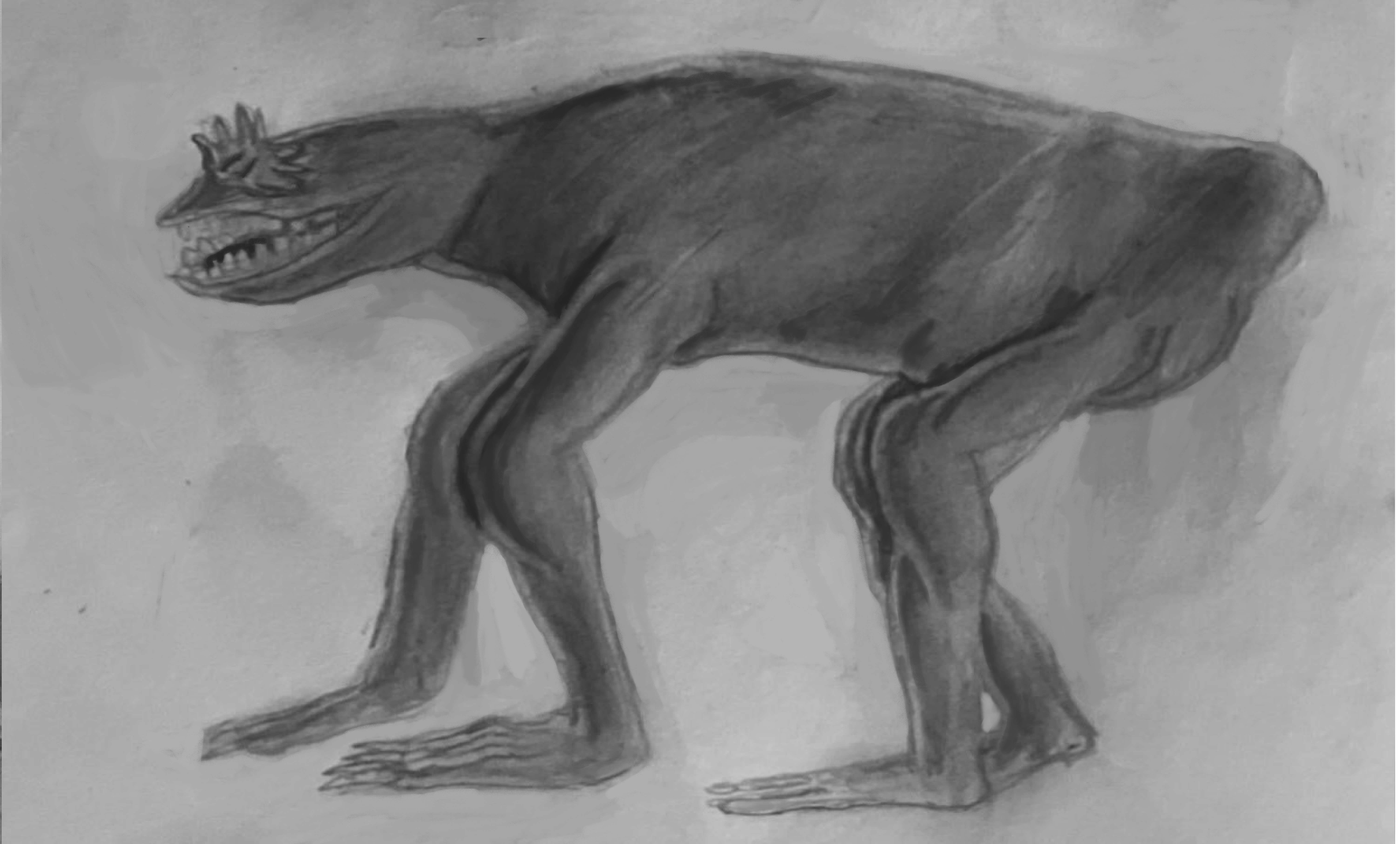
Burrowing in the dirt beneath the snow are giant rodents as well as Amikuks, blind creatures who use the tentacles around their noses to see.
An Amikuk
Within the water are a variety of creatures such as whales, seals, walruses, sea serpents, Tlekints, and eels. Since little fauna besides eels live near Cerumisk island, the slimy creatures are very important to those living near it.
Pal Rai Yuks are giant aquatic predators with six legs and horns who live in the far north-east by Narwhal Island. There are also Narwhals near Narwhal Island, as one would expect.
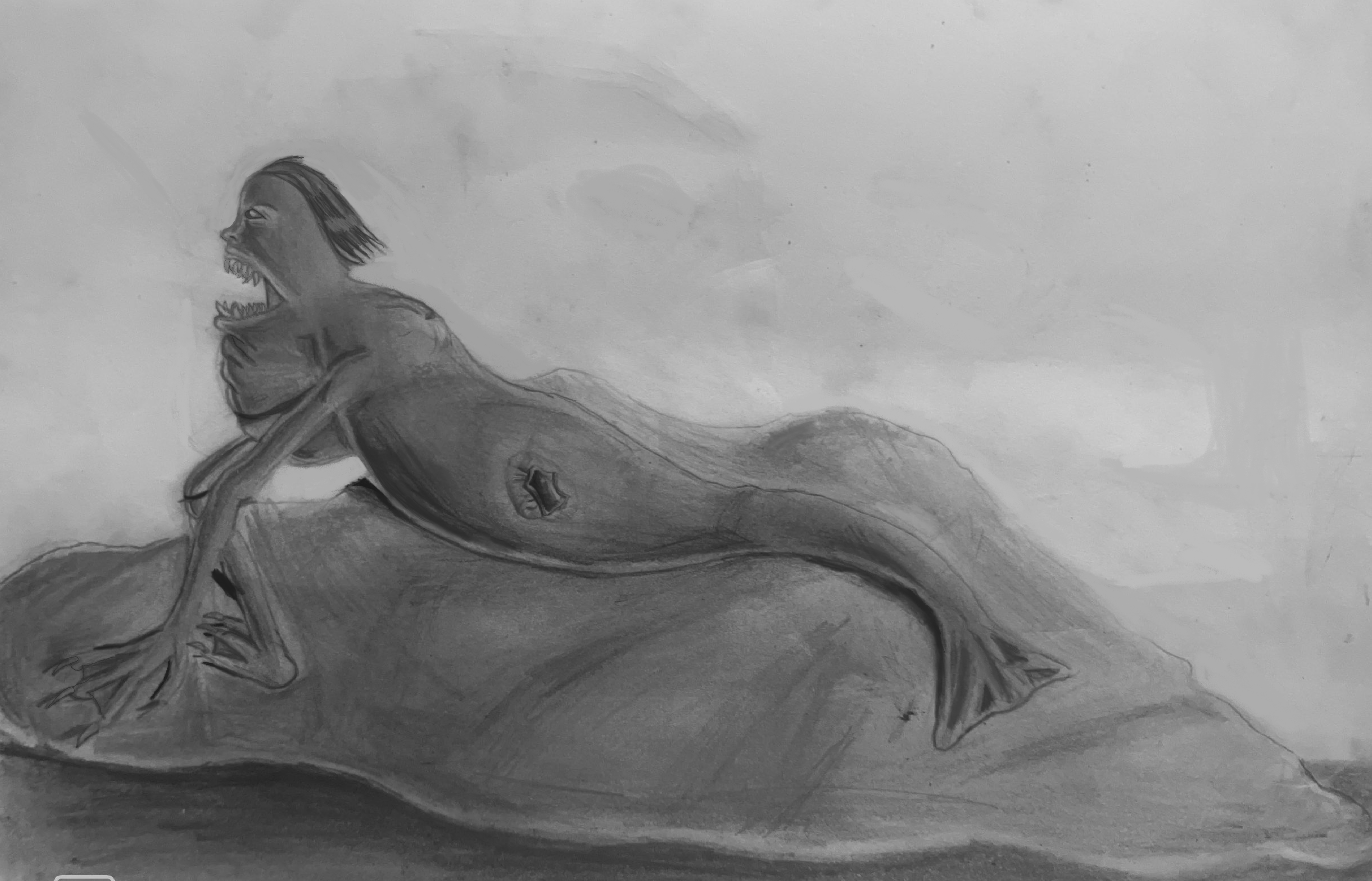
Living in shallow water near The Ice Wastes are the Qallupiluits, often referred to as the Qallups. Female Qallups resemble seals, but with green scaled skin, long black hair on top of their heads, and massive fanged mouths complete with large pockets, similar to the sacks of a frog, which they use to store their food. Male Qallups are the size of insects, and live as barnacle-like creatures on the bodies of female Qallups.
Female Qallups spend much of their time lurking near the shore, waiting to capture unsuspecting prey.
A Qallup.
In terms of flora, there are very few plants in Anuaran. Those which can survive in the environment include Blood Algae, as well as various species of shrubs and mosses.
One notable plant are Amnesiums, small purple flowers. In small doses, these flowers can act as hallucinogens. However, taking too many of them over a large period of time will cause one to begin to lose their short and long term memory. Eventually, the afflicted person will forget basic motor functions and how to speak.
People:
About 90% of the population of Anuaran are
Huawents. The Huawents resemble humans, but with skin and hair as white as snow, and eyes a dark blue like the bottom of the ocean. They are extraordinarily tall, with the average Anuaran woman measuring about 3 feet.
There are multiple different races of Huawents. A majority are Generic Huawents, while Northern Huawents and Marsh Huawents are confined to specific regions (those being the north and the Ice Marshes).
There are four different Huawent sexes.
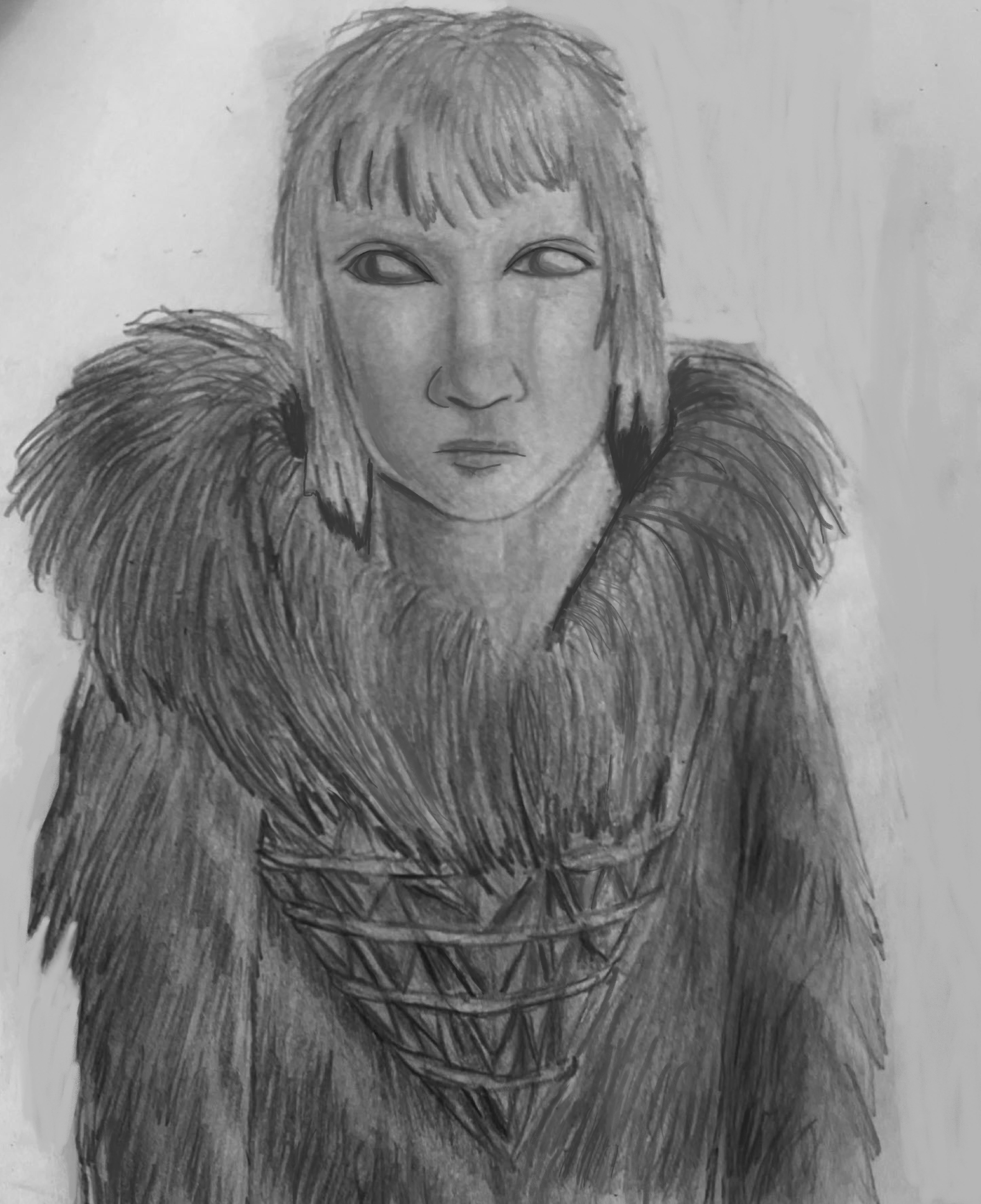
The most easy to understand are the Iazuns, women who do not have the ability to produce offspring.
An Iazun
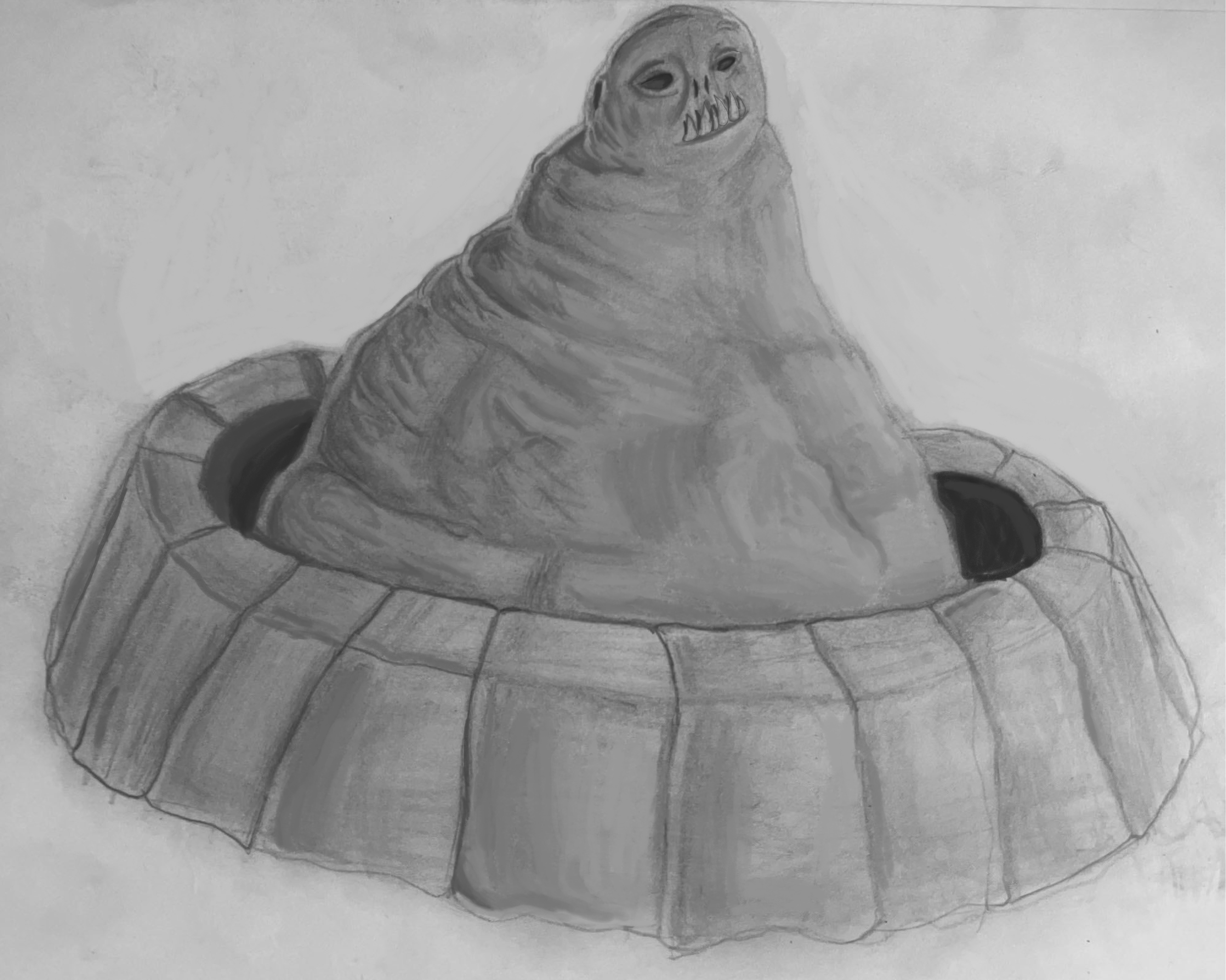
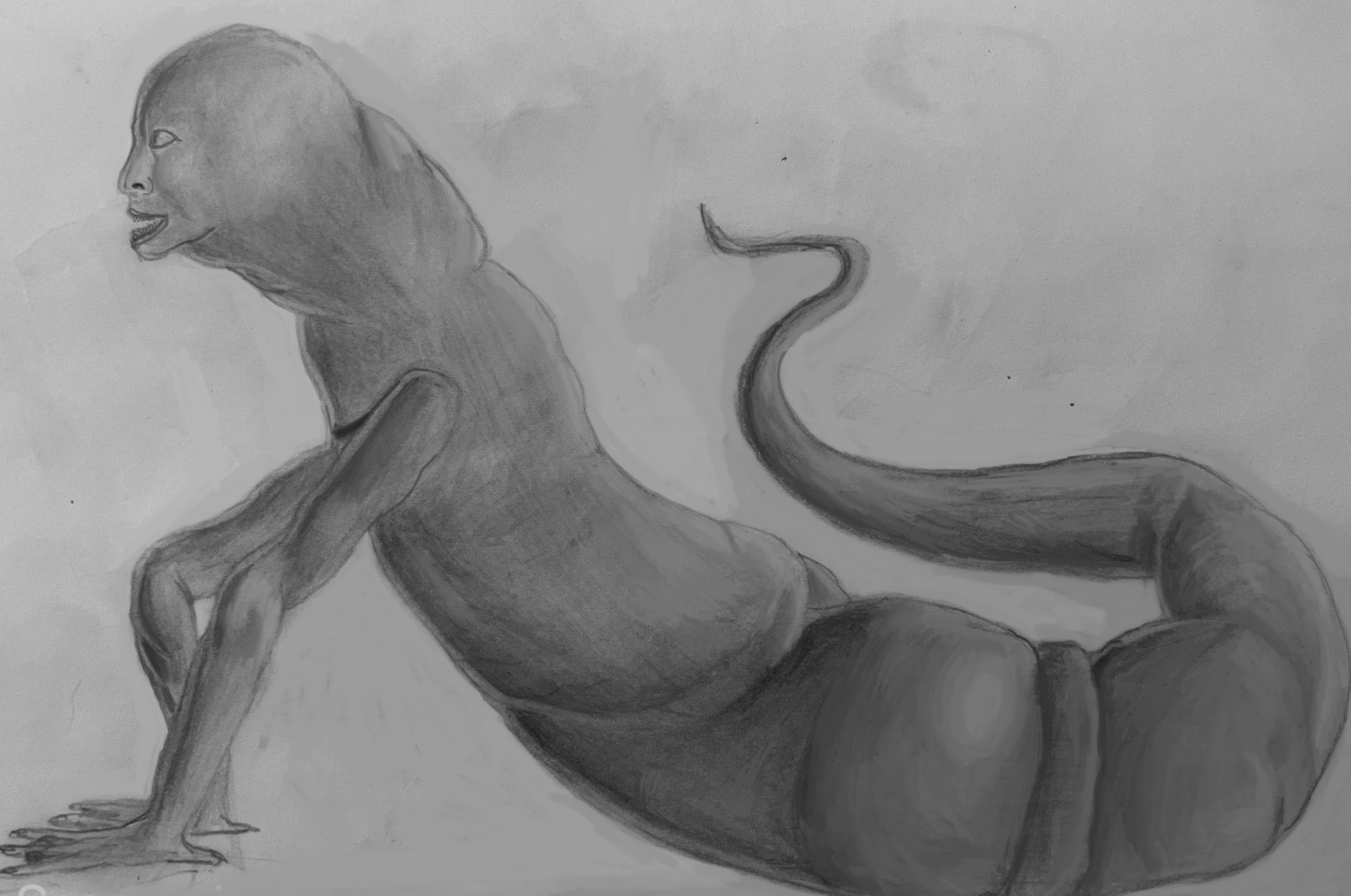
The women who have the ability to produce offspring are The Damewomen. These are women with the ability to give birth, and they function much like queen ants.
For the first few years of a Damewoman’s life, she will be fully mobile, with an appearance similar to Iazuns. When she reaches puberty, she will begin to shift into a completely immobile form, with her limbs fusing to the rest of her body. This new form is a large, circular one, resembling a boulder. A Damewoman can carry 10 fetuses at once, and it is said that they feel no pain from pregnancy or childbirth, but this has not been verified.
A Damewoman
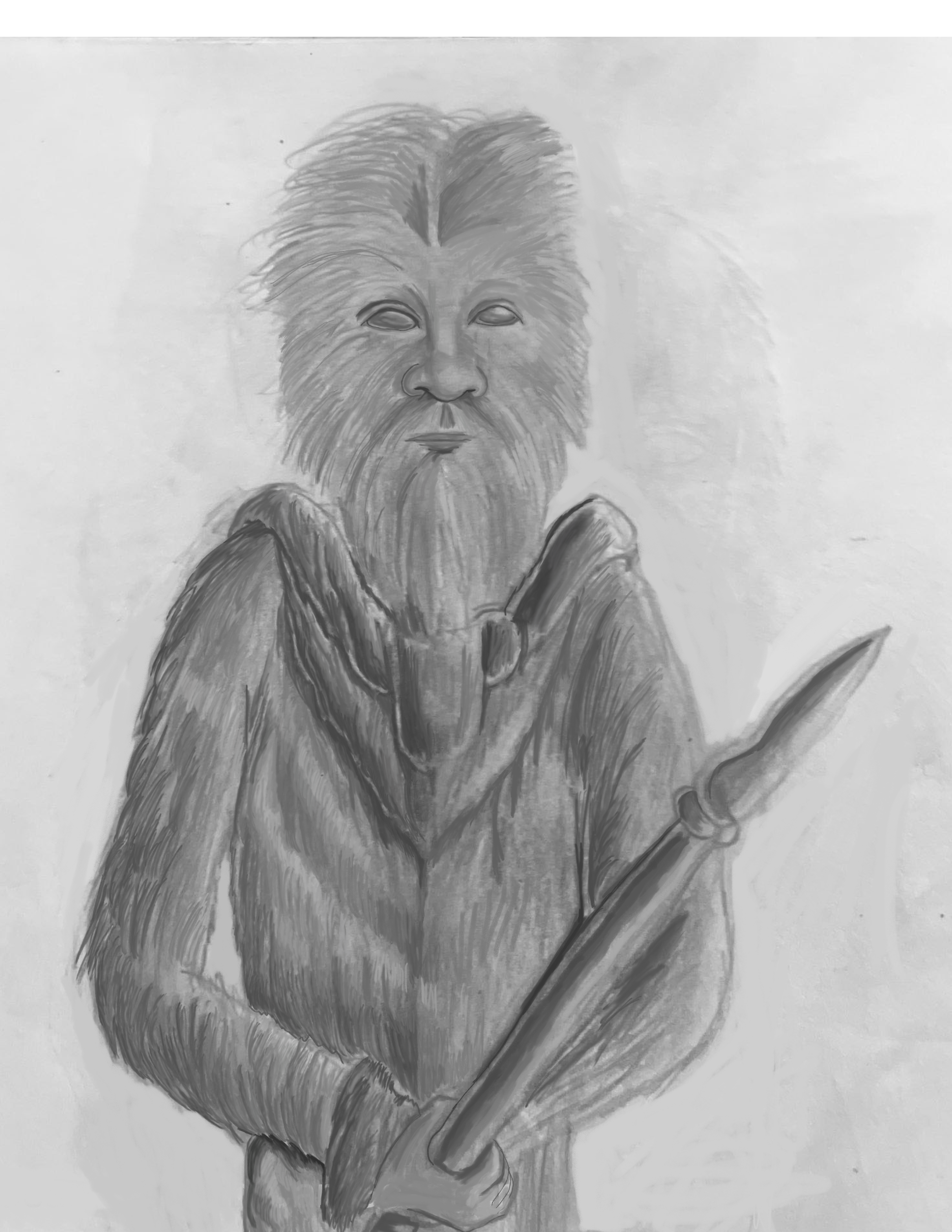
Another sex are The Hunters. These are males who lack the ability to fertilise women. They’re covered in a thick layer of white hair, and sport massive claws. As their name implies, their task is to hunt, but they also protect the community they live in as well as building and other acts of menial labour.
A Hunter
Lastly, there are the men. They are the ones who fertilise the Damewomen, and they do not have a humanoid appearance, but instead resemble large seals. A majority of their time is spent sleeping, only waking up to mate. To consume nutrients, they burrow within the snow and use filter feeding, eating tiny insects who dwell there.
A Male Huawent
The traits of the various sexes of Huawents vary within the different Huawent races.
The Northern Huawents are larger than their southern counterparts, and both their Iazuns and the Hunters are coated in a thick layer of white fur. They also have light blue eyes. Apparently, at the furthest northern reaches of Anuaran live Huawents eight meters tall who look almost like bears, with the addition of massive tusks. However, the accounts of them are so few, many believe this to be over-exaggerations.
Then, there are the Marsh Huawents, who live in the ice marshes. Their Damewoman are circular in size and serve as rafts, with a circle of air pockets making them extra buoyant. The Marsh Huawenrs will spend the entirety of the warm season on the backs of the Damewoman, only living on land when the marshes freeze in winter. The men of the Marsh Huawents look much more fish-like then the Generic Huawent men, and the Hunters grow longer fingernails to puncture ice.
One extra Huawent race are The Sharp Huawents, named so after their sharp teeth and nails. They live around Cerumisk Island, using their claws for fishing.
The 10% of people who aren't Huawents include humans.
Many of those humans live along the coast of the Winter Bay. Their blood is a mix of Ferrine, Red Islander, and dozens of other peoples.
Deeper inland are The Moose People, a nomadic people who follow migrating herds of moose. They have Ferrine traits, with pale skin and yellow hair.
A species endemic to the far east of Anuaran are
Pale Kaetru, who are completely unrelated to Kaetru, but look similar and have similar life cycles. They are the only known warm blooded amphibians.
Pale Kaetru start out their lives as white tadpole-like creatures, before growing arms and legs. As adults, they are humanoid in appearance, but with slimy white skin, large blue eyes, gills, webbed hands and feet, and tails. Their thumbs are especially long to help overcome the issues that gripping with webbed hands bring.
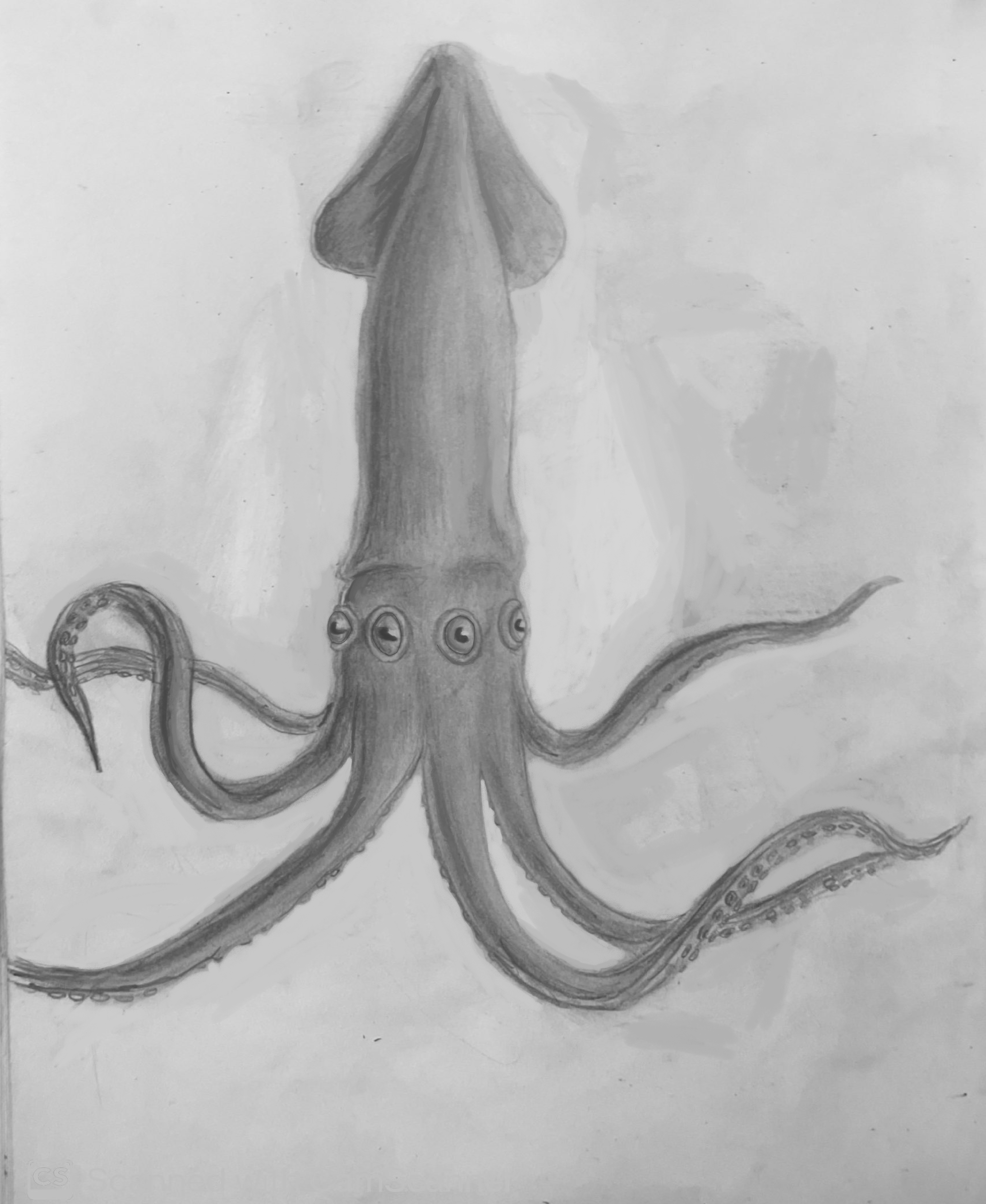
It is during adulthood when the Pale Kaetru’s life cycle diverges from the Kaeutru. To mate, four Pale Kaetru, two males and two females, will form ratking like structures by tying their tails together. Over the course of about a day, they will meld together, turning into one singular being: a large creature with an appearance similar to a giant squid, only with four eyes and white skin. This creature will then journey underwater to lay eggs.
Pale Kaetru are sapient, but rarely interact with other sapient beings. They appear to not have a name for themselves, which is why the name Pale Kaetru was given to them.
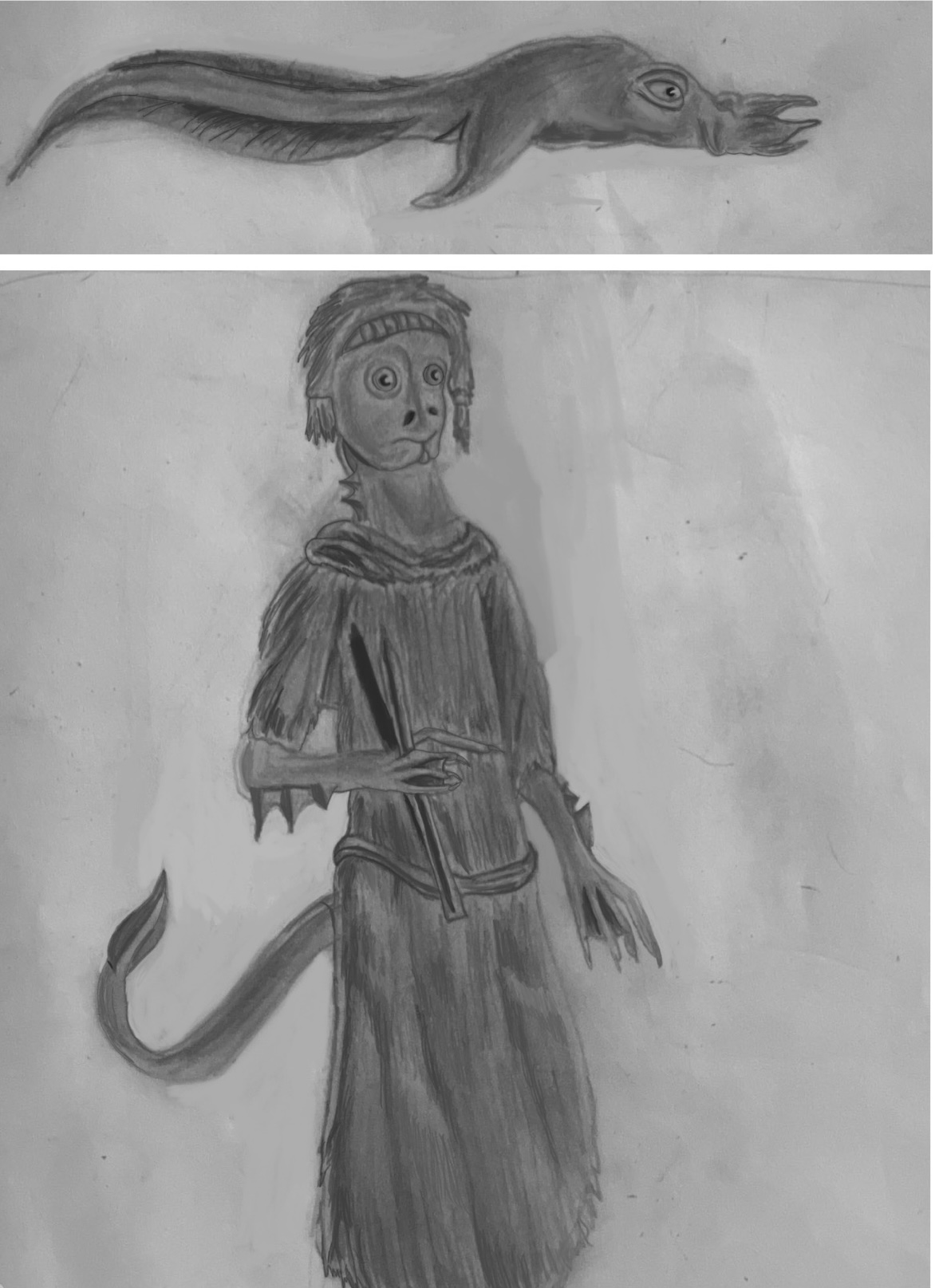
A tiny minority of people are a species known as the
Ctamons, who will be discussed later, and the same applies to the Northern Merfolk.
There are also legends which speak of Polartaurs, beings similar to centaurs, but with the heads and lower bodies of polar bears. Incomplete skeletons have been found which some claim to be Polartaurs, but archeologists debate on whether these are genuine.
It has also been speculated that there may be other species hidden in the deepest and coldest pockets of Anuaran, but that is merely myth.
All those who are not Huawents are legally not a part of Anuaran. This will be discussed later.
Culture:
A majority of Huawents live in small communities.
At the centre of each community will be the ruling hut. In these will lie the three Damewomen, the rulers of the commune. There are always three, so that if one or two dies, a new Damewoman can be born from another. In the very rare case in which all three Damewomen die, all members of the community will leave and join another community.
The various adult men of the community also spend their time in the ruling hut, sleeping when they aren’t mating.
Near the ruling hut will be the dwelling spaces of the Iazuns. Every Iazun has their own role, chosen by them when they turn 12. Some will take care of children, others will work as the hands and voices of the Damewomen, and others will repair machinery.
The nurseries will also be near the centre of the community. There, children will be raised. For the Huawent’s, childhood usually lasts for 12 years. All of the different sexes are raised together.
Moving outwards, we will find places where food and equipment is stored.
On the outside of the camp will be the homes of the Hunters.
The Anuarans are strictly matriarchal, with every Hunter expected to be completely obedient to the Iazuns, and every man expected to be completely obedient to the Damewomen.
Also on the outside will be the polar bear stables. The snowy conditions of Anuaran make automobiles impossible. The bond between an Anuaran and a polar bear is similar to a bond between a human and a horse. Hunters are taught how to ride polar bears from a young age, usually from the Hunters who are too old to hunt themselves. Some Iazuns are also taught how to ride polar bears, either for recreational or messenger purposes.
Generally, there are usually only about a hundred or so people in a community.
Another feature within a community will be a hut built around a hot spring. This spring will generally be used for rituals. One of these rituals is a coming of age ceremony which revolves around a child's first consumption of a Fireworm. In this, an Iazun or a Hunter will swallow multiple Fireworm eggs. When the eggs hatch within their body, the small space will make the Fireworms knot together. The knot will continue to grow, stretching throughout the entirety of the Huawents body, providing them warmth. The ritual is usually done when a Huawent turns 12.
It should be noted that this ritual is done only in the western half of Anuaran.
You may wonder what these huts look like. This varies based on location. The Huawents who live inland, near the Anuaran mountains, dwell in earth lodges, small huts whose roofs are made of the earth itself, bended upwards to form a roof. The Huawents dwelling near the eastern coastal regions also have dome-like semi-subterranean huts, but these have roofs and walls made of bone. Meanwhile, the Huawents in the far north and eastern coast create huts entirely out of ice.
There are a few communities, the richest communities, where the buildings are made of stone. This is true for the capital city of Anuaran, Ullayn. As one might expect, a community with 150,000 people in it is vastly different from your average community. There are hundreds of different nurseries and ritual huts scattered throughout the city. This urban area is even one of the few places with stores in Anuaran. However, these stores do not use money but instead barter.
The communities of the Marsh Huawents are different then the Generic Huawents. There are two kinds of Marsh Huawents.
Some are nomadic, following the migration of otters. In the summertime, the Marsh Huawents will tie the buoyant Damewomen to small rafts. The adult Hunters will then ride on the rafts, while the others ride on the Damewomen. In the wintertime, the community will ride on the ice on massive sailsleds.
As for the non nomadic Marsh Huawents, they live in stilt houses above the marshes. These stilt houses are made of animal bones and skin.
The Sharp Huawents are the only group were the Iazunsdo some measure of hunting, as they are expected to take part in ice fishing.
Moving on to cultural values, Huawents have no concept of personal ownership, not using money and sharing everything communally. However, many Huawents who live among the Western Sea regularly trade with humans, and as such, have developed ideas different from their kin.
In Anuaranian society, it is considered impolite to lie, even if it is a white lie. As such, Anuarans are often seen as being surprisingly blunt. Despite this reputation, Anuaran society still emphasises being respectful and polite. Their system of politeness is simply rather different to many other cultures. For instance, one must always greet someone else by hugging them.
Due to the low amount of food, Huawents will engage in cannibalism, except in the case of diseases. If a Huawent is not eaten, the Wormclump inside of them will continue to grow, eventually overtaking them. While cannibalism is considered obscene almost everywhere else, the Huawents see it as simply how one lives.
Huawents do not believe in wasting. Not only will the body of a dead loved one be eaten, but uses will be found for their bones, skin, and other parts of their body.
Sports and games are treated differently in different parts of Anuaran. In the northern regions, all play is seen as a waste of time and energy. In the west, it is common for Hunters to perform feats of strength when they aren’t hunting, and training for these feats is the way they get strong enough to hunt. In the east, only children and those who raise them are allowed to engage in “unproductive activities”, and these activities are rarely competitive, as competition is seen as antithetical to their communal sensibilities.
The culture of Anuaran changes throughout its landmass. Those living on the eastern coast often have communities with strong ties to fishing whereas the landlocked peoples are more dedicated to land hunting.
Those in the further north have multiple different ceremonies which make use of dancing, as well as practices tied towards wearing constructs of animals on special occasions.
Those on the north western coast have practices of carving animal faces onto bone and then wearing these as totems, similar to the practices of Akawans. The idea is that the spirits of the primaeval form of this animal will watch over those who wear their totems. The Huawents in this region believe every animal species had a primaeval form, the definitive idea of the animal.
There is a feature within some north western tribes of using the shells of the Giant Ice Snails as blowing horns. These shells will often have specific ruins carved into them which grant them magical properties, and will be blown by Iazuns during ceremonies and Hunters during battles.
It is common among western Huawents to use dogs such as Husky and Cloud Dogs for hunting.
Different groups of Huawents also disagree on treatment of the elderly. In some areas, the elderly are beloved for their wisdom, while in other places, they are seen as weak. Some will even have ritual killings of Huawents when they have been deemed too old to be of any use.
Treatment of the disabled also varies. Some Anuaranians believe that all beings should serve some purpose, so even if a Hunter loses both of their legs, they will find some way he can contribute to his community, and he will be treated like any other Hunter. However, others have the opposite viewpoints, killing all those who are disabled, whether they are babies who have just been born or adults who have suffered some injury or undergone some sort of disease. Some take a middle road, with disabled Iazuns being treated with respect, but disabled Hunters being euthanized.
The importance of rituals and the minutiae of these rituals depend. Many Huawents believe that all animals have a soul, and that after killing them, certain rituals must be done over the body before it is eaten. This is so the animal’s soul can safely journey to the place beyond. These rituals vary. Some are simple, with prayers being said while placing one's hand on the body. Meanwhile, the intricacies of some Huawents’ rituals are vast. Those living east of Okwan Bay place great importance on where the first incision on an animal’s corpse is placed while preparing it, and the direction which the carver and the meat face is essential.
There are many other small cultural differences, too vast to be contained here.
As for The Moose People, their culture has no real sense of gender. Both men and women are expected to perform the same tasks, wear the same clothes, and perform the same rituals. Obviously, there is still a sense of sexual differences, but this is not seen as something which defines a person.
The Moose People appear to have been influenced by the Huawents in some ways, however, as they will also have children raised not by their parents, but rather collectively by the whole community they are. The Moose People are very community driven, and also have no sense of individual ownership. The Moose People have a similar view of the disabled to certain Huawents, with all those who are disabled being “left behind”.
The similarities stop there, however. The Moose People do not commit cannibalism, and see lying the same way most human cultures do. Central to the culture of the Moose People are, well, moose. After killing a moose, one must say a prayer of thanks and make sure to use every part of the moose.
Since the Moose People are nomadic, they live in tents which can be quickly set up. Their main source of transportation is reindeer.
Another notable aspect of Moose People culture is the use of face painting, usually done with pastes made of powder from rocks and animal blood. These pastes are extremely resistant to the elements, and often remain for about a month unless washed off with the use of ash. Body paint is used to tell various information: what someone’s job is, if a woman is ovulating, or if someone has done some crime and should be ignored as punishment. Pregnant women will have special ruins painted on their bellies to ward off evil spirits.
Many of the humans living in Urtok and Nautda work as fishers and merchants, with a culture a mix of Ferrine and Huawent. They have the Huawent’s dislike of wasting and respect for animals, mixed with the Ferrine’s love of drinking, song, and strength.
We can only guess the exact intricacies of the culture of the Pale Kaetru or the culture of the Northern Mermaids, as the only contact made with them has been short and distant.
Government:
The capital city of Anuaran, Ullayn, is a community of its own, albeit a massive one containing thousands of people, ruled by The Queen of Anuaran.
While the long arms of the Queen’s governorship stretches to all of the other communities, her grasp on them is extremely limited. Every Damewoman swears allegiance to The Queen, and must follow all The Queen’s edicts, but is free to make her own laws within her own community.
The main purpose of The Queen’s power in the various communities is recruitment of armies.
The Anuaran military is feared across the north, with their warriors riding polar bears into battle. The Queen will send out envoys to different communities, and these envoys will return with Hunters, who will be trained within some of the various army camps near Ullayn. The Damewomen are not allowed to say no.
Underneath the queen is The High Council of Iazuns, led by The Duchess. The Duchess acts as the hand and the voice of the queen, delivering instructions to those below. Becoming a Duchess requires one to proposition the queen upon the death of a previous Duchess.
The amount of Iazuns in the High Council, and their roles, varies depending on how many the Duchess wishes.
Beneath The High Council are The Wandering Peacekeepers. These are wandering groups of Iazuns whose job it is to resolve disputes between communities.
Within Ullayn is a large number of Damewomen, who may all become Queen when the current one dies.
Anuaran has no real court system. If someone commits a crime they will be taken in front of their Damewomen and judged. If someone commits a truly heinous crime, they will be taken in front of The Duchess.
The Damewomen of each community have their own laws for their community, but these are usually not written down or set in stone, merely what the Damewomen currently believe is best.
There are set-in-stone laws for the entirety of Anuaran, however. Most of these revolve around trade, the system of messages, and contact between communities. For instance, Damewoman are only allowed to rule on people who live in their own communities, even if the crime was done against someone else’s community.
Obviously, communities going to war with each other or stealing from one another is forbidden.
The military of Anuaran is “The Bear Cavalry”. Generally, the leader of this cavalry is part of The High Council of Iazuns. In peacetime, “The Bear Cavalry” serves as a messaging service between communities, as well as a police force.
While “The Bear Cavalry” is made up mostly of Hunters, the leaders are all Iazuns.
Non-Huawents are not legally considered citizens. As such, there are no laws surrounding them. As such, it is perfectly legal for a community of Huawents to go and massacre an entire community of Moose People.
There are various small communities of humans living along the Winter Bay who have been granted status as “honorary Huawents”, meaning they are legally considered Huawents, and are thereby awarded the protections of citizenship.
Religion:
The patron goddess of Anuaran is Unyal, the goddess of snow and cold, who reportedly created the Huawents out of snow.
There are basically two religions devoted to the worship of Unyal. One of these is known as The Central Religion, the official religion of Anuaran led by The Queen. It has its own specific canon versions of stories and specific values.
Then, there’s the other religion, commonly referred to as The Free Religion. This religion is not organised, but is actually a vast tapestry of different legends and stories all across Anuaran.
Both religions have a variety of practices.
As has been stated, one is expected to say multiple prayers after killing an animal in order to prevent the spirit of the animal from haunting the killer. This comes from the belief among Huawents that every living being has a soul equal to a person.
The Central Religion states that one must say a prayer over the animal, and then hang the skin of the animal on a staff pointing to the north for three days. However, many groups make their own modifications to the ritual. Not wasting any part of a slain animal is another tenant of The Central Religion.
In addition to worshiping Unyal, many Huawents worship (as in, they pray to) The Followers, entities who serve Unyal.
However, The Central Religion of Anuaran claims that one must not worship any being other than Unyal.
The Followers are recognized as divine beings by The Central Religion, but ones to be respected, not worshipped. The central religion also claims that there are only four Followers.
However, it is extraordinarily hard to enforce this. While it appears that a majority of communities follow these rules, there are still many who claim there are up to 24 Followers, and some if not all of them are worshipped.
The four Followers who are recognized by The Central Religion include The Mother, who is worshipped mostly in the western areas of Anuaran. The legend of The Mother depends upon who is telling you the tale.
However, the version of the story supported by The Central Religion of Anuaran is as follows: The Mother was an Iazun girl who lived near The Cirulean Sea. She believed she was useless, and so she jumped into the sea, trying to drown herself. As she sank, she realised that her life could have meaning. So, she prayed to Unyal for her life and for a way to make a difference. Hearing her prayers, Unyal turned her into a monolithic eel with massive tendrils sticking out of her mouth. From these tendrils sprang the first eels.
They say that The Mother still dwells in the Cirulean Sea, giving birth to eels.
Many believe this legend comes from the fact that nobody knows how eels reproduce. Similar legends also appear in northern Uanuk, but with different entities in place of Unyal.
Another Follower is Brother Light. You see, in parts of the northern world, one can sometimes see a huge explosion of light at night. This is called the Aurora Borealis, and the legend of Brother Light explains how Aurora Borealis came to existence. The exact details concerning Brother Light depend.
Certain groups say that Brother Light was the son of Unyal and the god of light. Others claim that he was the son of the god of light and a mortal woman, and he fell in love with Unyal.
This version is not recognized by The Central Religion. Instead, The Central Religion claims that Brother Light was a Selkie. While Selkies don’t live in Anuaran, it is believed they once did, with this legend being evidence.
Apparently, Brother Light was the younger brother of the queen of The Selkies. The Huawents went to war with The Selkies, who in this legend are seen as heretics, except for Brother Light. According to the legend, Brother Light realised the only way to prevent The Selkies from killing all of the Huawents was to kill his sister. After doing this, Brother Light then proceeded to fall onto his own blade. Unyal was so moved by this, she turned him into the third moon and his blood became the Aurora Borealis. The queen of The Selkies then became the second moon.
There is one night in the year when both the third and the second moon are visible. During this night, the aurora borealis is present, but it fades once the second moon eclipses the third moon.
Also according to this legend, Brother Light is still bleeding, as his grief is connected to his bleeding. However, when Brother Light gets to be with the third moon, he stops grieving, and so the Aurora Borealis disappears.
The third moon appears to never be listed as one of The Followers, as she is seen as a more villainous figure. There is a story, sanctioned by The Central Religion, which claims she killed the fifth moon, causing it to fall to earth.
According to The Central Religion, other followers include The One Eyed Boy. Apparently, he was one of the first mortals to be created. In these days, mortals were only ever children. However, the children began to fight, as they had no system of governance. The One Eyed Boy tried to bring peace, only to have his eye cut out, where it became the first Amnesium. Unyal saw this and realised she had to make the children grow up, as well as create the system of four genders.
The fourth official follower is Sehau. She led the Huawents in their war against the Selkies. After the war ended, the world was divided between the Huawents and the Selkies, with the Huaewents getting the north. Sehau was chosen by Unyal to become the queen over all of the Huawents.
During her time as queen, Sehau had four children. Three of them became moons, while one of them stayed on earth to continue the dynasty of Huawent queens. Sehau also became a moon.
Many stories within the Free Religion claim that the third moon was jealous of Sehau, causing her to kill one of Sehau’s children. As punishment for this Unyal, cursed the Selkies.
A note should be made about the war. Apparently, Unayl created both Huawents and Selkies (Huawents out of snow and Selkies out of fire), and they lived in harmony for thousands of years until the war. After the war, the Selkies retreated south. The Selkies were reportedly happy there until Unyal cursed them, leading to a majority of them dying out.
The origin of humans and various other species is never explained by any story recognized by The Central Religion, but some in The Free Religion claim they were created to rival the selkies.
Other followers not recognized by The Central Religion include The Master of Bone.
According to legend, he was a hunter who was the size of “four whales stacked on top of each other”. He fought in the war against the Selkies, but was killed. His bones then turned into glaciers.
There is also Mistress White. In north west Anuaran, there is a massive white statue of a woman built from opal. This statue is so big, five different communities live on it, and it is said that this statue was once Mistress White herself.
Mistress White reportedly formed from a single tear that Unayl made after she created the Huawents and The Selkies, as she realised she would never do anything this noteworthy again. As a result of forming from a tear, Mistress White was full of pain, and she attempted to destroy all of creation, until Unyal turned her into a statue.
It should be noted that the Free Religion recognizes the existence of other gods. However, Unyal is the only one that Huawents should worship since she created Huawents.
While the Central Religion has no official position on this, many Huawents will tell you that other sapient species such as humans were created by other gods.
A variety of legends exist in Huawent society created as general warnings about staying safe in the harsh environment. A good example of this is the eastern legend of the Earthfish, a giant fish that swims through dirt as if it were water and feasts on human flesh. However, it only hunts at night.
The religion of The Moose People and the other humans of Anuaran vary. Some worship Unyal, while others worship Ptoth or Illvidri.
Art:
The Huawents have a long tradition of spoken word stories, with many of their myths being passed down through oral tradition. Many stories tell lessons through the use of animals.There are a variety of animal archetypes. For instance, there is the dog, who is usually portrayed as honourable yet dumb, the strong and wise bear, and the clever yet malicious penguin.
A practice in south Anuaran is the crafting of sculptures from bone. These can range from small tokens which can be worn as necklaces to statues the size of buildings made from the bones of Screamers.
One type of sculpture common within the south-west are Kikituks, effigies of animals. Magic can be used to bring these sculptures to life for short periods of time, transformed into mindless creatures bent to the carver's will.
Trade:
The primary exports of the Anuarans are animal products such as walrus blubber, seal pelts and dried eel.






Comments