

Way-Singer
Way-Singers are traveling performers, storytellers, musicians, and news-carriers who move along the roads of Tanaria. They are known for their bright cloaks, road-worn instruments, sharp tongues, and seemingly endless collections of songs and stories. To many children, a Way-Singer represents freedom itself: a life beyond village fences, household chores, family trades, and the same familiar faces.
Children often dream of becoming Way-Singers after seeing one arrive at an inn, festival, or village square. A skilled Way-Singer can make a crowd laugh, silence a room with a single verse, turn history into wonder, or carry news from places most children have only heard named in passing. They seem to belong everywhere and nowhere, welcomed for the entertainment they bring and remembered long after they leave.
The truth of the profession is harder. Way-Singers walk dangerous roads, sleep under poor shelter, memorize local laws and grudges, and learn which songs should never be sung in certain halls. They preserve histories, carry warnings, spread rumors, and sometimes speak truths that nobles, priests, or commanders would rather bury. Some possess bardic magic, but most survive through memory, wit, discipline, and the ability to read a room before a careless word becomes a death sentence.
Despite the risks, the dream endures. For a child with a restless heart, a clear voice, or a hunger for stories, few lives seem brighter than that of a Way-Singer stepping onto the road with a song on their tongue and the whole world waiting beyond the next hill.
Demand is highest along major trade routes and in places that rely on travelers for information. Inns, taverns, market squares, and festival grounds often compete for well-known Way-Singers, since their presence can draw crowds and increase trade for an evening. Remote villages may pay poorly in coin but offer food, lodging, repairs, and protection in exchange for songs and news.
Nobles, temples, and guilds also employ Way-Singers, though these arrangements are more complicated. A court may hire one to entertain guests, preserve family history, spread a flattering version of events, or quietly carry messages between allies. Temples may seek Way-Singers to teach hymns or carry holy stories to distant communities. Guilds and merchant houses sometimes use them as informal informants, trusting that few people notice what a performer hears while tuning an instrument in the corner.
Despite their popularity, Way-Singers are not always trusted. The same voice that brings laughter to a tavern can carry scandal to the next town. In tense regions, rulers may restrict their travel, censor their songs, or require permits before allowing them to perform in public. For this reason, the demand for Way-Singers is constant, but uneven. Everyone wants stories, music, and news. Not everyone wants the truth arriving with them.
Children often dream of becoming Way-Singers after seeing one arrive at an inn, festival, or village square. A skilled Way-Singer can make a crowd laugh, silence a room with a single verse, turn history into wonder, or carry news from places most children have only heard named in passing. They seem to belong everywhere and nowhere, welcomed for the entertainment they bring and remembered long after they leave.
The truth of the profession is harder. Way-Singers walk dangerous roads, sleep under poor shelter, memorize local laws and grudges, and learn which songs should never be sung in certain halls. They preserve histories, carry warnings, spread rumors, and sometimes speak truths that nobles, priests, or commanders would rather bury. Some possess bardic magic, but most survive through memory, wit, discipline, and the ability to read a room before a careless word becomes a death sentence.
Despite the risks, the dream endures. For a child with a restless heart, a clear voice, or a hunger for stories, few lives seem brighter than that of a Way-Singer stepping onto the road with a song on their tongue and the whole world waiting beyond the next hill.
Demand
Way-Singers are in steady demand across Tanaria, especially in rural villages, trade towns, caravan stops, and isolated settlements where news travels slowly. A skilled Way-Singer brings more than music. They carry stories, warnings, rumors, songs from distant courts, accounts of wars and marriages, and news of road conditions, missing travelers, taxes, plagues, monster sightings, and shifting borders.Demand is highest along major trade routes and in places that rely on travelers for information. Inns, taverns, market squares, and festival grounds often compete for well-known Way-Singers, since their presence can draw crowds and increase trade for an evening. Remote villages may pay poorly in coin but offer food, lodging, repairs, and protection in exchange for songs and news.
Nobles, temples, and guilds also employ Way-Singers, though these arrangements are more complicated. A court may hire one to entertain guests, preserve family history, spread a flattering version of events, or quietly carry messages between allies. Temples may seek Way-Singers to teach hymns or carry holy stories to distant communities. Guilds and merchant houses sometimes use them as informal informants, trusting that few people notice what a performer hears while tuning an instrument in the corner.
Despite their popularity, Way-Singers are not always trusted. The same voice that brings laughter to a tavern can carry scandal to the next town. In tense regions, rulers may restrict their travel, censor their songs, or require permits before allowing them to perform in public. For this reason, the demand for Way-Singers is constant, but uneven. Everyone wants stories, music, and news. Not everyone wants the truth arriving with them.
Career
Qualifications
There are no universal qualifications required to become a Way-Singer, and this is part of why the profession captures the imagination of so many children. A person does not need noble blood, formal schooling, or magical talent to begin. A clear voice, a good memory, quick judgment, and the courage to leave home are often enough to take the first steps onto the road.
Most respected Way-Singers, however, undergo some form of apprenticeship. Young hopefuls may train under an older singer, travel with a small performance troupe, serve in an inn known for hosting musicians, or study with a bardic college, temple choir, or storyteller’s guild. During this training, they learn songs, instruments, rhythm, history, regional customs, safe roads, dangerous names, and the delicate art of entertaining a room without offending the wrong person.
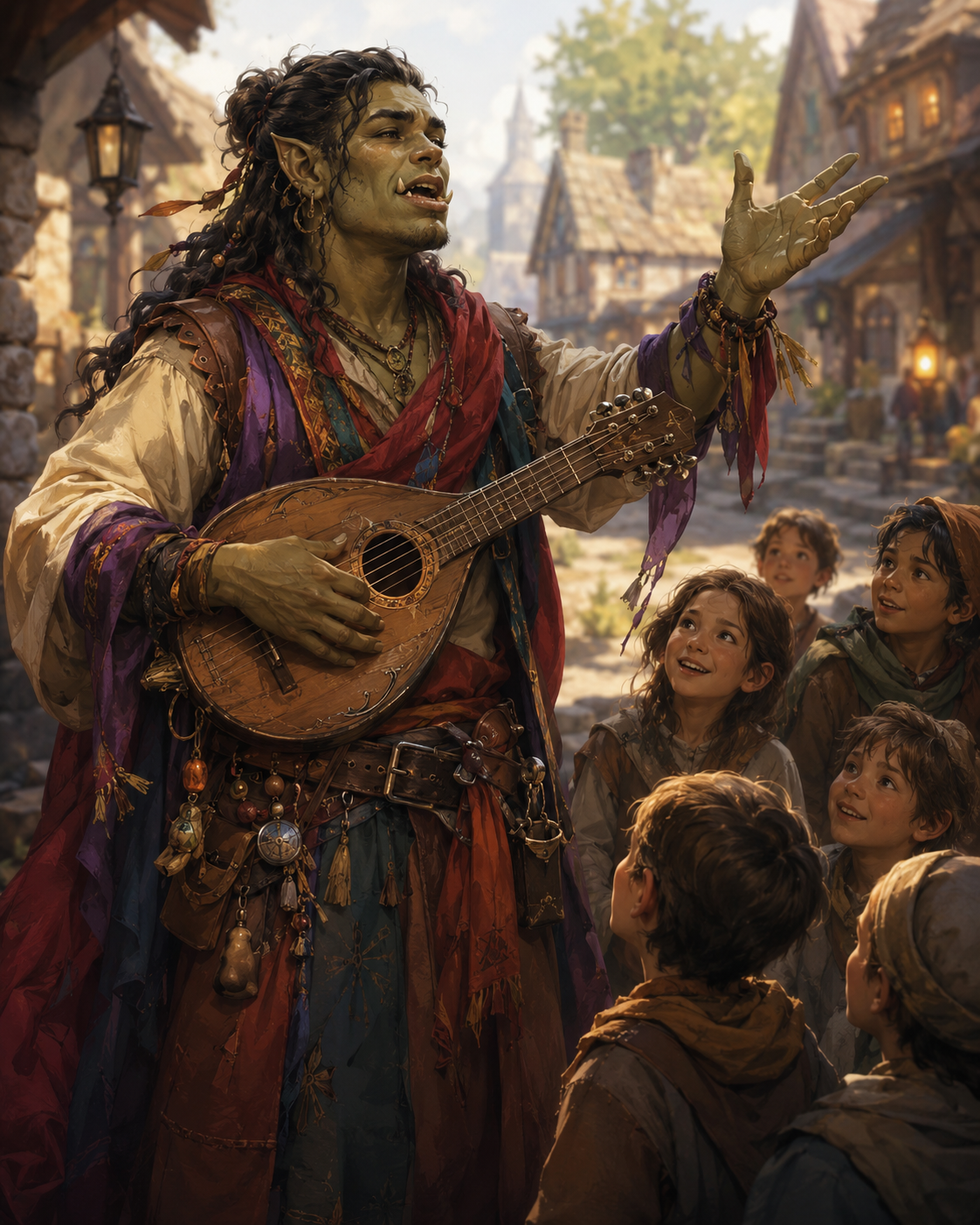 Memory is considered one of the most important qualifications. A Way-Singer must be able to remember long ballads, local histories, family names, road warnings, recent news, and different versions of the same tale. They must also know when to change a song for the audience before them. A verse that earns applause in a Kalrosi hall may start a fight in Valoria, while a joke beloved in Miranore may mean nothing in a Dhuman market.
Way-Singers must also be physically resilient. The work requires long walks, irregular meals, poor sleep, bad weather, and the ability to perform while tired, hungry, frightened, or ill. Many learn basic first aid, campcraft, negotiation, and self-defense. Those who cannot survive the road rarely remain in the profession long, no matter how beautiful their voice may be.
Magical ability is admired but not required. Some Way-Singers can weave minor enchantments into their music, sharpen memory through rhythm, soothe tempers, or carry their voices across crowded halls. Others have no magic at all and rely entirely on talent, practice, and presence. Among common folk, a non-magical Way-Singer who can hold a room through skill alone is often respected more than one who charms an audience by spellwork.
The final qualification is discretion. Way-Singers hear things. They are present in taverns, courts, kitchens, stables, camps, and roadside shrines, often while others forget they are listening. A careless singer becomes a rumor-monger. A wise one learns which truths should be sung, which should be softened, and which should be carried quietly to someone who needs to hear them.
Most respected Way-Singers, however, undergo some form of apprenticeship. Young hopefuls may train under an older singer, travel with a small performance troupe, serve in an inn known for hosting musicians, or study with a bardic college, temple choir, or storyteller’s guild. During this training, they learn songs, instruments, rhythm, history, regional customs, safe roads, dangerous names, and the delicate art of entertaining a room without offending the wrong person.
Way-Singers must also be physically resilient. The work requires long walks, irregular meals, poor sleep, bad weather, and the ability to perform while tired, hungry, frightened, or ill. Many learn basic first aid, campcraft, negotiation, and self-defense. Those who cannot survive the road rarely remain in the profession long, no matter how beautiful their voice may be.
Magical ability is admired but not required. Some Way-Singers can weave minor enchantments into their music, sharpen memory through rhythm, soothe tempers, or carry their voices across crowded halls. Others have no magic at all and rely entirely on talent, practice, and presence. Among common folk, a non-magical Way-Singer who can hold a room through skill alone is often respected more than one who charms an audience by spellwork.
The final qualification is discretion. Way-Singers hear things. They are present in taverns, courts, kitchens, stables, camps, and roadside shrines, often while others forget they are listening. A careless singer becomes a rumor-monger. A wise one learns which truths should be sung, which should be softened, and which should be carried quietly to someone who needs to hear them.
Perception
Social Status
Way-Singers occupy an unusual place in Tanarian society. They are often welcomed, celebrated, fed, and given a warm place by the fire, but they are not always trusted. Their work places them between social classes, allowing them to perform for farmers, merchants, soldiers, priests, nobles, and rulers without fully belonging to any of them.
Among common folk, a good Way-Singer is usually treated with fondness and curiosity. In villages and roadside inns, their arrival may be enough to draw people from their homes for an evening of songs, stories, news, and laughter. Children often admire them openly, seeing the profession as a life of freedom and adventure. Adults are more practical, but many still value Way-Singers as one of the few reliable sources of outside news.
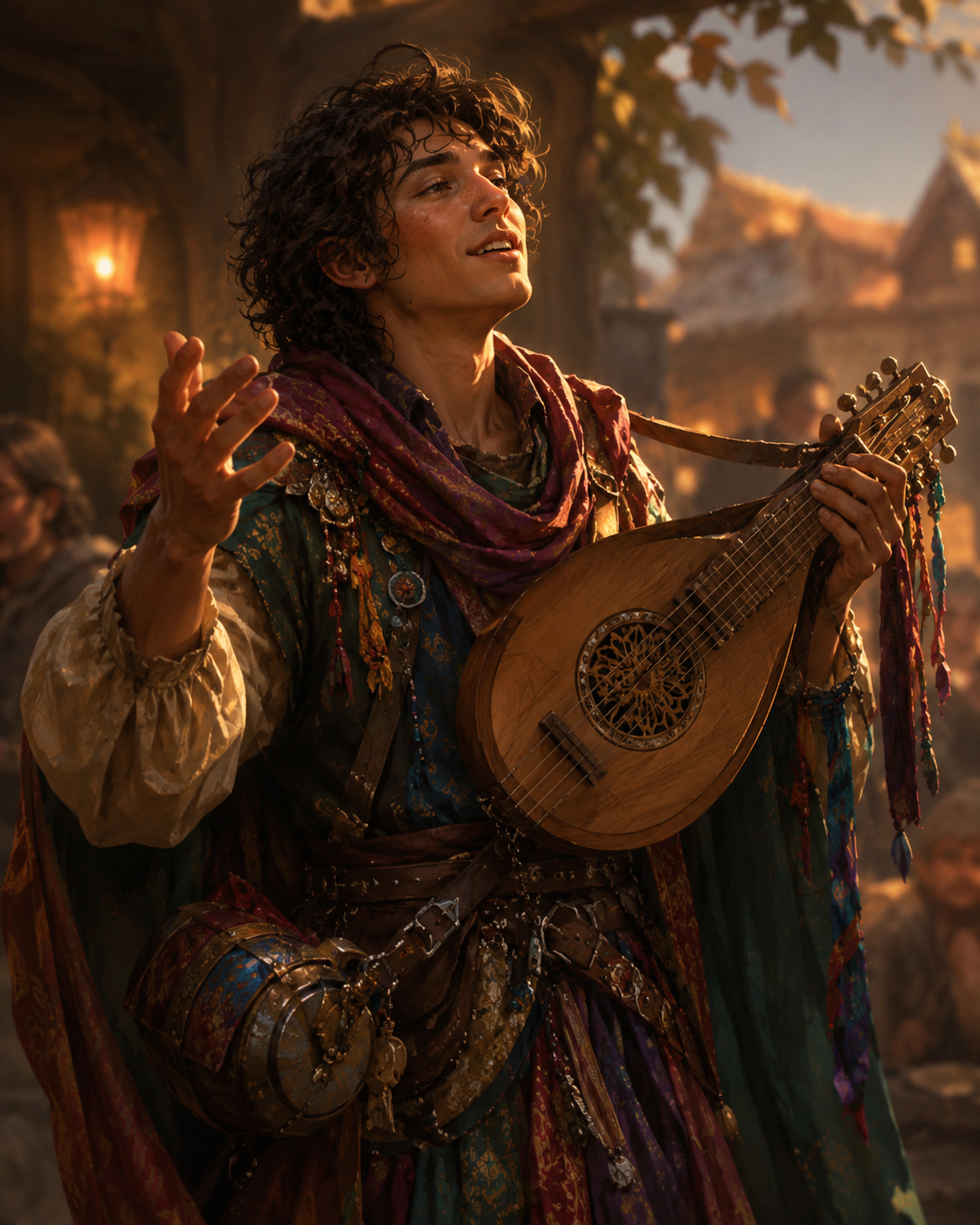 In noble courts, their status is more complicated. A talented Way-Singer may be invited to perform at feasts, weddings, diplomatic gatherings, or private salons, but they are rarely considered social equals. They are expected to entertain, flatter, remember names, and avoid dangerous subjects unless specifically invited to speak boldly. A court may praise a Way-Singer one night and have them removed the next if their songs cut too close to scandal.
Scholars, priests, and historians sometimes respect Way-Singers as keepers of oral memory, especially in regions where written records are scarce or controlled by the powerful. Their songs preserve battles, disasters, migrations, love stories, betrayals, and local heroes who might otherwise vanish from formal histories. Even so, learned institutions often regard them as unreliable, since performance naturally reshapes truth into something more memorable.
The lowest opinion of Way-Singers tends to come from officials, guards, and rulers who fear rumor. Because Way-Singers travel freely and speak to many kinds of people, they are often suspected of spreading dissent, carrying secret messages, or turning public opinion with satire. In tense regions, they may be required to carry permits, submit songs for approval, or avoid performing near military camps and government halls.
A famous Way-Singer can become beloved across kingdoms, with their songs repeated long after they have left a town. An unknown one may be treated little better than a beggar with an instrument. Their social status depends heavily on reputation, skill, discretion, and the mood of the place they enter. They are admired for their freedom, needed for their news, envied for their stories, and feared for how easily a song can outlive the person it mocks.
Among common folk, a good Way-Singer is usually treated with fondness and curiosity. In villages and roadside inns, their arrival may be enough to draw people from their homes for an evening of songs, stories, news, and laughter. Children often admire them openly, seeing the profession as a life of freedom and adventure. Adults are more practical, but many still value Way-Singers as one of the few reliable sources of outside news.
Scholars, priests, and historians sometimes respect Way-Singers as keepers of oral memory, especially in regions where written records are scarce or controlled by the powerful. Their songs preserve battles, disasters, migrations, love stories, betrayals, and local heroes who might otherwise vanish from formal histories. Even so, learned institutions often regard them as unreliable, since performance naturally reshapes truth into something more memorable.
The lowest opinion of Way-Singers tends to come from officials, guards, and rulers who fear rumor. Because Way-Singers travel freely and speak to many kinds of people, they are often suspected of spreading dissent, carrying secret messages, or turning public opinion with satire. In tense regions, they may be required to carry permits, submit songs for approval, or avoid performing near military camps and government halls.
A famous Way-Singer can become beloved across kingdoms, with their songs repeated long after they have left a town. An unknown one may be treated little better than a beggar with an instrument. Their social status depends heavily on reputation, skill, discretion, and the mood of the place they enter. They are admired for their freedom, needed for their news, envied for their stories, and feared for how easily a song can outlive the person it mocks.

Alternative Names
Road Bard, Songbearer, News-singer
Type
Entertainment
Demand
Steady
Famous in the Field


Really fascinating that the profession is viewed so differently by different people, and the fact their words, songs, and jokes could be taken differently from town to town. I can see why kids would really look up to these guys and want to join their ranks though.
Explore Etrea | Summer Camp 2026
Yeah I was trying to think what would kids really idealize, like firefighters and police officers and living in a small town having someone show up with stories and news and adventures would really get a kids blood pumping I think.
"Every story is a thread, and together we weave worlds."
The Origin of Tanaria