
On Settlement Density
Across the systems touched by spacefaring civilizations, population density follows a pattern that often surprises those expecting frontier expansion or planetary-scale settlement. Two conditions shape nearly all inhabited regions. First, no matter how remote or hostile a location appears, it is rarely untouched; exploration and early infrastructure tend to precede permanent habitation, leaving traces long before stable communities form. Second, the widespread availability of cloning technology stabilizes populations at low absolute numbers, removing the biological and logistical pressures that historically drove large-scale demographic growth.
As a result, most space-capable societies develop in a highly distributed, low-density manner. Even worlds with ideal climates and abundant resources may support only a few dozen residents, spread across isolated facilities rather than concentrated cities. Cloning removes the need for large populations to ensure continuity, while advanced fabrication and automation reduce the labor required to maintain settlements. Expansion favors redundancy and dispersion over mass, producing networks of small, self-sufficient nodes rather than densely populated hubs.
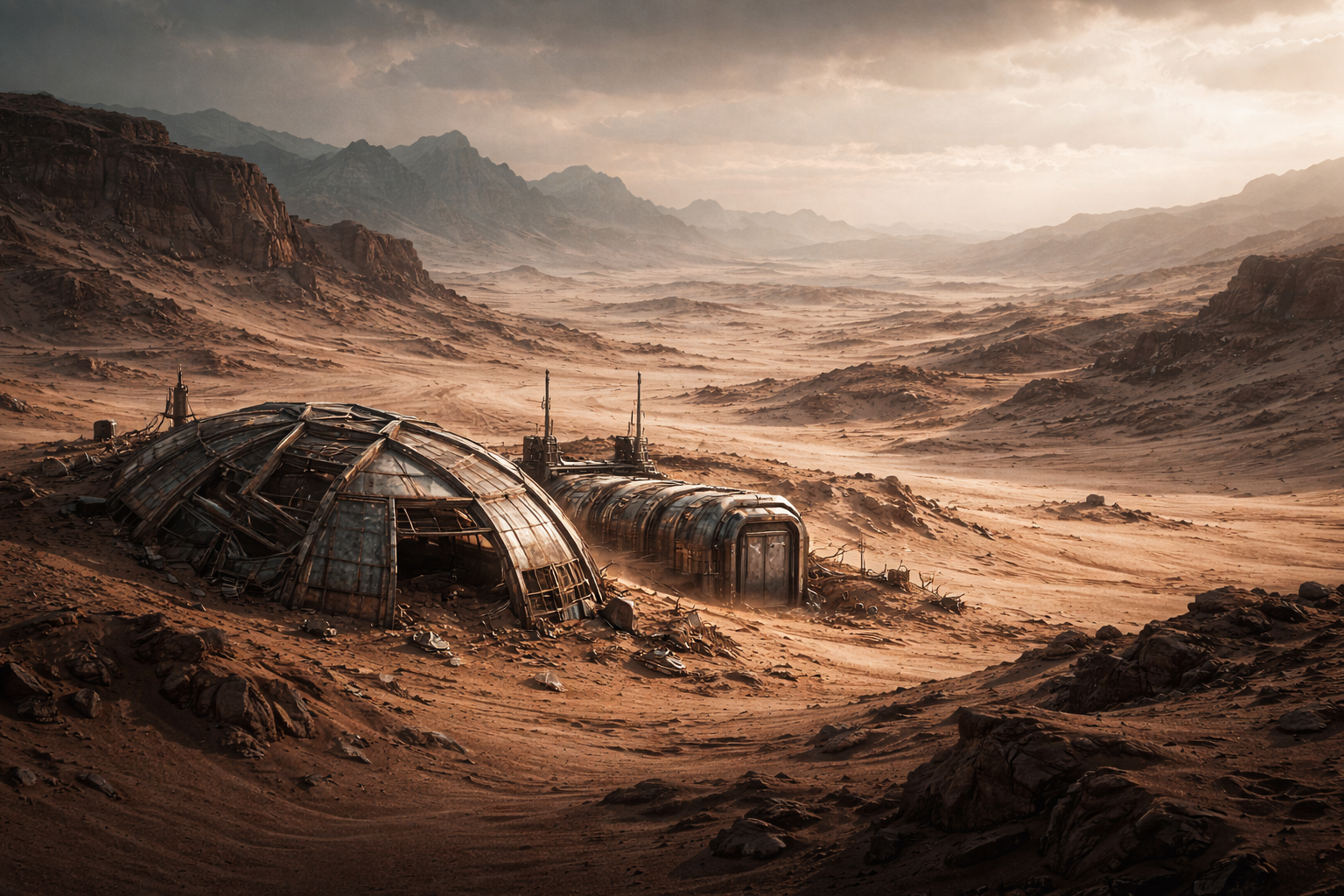
This distribution makes space-based habitation—stations, orbital platforms, and capital ships—just as viable as surface settlements. Without the need to support large civilian populations, these mobile or semi-permanent structures offer comparable stability with far greater flexibility. Many communities choose to live entirely off-world, relocating as resources, politics, or maintenance demands shift. When settlements do exist planetside, they often resemble outposts rather than colonies: tightly controlled environments embedded within otherwise untouched terrain.
Detection of such populations is correspondingly difficult. Most settlements are physically small, energetically efficient, and deliberately quiet. Unless broadcasting their presence, they are effectively invisible against the scale of a planet or star system. It is not uncommon to discover a lone research team, family group, or maintenance crew living on worlds that would otherwise be considered uninhabitable without extensive environmental control.
Over time, this model produces a galaxy filled with ephemeral habitation. Outposts are established, maintained for decades or centuries, then quietly abandoned as priorities change or infrastructure fails. What remains are scattered ruins—sealed stations, empty habitats, and partially reclaimed facilities—marking places where people once lived briefly but deliberately. In a civilization built on continuity rather than expansion, settlement is less about claiming space and more about leaving options behind, many of which outlast their creators.