
Actor OCC
Actor O.C .C.
In the Palladium World, an actor is a very highly trained professional, with the versatility and skill needed to put on an entire theatrical production. They have to be able to perform dozens of different roles, as well as understanding all the basic elements of stagecraft, including casting, directing, promoting, make-up, etc.
Unlike modern day actors, who are specialists simply in the art of performance, the actor in the Palladium World cannot rely on the talents of directors, stage managers, prop specialists, costume designers and lighting technicians. No, the Palladium actor has to be able to do all that, and much, much, more.
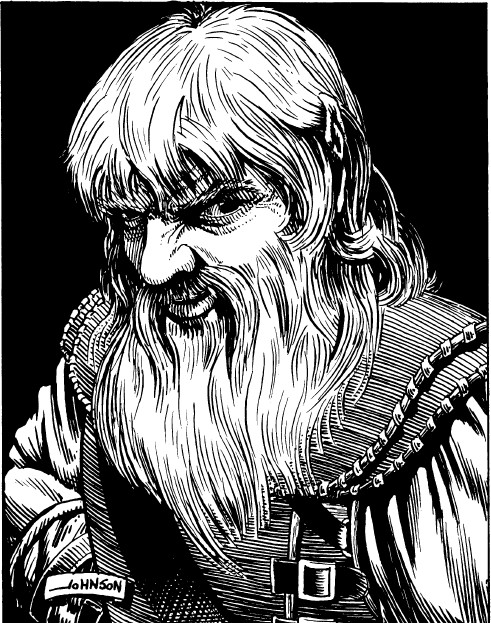
Most actors travel individually or in small troupes. By necessity, they perform all the functions of an entire theater company on their own. They make their own signs, props, and, often as not, their own stages.
Not only do they play most of the parts, they often create their own plays. Many performances are customized for each specific region and audience. For example, a play given for the benefit of nobility is likely to be more sophisticated and classy, while a play for peasant villagers (or nonhumans) is likely to be more exaggerated, bawdy and simplistic.
Having to work with enthusiastic, but unskilled, locals, actors usually have to modify any existing scripts to compensate for specific talents, or lack thereof.
Many are also well versed in a variety of lore and are good story-tellers. Actors travel a great deal and are often invited by the gentry (from merchants and scholars to nobility), who l ike to associate with these attractive, talented, and "amusing" men and women. This means that actors often hear a great many rumors and news, and may even get involved with the intrigues and goings-on of court, politics or the wealthy. This can also lead to trouble if the character is not discreet on many levels. They are frequently regarded as spies, whores and low-life when trouble arises.
--
Actor O.C.C.
Alignments: Any
Attribute Minimum Requirements: I.Q. 10, M.A. 12, or higher.
--
O.C.C. Skills for the Actor
- Public Speaking (+25%)
- Imitate Voices & Impersonation (+15%)
- Disguise/Make-Up (+10% )
- Dance (+15%; professional quality)
- Mime
- Horsemanship: General
- Basic Math (+10%)
- Language: Native tongue at 98% plus two of choice (+15%).
- Literacy: One language o f choice (+10%)
- Sign Language (+10%)
- Writing (+10%; mostly prose, but can also put together lines of poetry).
- Carpentry (+5%)
- Stage Carpentry, Lighting and Assembly (+10%)
- Sew (+5%; the character knows how to create stage costumes out of just about any kind of material. While the character can make clothing and costumes that look good, they will not stand up to any kind of serious wear or stress, such as fighting or adventuring. Also includes the ability to alter ready-made costumes to fit a variety of different performers - "Oh no! Little Inelina is sick! Hand me that bridal gown so I can change it to fit Olaf... Yes, I know it's not nearly big enough, just tell him not to tum his back to the audience..."
- W.P. Sword (In learning to be an actor, the character must also learn the art of sword fighting on stage. This is not an easy thing to do, and the character must actually be just as skilled as any "real" swordsman, so as to avoid injuring the other actors.)
- Hand to Hand: Basic (actors have to learn to put on a good show in their make-believe fights, and many of them have actually learned fighting skills.
Note: Hand to hand : basic can be changed to hand to hand: expert for the cost of one "other" skill, or martial arts for two other skills or assassin, or even Gladiator combat for the cost of three other skills.
O.C.C. Related Skills
Select three other skills at level one, plus select one additional skill at levels two, four, six, eight, ten and twelve. All new skills start at level one proficiency.
Note: Most "other" related and secondary skills tend to reflect the character's profession.
- Communications & Performing Arts: Any (+10%)
- Domestic: Any (+10% )
- Espionage: Only escape artist and intelligence, other than O.C.C. skills.
- Horsemanship: General or Exotic only.
- Medical: First Aid only.
- Military: Heraldry, Weapon Quality and Surveillance only.
- Physical: Any, except acrobatics and wrestling.
- Rogue: Any (+2%)
- Science: Math and Anthropology only.
- Scholar & Technical: Any (+10% on all Lore and Language skills)
- Weapon Proficiencies: Any; except siege.
- Wilderness: Any
Secondary Skills
Select four secondary skills from the previous list at level one, and one additional skill at levels three, five, seven, nine and eleven. These are additional areas of knowledge that do not get the advantage of the bonus listed in the parentheses. All secondary skills start at the base skill level. Also, skills are limited as previously indicated in the list.
Starting Equipment
The character starts out with a small, twowheeled cart, and one horse trained for both riding and pulling, worth 800 gold. Stowed in the cart are a dozen costumes, stage weapons and armor, one cloth backdrop (on one side it's an outdoor meadow, on the other side it is the interior of a castle), a variety of brightly colored cloth banners (36, in various colors) , treated torches (32), and eight metal lantern/torch holders (when assembled, each is 8 feet/2.4 m tall).
Tools include a decent wood saw, a hammer, nails (100 large, 50 small), a plane (a hand tool with a blade set in a body, used to shave thin layers off wood to flatten, smooth, reduce thickness, or create a desired shape), an awl (a simple, sharp-pointed hand tool with a handle, used for piercing holes, marking precise spots, scribing lines, or widening existing holes in materials like wood, leather, and fabric without removing material like a drill), a pair of pliers (A "pair of pliers" is a versatile hand tool with two levers and pivoting jaws, used to grip, bend, cut, or manipulate objects firmly, like holding nuts, bending wire, or pulling nails, functioning as a simple machine to multiply hand force for various tasks in homes, workshops), and a crowbar.
Among the actor's personal gear are four duplicate books of popular plays, an assortment of hand-scribed plays (dramas, comedies, short vignettes, and some operas), plus sufficient paper, pen and ink.
Clothing includes several outfits, including an ordinary set of street clothes (well-to-do peasant style), the outfit of a mercenary soldier, a noble, and a couple of uniforms.
The character's make-up kit is well-stocked, and able to put together anything from a troll face (complete with beard, wig, fake nose and false fangs), to the exaggerated make-up of a fairy-tale princess.
The character also has a full set of cooking gear, a couple of travelling bags, a sewing kit, a couple of water skins, an oil lantern, and a tinder box.
Armor
Unlike any of the other entertainers, the actor is frequently called upon to use armor. Not just in combat, but in all kinds of difficult stage feats and tricks. While actors prefer not to use helmets, they are perfectly comfortable in even the heaviest suits.
Starts out with a full suit of chain mail (14 A.R., 44 S.D.C.).
Weapons
The character starts out with a good quality long sword (kobold or dwarven, worth 150 gold, 2D6+1 to damage), a quarterstaff and a dagger.
Money
In addition to 200 gold in cash, the character may also have a "letter of credit," redeemable at banks or merchant houses, for another 600 gold. Many entertainers tend to be more interested in fame and glory than fortune. Thus, while they can make a good to excellent living, and amass a nice nest-egg, few ever become truly wealthy and many spend their money on expensive clothes, costumes, jewelry, and good times.