
Mountain Dwarves
Lords of the Oath
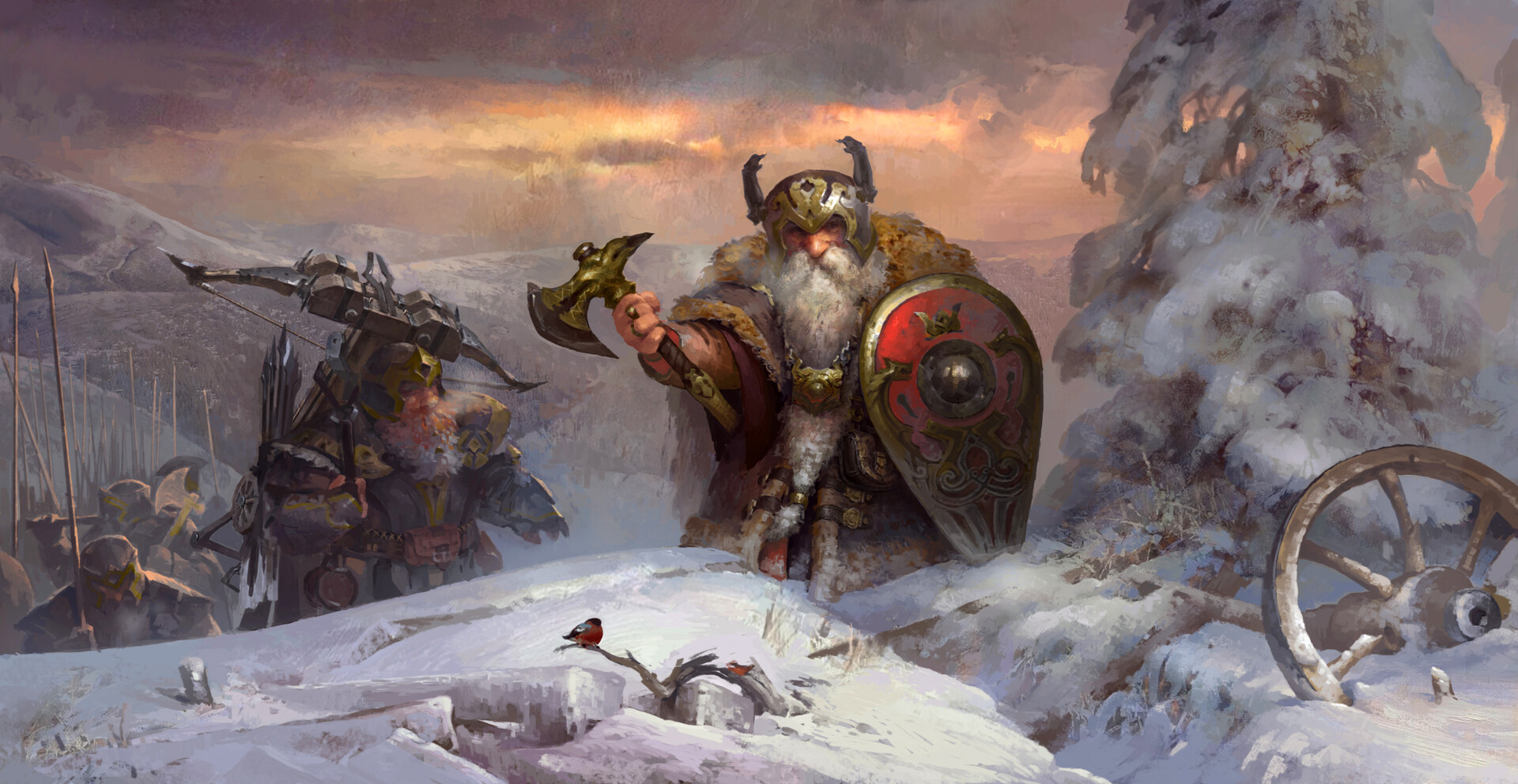
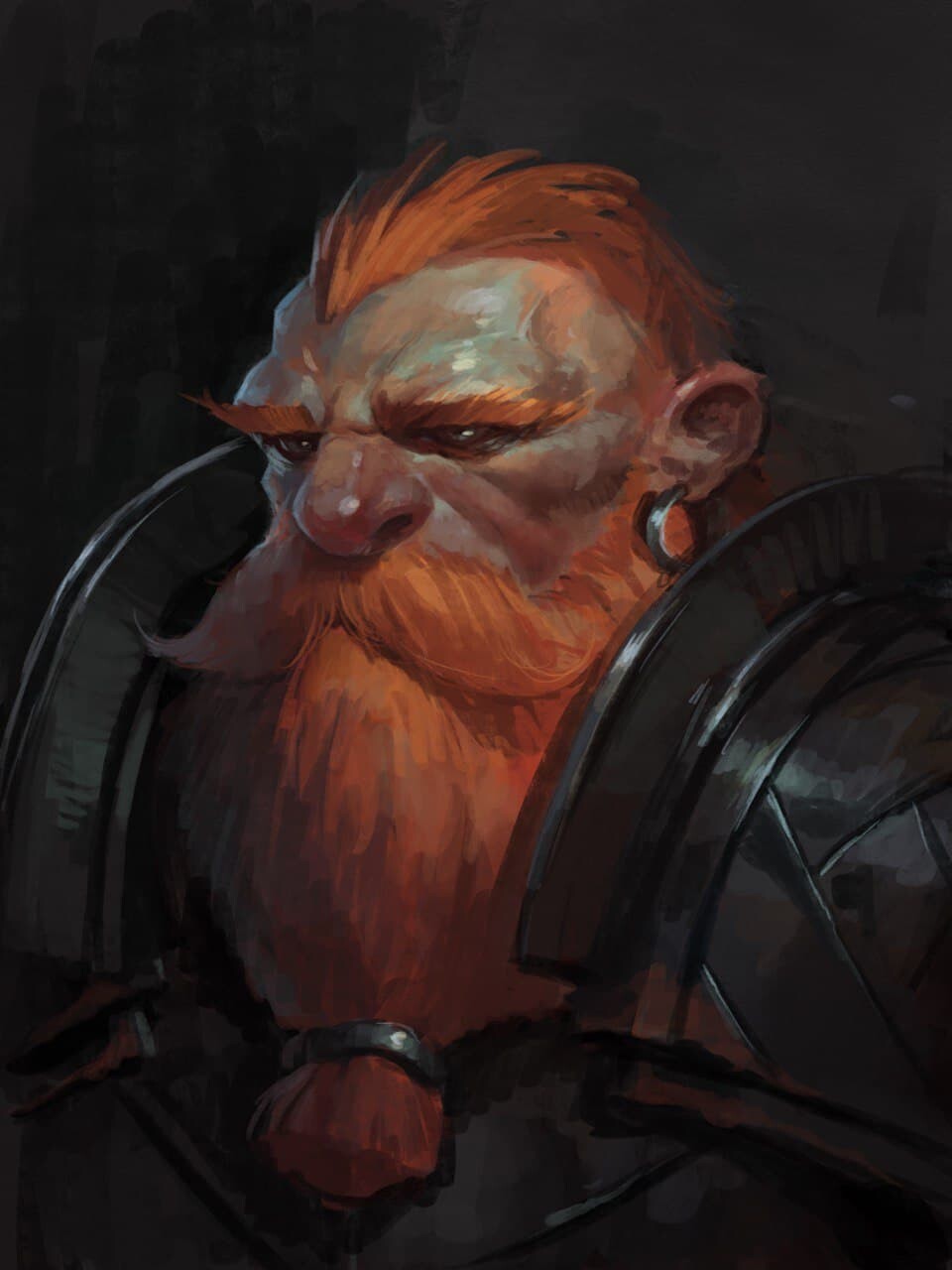
Nestled in the mountainous reaches of Vurturum, Daeruin, and Mistvall, the Mountain Dwarves are a hardy people known for their strong sense of honor and stubborn attachment to traditions. Like other dwarves, they are best known for their stout stature, sturdy builds, and great beards, though Mountain Dwarves are visually distinguished by their lighter skin and hair colors. Much like their rugged homelands, they can be rather cold, especially to outsiders. They are a suspicious people, slow to forgive, and famously stubborn, especially when it comes to oaths and vengeance. If a Mountain Dwarf gives her word, it can be expected to be taken to the grave and beyond, with generations of dwarves clinging to oaths longer than their memory. It is an old joke among the Mountain Dwarves that half their family rivalries are unresolved because no living dwarf recalls the slight or by whom it was committed. All public oaths are recorded in the ledgers of the lords of a particular keep. In their culture, oathbreakers face ridicule and are followed by mistrust for the rest of their days. A reclusive people, Mountain Dwarves prefer to build sturdy stone fortresses in the highest reaches where they can remain safe from outside influences. Mountain Dwarves are well known for their skill as miners, smiths, and warriors, preferring to battle in unified, regimental units protected by heavy armor and making use of hammers and axes. While the arcane arts are not their strong suit, there have been many skilled artificers and transmutation wizards from among their ranks, suiting their magic to the needs of dwarvish society.
Castle Kings
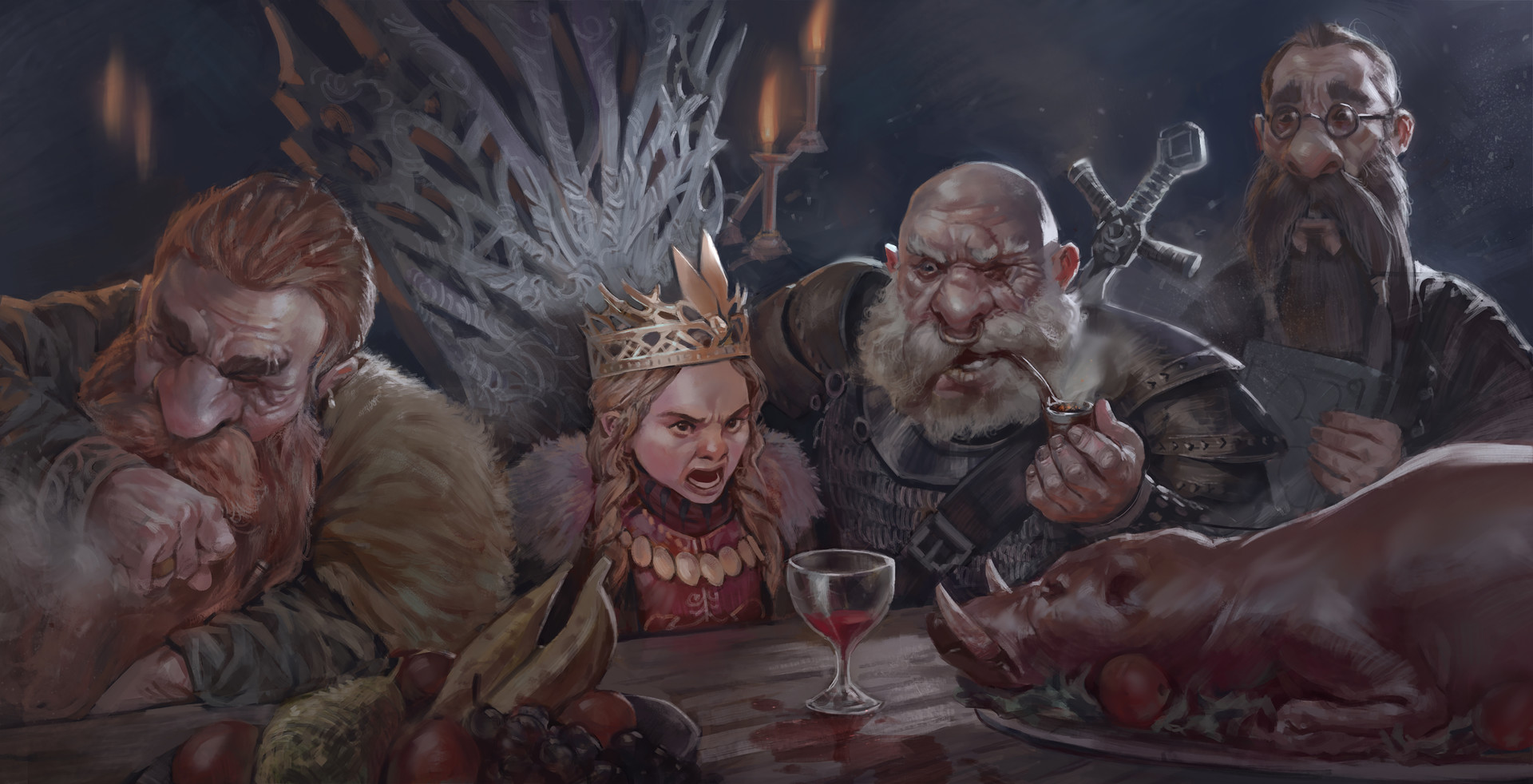
Mountain Dwarves are organized into clans, large kin-units of multiple families bound together by a common ancestor. Each clan is led by an elder who acts as head and is selected from among the heads of each family within the clan. The heads of each clan pledge their allegiance to a monarch, generally chosen through a moot from among the most powerful clan leaders. If the clans withdraw their allegiance, a monarch's rule loses its legitimacy. Oaths, whether promises to keep one's word or vows of vengeance, are often considered a family affair. Therefore, a Mountain Dwarf is not keen to give her word lightly, knowing it will be taken gravely seriously by the rest of the culture. This complex system of kin loyalty and oaths is the basis for Mountain Dwarf society and power structures. Despite the Mountain Dwarven obsession with oaths, honesty, and loyalty, a slight against their family is the kind of thing to make one of their kind abandon an alliance. Others may consider it a point of mockery and accusation of hypocrisy, but to their people, there is no contradiction in the hierarchy of loyalty being clan, then king, then outsider. Short of that, though, Mountain Dwarves can be expected to be trustworthy, honor-bound, and loyal to their kin, liege, and companions, even when times are tough.
A People Scattered
They rarely leave their homelands willingly, often going their whole lives without going very far outside their stone walls. While Vurturum is the primary kingdom for the dwarves in general, Mountain Dwarves can be found in even further northern regions such as Daeruin and Mistvall. In their native Vurturum, the Mountain Dwarves live in castle cities amidst the mountains, often contending with bands of Orcs and Goliaths for control of the territory. Their kingdom is in uneasy union with the Deep Elves who live beneath them in the Underdark, making for complicated bedfellows, especially around the area of mining rights. In the Empire of Daeruin, they are the original inhabitants of Duervale, an ancient Dwarven stronghold put to the torch over a century ago by the Dark Elves. A brutal siege and ethnic cleansing removed their people in large part from the city, forced to wander around the empire. Some remained in Duervale to rebuild what was lost, but without the master builders and smiths who maintained its structures, Duervale has taken on a strange blend of Dwarven foundation and Dark Elven finish. In Mistvall, the Mountain Dwarves have called the most northern reaches home for generations and have often sought a peaceful, if isolationist accord, with the Snow Elves, at times having to band together with their Elven neighbors to resist the Northmen and defend their shared homeland. Wherever Mountain Dwarves wander, they tend to live around high peaks where they can found defensible settlements and engage in mining operations.
Naming Traditions
Feminine names
Belmera, Torvia, Brynthel, Taslyn, Maerwin, Gwyngalia, Barmora, Anselle, Bardeth, Mistnura, Mysglia, Gemnyl, Myrri, Tazdeth, Ingmyla, Lasmora, Broltyn, Nallin, Kathnyl, Marmora, Bretmyla
Masculine names
Darbek, Tordrus, Bharmyl, Bramrus, Emdrak, Thormor, Ranmire, Galnar, Gralmund, Urmdal, Dulmir, Bharrim, Bhalmund, Morrig, Hjolmond, Thalmund, Hulkohm, Emrig, Brangrum, Galdir, Baergrim
Family names
Family names are typically taken from a recognizable deed, trait, or legend about the ancestor who started the clan.
Thunderhorn, Giantbelt, Frostblade, Hardstone, Goblinhold, Mountainhand, Grayhand, Stonehammer, Broodtale, Burrowbrow, Lightdelver, Darkforge, Bigmane, Strongaxe, Bravebane, Firetankard, Bronzeanvil, Thunderguard
Culture
Art & Architecture
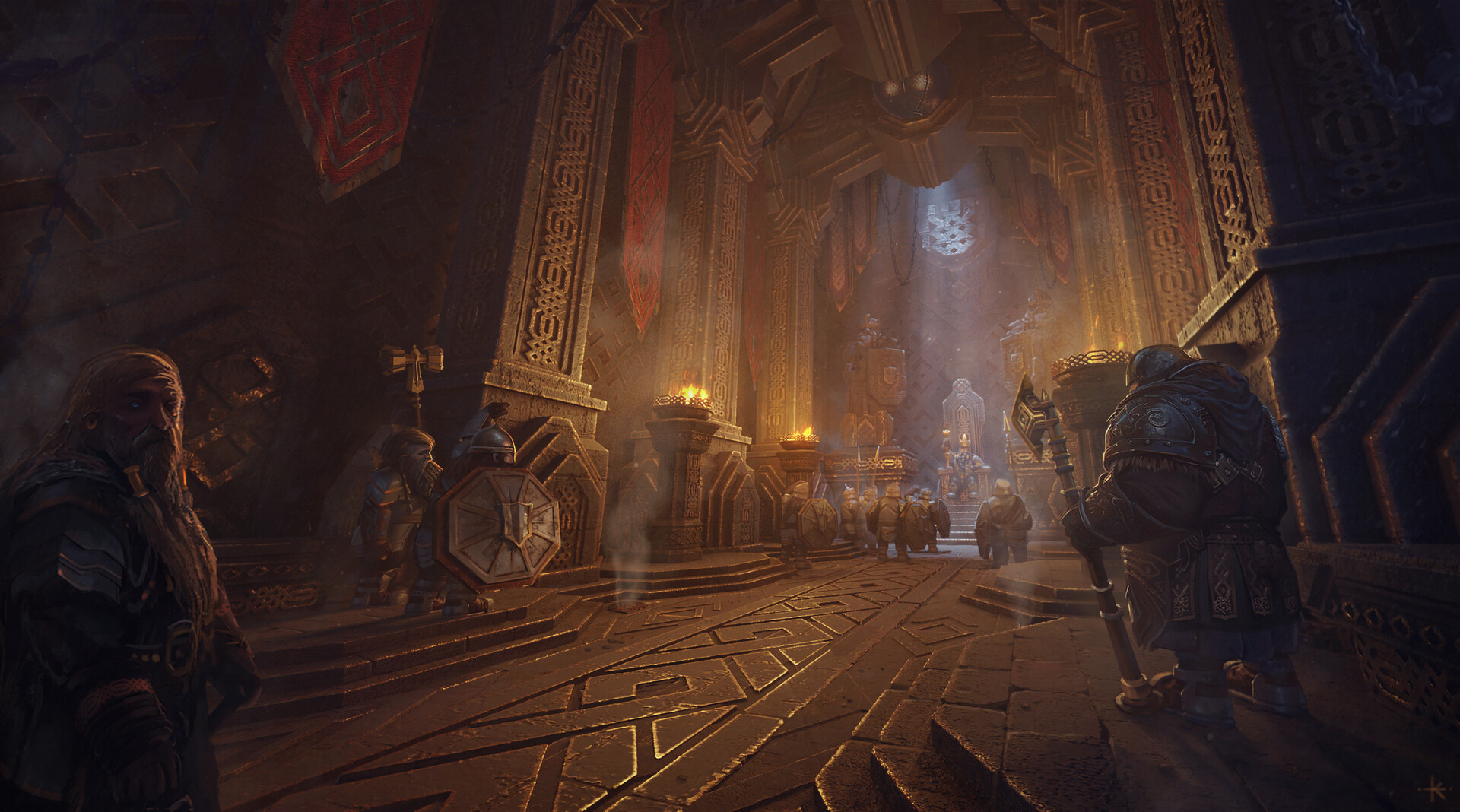
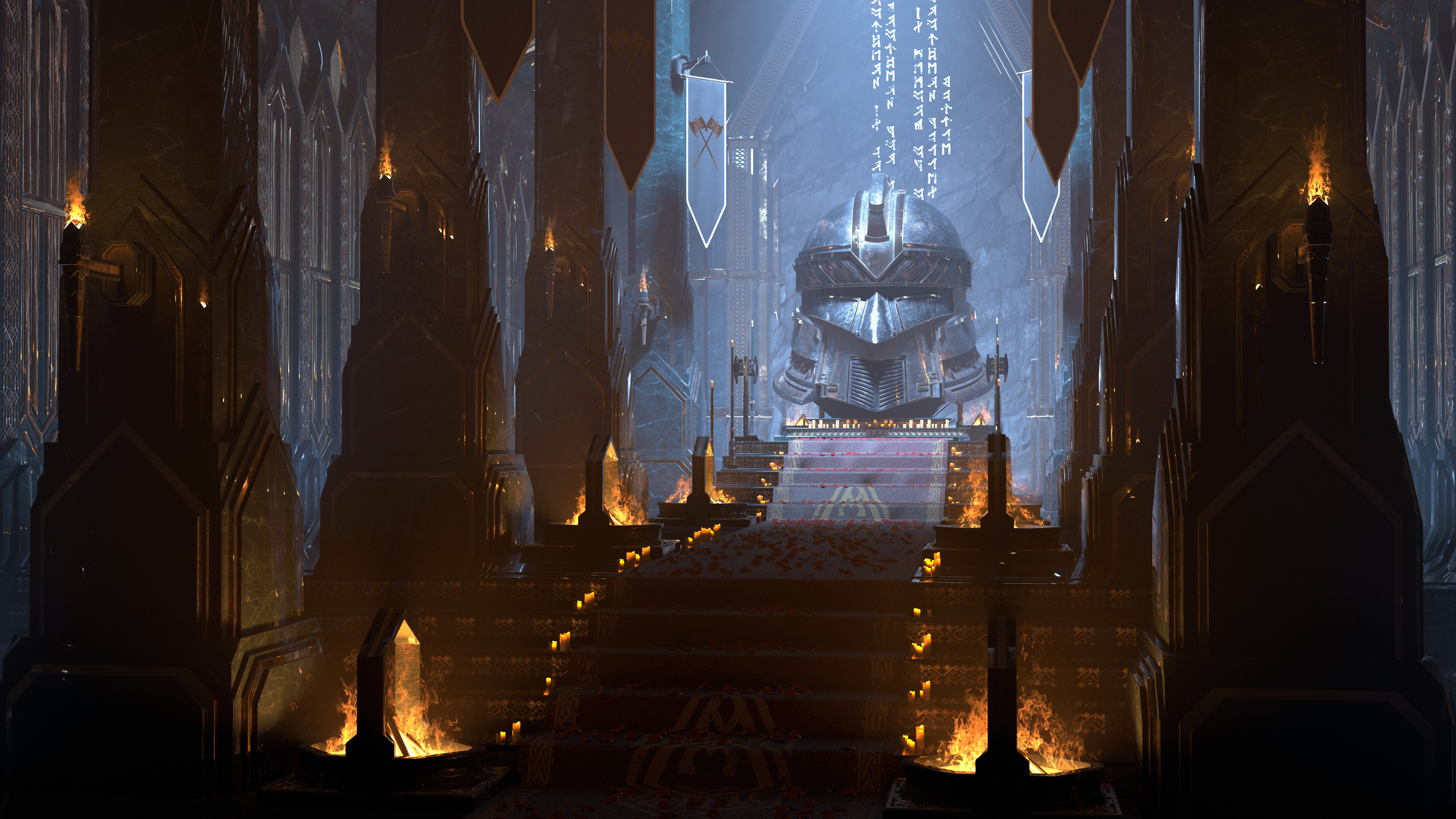
A race of stonecutters, Mountain Dwarves are the most skilled mountain civilization when it comes to building upon the land. Dwarven architects carve hewn homes out of the very mountains themselves, chiseling the faces into beautiful homesteads hollowed out inside the mountains. They also build along the roads and rocky lands around the mountains. Mountain Dwarf architecture tends to be focused on defensibility, thus even simple homes resemble miniature castles in their style. Mountain Dwarves rarely use wood in their building, especially the exterior, as their lands rarely have many trees, and they're usually used for firewood. They make significant use of stone. Mountain Dwarves are well known for their expertly crafted fortresses, great halls, and complex walls capable of fending off any assailant.
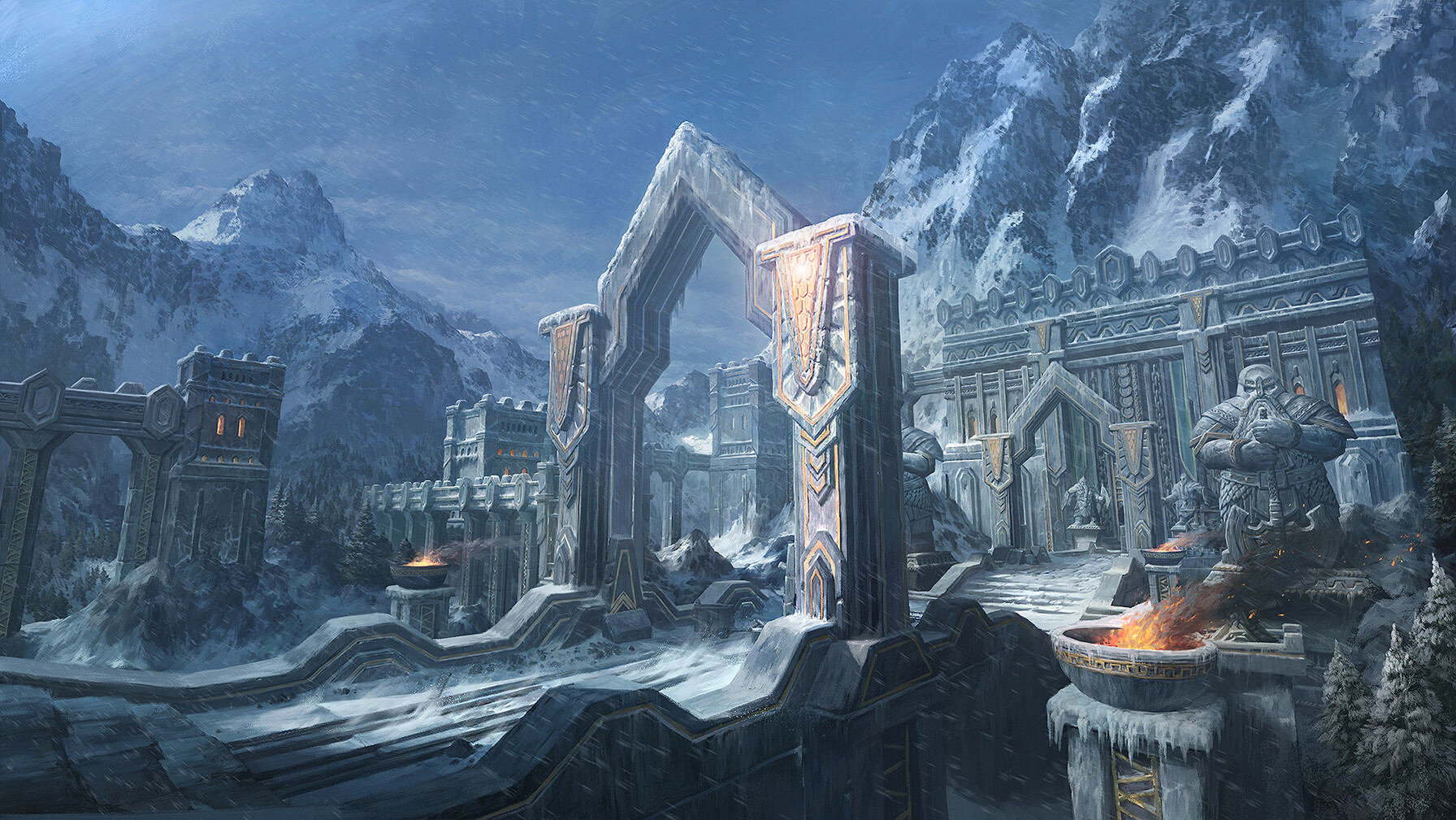
They craft and display art of many forms, from jewelry to poetry to well-decorated smithing, but no art form is as beloved as stonecutting. Through stone, Mountain Dwarves carve stalwart statues that stand the test of time and tapestries that tell the story of their great deeds. While stone is almost always the primary material, they like to embroider pieces with precious gems, especially quartz, diamonds, and emeralds, as well as metals, usually gold, silver, or steel dyed blue or brass. Mountain Dwarves often wear necklaces, amulets, rings, piercings, and metal accoutrements in their hair. Despite the reputation for mastery over stone, they are also skilled when it comes to crafting clothes. Fine silk robes, ornate jewelry, and gleaming crowns are among the fine clothes worn by Mountain Dwarves.
Foods & Cuisine
As a mountainous people who typically avoid dealing with outsiders if possible, Mountain Dwarves usually produce their own food using local resources. In their frigid lands, farming is quite difficult, though possible through some traditional Dwarven means that are kept secret from other nearby races to discourage them from attempting to seize Dwarven farmlands. They have managed to cultivate fungal crops that only grow under a particular dim light produced by Underdark lichen, which itself is also edible. This is mostly accessible to the Mountain Dwarves of Vurturum who have access to trade with the Deep Elves. Otherwise, Mountain Dwarves typically engage in animal husbandry, raising yak, goats, and bighorn sheep that feel at home in their mountainous steads. There are also strains of potatoes and barley that can effectively grow in the rocky, rugged conditions. Mountain Dwarves are known for their love of alcohol, whether beer, ale, or mead. Mead halls and breweries are common across their cities, and there are entire clans dedicated to the cultivation of these beverages. Wine is not popular in their culture as it's considered a foppish drink.
Funerary and Memorial customs
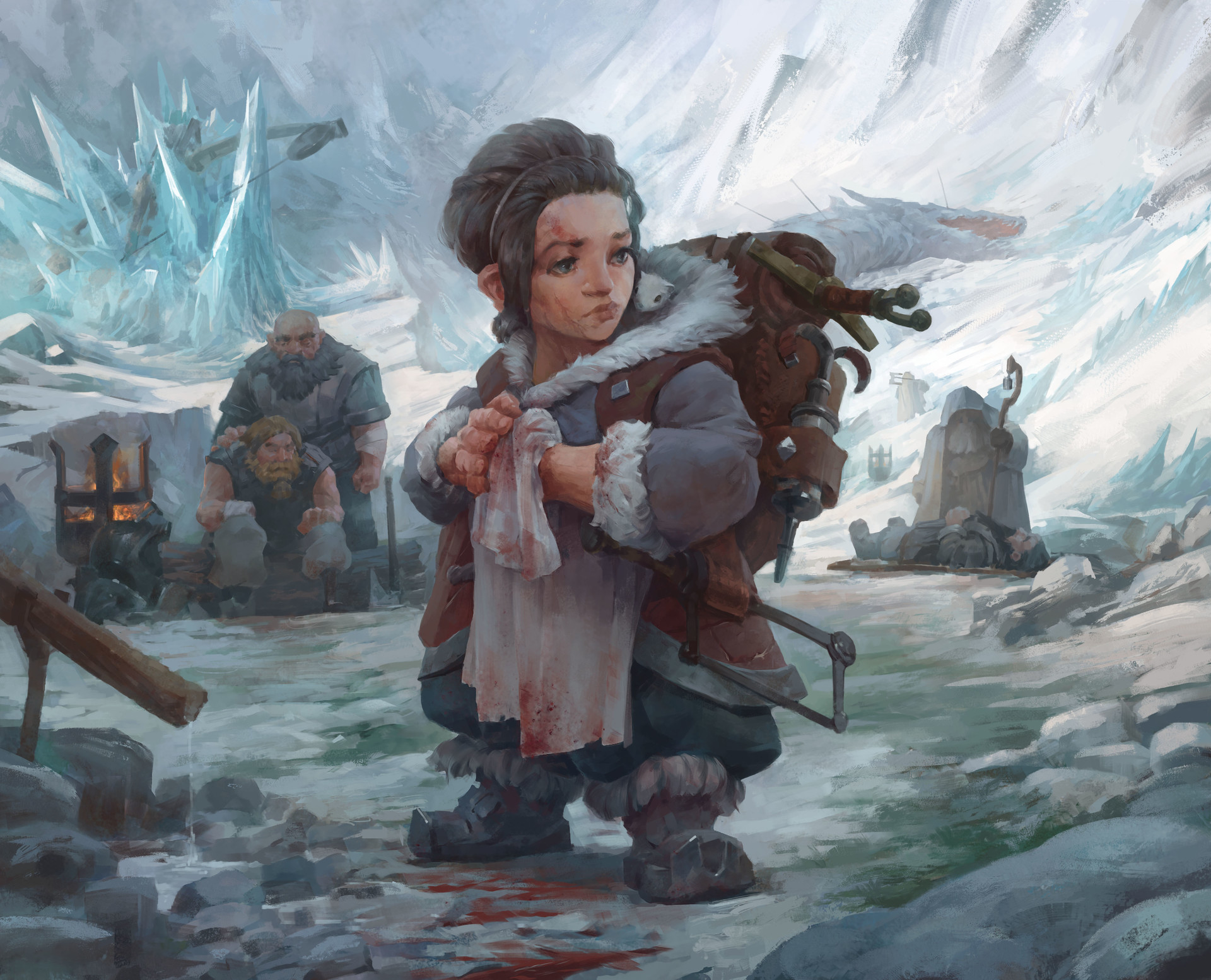
Traditionally, Mountain Dwarves dispose of their dead by cremation to honor Sabosa, the Goddess of Fire. Their legends also say that powerful Dwarven spirits survive the fire and travel to power the forge of Basorus, Craftsman of the Ten Divines. When a Mountain Dwarf dies, a funeral is held in short order, attended by friends and family. It is expected that any remotely close family should attend. The mourning period may last up to two weeks for close family, during which time oaths may be waived. It is customary for a grieving Mountain Dwarf to stoically withstand the pain of the loss and find ways to honor the memory of the departed. Mountain Dwarves don't have strong traditions regarding the afterlife, it remains an open question among their people.
Ideals
Beauty Ideals
Mountain Dwarves idealize robust bodies, strong features, and thick hair. Regardless of gender, Mountain Dwarves appreciate a great mane of hair, often in elaborate braids and outfitted with plates, rings, and chunks of metal for accoutrement. Some women among their people can grow beards, even rivalling that of the men, a feature often mocked by outsiders but considered just as beautiful among the Mountain Dwarves. While women are quite free to present in ways some might consider masculine, the same is not true in reverse. Mountain Dwarven men are expected to ooze masculinity in their presentation and behavior and it is more socially grievous for men than women to deviate from traditional gender norms.
Gender Ideals
Mountain Dwarves espouse certain universal ideals of honesty, courage, and intelligence regardless of gender. However, men are expected to be skilled in at least one craft, ideally more, whether smithing, stonecutting, jewel carving, and so on. Women, on the other hand, are expected to work in the domestic space, often being skilled cooks, brewers, lorekeepers, and weavers. Some women reject these ideals and take up steel as warriors, adventurers, and even conquerors, demanding respect on equal footing by force. Despite battle as occupation being more common for men, whether as soldiers or sellswords, when it comes to defending the homeland, the Mountain Dwarves believe in the notion of all hands on deck. Beyond these distinctions, women are often the keepers of family traditions, passing them from mother to daughter. It is often said that men are too busy fighting over oaths, so the business of keeping traditions alive is women's work.
Courtship Ideals
As with many aspects of Mountain Dwarven life and culture, courtship is ideally done without delay and without too much ceremony. Families often consult a match maker, usually an elder woman with a keen awareness of the word on the street concerning romantic availability. A Mountain Dwarf interested in another will often present their love interest with a special piece of jewelry or adornment, whether an amulet, a circlet, a ring, or so on. This adornment should feature three distinct gems: two stones representing both individuals, as well as a third representing their bond. Ideally, a Mountain Dwarf makes this by their own hand; commissioning it is seen as bad form, especially since any Mountain Dwarf worth their salt is expected to have at least passable skill in a trade useful for this kind of creation. Mountain Dwarves are not very likely to be casual in their love life, preferring to court a single person with the express intent of marriage and family rather than personal whim.
Relationship Ideals
Relationships tend to include quite a bit of family involvement among the Mountain Dwarves. Marriages are not a simple union of two souls but a joining of two families. Relationships often include sharing of wealth and connections between family. As such, marriage rarely crosses class boundaries. While polygamy was known to the Mountain Dwarves in ancient times, the practice is nearly dead today, with monogamy being seen as more true to one's word and the special bond that keeps families close. The role of relationships is primarily bringing forth new generations of youth to carry on the traditions and work towards the betterment of the family. Mountain Dwarves feel and express love same as anyone else, though they tend to see marriage as a life-long commitment through which love may come later. It is often said love is not a fit of whimsy but a castle two people build stone by stone.
Comments