
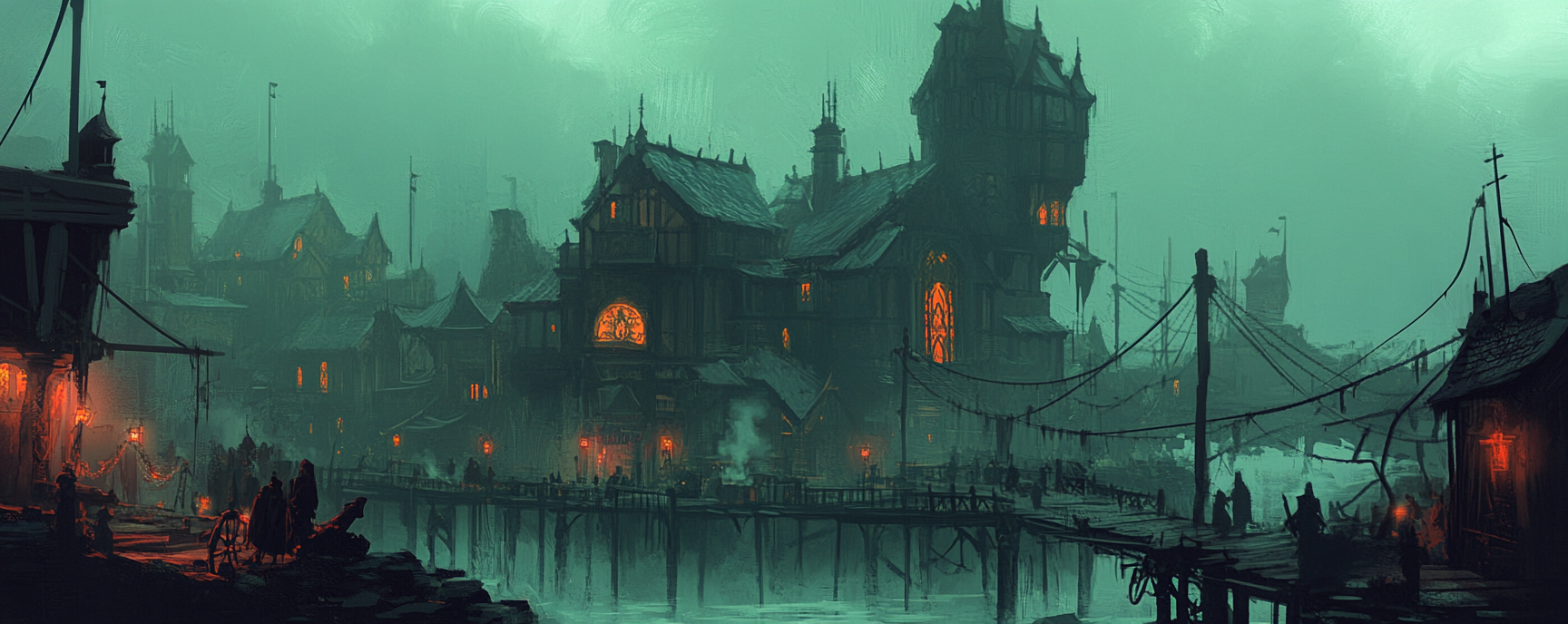
Thalos Mire
Thalos Mire is a large and robust settlement nestled within the stagnant wetlands of the lowlands. Founded nearly a century ago by exiles and wanderers who sought refuge from their former homeland, the town has endured both the hardships of the swamp and the burdens of its overcrowded streets. Though damp fog rolls in from the waters and strange noises echo across the marshes, the people of Thalos Mire have carved out a thriving life here.
With nearly 6,000 residents and close to 1,500 standing structures, it is a bustling hub of production and trade, famous across the region for its unique methods of shipping goods—rafts guided by long poles through narrow channels, swamp-runners carrying cargo by stilts and ropes, and even aerial gondolas stretched across watchtowers and cranes.
Founding & Origins
The town’s name comes from two words in Old Tongue: Thalos (meaning “endure” or “withstand”) and Mire (reflecting the swamp they settled in).
Its founders were exiles, either forced out or leaving by choice after conflicts tied to faith, politics, or blood-feuds. They found the swamp unforgiving but defensible, with plentiful timber and waterways. It was Ara, Goddess of Nature & Travel, that many claim guided them here—though some whisper that Baros, God of Balance & Wanderers, had a hand in their journey.
Setting & Theme
Style: Gothic Horror with Ancient Greek undertones. Stone colonnades rise from the muck. Carved statues of forgotten heroes lean into the mist. The swamp air is heavy, filled with the smell of pitch, sawdust, and burning lamps.
Faith: The Luminous Covenant dominates daily life. Shrines to Zemros (sunlight and healing) and Ara (nature and travel) are common, though Kiltris, Goddess of Death & Weakness, is quietly feared and given offerings to ward off swamp fevers and misfortune.
Physical Layout
Walls & Defense: The town is surrounded by a sturdy wooden palisade reinforced with stone, patrolled by a Town Watch along its raised walkway. The main gate is barred at night, but left open under watch during the day and evening. Scattered watchtowers dot the perimeter.
Market Square: Ample space for vendors. Stalls are auctioned off by bid before market day. Overflow merchants are banned, and guards enforce the rule strictly.
Architecture: Buildings are robust—wooden beams, swamp-stone foundations, moss creeping across walls. Rope bridges and narrow causeways connect districts across waterlogged channels.
Community & Culture
Population: ~6,000 in-town residents, with an additional 20% overflow living outside the walls in tents, huts, and makeshift camps.
Density: Crowded—streets are tight, inns are packed, and bumping shoulders in the square is expected.
Nightlife: Active—inns, taverns, and gambling dens run deep into the night. The streets remain lit by lanterns and magical glyphs near temples.
Disposition to Outsiders: Neutral—locals are wary but not hostile. Visitors must prove their worth before trust is earned.
Economy
Priority: Production & Movement of Goods.
Specialty: Innovative Shipping Methods—floating barge caravans, pulleys across swamp channels, gondolas between towers, and trained swamp-runners who deliver goods on foot with uncanny speed.
Resources:
- Logging Camps deep in the marshes provide lumber, pitch, and resin.
- Stone Quarries in the dry uplands yield limestone and slate.
Prosperity: Very Successful. The town is wealthy, drawing droves of merchants and visitors, which only adds to its congestion.
Wealth of Population: Average, with most living modest lives. Wealth concentrates in merchant families, barge captains, and guild leaders.
Governance & Law
Leadership: A Mayor, chosen by vote every decade, presides over Thalos Mire. The current mayor is Gwendry Holt, a polite, wary, and pragmatic man of trade who balances the demands of the merchant guilds and the common folk.
Law Enforcement: The Town Watch, led by Captain Lysandra Veyra, keeps order. They are competent but stretched thin by the crowds and influx of travelers.
Crime: Average. Pickpockets, black-market smugglers, and tavern brawls are common. Organized crime exists but keeps its head down, careful not to draw the wrath of the mayor or the watch.
Religion
Faith in the Luminous Covenant is woven into daily life:
Zemros – Sunstones and lanterns burn in his name. His light is prayed to for protection against swamp-born plagues.
Ara – Travelers whisper her name when setting out into the bog. Pilgrims to her shrines bring reeds, flowers, or animal bones.
Baros – Outsiders and wanderers find comfort in his shrines at the edges of the town. His priests often mediate disputes.
Kiltris – Though not openly worshiped, she is feared. Offerings of black feathers or carved bone trinkets are quietly tossed into the waters.
Notable Locations
Non-Commercial
The Dueling Grounds (Outdoor Recreation Area): A wide, marsh-drained plaza of gravel and stone. Here locals eat, gossip, and host public contests of sport or honor duels—some of which end in blood.
Oratory of the Covenant: A modest hall of whitewashed stone, where common folk gather for intimate prayers and sermons. Its walls are adorned with murals of Ara guiding exiles through the swamp.
Sanctuary of Zemros: The grandest structure in Thalos Mire, this towering temple houses hundreds. Stained swamp-glass windows catch the light, while its priests maintain the eternal sunfire that burns upon the altar.
The Courthouse: A stern, columned structure where disputes and trials are held. Justice here is often swift, sometimes harsh, but intended to preserve order in such a crowded place.
Commercial
The Marshlight Atelier (Artist): Painters and sculptors capture both beauty and horror of the swamp. Their works are prized for their haunting qualities.
The Eel-Eyed Oracle (Soothsayer): A crooked hut on stilts, its owner reads fate from swamp water, stars, and entrails. Many believe she channels Qharos, God of Fate.
Greve’s Cobbling (Cobbler): A cramped shop forever smelling of leather and pitch, making waterproof boots essential for swamp survival.
The Laughing Reed (Club): An entertainment hall where traveling troupes and local dramatists perform. Nights resound with tragic plays, ribald comedies, and mournful songs.
Oven of the Dawn (Baker): Beloved for its sun-baked loaves and swamp-root pastries. The baker lights the ovens each morning in honor of Zemros.
The Cloak & Needle (Tailor): Offers both practical garb for swamp life and elegant cloaks for wealthy merchants. Known for its spider-silk embroidery.
The Loomed Basket (Weaver): Produces fabrics, nets, and reed baskets. Particularly known for its durable swamp-weave cloaks.
The Mire-Mart (General Store): A crowded but dependable shop for daily goods—candles, rope, dry food, and more.
The Drowned Stag (Inn): Famous for its hearty meals and warm baths. Always crowded, but always welcoming—if you can afford the bed.
Amberflask Alchemics (Alchemist): Brews potions, poultices, and swamp-based tinctures. The alchemist is rumored to experiment with forbidden mixtures whispered in Kiltris’s name.
Life in Thalos Mire
Sights & Smells: Smoke from tar kilns, the reek of damp reeds, the tang of leather and sweat.
Sounds: The slap of water on hulls, the creak of rope bridges, vendors shouting bids in the marketplace.
Daily Rhythm: The swamp makes farming difficult, so much of the town’s labor is tied to resource harvesting and shipping. Barges leave at dawn and return at dusk, while the night belongs to taverns, gamblers, and travelers.

Comments