
Flashback - Another Flooded Temple
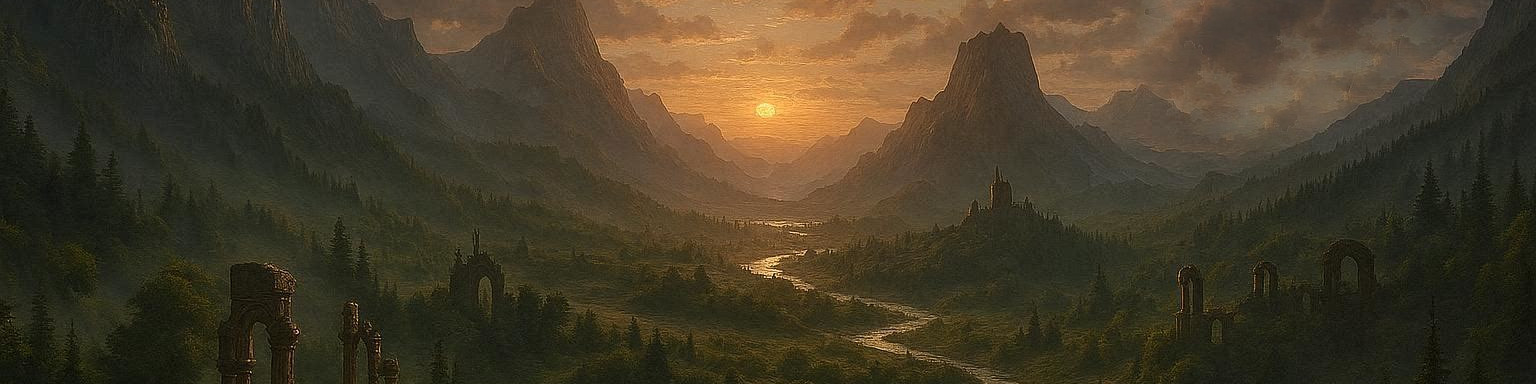
The morning light filtered weakly through the canvas awnings of the forward camp, turning the brass‑lined entrance of the ruin into a muted gold. Thalan stood at the threshold, arms folded, studying the water that now pooled across the first chamber. It hadn’t been there yesterday. The ruin had shifted overnight - water seeping up from unseen channels, turning the lower corridors into treacherous, half‑submerged hazards.
Around him, members of the Aelinthar Institute of Historical Inquiry murmured anxiously. Their equipment - survey rods, ever‑lamps, parchment rolls - was stacked in careful piles, ready but unused. Kiara hovered near Thalan’s side, clutching a notebook to her chest. She was young, brilliant, and earnest, with a habit of leaning forward whenever Thalan spoke, as though his words carried gravity she couldn’t afford to miss.
“The flooding isn’t random,” Kiara said, pointing to her sketches. “The water’s rising along the southern axis. If the lower chambers are connected to a cistern or an underground spring...”
“It means the supports could be compromised,” added Senior Archivist Mereth, his voice tight. “We should halt the dig until we understand the structural changes.”
Others chimed in - some cautious, some impatient. The ruin was unlike anything the Institute had catalogued: brass‑framed doorways, ancient elvish script in archaic dialects, hints of ritual architecture that predated most known sects. Every hour they delayed risked losing information to the shifting water.
Thalan listened, weighing each voice. He felt the familiar pull - the responsibility to protect his team, and the irresistible lure of discovery. The inscriptions they had uncovered hinted at a forgotten lineage of elven spiritual practice. If they stopped now, the ruin might collapse or flood entirely before they could learn its secrets.
Kiara stepped closer. “Thalan… I know what this site means. But if the water keeps rising, it could get very dangerous.” Her eyes held both fear and a quiet, unspoken hope that he would choose caution.
Thalan exhaled slowly. “We continue,” he said at last. “But no one goes anywhere alone. Every corridor is checked twice. If anything shifts, we pull back immediately.”
There was tension in the air, but also resolve. Kiara nodded, though worry lingered behind her smile. The team gathered their gear, unshuttered their ever‑lamps, and followed Thalan into the flooded dark.
The deeper chambers were colder, the water swirling around their boots as they advanced through narrow hallways lined with brass plates. The ruin groaned occasionally - ancient stone adjusting to new pressures. Thalan kept the team close, checking every step, every ceiling seam, every pillar.
They reached a wide chamber supported by four massive columns. Water pooled across the floor, rippling with each movement. Thalan was documenting a wall relief - an intricate depiction of elven figures in ritual procession - when a low, resonant crack rolled through the chamber.
Everyone froze.
The ceiling shuddered. Dust drifted down like pale snow.
Then the world broke.
A thunderous roar filled the chamber as the ceiling split open. Stone slabs crashed down, pillars buckled, and the floor lurched sideways as water surged violently. Two researchers - Lethar and Sira - were crushed instantly beneath falling debris, their cries swallowed by the collapse.
Kiara was thrown across the chamber, slamming into a pillar before a slab pinned her leg. She screamed, the sound sharp and panicked, echoing through the ruin.
Thalan didn’t hesitate. He waded through the rising water, shouting orders, pulling survivors toward the only stable corner of the chamber. The water climbed rapidly, swirling with mud and broken stone.
He reached Kiara last. Her face was pale, her breath ragged, her hands clawing at the stone trapping her leg. “Thalan—please—”
“Don't move,” he said, voice steady despite the chaos. With two others, he braced himself and heaved the slab upward. The stone shifted - just enough. Kiara screamed again as her leg came free, and Thalan dragged her clear just as another section of ceiling collapsed behind them.
The survivors scrambled out of the ruin, soaked, shaking, and carrying the weight of the dead. Thalan stayed until the last body was recovered, his hands trembling as he helped lift the fallen onto makeshift stretchers. Kiara was carried out on a litter, drifting in and out of consciousness, her fingers occasionally tightening around Thalan’s sleeve.
The ruin groaned once more behind them, then fell silent.
Weeks later, Thalan stood before the investigatory panel in the Institute’s marble‑lined hearing chamber. The air was heavy with expectation. Scholars reviewed reports, structural analyses, and testimonies. Kiara - still recovering, her leg bound in enchanted splints - had spoken in his defense, insisting his decision had been reasonable given the information at the time.
The panel agreed. Their verdict was clear: The collapse was an unforeseeable consequence of ancient instability and rising groundwater. Thalan had acted responsibly. No fault assigned. No reprimand issued.
But absolution did nothing to ease the weight in Thalan’s chest.
He left the chamber without speaking, walking through the Institute’s familiar halls - past the archives he had spend years perusing, past the lecture rooms where he had learned excavation techniques, past the courtyard where he had first met Kiara and encouraged her to join the expedition.
Outside, the air was cool. The Institute’s spires rose behind him, proud and gleaming, but they felt distant now - belonging to a world he no longer recognized.
Thalan did not return to archaeology. He resigned quietly, leaving the Aelinthar Institute and the work he once loved. The ruin’s collapse remained with him, carved too deeply to ignore, a reminder of the potential cost of a single decision.

Comments