

Ichthyocentaur
Basic Information
Anatomy
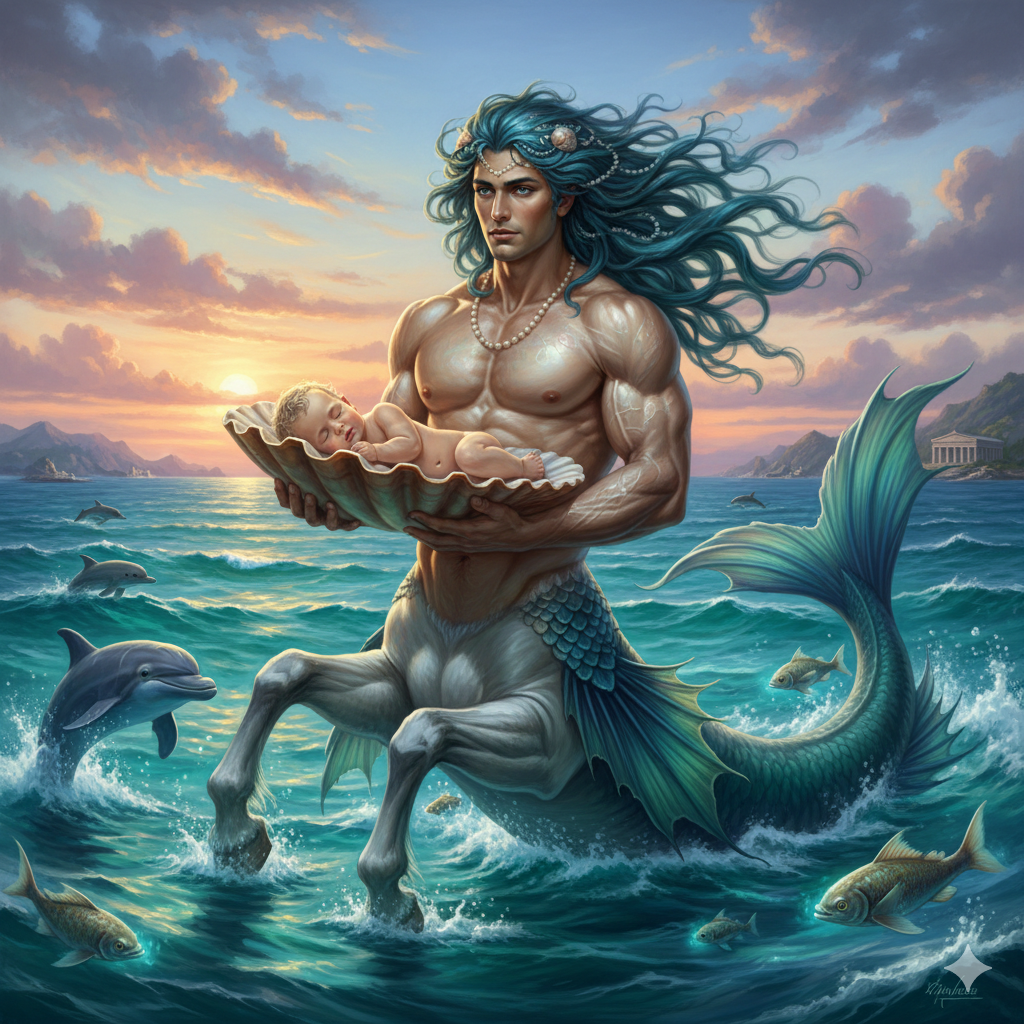
An Ichthyocentaur possesses the upper body of a human (from the head to the waist), the forelegs of a horse, and a magnificent, serpentine fish tail that replaces the hind legs and lower horse body. Their skin often has a slightly iridescent quality, like a fish's scales, especially on their human torso. Their hair can be wild and seaweed-like, or even blue-green in color.
Biological Traits
- Amphibious Nature: While primarily marine, their horse forelegs allow them to briefly traverse land or rocky shores if necessary, though they are cumbersome out of water.
- Hydrokinesis (minor): Some older or more powerful Ichthyocentaurs are rumored to have minor control over water, able to create localized currents or calm turbulent seas.
- Strength: Possess immense strength, easily capable of overturning small boats or wrestling with large sea creatures.
Genetics and Reproduction
Ichthyocentaurs are a distinct race, though their exact reproductive methods are shrouded in mystery. It is believed they reproduce in deep-sea grottoes, with the female laying clutches of eggs that are then fertilized by the male. The young hatch as miniature versions of their parents, capable of swimming almost immediately.
Growth Rate & Stages
- Hatchling: Emerge small, swift, and shy, clinging to their parents' sides.
- Juvenile: Rapid growth phase, learning to hunt and navigate complex currents.
- Adulthood: Reached by age 15-20, upon which they possess their full strength and wisdom of the seas.
Ecology and Habitats
Ichthyocentaurs are creatures of the open ocean, preferring the vast, deep waters where their powerful tails have room to maneuver. They frequent submerged mountain ranges, vast trench systems, and ancient coral cities, though they may occasionally venture into shallower coastal waters or even rivers, especially during storms or for specific quests.
Dietary Needs and Habits
As apex predators of the sea, their diet consists primarily of large fish, squid, and even smaller marine mammals. They are adept hunters, using their speed and agility to corner prey. They do not consume terrestrial food, finding it dry and unappetizing.
Biological Cycle
They are primarily nocturnal hunters, preferring the twilight depths. They engage in long migratory journeys, following schools of fish or changes in ocean temperature. They have incredibly long lifespans, rivaling minor deities, and seem to be immune to many terrestrial diseases.
Behaviour
Ichthyocentaurs are generally noble, wise, and benevolent beings, particularly towards sailors in distress. They are known for their calm demeanor but can be fearsome in battle, defending their territories or those under their protection with swift brutality. They possess a deep reverence for the ocean and its creatures.
Additional Information
Social Structure
Ichthyocentaurs tend to be solitary or live in small, familial groups rather than large clans. They hold deep respect for elders and powerful warriors. They acknowledge Poseidon as their ultimate sovereign.
Uses, Products & Exploitation
Their unique biology makes them largely unexploitable by mortals, though their scales or fragments of their fins might be sought by powerful mages for rare reagents. Their wisdom, however, is a treasure, and they might offer guidance to worthy heroes who brave the deep.
Facial characteristics
Their human faces are typically handsome and dignified, with piercing eyes that reflect the depths of the ocean. Sometimes their noses are broader, or their mouths wider, hinting at their marine nature.
Geographic Origin and Distribution
While first mentioned in connection to the eastern Mediterranean, particularly the Aegean, they are believed to inhabit all the great oceans of the world. They are rarely seen, preferring to remain hidden from mortal eyes.
Average Intelligence
Highly intelligent, often described as philosophical and possessing vast knowledge. They are skilled strategists and problem-solvers, capable of complex thought and communication.
Perception and Sensory Capabilities
Their human eyes possess excellent underwater vision, able to discern shapes and colors in the murky depths. They are highly sensitive to changes in water pressure and currents, which aids their navigation. Their horse-like ears are surprisingly effective at picking up subtle sounds and vibrations both above and below the surface.
Symbiotic and Parasitic organisms
They often have symbiotic relationships with dolphins and large whales, acting as protectors or guides. They are generally too swift and powerful to be plagued by parasites, though barnacles might occasionally attach to older, slower individuals.
Civilization and Culture
Culture and Cultural Heritage
Their culture is one of Exploration and Guardianship. They chart the deepest currents, protect marine life, and safeguard ancient underwater ruins. Their music is the song of the whales and the roar of the ocean
History
The Ichthyocentaurs predate many of the Olympian gods, having witnessed the shaping of the world. They served during the Gigantomachy, aiding the Olympians, and their ancient knowledge makes them living libraries of the sea.
Common Myths and Legends
The most famous account involves Bythos and Aphros, who are depicted in mosaics pulling Aphrodite's shell chariot from the sea. Other tales speak of them guiding lost ships through treacherous waters or battling monstrous kraken that threaten coastal communities.
From the waist up, they are powerfully built, resembling athletic humans. Their horse forelegs are muscular, and their fish tails are incredibly broad and strong, allowing for immense propulsion through the water. They are generally much larger than a human, with their full length (from head to tail-fin) easily exceeding 15-20 feet.
Comments