Yggdrasil
God of Time
Eldest, leaf-bearded, wind-dancer, cloud-crowned, knife-branched, bird-host, winter-toothed, age-rimed, well-drinker, rune-keeper
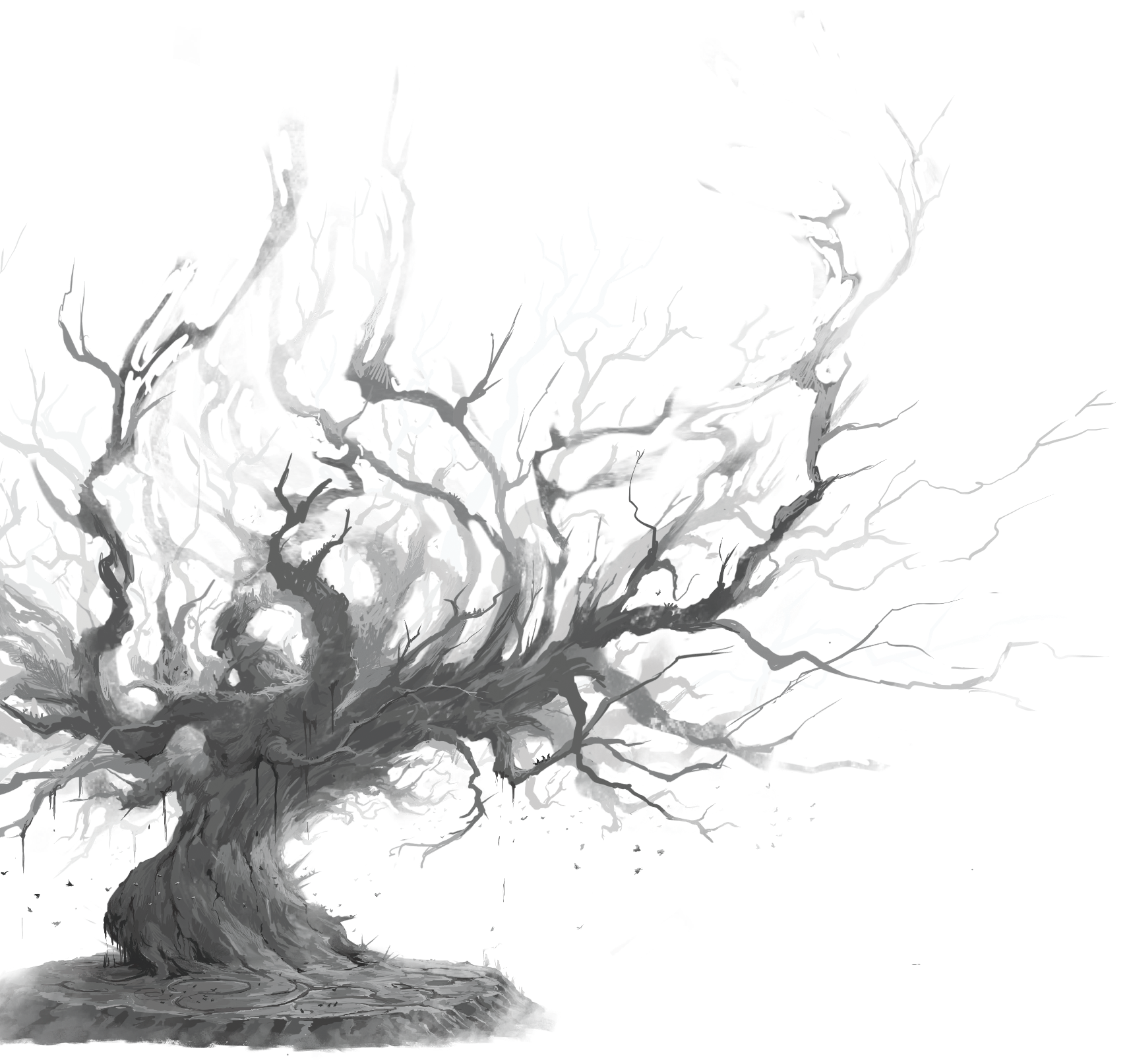
Yggdrasil was the God of Time and the most ancient of all beings. Many say that it was the first living thing in the world, the first to open the door from the invisible realm to the visible, the first to take root here and grow. Some said that time itself was the measure of its growth, and should it cease, time would end.
And it has ceased... almost.
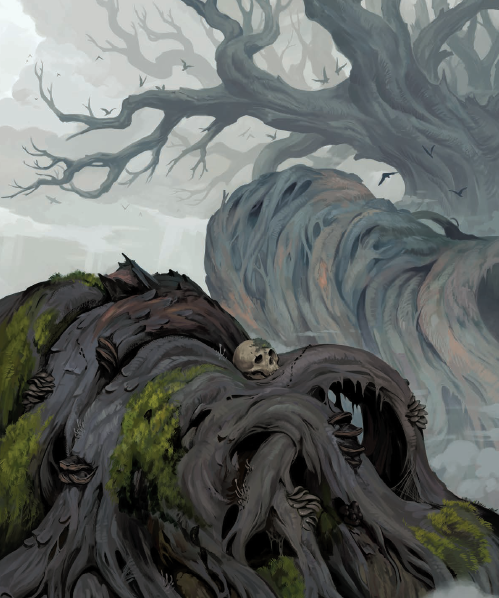
The World Tree was felled by the Oligarchs, but its broken stump, although poisoned and growing only twisted, blackened stalks, still holds a spark of life deep within. Unlike the other elder gods, Yggdrasil was rooted in this world: its body was a particular tree in a particular place. Even though its power extended to all plant life, that power was anchored in the mighty Ash of Thule—the very tree that bleeds its dark sap into the Od connecting all plant life. Yggdrasil now has new sobriquets: black-speared, poison-hearted, bug-hoarder.
Before it was struck down, Yggdrasil doled out to the world its due in measured form: the steady march of the seasons, epitomized by the growth and death of plant life. Yggdrasil was the Guardian of Thresholds, both metaphorical—the portals between the stages of life: birth, childhood, adulthood, elderhood, and death—and literal—its body was the locked door keeping separate the mortal and divine realms.
Of all the gods, Yggdrasil was the least wrathful and regarded mortals with the least disdain, especially its adopted jötunnkin. It respected knowledge and wisdom, and it rewarded those who displayed them. It gifted mortals with medicine hidden in herbs but also punished them with hidden poisons. Knowing which plant was which required mortals to study Yggdrasil’s works and hand down their lore to their descendants, keeping it alive over time.
Yggdrasil had the highest reach, as its branches stretched beyond the sky and into the sea of stars. The wind and clouds were its breath. The creatures of the air were closest to Yggdrasil. It is said that birds were born as leaves on the World Tree’s branches; when they fell in First Autumn, in their motley, Yggdrasil’s winds breathed new life into them, and they took wing. Birds still seek refuge in trees, a memory of their original bower.
Insects were born from its bark, and their shells still hold the hardiness of its petrified flesh. They spread its seeds across the world, epitomized by the ceaseless labor of its bees. Yggdrasil’s priests considered honey the most sacred of foods and honey-wine mead the most sacred drink.
Farmers honored Yggdrasil. A good crop yield meant it was content. When fields were fallow, they knew they had angered the god in some way—or someone had, and the culprit had to be forced to make amends. If no guilty party was found, a scapegoat had to stand in.
The first yield of the season was ever the primary means of sacrifice to Yggdrasil. When times were bad, however, a member of the community was urged to volunteer for sacrifice. If no one stepped forward, everyone’s name was placed into a basket. No name, not even the ruler’s, was left out. The sacrifice was fed a feast of cakes and wine, bathed, dressed in fine robes, and taken to the oldest known tree in the area, where they were nailed to its trunk. They were honored ever after, and their family received a portion of wealth from the community’s other families.
This tradition of selfless sacrifice continues in a twisted form today, as people answer the whispering call of the dying tree, traveling to its broken stump to impale themselves on its branches and be transformed into insectile things. These chitin-barked servants then skitter forth into the world, seeking more sacrifices for their dead god.
Macarn had it from Ardsley, who had it from Grimmor before him, who had it from Brynna the Silver-Shorn, that the Beetle-Blight had come in her time, and she knew the means for extracting sap from the First Tree that, when smeared on the stalks, drove the pests away and ended the famine.