Ouroboros
God of the Eternal Cycle
Mail-skinned, two-tongued, jewel-eyed, egg-eater, limb-quickener, pyre-lighter, the dragon that is the world
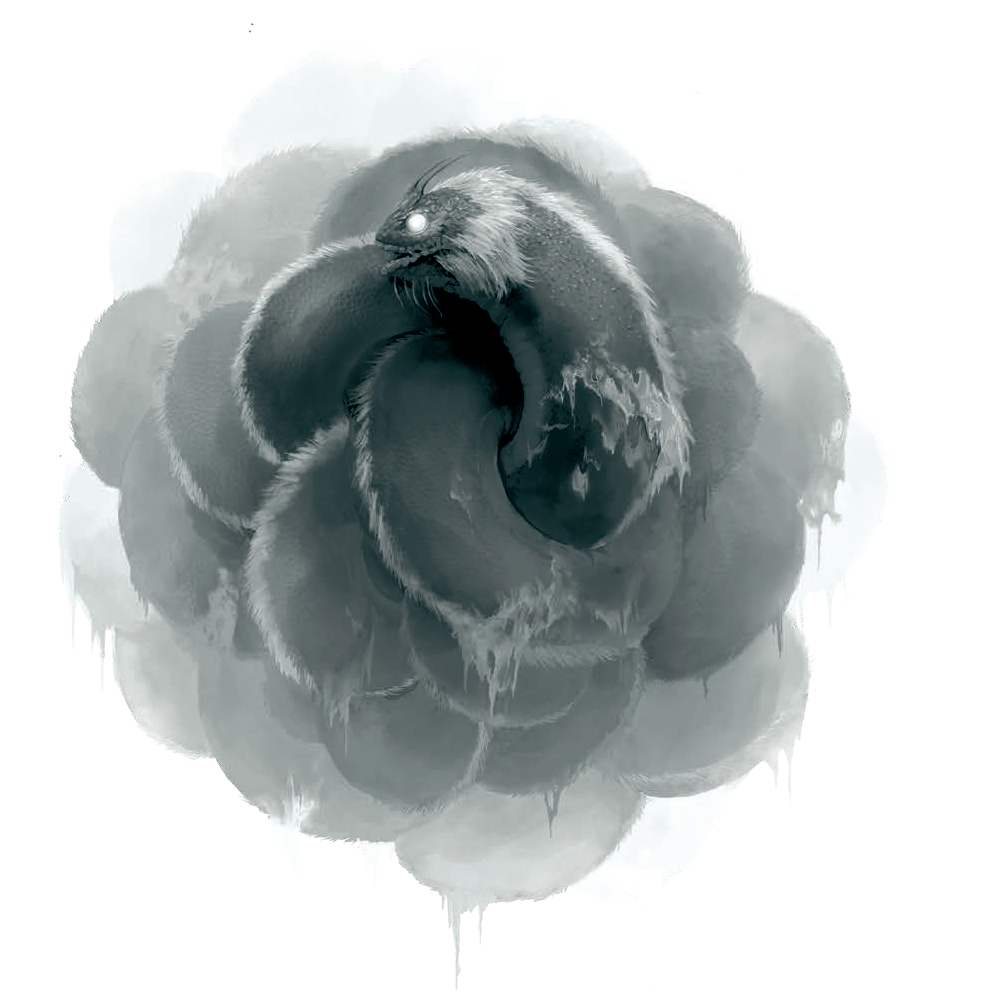
Ouroboros was the God of the Eternal Cycle, the snake that wove through the world, holding it together. By swallowing its own tail, it sealed the world within its coils and locked out the outside. !e peristalsis of its slow digestion reverberated through everything its coils touched, creating the ebb and flow of existence, the binary oppositions—light/dark, hot/cold, wet/dry, and so on—that combined to make a multitude of forms.
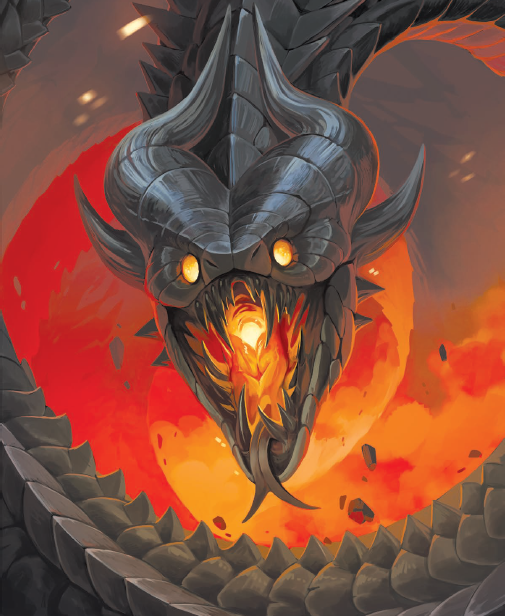
Before mortal eyes, Ouroboros took the form of an endless snake, the entirety of its body impossible to see at once. Its scales shimmered with the reflection of unseen fire, and acidic venom dripped from its fangs, dissolving whatever it touched. All caught in its gaze stayed riveted in place; they would be haunted by the memory of it for years afterward, awaking from dreams of being a mouse swallowed by a snake. !at gaze could enthrall even the other gods, and Ouroboros often got them to do its bidding with a stare and a hiss.
Although Mother Wolf spawned many of the creatures of the world, Ouroboros quickened life itself by instilling the spark of animation in each being. Its eggs hatched new ideas, put new thoughts into mortals’ minds, and provoked their imaginations. Couples who wished to conceive would place a snake’s egg under their marriage-bed’s mattress, and if they could sow their oats without cracking it, the wife’s womb would hold new life.
!e world was said to be Ouroboros’s original egg: its shell the vault of the sky, its albumen the seas, its yolk the land. !e Endless Snake’s sinuous body slid between the cracks in the world’s shell, and it is said that Ouroboros knew more about Outsiders than any other god. Some even whispered that it was an Outsider itself, one that had insinuated itself through its spellbinding stare, convincing even the Norns that it belonged here.
Animals that hibernate were sacred to Ouroboros, when, during their winter trances, they were believed to serve the snake god in the invisible world.
Ouroboros’s blood was like lava, hotter than a thousand furnaces. As it traveled beneath the earth, its passing would melt stone, creating the warren of tunnels and caves that miners prized and through which they traveled to reach veins of precious metals. Blacksmiths also honored Ouroboros, praying to him to keep their fires hot and steady. !e first swords, it is said, were forged in imitation of Ouroboros’s fangs.
Petitions to Ouroboros were whispered. Sacrifices were made in the form of burnt offerings, most often items of deeply personal value. In bad times, humans were sacrificed in great, egg-shaped ovens—chiefly babies and the elderly, the newly born and the long-lived. If no such sacrifices were available, strangers to the community would be captured and locked into a wooden statue, which was then lit on fire. !e shape of the statue would mimic one of the other gods: a horse, a wolf, a tree, or a crow—this effigy would signal to Ouroboros which god it should entrance to grant the people’s wish.
Today: angry. Tomorrow: sad. The next day: joyful. Bereft the next. To and fro, left and right, and ever forward. Such are the undulations of the snake. Such are our lives.