

Sainted authority
At the heart of the bishoprics, lies the sole reason that the system of family and god-given governance: The Sainted Authority. A tome said to be written by the Saints themselves, as they prepared to stand against the forces of Hell.
Sainted authority is not a book written by the saints, it is a book written by their mortal generals after they saw the cities of the very earliest form of the bishoprics fall. It is at it's heart a form of control, manipulating people into obeying the commands of a false god.
The route they decided on was replacing it.
Each chapter was written by a different author and contains a different part of the history of the saints.
Earlier stories are more accurate, such as the formulation of the states, and it begins to devolve into folk tales. Stories like this often feature mortal heroes from the Deitic war interacting with the saints, and tend to promote the idea of family.
From childhood where the stories are simplified in school, to adult life where it is a constant companion and a recommended source of comfort, and into old age, where the hope is that eternal salvation awaits from this very book.
 Then it moves on to more tellings of the achievements of both the bishoprics and the saints, gradually straying further and further from the truth, and closer and closer to propaganda.
Finally the book moves on to talking about the efforts of the sainted forces during the Deitic war. Depicting the forces of Hell as cheaters in order to explain why the divinely superior forefathers fell in battle.
It then is a piece of prophecy (or what it's designers may have called speculative fiction.) It predicts that the Bishoprics will reclaim their homlands, and hold them for ten thousand more years. Due to the schism, this did not happen.
It varies from group to group though, with devils obviously being the worst depicted. Then Coven and witches in general are depicted in a negative light. Then usually are the primordials, seen as lesser, fallen deities. And finally the regular Gods, who are depicted as having been replaced by the saints.
As an interesting side note, the book entirely ignores the existence of titans, only briefly mentioning battles with Mega-fauna, who it does not acknowledge as true deities.
These intresting interperations include:
Sainted authority is not a book written by the saints, it is a book written by their mortal generals after they saw the cities of the very earliest form of the bishoprics fall. It is at it's heart a form of control, manipulating people into obeying the commands of a false god.
Historical
Creation
Reasoning for creation
The higher-ups in the saint army during the Deitic war saw that their leaders, The Saints were beginning to fall in battle. So they were faced with an almost impossible question: What do you do when the basis for your society is literally dying in front of your eyes.The route they decided on was replacing it.
Formulation
The stories within Sainted authority originate from both folk tales and real tales of the Saints. The authors collected stories from both scholars of historical theology and their ranks. This resulted in the mix of folk tales and genuine story that permeates throughout Sainted Authority.Each chapter was written by a different author and contains a different part of the history of the saints.
The truth behind the stories
The stories vary in their authenticity, with the vast majority of the tales containing some degree of truth and some degree of fiction.Earlier stories are more accurate, such as the formulation of the states, and it begins to devolve into folk tales. Stories like this often feature mortal heroes from the Deitic war interacting with the saints, and tend to promote the idea of family.
Distrobution
Throughout the Deitic war, as more and more of the saints forces fell in battle, the early generals began to distribute early copies to their forces. This is what established the initial familial philosophy that unites the Bishoprics.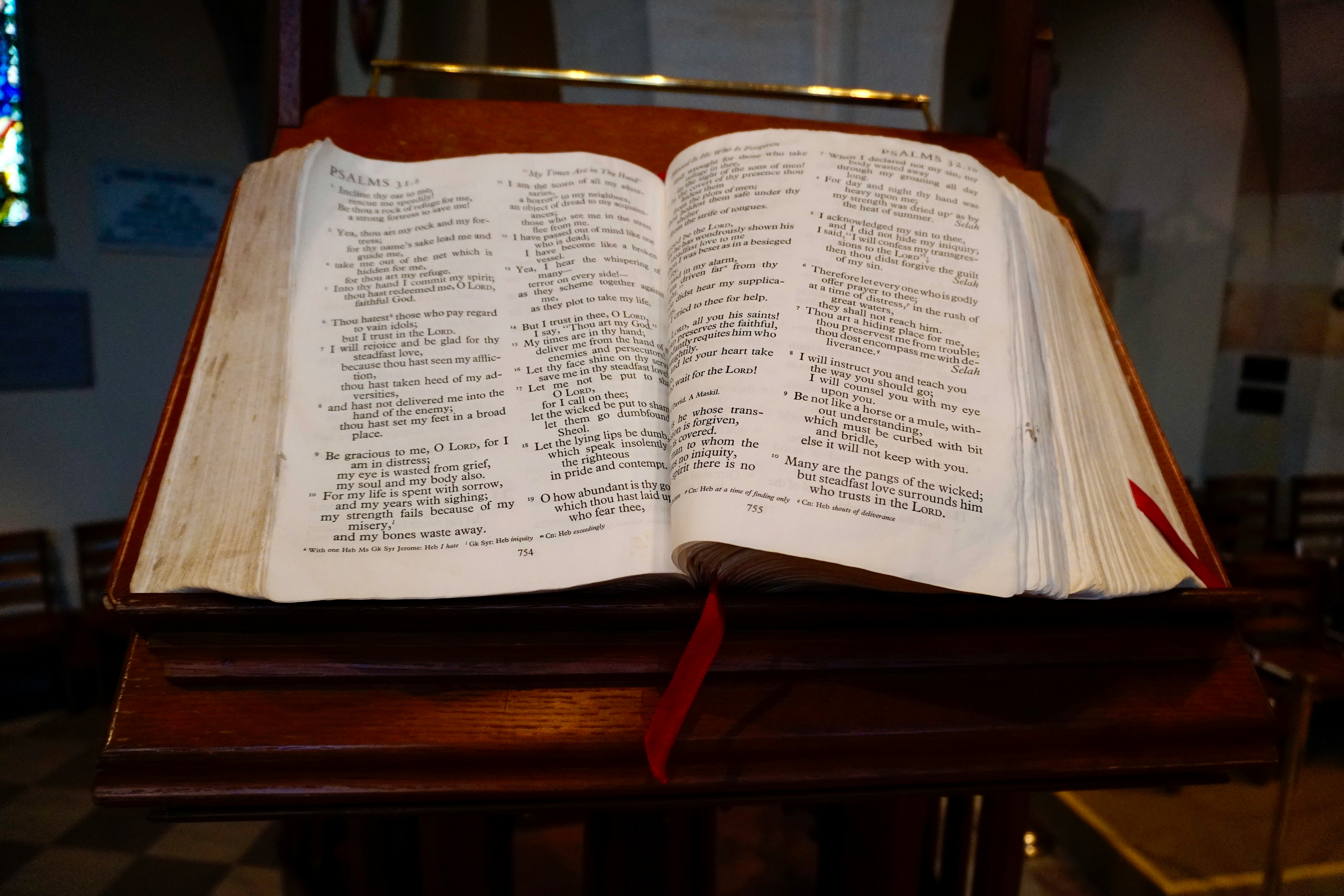
An early copy of sainted authority.
Modern
During the modern era, it is publically distributed to everyone in the Bishoprics. Each stage of any citizens life will be involved with this book.From childhood where the stories are simplified in school, to adult life where it is a constant companion and a recommended source of comfort, and into old age, where the hope is that eternal salvation awaits from this very book.
Contents
Summary
The story begins with the creation of Saintdom, where it ascribed to the simple feats of the saints, whom the book refers to as "Forefathers." It states that they received their abilities for being the Archetype of a noble quality and that they were told by a fictionalized being (likely designed to replace the reaper of souls,) to go out and found the bishoprics.Forefather Pythagoras was the first, with his noble quality being ingenuity, and immortality being granted to him first and foremost.
Then there was Forethather Leonidas, for his quality of bravery. Granted immortality in his dying breathes.
Next Forefather Flammel, who's generosity is what granted him his immortality.
And finally Forefather Gabriel, the youngest and last to become immortal, who was granted power for his music.
An abstract depiction of the formation of sainthood, known as "the four"
Finally the book moves on to talking about the efforts of the sainted forces during the Deitic war. Depicting the forces of Hell as cheaters in order to explain why the divinely superior forefathers fell in battle.
It then is a piece of prophecy (or what it's designers may have called speculative fiction.) It predicts that the Bishoprics will reclaim their homlands, and hold them for ten thousand more years. Due to the schism, this did not happen.
Subtext
Theological
In a theological sense, the book promotes a form of Deity-based and religious isolationism, promoting the forefathers as the only true pure gods and all others as false profits and pretenders.It varies from group to group though, with devils obviously being the worst depicted. Then Coven and witches in general are depicted in a negative light. Then usually are the primordials, seen as lesser, fallen deities. And finally the regular Gods, who are depicted as having been replaced by the saints.
As an interesting side note, the book entirely ignores the existence of titans, only briefly mentioning battles with Mega-fauna, who it does not acknowledge as true deities.
Religous zeal
The book promotes intense religious zeal, encouraging its users to participate in regular traditions.Morality
Morally it initially promoted the very basic idea of morals, but as the years have gone on, there have been some modifications.These intresting interperations include:
The brotherhood asks that you give up your food so that all may prosperInterpreted to mean, pay your taxes.
Those who rule are elected not by man but by the forefathers themselves,Used to transfer the bishoprics system of governance from repersentative and authoracratic democracy, to a sytem of successive dictatorship.
...these lands will be ruled with the spirit of the Forefathers, through their elected rulers.Interpreted to apply moral imperative to any law in the Bishoprics.

Comments