
Mithardir
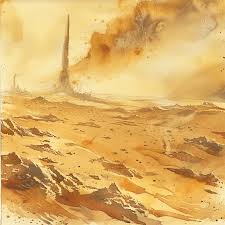
Mithardir, also known as Pelion, was the third and deepest layer of Arborea. An endless desert of fine, chalk-like white dust, it was mostly uninhabited, containing only ruins and the buried remains of previous civilizations. Its only inhabited area was the divine realm of the Mulhorandi deity Nephthys.
History
The layer was once covered in forest and inhabited by giant-like or titan-like deities.Rumors & Legends
The distant past of the layer was surrounded in legend and conflicting tales. The Seldarine maintained that Mithardir once held the realms of the lords of beast cults, before they moved on to the Beastlands. Others maintained that Pelion was the original layer that housed the divine realms of Ptah and the rest of the pantheon, before dwindling away due to lack of followers.Notable Locations
Amun-thys, realm of Nephthys. An ever-shifting realm of dunes, dotted with abandoned tombs and inhabited by desert fauna and tribes of lycanthropes, with very little vegetation that was brittle, desiccated, and colored white as its sands. The most prominent species were white lotus, dust reed, and tumbling lily. It was unclear whether the desertification of the layer was a process caused by Nephthys's influence or in spite of it. Coriandor, an elven village that encompassed both sides of a gate between this layer and the Quasi-Elemental Plane of Salt.Inhabitants
The primary inhabitants of Mithardir were the bralani eladrin. Other than that, the layer was populated only by small lizards, snakes, and desert rats, as well as occasional vultures, adders, and scorpions. Pelion had very few inhabitants. Most notable were the brass dragon Argevar and a phoenix who nested somewhere among the dunes. The layer was also said to be inhabited by a tribe of elves from the world of Athas.Geography
The layer had almost no vegetation. It was entirely covered in a white, powdery dust that gave it its name―"Mithardir" meant "white dust" in the Elven language. Some areas were also covered in snow. Its climate was mild and temperate, but often swept by intense and sudden dust and lightning storms. The entire layer evoked a sense of emptiness, loss, and abandonment.

Comments