Karasuthra was the third and deepest layer of the Beastlands. A realm of perpetual night and home to dangerous predators, it contained the divine realm of Stronmaus
Description
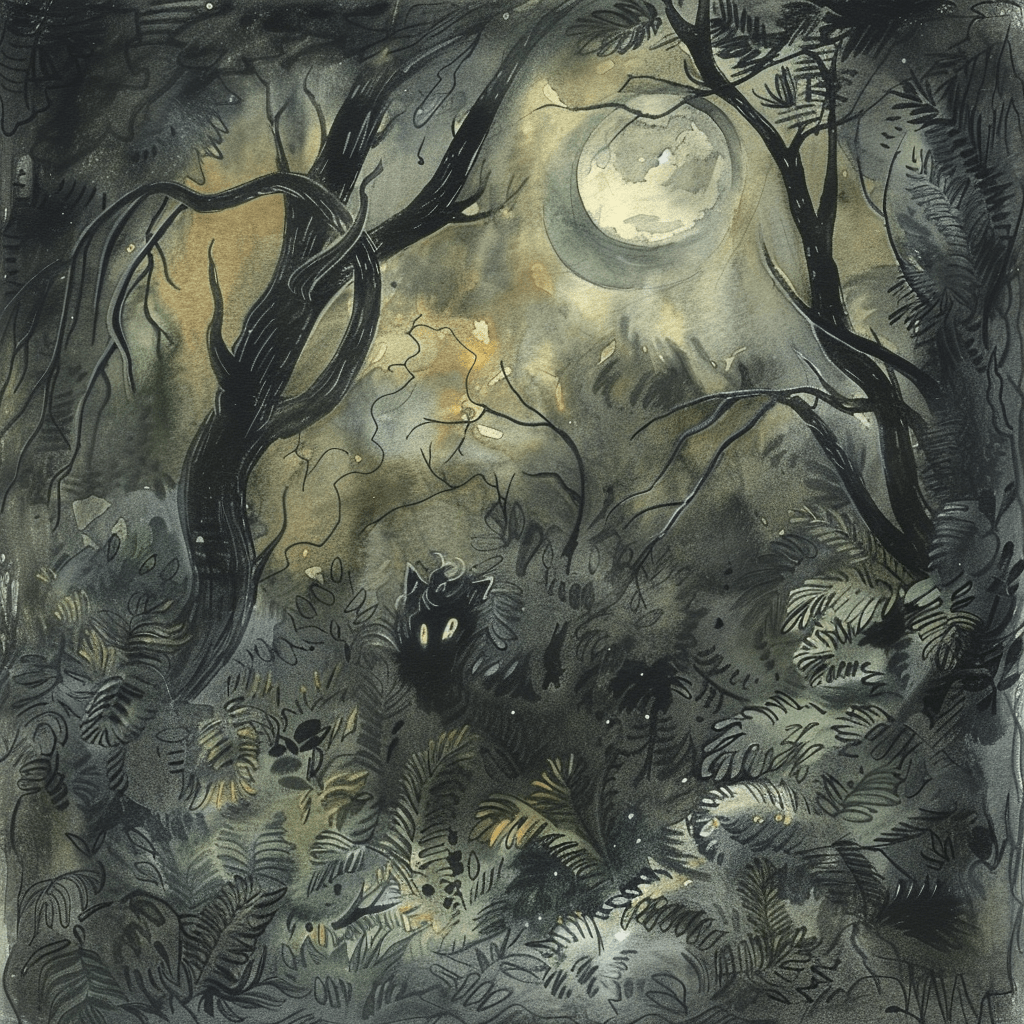
The dominant celestial body in the layer was the moon Noctos, which absorbed the light that emanated from the plane's sun Selera and reflected part of it off its surface, providing the layer with a very dim silver moonlight. Noctos's phase changed extremely slowly.The countless stars of this realm drifted randomly across the heavens, moving unpredictably and baffling all attempts at understanding. Light sources such as torches, fires, and magical light were also considerably weakened while in the layer, giving off only about half of their nominal light and heat for only half of the normal duration. Nonmagical light only worked if brought from outside of the layers, and no new nonmagical light could be initiated there
Like the rest of the Beastlands, this layer had no settlements.
Notable Locations
Stormhold, realm of Stronmaus. A massive floating castle built of gold, platinum, and gems and floating atop a storm cloud, it soared across the skies of Karasuthra constantly accompanied by thunder and lightning.
The Labyrinth of Fiery Doom, a detached fragment of Phlegethos rumored to be the lair of a couple of lovers: a red dragon and a succubus. Their true identities were known to almost no one. The red dragon was in fact the agathinon Janarr, while the succubus was in fact the erinyes Nalura. They had fallen in love with each other before realizing they were supposed to be enemies, and decided to adopt their disguises in order to hide from their pursuing hierarchies. the couple was expecting their first child.
The Ice Plain, realm of Rellavar Danuvien, the Frost Sprite King of the Seldarine.
Inhabitants
The layer's main natives were the mortai, who were present in the skies of the entire plane A permanent contingent of at least one mortai was always present near Stormhold.
Like the rest of the plane, Karasuthra was inhabited primarily by natural beasts. The layer's most frequent inhabitants were noctunal animals such as owls and panthers. Despite the perpetual night, the layer had an extensive vegetation that provided food and cover for a variety of herbivore animals as well.


Comments