Griffons
The first griffon was created by an elven wizard, though his name is lost to history it is believed he was a Reymanté. His first creation was the classic Griffon, a giant eagle combined with a lion into a dangerous hybrid. He had some success in training them but a large number escaped into the wild. They started in Wildren but quickly spread to other continents as well. Several of his descendants tried to replicate his feat and a few succeeded, however those that hadn't previously escaped into the wild did so successfully during the deliverance. With all the dragons in the area killed the wild griffons quickly became the new dominant sky predator, especially in Wildren.
So far there are 7 known types of Griffon recent efforts to create new variants have been unsuccessful.
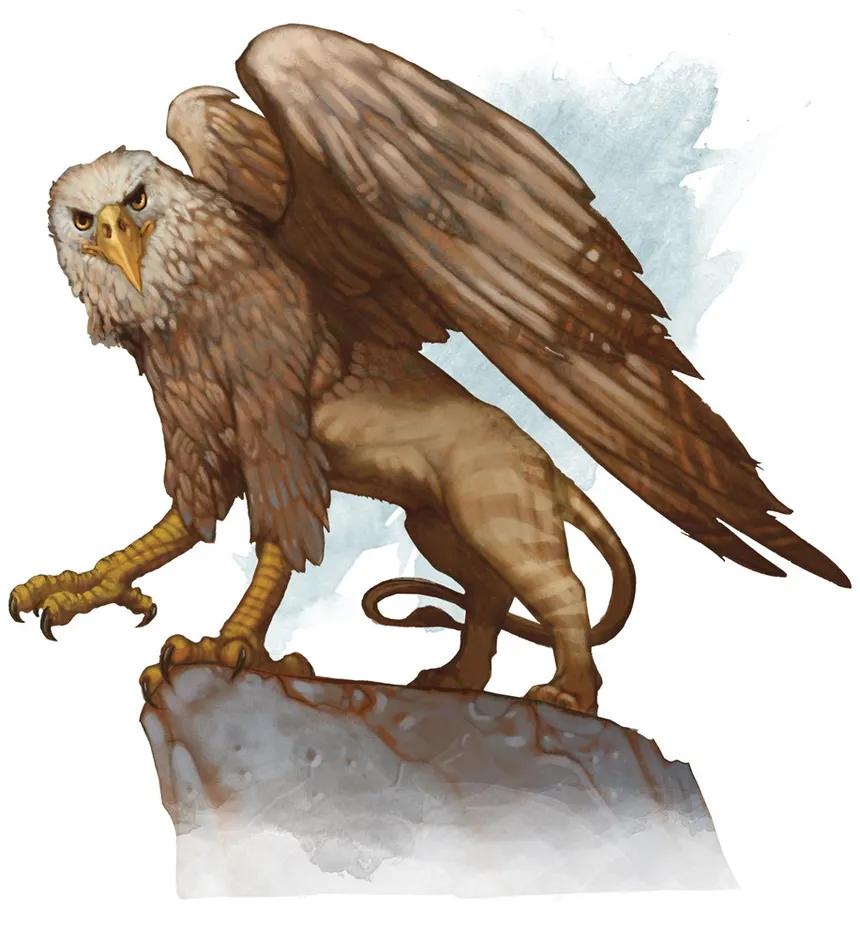
Classic Griffon. The classic griffon involves the mix of an eagle and a lion, males have the heads of bald eagles while females have those of a golden eagle. This type of griffon is generally considered the standard and also the best for most purposes. They live in small family groups with 1 male, 2-4 females, and their children until those children reach full adulthood and fly out to find their own mates. When prey is plentiful they may form into larger groups, often with multiple related families, and share territory to better guard each other. They are naturally territorial but are communal and easily socialized, this makes them excellent for mounts. Classic griffons that are well equainted with each other have no problem sharing stable space.
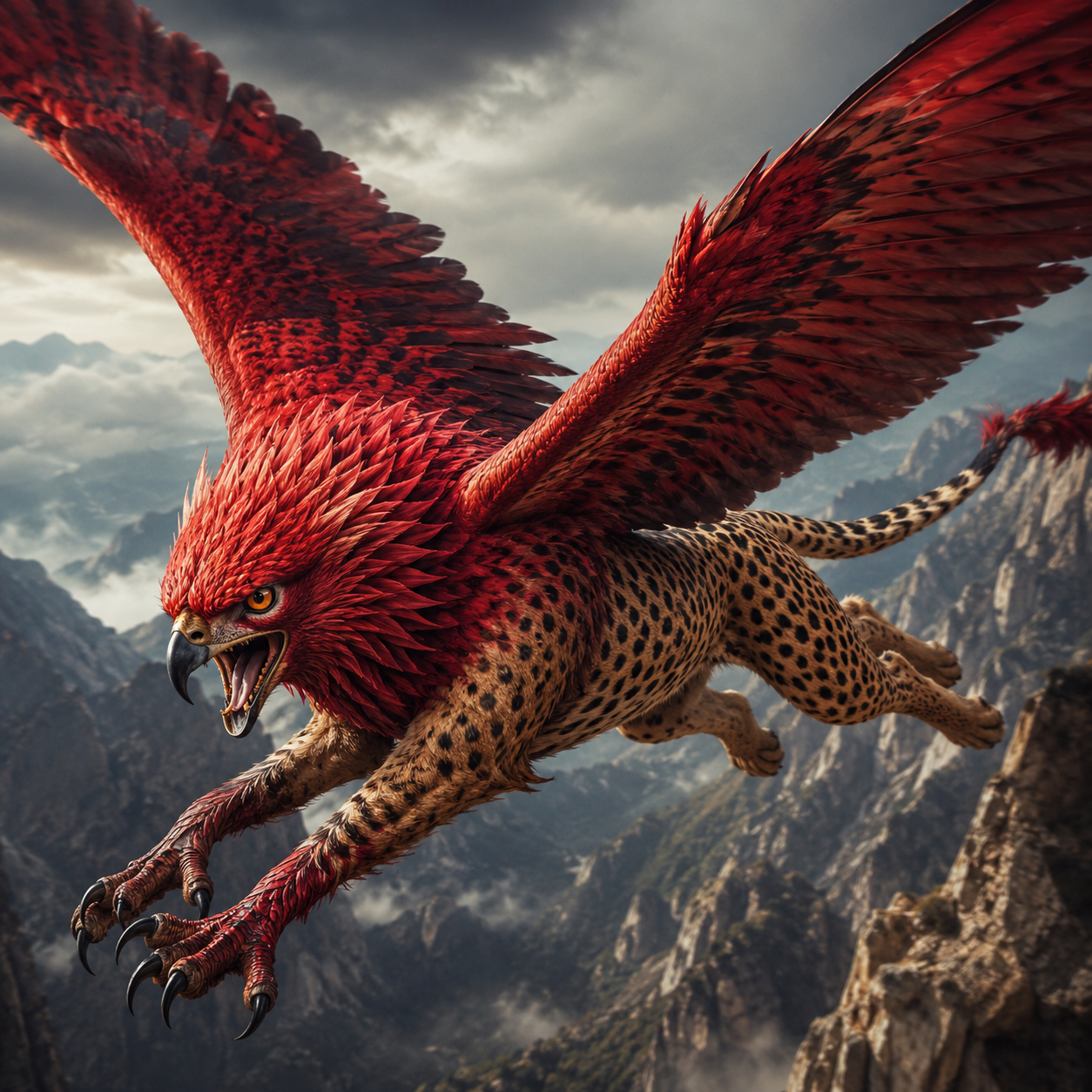
Bloodhawk Griffon. The bloodhawk griffon is a combination of a bloodhawk and a cheetah. Red feathers and a savage beak leads into a sleek body. These are are the fastest variety of griffon and are often used for racing. However they are also the most aggressive and most difficult to train. They are also slightly weaker than the classic griffon, favored by those who wear light or medium armor rather than full plate. Bloodhawk griffon males only get along if they are brothers or one is a direct descendant of the other. Females range between male territories being impregnated by multiple males during the mating season, creating more genetically diverse offspring. They lay clutches of 3-4, two or three males and one female.
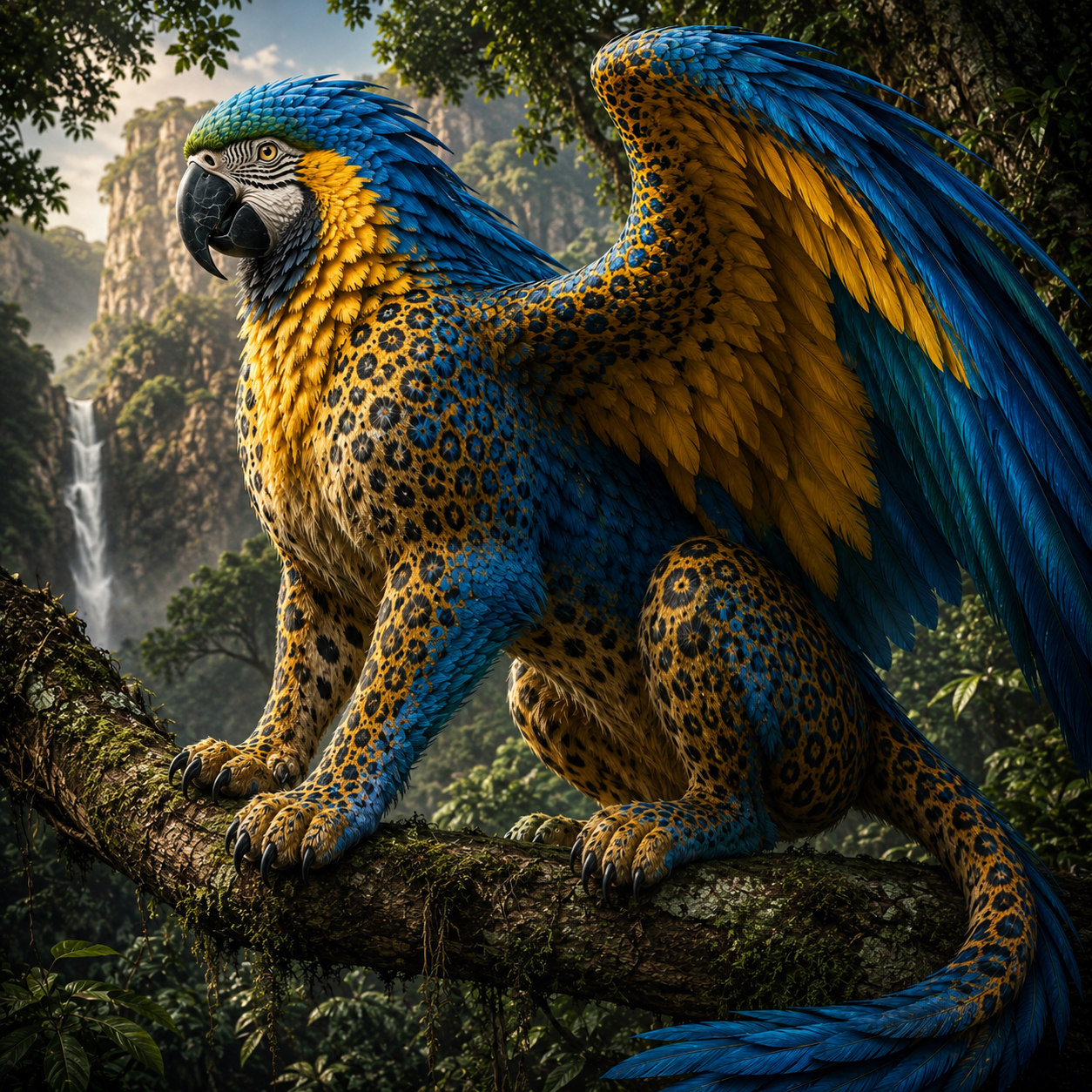
Tropical Griffon. The tropical griffon is the combination of a parrot and a jaguar. Their fronts have colorful feathers used to attract a mate. They are the most vocal of the griffons and can learn phrases and their meanings, they are also known for their singing and their dancing both of which are also used to attract mates. They are also some the only omnivorous griffons. They enjoy large fruits, coconuts, and giant insects along with traditional meat. They can be difficult to train as they are intelligent but also easily distracted. The are typically not suited for battle so very few are bred in captivity.
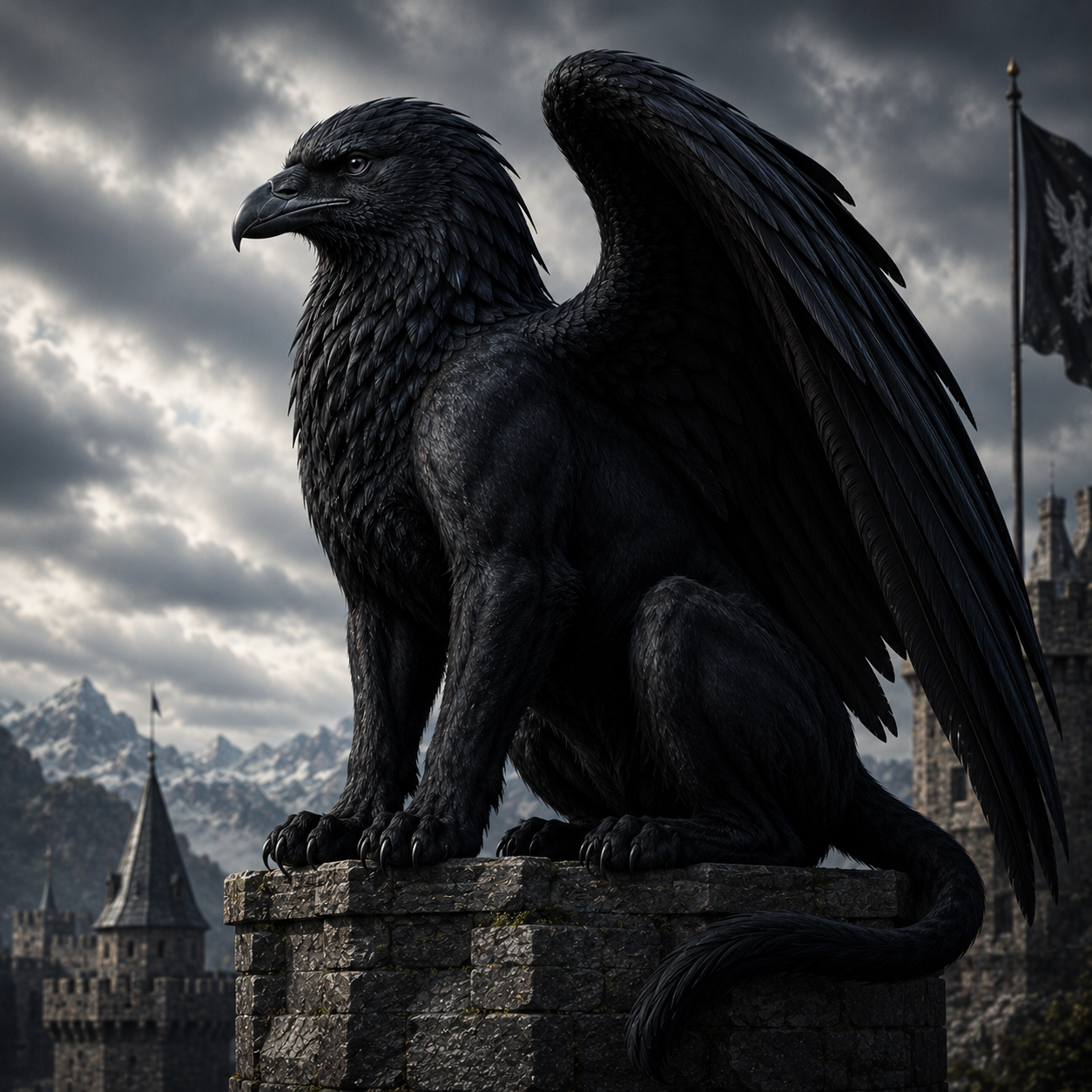
Raven Griffon. Also known as an Omen Griffon or Death Griffon, it combines a raven with a black panther. These griffons have the mimicry trait of ravens and are the most intelligent species of griffon. Due to their mimicry they can often communicate ideas in the voices of their riders by stringing sounds they have head together. They are also able to sustain a familiar bond if done during the first year of their lives. This makes them a favorite for spellcasters, being able to mentally communicate with your mount has its advantages. Raven griffons mate for life and generally will only have two clutches of 2-3 eggs over the course of their lives. Their intelligence also makes training difficult if one makes a bad impression, they will remember.
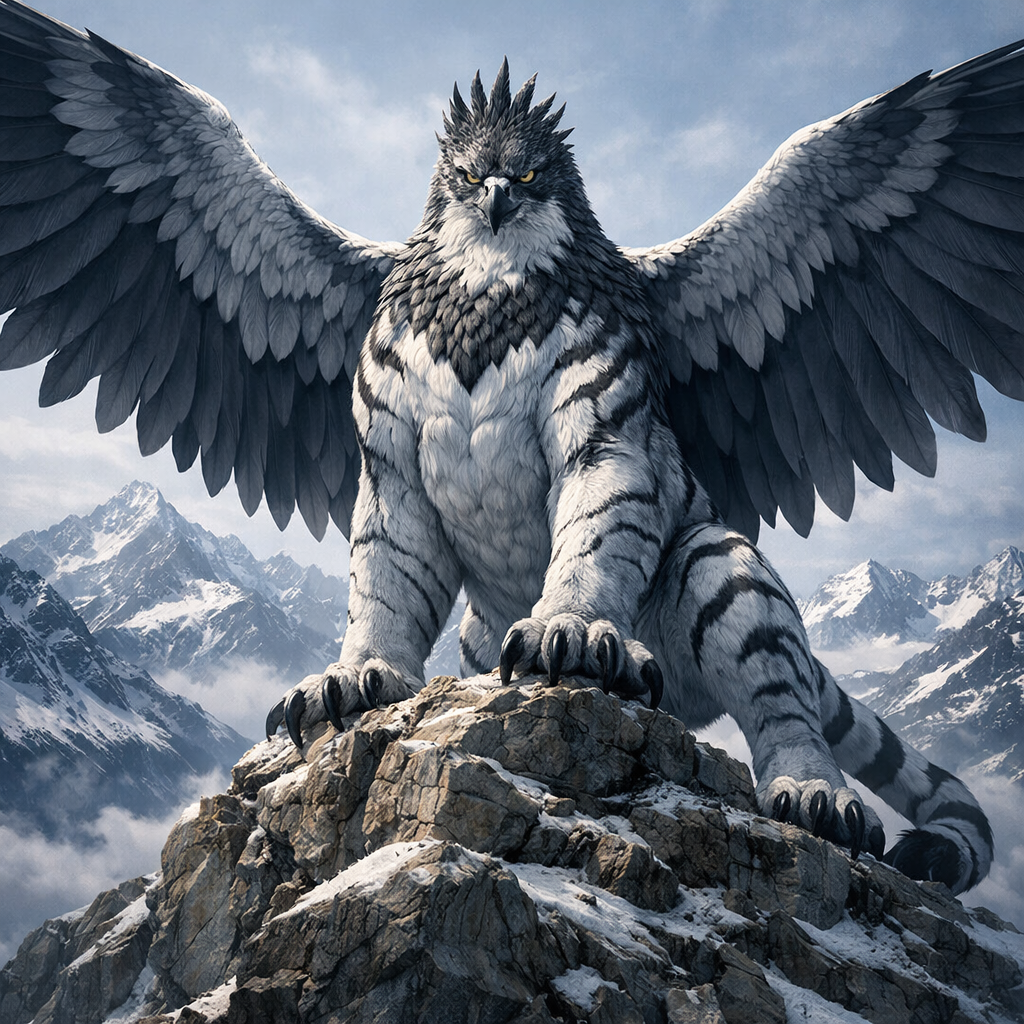
Crowned Griffon. The largest variety of griffon is a mix of a crowned eagle and a tiger. These griffons are big and powerful, capable of carrying great weights. They may be ridden into battle by a goliath in full plate or perhaps a small ogre. While they aren't as aggressive as bloodhawk griffons they are less sociable. They are very territorial and will fight off other griffons unless it is a crowned griffon of the opposite sex, then they may tolerate each other but only if there is enough food for both of them. They come together to mate once a year and lay a single egg, which the mother raises alone as soon as it hatches. Being so territorial they will not allow other mounts to serve their usual rider, who they will also feel the need to challenge regularly. Many crowned griffons have killed their riders if they perceive them as weak. Standard practice is for riders to regularly wrestle crowned griffons into submission every few months during the late juvenile and early adult stages.
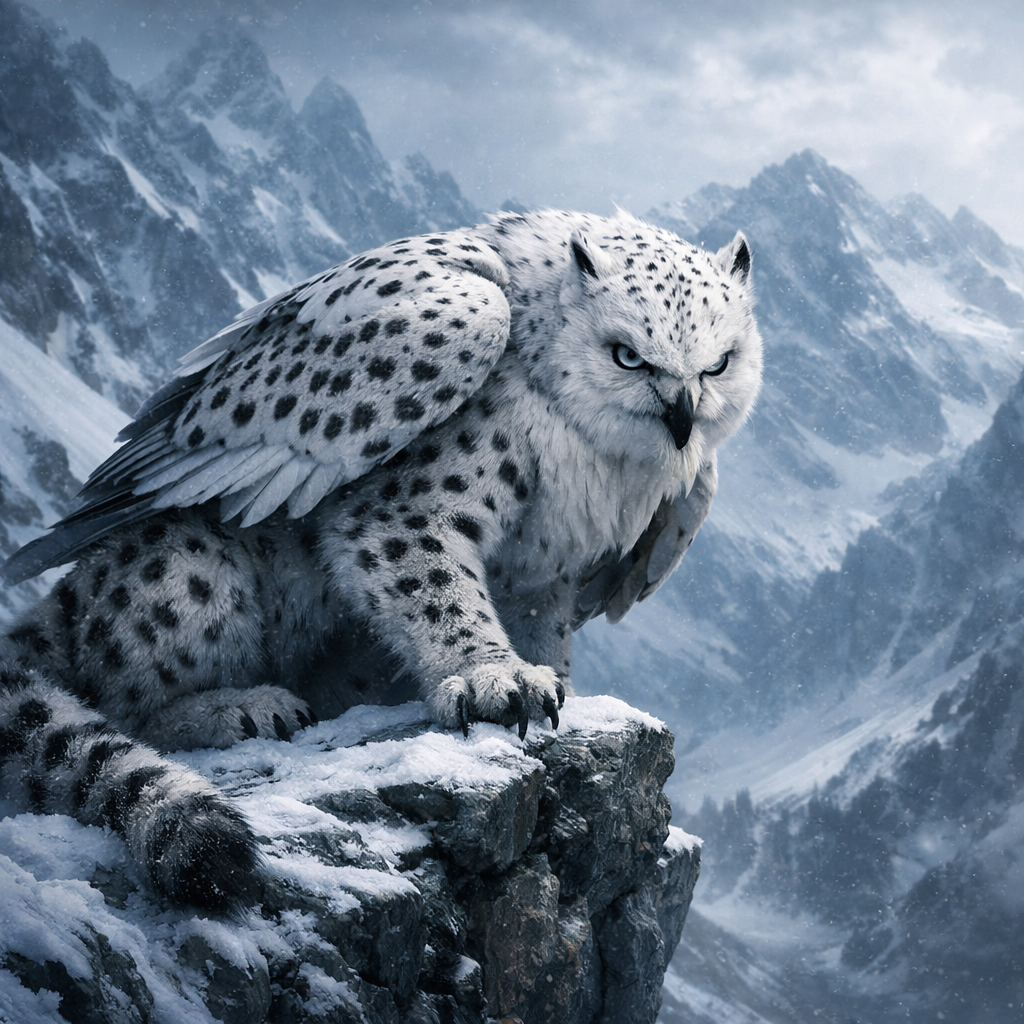
Snowy Griffon. A variety of griffon bred in the feywild by an eladrin of the winter court, combines a snowy owl and a snow leopard. They are resistant to extreme cold and typically live in mated pairs in high altitude mountains or northern forests. They have owl-like wings and can fly silently, as well as having excellent night vision. They'll eat most small or medium creatures and are smart enough to knock people off mountains before feasting on the remains. They lay 2-3 eggs every 2 years.
Modifying The Griffon Stat Block.
The Griffon stat block in the monster manual is meant to represent the average wild adult classical griffon. Griffons specifically trained for war from a young age will of course be better able to fight and will typically have between one and five extra hit dice depending on how battle hardened they are. If they are veterans of several battles they may also increase their strength or dexterity score by 2 and/or their proficiency bonus by 1. Bloodhawk. Fly speed increased to 90. STR decreased to 16, DEX increased to 18(this decreases to hit and damage and increases AC). CON decreased to 14(this decreases hp by 1 per hitdie). Gains the Feline Agility Trait (Your reflexes and agility allow you to move with a burst of speed. When you move on your turn in combat, you can double your speed until the end of the turn. Once you use this trait, you can't use it again until you move 0 feet on one of your turns.) Tropical. STR decreased to 16(this decreases to hit and damage). INT increased to 5, CHA increased to 14. Gains proficiency in performance. Raven. STR decreased to 16(this decreases to hit and damage). INT increased to 10. If a bonded familiar INT increased to 13. Gains the Mimicry Trait (The raven can mimic simple sounds it has heard, such as a whisper or chitter. A hearer can discern the sounds are imitations with a successful DC 10 Wisdom (Insight) check.) Crowned. STR increased to 20(this increases to hit and damage). CON increased to 18(this increases hp by 1 per hitdie). Gains the Powerful Mount Trait (This creature counts as one size larger when determining its carrying capacity; the weight it can push, drag, or lift; and the size of creature that can ride it as a mount). Gains proficiency in Intimidation. Snowy. STR decreased to 16, DEX increased to 16(this decreases to hit and damage and increases AC). INT increased to 5, WIS increased to 14. Gains cold resistance. Darkvision increased to 120ft. Gains proficiency in stealth.Basic Information
Genetics and Reproduction
Growth Rate & Stages
Griffons lay their eggs 2-3 weeks after mating, once laid the eggs are protected by the parents and kept warm for 30-40 days. After which they will hatch griffons go through 4 stages of life: Hatchling, Juvenile, Adult, and Dusking. For the first year after their hatching they are referred to as hatchlings, during this stage they eat partially digested food given by their parents or ground meat with bits of fur and bone mixed in as they age. They eat their body weight worth of food two or three times a day. For classic, bloodhawk, and tropical griffons this stage is when they will imprint on those that give them food regularly. During the hatchling stage griffons are considered small creatures.
The Juvenile stage is marked by growth and new plumage. After a year of growing a griffons flight feathers have grown in and they take to the skies. Juvenile griffons are medium sized and typically hunt with their parents who will weaken prey before allowing one of the cubs to finish it. If raised in captivity this is when they are switched to a solid foods diet, eating chunks of carcass rather than ground meat. A juvenile will take 2 years to reach large size and adulthood. Crown griffons typically take an extra 3-5 months to reach full size but are abandoned by their mom after only one year as a juvenile. If raising a griffon it is important to get them accustomed to taking direction during this stage. Some breeders use halfling riders so their juveniles can take riders early.
Griffons reach adulthood after 3-3.5 years of life and are then capable of serving medium creatures as mounts. Those that reach this stage leave their nests in search of their own territories or mates. If raised in captivity they are always moved to a different area to be further from their parents. Early adulthood is especially important if training combat mounts. Combat drills with healing magic afterwards are important if you want fearless mounts and mounted acrobatics drills are used to teach the griffon how to maneuver without unseating their charge.
When a griffon has lived a full life and their age starts to show they are considered to have entered the dusking stage. They get a bit weaker and fly a bit slower, they are retired from military service and usually have perhaps one more mating in them before they die. This stage typically lasts only 1-2 years. Different griffon breeds enter their dusking at different ages. Bloodhawk griffons dusk early, around age 15 giving them a racing life of perhaps 10 years and working life of 12. Classic, Tropical, and Snowy Griffons dusk between ages 20 and 24 giving them a working life of 17-21 years. Crowned Griffons last longer, dusking around age 30 but with their longer juvenile period they have a working life of around 25 years. Raven Griffons are a special case, normally they dusk around the same timeframe as Classic Griffons. But there is an exception, those that are in a familiar bond find their aging slowed after adulthood. They will age with their bonded mage only dusking when their bonded is extremely old or has already died.