

VEL'GRAK
The Warding-Ember (Plinius's rendering) · Compound · Grakh'tor (Orcish) · Status as of 1200 A.P.: still produced, its supply increasingly strained
It has the exact colour and gloss of a good plum preserve. I was told this before I was shown it, and I confess the telling did not prepare me for how badly I still wanted to taste it.
Vel'grak, which Plinius renders loosely as the Warding-Ember, is a dark, glossy paste rendered from the pulp of the Grak'shor fruit, the same deep red-black flesh the Vor'keth discard once a fruit's prized seed has been removed for ceremonial preparation. Rather than waste the pulp, the Vor'keth reduce and thicken it into a preserve-like compound used as a threshold and boundary marker: painted along grain-store doorframes, tribute-caravan seals, and grove boundary posts throughout the Grak'mor zone and wherever Vor'keth authority extends. Its practical function is straightforward, a deterrent against scavengers and unauthorised entry, but its danger to anyone unfamiliar with Grak'shor is considerable, since it looks, to any outside observer, exactly like something meant to be eaten.
DM ONLYMechanics & Inner Workings
Vel'grak deters in two ways at once. Visually and by scent, it presents as food, which draws the curious and the hungry toward it rather than away, and the moderate toxicity inherited from the raw Grak'shor fruit does the rest: gastrointestinal distress in smaller exposures, a prolonged fever-like illness in larger ones, consistent with the documented effects of unprepared Grak'shor fruit itself. Whether the rendering process concentrates the toxin beyond the raw fruit's own moderate potency is not established with confidence, though several border-market accounts describe illness following Vel'grak exposure as somewhat more severe than the seven documented cases of raw-fruit illness on record.
DM ONLYHistory
The practice of rendering discarded Grak'shor pulp into a boundary compound long predates any Roman contact with the confederacy, and Plinius has been unable to establish when it began or who first thought to put the fruit's discarded half to use rather than simply disposing of it. The earliest Roman documentation comes from third-century border trade records, which describe the substance without naming it, evidently mistaking it at the time for a trade good rather than a marking compound. Cross-reference the Grak'shor species article for the fruit's own documented history and toxicity.
DM ONLYSignificance
Practically, Vel'grak works, and works cheaply, turning a waste product into a functional deterrent at no cost beyond the labour of rendering it. Symbolically, it marks Vor'keth authority as clearly as any seal or standard would, and Plinius has come to read a working Grak'mor boundary the way a Roman surveyor reads a milestone: not decoration, but a claim. The broader Grakh'tor cultural weight thresholds and boundaries carry, evident elsewhere in how the confederacy treats acknowledgment and demonstrated worth, is not absent here either, though Plinius is cautious about overstating a connection no Vor'keth source has confirmed to him directly.
Show Spoiler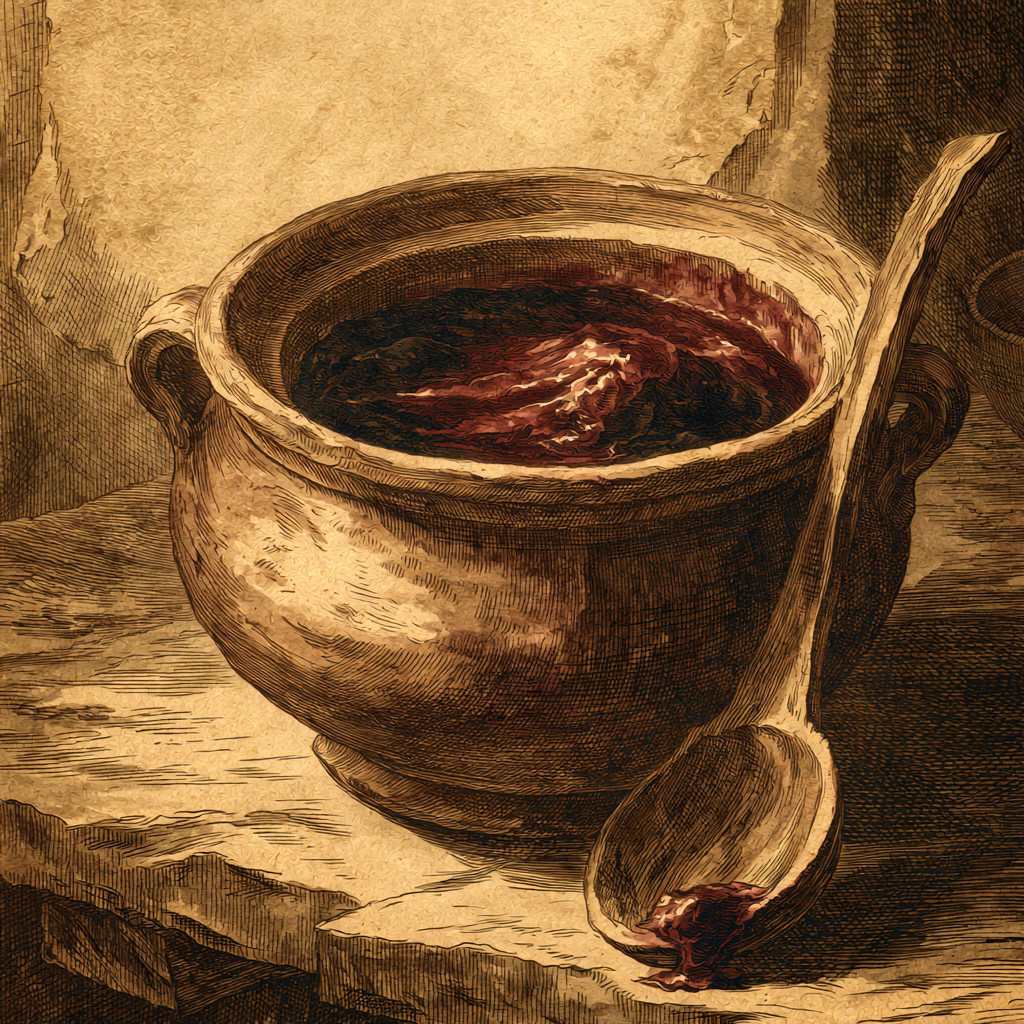
Uncommon (production restricted to the Vor'keth-controlled Grak'mor zone)
Discarded Grak'shor fruit pulp, reduced and thickened; volcanic mineral additive
Simple rendering vessels; no specialised equipment

Comments