

THE SALT-KNOT
The token of the Salt-Binding · Ceremonial · Halfling · Status as of 1200 A.P.: carried by every bound pair across the Isles, Plinius among them
I have been awarded an honorary Doctorate of Frontier Scholarship, three provincial commendations, and a citation from the Senate itself for services to Comparative Cultures. I keep the Salt-Knot in a drawer none of them share.
The Salt-Knot is the physical token exchanged during the Salt-Binding , a length of cordage tied by the officiating Hearth-Keeper and halved between the two binding parties, each keeping their portion for the rest of their life. No two Salt-Knots are alike, since each is tied from whatever rope was actually aboard the vessel or present at the crossing the binding commemorates, making every knot an object with a genuinely singular history rather than a mass-produced symbol. Plinius carries his own, tied at the The Crossing Shrine in 1189 A.P. when he and Merry Burrowfoot formalised their kinship, and considers it, without much hesitation when asked directly, the single object among his possessions he would grieve hardest to lose.
DM ONLYMechanics & Inner Workings
The knot pattern itself, which halfling sources decline to name for outsiders and which Plinius has therefore never attempted to reproduce even privately, is understood to encode the specific Hearth-Keeper who tied it and, by some convention Plinius has not been able to characterise fully, something of the nature of the hardship the binding commemorates. Whether this is literal information encoded in the knot's structure or simply a claim halfling tradition makes about a skilled Hearth-Keeper's ability to read one, Plinius cannot say with confidence.
History
The Salt-Knot's history is inseparable from the Salt-Binding ritual it belongs to, and carries no separate origin story; see the Salt-Binding article for the tradition's own documented history, predating the Twelfth Permutatio and sharpened in importance in the generation immediately following the halflings' 1000 A.P. arrival at Brindala.
Significance
Where the Salt-Binding ceremony itself is an event, witnessed and then finished, the Salt-Knot is the ceremony's permanent residue: proof that can be produced, examined, and, where the Merchant Council is involved, weighed as evidence. Plinius notes that halflings who have lost a Salt-Knot, to fire, to the sea, to simple decades of wear, describe the loss with a grief that has surprised him each time he has witnessed it, out of proportion, he initially assumed, to the loss of a piece of rope, until he came to understand that what is actually being mourned is not the object but the tangible, irreplaceable proof of a bond that now has to be taken on trust alone.
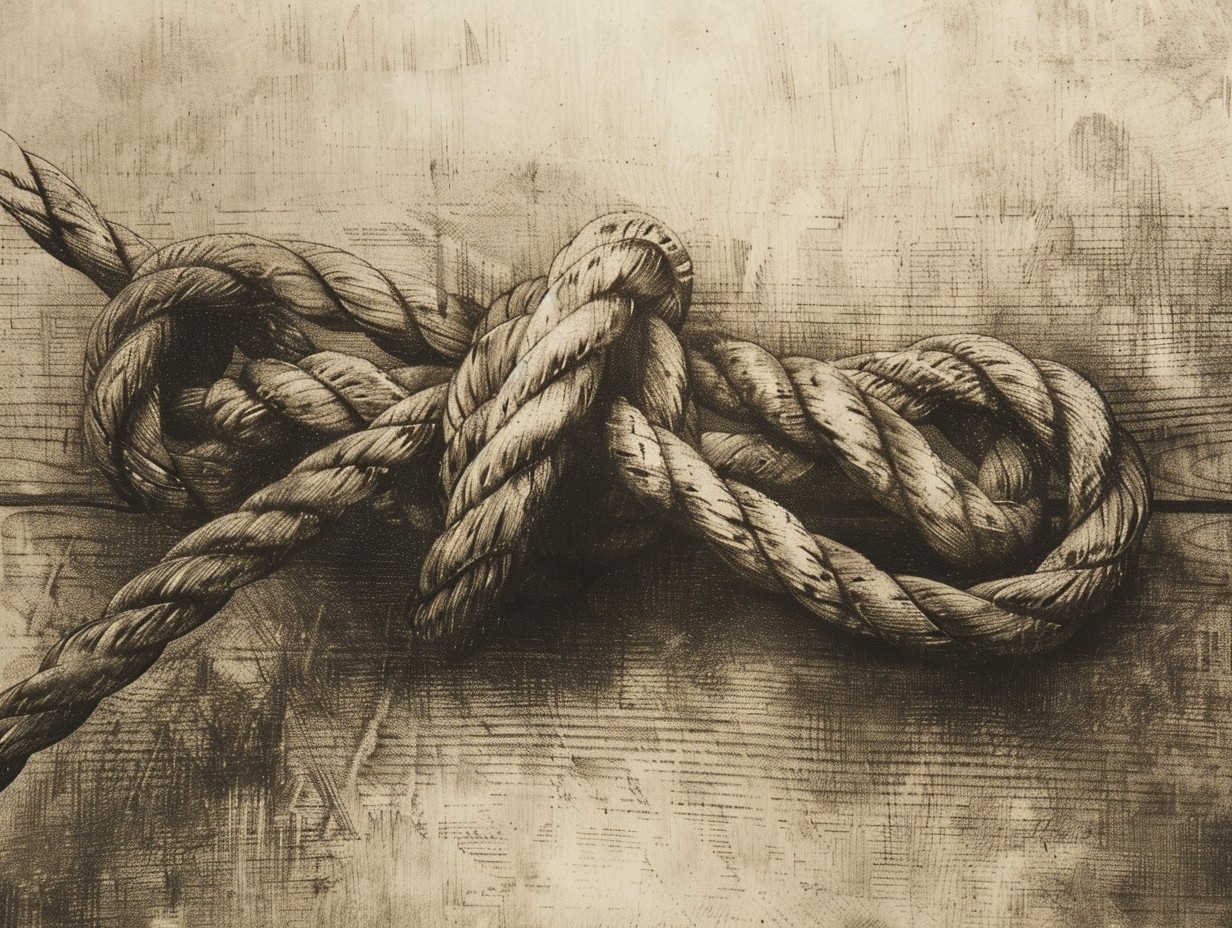
Common in practice; each individual knot is unique and cannot be replaced
Maritime cordage, often incorporating rope from the vessel or crossing commemorated
None; tied by hand according to a pattern taught only within the priesthood

Comments