Topography:
Scorching heat smothers the arid mountains of Kaichi .
This heat is broken by the Chasulaan River, flowing into Sudchot Lake.
Separating Kaichi from Diqui are the Ahumi Mountains.
Flora and Fauna:
Mammals include jackrabbits, long-eared jerobas, yaks, antelopes, and yirinxes.
Quillyaks are massive porcupines. Their quills are often used as swords.
Tsagons are gazelle-like creatures who roam the mountains of east Kaichi and its surrounding areas.
Along the desert ground, various species of snakes slither and scorpions scuttle.
Giant Desert Worms also dwell beneath the sands of Kaichi.
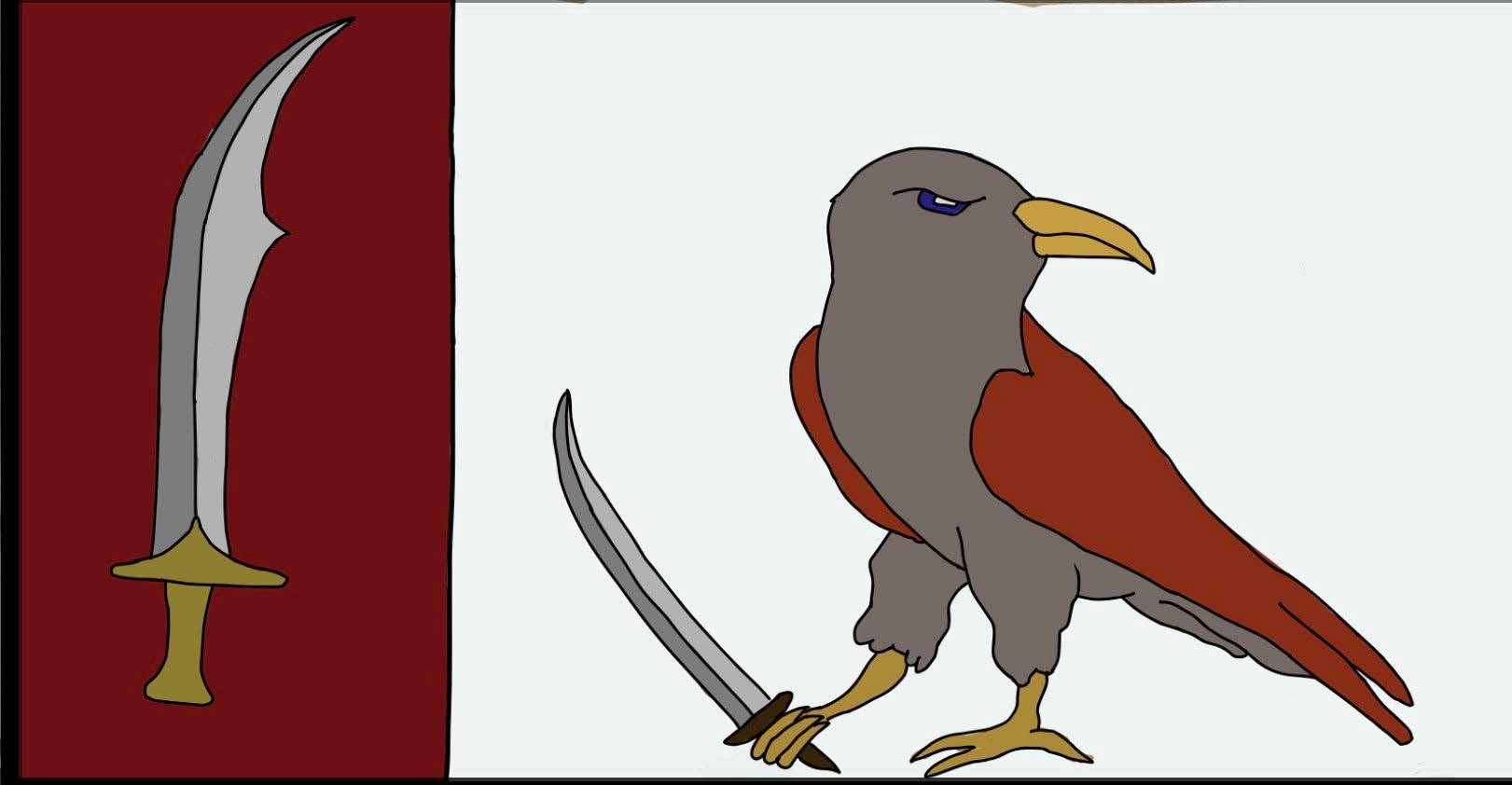
Birds include buzzards, owls, and hawks, but the most important of all birds are falcons.
Dinosaurs such as raptors and T-Rexes dwell in Kaichi.
In Kaichi grows wormwood, feathergrass, and sauxhalls.
The south of Kaichi is more fertile. In the shadows of larches and aspens, foxes and bobcats prowl, while sundews and roses burst through the dark soil.
People:
While a majority of those in Kaichi are Kaichins, a small percentage are the Uvarthish people, a nomadic hunting group who dwell all across the middle regions of the world, moving with the migration of the Tsagons.
The appearance of Kachins a blending of the traits of southern Diquins and Hadiyans.
Culture:
The culture of Kaichi is based around strength, honor, and glory.
There are Kaichin “Male societies”. These are brotherhoods of young unmarried men who serve as warriors and policemen.
Body paint is common among Kaichins, but is only worn during certain occasions. Those who fulfill some sort of important role such as priests, nobles, and members of male societies, are expected to wear body paint denoting their position whenever in public.
Also common is piercings, generally on the nose and ears.
It is tradition for a 14 year old boy to go out and slay a Quillyak, and then one of its quills would become the boy's sword as he becomes a man. However, this tradition has been slowly falling out of favor in the past hundred or so years.
The Kaichins are patriarchal.
A large population of Kaichin live a nomadic pastoral lifestyle, with multiple different tribes and clans which move through the seasons, herding cows, yaks, sheep, triceratops, and goats.
However, in 3023, the movement of nomads was forced to be constricted to within each of the 8 districts of Kaichin. What this means is that the moving of domesticated animals across district lines was banned except for the purposes of trading, in which case they would have a government license.
However, this has not stopped the Uvarthish people, as their lifestyle is a nomadic hunting one. The government has made multiple attempts to prohibit their movement. However, while the Kaichin nomads can still follow their general practices while being constrained to one district, the Uvarthish can’t.
As a result of this nomadic lifestyle, many Kaichins live in gers, portable tents made of felt and wood.
However, there are still many Kaichins who have abandoned the nomadic lifestyle altogether, living in a variety of cities by the Chasulaan River. These make up about half of the Kaichin population.
Similarly to the Kavtin people, horses have traditionally been important to Kaichin culture, but in the past two hundred years, their importance has faded, as a majority of Kaichins have been more willing to switch to cars or motorcycles.
There are specific kinds of cars in Kaichi designed specifically for the purposes of herding, with big wheels, no doors, and small sizes. These are known as Joops.
There are many Kaichin holidays. Most of these are festivals celebrated through sports events such as racing, archery, and wrestling. Boxing, sword fighting, and rodeos are also common.
In general, sports are important to Kaichi. Within the capital is The Grand Arena, where many games take place. Even those who have left the nomadic life still live within tribes, and each tribe usually has their own sports team. Pride in one's team equals pride in one's tribe. In a lot of ways, sports take up the space where warfare was once taken up.
There are a variety of tournaments, with the team who wins being offered riches by the king himself.
The Grand Arena is the only place where people can expect to see the monarchs, increasing the importance of these games.
Similar to the elves, Kaichins believe in the power of names, and as such, children will often be given “false names”. This is done so evil spirits won’t learn their true names and say them in order to control the children.
Children will not cut their hair, as the idea is that evil spirits will then confuse them for wild animals. When a Kaichin turns 14, they will go through a hair cutting ceremony, and they would then be granted their true name. The idea is that they are no longer weak.
This superstition revolving around evil spirits is often used as justification for Kaichin’s obsession with strength and fighting.
Falconry is very common among Kaichins. Within the nomadic groups, every tribe will have a family of falconers. The members of these families will develop deep, almost spiritual, bonds with their falcons.
Government:
Kaichi is an autocracy led by an Atzigon. This role is not a hereditary one, with the next Atzigon being determined by the current Atzigon.
The role of the Atzigon is both leader of the country and leader of the military.
Beneath the Atzigon is the Judiciary of Kaichi. This is the body which handles all legal matters, as well as overseeing the police force of Kaichi. The Judiciary is led by 24 High Judges who are all chosen by the Atzigon.
The police force of Kaichi, known as The Red Guard, is one of the most feared in all the world. While some of the police are merely boys chosen from male societies, many come from long lines of Red Guards, being raised from birth to accept their role.
Trial by combat is seen as an option in the Kaichin legal system.
There is a Kaichin monarchy, but the only power the monarchs have is purely ceremonial. Much of their duties involve the games at The Grand Arena, bestowing prizes upon winners of tournaments.
Kaichi still contains a large number of tribes and clans.
The governance of these individual tribes and clans varies. However, they are all required to answer to the government of Kaichi.
The number of people in the tribes vary. For the nomadic peoples, a tribe will usually consist of a few hundred people. However, for those who live in the big cities, their tribe will usually consist of thousands of people. For the urbanites, being a member of a tribe is very different, with the tribal leaders not being rulers so much as they are celebrities.
Each of the districts of Kaichi are led by Governors. This is a position chosen by the Judiciary.
Religion:
Kaichin religion was once devoted to the god of war, Yamat, but in the past thousand years,
Indrictism had slowly replaced it as the dominant religion.
Differing from other Indrictists, a majority of Kaichins will not go to temples, but instead pray to Indrict Markers. These are simple stone statues of Indrictus situated along roads and paths. They often have holes drilled through them, which often produce sounds when the wind flies through them. This has the side effect of the Indrict Markers helping people who are lost.
The exception to this are the urban Kaichins living near the Chaulaan River, who generally have miniature Indrict Markers in their own home.
The Crimson Cult, the central religious order of the worship of Yamat, still exists, but its glory days are long behind it.
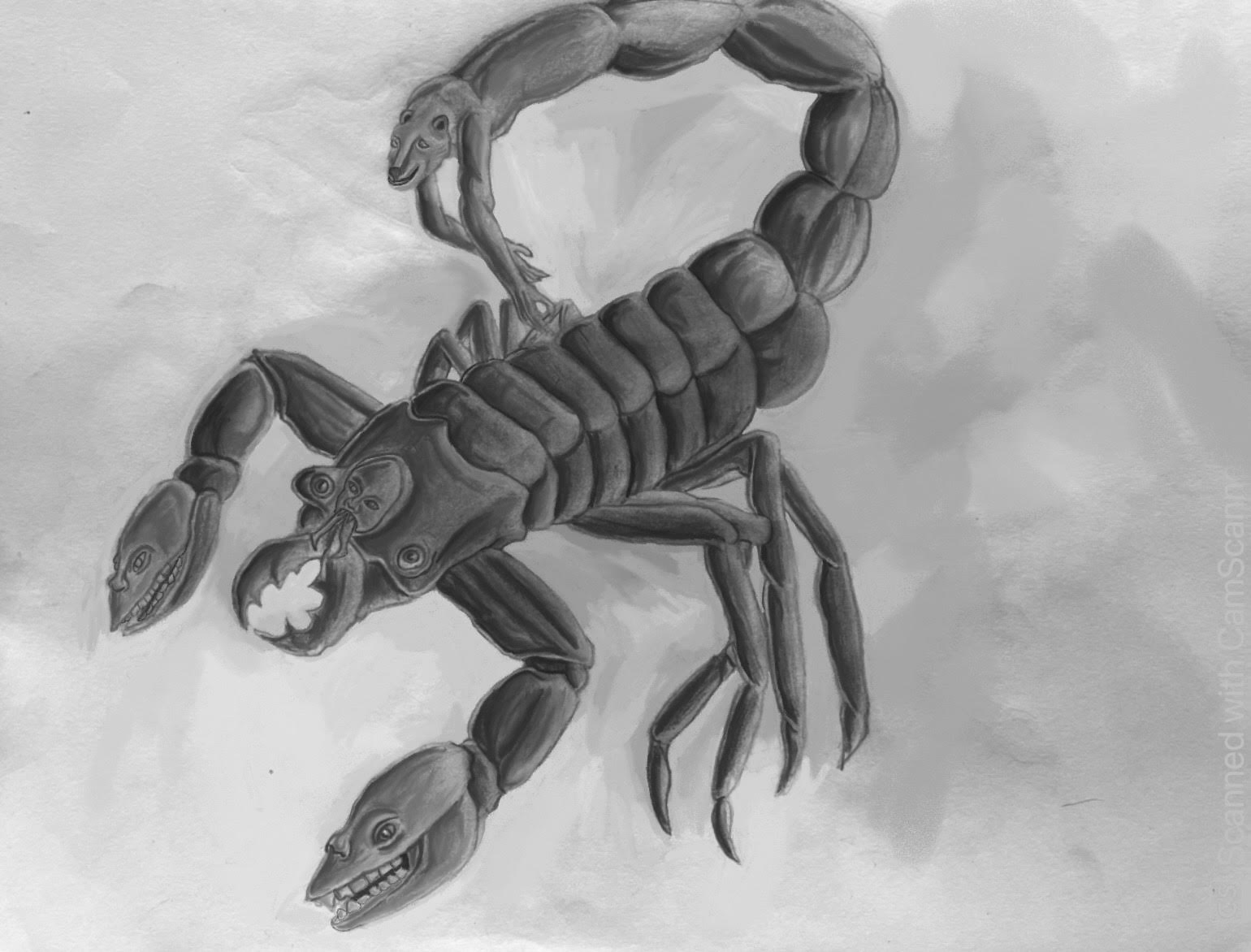
A depiction of Yamat.
Art:
Kaichin stories are told through oral tradition, with many epic spoken-word poems.
Traditional Kaichin music has a yak’s horn as an instrument, often accompanied by a chorus of singers and a drummer. Kaichin music is generally quite fast.
Within Kaichin culture, poems are seen as more “high art”, while songs are “low art”. A story told by a poem will usually be a serious story meant to be pondered, while a story told musically will often be comic or fantastical.







Comments