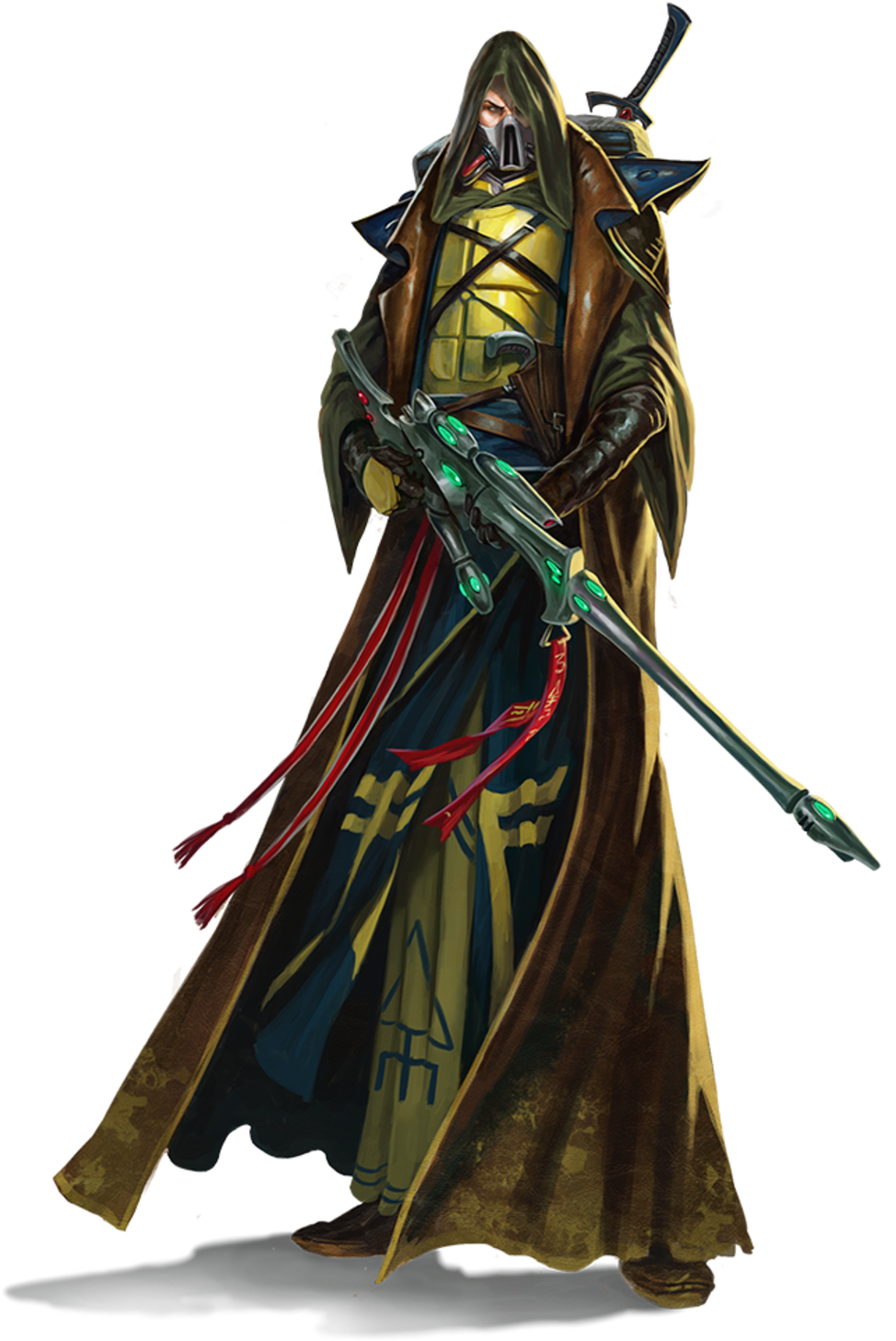
At 3rd level, a pathfinder gains the Pathfinder’s Archetype feature. Your choice represents your tradecraft by which you operate and utilize your abilities. Some pathfinders specialize in subduing and killing an enemy, making them effective at collecting bounties and contracts. Others focus on their skills in shadowing and investigation, making for a skilled tracker or guardian.
DIMENSIONAL STALKER
Dimensional Stalkers guard the galaxy against threats that originate from other dimensions or that seek to ravage the mortal realm with rift energy. They seek out dimensional portals and keep watch over them, venturing to the Inner Dimensions and the Outer Dimensions as needed to pursue their foes. These Pathfinders are also friends to any forces in the multiverse, especially benevolent dragons, and primordial creatures that work to preserve life and the order of the dimensions.
DIMENSIONAL STALKER TECHNIQUES
Starting at 3rd level, you learn additional techniques when you reach certain levels in this class, as shown in the Dimensional Stalker Forging table. The talent counts as a Pathfinder technique for you, but it doesn't count against the number of Pathfinder techniques you know.
DIMENSIONAL STALKER FORGING TABLE
| PATHFINDER LEVEL | TECHNIQUE |
|---|
| 3rd | Absorption |
| 5th | Phase Shift |
| 9th | Celerity |
| 13th | Protective Sphere |
| 17th | Spatial Passage |
DETECT PORTAL
At 3rd level, you gain the ability to sense the presence of a dimensional portal. As an action, you detect the distance and direction to the closest dimensional portal within 1 mile of you.
Once you use this feature, you can't use it again until you finish a short or long rest.
DIMENSIONAL WARRIOR
At 3rd level, you learn to draw on the solorium energy to augment your attacks.
As a bonus action, choose one creature you can see within 30 feet of you. The next time you hit that creature on this turn with a weapon attack, all damage dealt by the attack becomes force damage, and the creature takes an extra 1d8 force damage from the attack. When you reach 11th level in this class, the extra damage increases to 2d8.
ETHEREAL STEP
At 7th level, you learn to step through the Ethereal Dimension. As a bonus action, you can activate the Intangible Form technique with this feature, without expending a tech slot, but the technique ends at the end of the current turn.
Once you use this feature, you can't use it again until you finish a short or long rest.
DISTANT STRIKE
At 11th level, you gain the ability to pass between the dimensions in the blink of an eye. When you take the Attack action, you can teleport up to 10 feet before each attack to an unoccupied space you can see.
If you attack at least two different creatures with the action, you can make one additional attack with it against a third creature.
SPECTRAL DEFENSE
At 15th level, your ability to move between dimensions enables you to slip through the dimensional boundaries to lessen the harm done to you during battle. When you take damage from an attack, you can use your reaction to give yourself resistance to all of that attack's damage on this turn.
NANOBOT KEEPER
You’ve upgraded your rig to have a powerful connection with specialized nanobot swarms. The nanobot swarms become a potent force in battle, as well as helpful company for the Pathfinder. Many Nanobot Keepers are agents of powerful mega-corps that have invested in this technology. While others have unlocked this lost technology for themselves.
GATHERED SWARM
At 3rd level a swarm of nanobots has bonded itself to your rig and can assist you in battle. While you’re alive, the swarm remains in your space, crawling on you or flying and skittering around within your space. You determine its appearance, or you generate its appearance by rolling on the Swarm Appearance table.
SWARM APPEARANCE TABLE
| D4 | APPEARANCE |
|---|
| 1 | Swarming insects |
| 2 | Miniature robots |
| 3 | Fluttering robot birds |
| 4 | Playful Protean |
Once on each of your turns, you can cause the swarm to assist you in one of the following ways, immediately after you hit a creature with an attack:
- The attack's target takes 1d6 piercing damage from the swarm.
- The attack's target must succeed on a Strength saving throw against your talent save DC or be moved by the swarm up to 15 feet horizontally in a direction of your choice.
- You are moved by the swarm 5 feet horizontally in a direction of your choice.
IT'S YOUR SWARM
A Nanobot Keeper's swarm and techniques are reflections of the character's bond with the technology. Take the opportunity to describe the swarm and the Pathfinder's solorium energy in play. For example, when our Pathfinder activates jump, they might appear to have the swarm lift them up and propel them forward. Such descriptions don’t change the effect of technique, but they are exciting opportunities to explore your character’s narrative through their class abilities.
Also, remember that the swarm's appearance is yours to customize, and don't feel confined to a single appearance. Perhaps the spirits' look changes with the Pathfinder's mood or with the seasons. You decide!
NANOBOT KEEPER FORGING TECHNIQUES
Starting at 3rd level, you learn the Tricky Fingers Prime Technique if you don’t already know it. When you activate it, the hand takes the form of your swarming nanobots.
You also learn an additional technique of 1st level or higher when you reach certain levels in this class, as shown in the Nanobot Keeper technique table. Each technique counts as a Pathfinder technique for you, but it doesn't count against the number of Pathfinder techniques you know.
NANOBOT KEEPER TECHNIQUES TABLE
| PATHFINDER LEVEL | TECHNIQUES |
|---|
| 3rd | Capacitor |
| 5th | Gravity Sphere |
| 9th | Fly |
| 13th | Veiled Observer |
| 17th | Contagion |
WRITHING TIDE
Starting at 7th level, you can condense part of your nanobot swarm into a focused mass that lifts you up. As a bonus action, you gain a flying speed of 10 feet and can hover. This effect lasts for 1 minute or until you are incapacitated.
You can use this feature a number of times equal to your proficiency bonus, and you regain all expended uses when you finish a long rest.
MIGHTY SWARM
At 11th level, your Nanobot Swarm grows mightier in the following ways:
- The damage of Nanobot Swarm increases to 1d8.
- If a creature fails its saving throw against being moved by a Gathered Swarm, you can also cause the swarm to knock the creature prone.
- When you are moved by Nanobot Swarm, it gives you half cover until the start of your next turn.
DISPERSAL
At 15th level, you can discorporate into your swarm, avoiding danger. When you take damage, you can use your reaction to give yourself resistance to that damage. You vanish into your swarm and then teleport to an unoccupied space that you can see within 30 feet of you, where you reappear with the swarm.
You can use this feature a number of times equal to your proficiency bonus, and you regain all expended uses when you finish a long rest.
MECHINOR
The Mechinor shares a specific bond with a drone implanted with specialized artificial intelligence. These drones work in unison with the pathfinder in pursuit of an objective or in defense of their sector.
TECHNICAL EXPERTISE
When you choose this archetype at 3rd level, you gain proficiency in the Mechanics skill and with mechanic’s tools.
PATHFINDER’S COMPANION
At 3rd level you construct a drone companion fitted with an AI linked directly to your solorium implant.
Construction of your companion takes 8 hours and 500 cu in materials. Choose your companion from an armored drone, strike drone, supply drone, surveillance drone, or tactical drone (see appendix B for stats on these drones).
You communicate telepathically with your companion. It obeys your commands to the best of its ability. In combat, it acts on its own initiative but you determine its actions and decisions. If you are incapacitated or absent, your companion acts on its own.
When using your Expert Pathfinding feature, you and your companion can both move stealthily at a normal pace.
- Your companion uses your proficiency bonus rather than its own for attacks and skills which it is proficient in.
- It also adds its own proficiency bonus to its AC and saving throws.
- Your companion gains proficiency in two skills of your choice
- For each level you gain after 3rd, your companion gains an additional hit die and increases its hit points accordingly.
- Whenever you gain the Ability Score Improvement class feature, your companion’s abilities also improve. It can increase one ability score of your choice by 2, or it can increase two ability scores of your choice by 1. As with any character, it can’t increase an ability score above 20 using this feature unless its description specifies otherwise.
- Your companion gains the benefits of the Know Your Target feature, and also your Favored Quarry feature when you gain that at 6th level. The benefits it gains are against the quarry types you choose when you use the feature.
- When you use your Pathfinder’s Mark feature, your companion gains the same benefits for the duration of the feature’s effects.
GM’S OPTION: ANIMAL COMPANION
Depending on the setting and nature of the campaign, the GM might choose to expand companion options to include living beasts. As a rule of thumb, a beast can serve as an animal companion if it is Medium or smaller, has 15 or fewer hit points, and cannot deal more than 8 damage with a single attack. In general, that applies to creatures with a challenge rating of 1/4 or less, but there are exceptions.
If your companion is ever destroyed, you can rebuild it using a backup of its AI. This requires 8 hours of uninterrupted work and 250 cu in materials, regardless of if any part of its former body is salvageable.
If you recover a former companion while you have a current one, your current companion’s AI is erased, rendering it a useless pile of robotic parts.
TACTICAL DEFENSE
At 7th level, while your companion can see you, it has advantage on all saving throws.
MULTI-TARGETING
At 11th level, your companion can use its action to make a melee attack against each creature of its choice within range, with a separate attack roll for each target.
REACTIVE DODGE
At 15th level, when an attacker that your companion can see hits it with an attack, it can use its reaction to halve the attack’s damage against it.
MONSTER HUNTER
You have dedicated yourself to hunting down creatures that threaten the foundation of civilization. A Monster Hunter seeks out aberrations, beasts, dragons, netherants, monstrosities and other powerful threats. Trained in specialized hunting techniques to overcome such monsters, slayers are experts at unearthing and defeating mighty foes.
MONSTER HUNTER POWERS
Starting at 3rd level, you learn an additional talent when you reach certain levels in this class, as shown in the Monster Hunter talent table. The talent counts as a pathfinder talent for you, but it doesn't count against the number of pathfinder talents you know.
MONSTER HUNTER TECHNIQUES TABLE
| PATHFINDER LEVEL | TECHNIQUE |
|---|
| 3rd | Sensory Boost |
| 5th | Detect Truth |
| 9th | Programmed Trigger |
| 13th | Secure Zone |
| 17th | Superior Stasis Field |
HUNTER'S LOCK
At 3rd level, you gain the ability to scan a creature and discern how best to hurt it. As an action, choose one creature you can see within 60 feet of you. You immediately learn whether the creature has any damage immunities, resistances, or vulnerabilities and what they are. If the creature is hidden from psychogenic power, you sense that it has no damage immunities, resistances, or vulnerabilities.
You can use this feature a number of times equal to your Wisdom modifier (minimum of once). You regain all expended uses of it when you finish a long rest.
DECISIVE STRIKE
Starting at 3rd level, you can make a decisive attack on one foe, increasing the harm you inflict on it. As a bonus action, you designate one creature you can see within 60 feet of you as the target of this feature. The first time on each turn that you hit that target with a weapon attack, it takes an extra 1d6 damage from the weapon.
This benefit lasts until you finish a short or long rest. It ends early if you designate a different creature.
EXTRAORDINARY DEFENSE
At 7th level, you gain extra resilience against your prey's assaults on your mind and body. Whenever the target of your Hunter's Lock forces you to make a saving throw and whenever you make an ability check to escape that target's grapple, add 1d6 to your roll.
ARCANE USER'S NEMESIS
At 11th level, you gain the ability to thwart someone else's talent. When you see a creature activating a power or teleporting within 60 feet of you, you can use your reaction to try to disrupt it. The creature must succeed on a Wisdom saving throw against your forging save DC, or its power or teleport fails and is wasted.
Once you use this feature, you can't use it again until you finish a short or long rest.
HUNTER'S COUNTER
At 15th level, you gain the ability to counterattack when your target tries to sabotage you. If the target of your Hunter's lock forces you to make a saving throw, you can use your reaction to make one weapon attack against the quarry. You make this attack immediately before making the saving throw. If your attack hits, your save automatically succeeds, in addition to the attack's normal effects.
OUTRIDER
Your connection with your forging ability allows you to create a ride, which can manifest in whatever physical shape you desire. As your power grows, your ride grows as well, blossoming from a small entity into a large one strong enough for you to ride.
Consider the source of The Ride you have bonded with. The Outrider Origin table offers examples.
OUTRIDER ORIGIN TABLE
| D4 | ORIGIN |
|---|
| 1 | You have always been obsessed with vehicles and fine-tuning their performance; you love your ride like you love friends and family and have an incredible bond with it. |
| 2 | A secret order of Pathfinders who collect and guard Star League technology taught you their ways. |
| 3 | A Mega corporation has provided training to create a ride. |
| 4 | You're from a notorious biker gang and your willpower for survival allows you to create a ride. |
| 5 | An ancient alien inscription on a standing stone empowered you when you read it aloud. |
| 6 | You had a vivid dream, and when you woke up, your ride was watching you. |
OUTRIDER’S GIFT
At 3rd level, the bond you share with your ride is unique, together you are greater than the sum of the whole which empowers your presence. You gain the following benefits:
Thaumaturgy. You learn the Illusory Point prime technique, which is a Pathfinder talent for you.
Word on the Street. You learn to speak, read, and write Binary or one other language of your choice.
FAITHFUL COMPANION
At 3rd level, as an action, you can summon your ride. It appears in an unoccupied space of your choice within 30 feet of you.
The ride is friendly to you and your companions, and it obeys your commands. See its game statistics in the accompanying Outrider Companion stat block, which uses your proficiency bonus (PB) in several places. Whenever you summon the ride, choose a damage type listed in its The Ride's Essence trait. You can determine the cosmetic characteristics of the ride, such as its color, its nature (mechanical or biological), or any visible effect of its essence; your choice has no effect on its game statistics.
In combat, the ride shares your initiative count, but it takes its turn immediately after yours. It can move and use its reaction on its own, but the only action it takes on its turn is the Dodge action, unless you take a bonus action on your turn to command it to take another action. That action can be one in its stat block or some other action. If you are incapacitated, the ride can take any action of its choice, not just Dodge.
The ride remains until it is reduced to 0 hit points, until you use this feature to summon the ride again, or until you die. Anything the ride was wearing or carrying is left behind when the ride vanishes.
Once you summon the ride, you can't do so again until you finish a long rest, unless you expend a tech slot of 1st level or higher to summon it.
BOND OF THE JOURNEY
Starting at 7th level, the bond you share with your ride intensifies, protecting you and enhancing the ride’s capabilities. When you summon your ride, it gains wings or some other propulsion system and has a flying speed equal to its walking speed.
In addition, while your ride is summoned, you and the ride gain the following benefits:
Mount Upgrade. The ride grows to Medium size. Reflecting your special bond, you can use the ride as a mount if your size is Medium or smaller. While you are mounted, it can't use the flying speed of this feature.
Arcane Bite. The ride’s melee attack deals an extra 1d6 damage of the type chosen for the Ride’s Essence.
Resistance. You gain resistance to the damage type chosen for the Ride’s Essence.
ROAD RAGE
At 11th level, as an action, you can project a 30-foot cone of damaging breath or cause your ride to project it. Choose acid, cold, fire, lightning, or poison damage (your choice doesn't have to match your ride's The Ride's Essence). Each creature in the cone must make a Dexterity saving throw against your forging save DC, taking 8d6 damage on a failed save, or half as much damage on a successful one.
This damage increases to 10d6 when you reach 15th level in this class.
Once you use this feature, you can't do so again until you finish a long rest, unless you expend a tech slot of 3rd level or higher to use it again.
ONE WITH THE RIDE
At 15th level, your bond to your ride reaches the pinnacle of its power. While your ride is summoned, you and the ride gain the following benefits:
Turbocharge. The Ride’s attack deals an extra 1d6 damage of the type chosen for it's The Ride's Essence (for a total of 2d6 extra damage).
Upgraded Ride. The ride grows to Large size. Your ride is no longer prohibited from using the flying speed of Bond of the Journey.
Hostile Environment Suit. When either you or the ride takes damage while you're within 30 feet of each other, you can use your reaction to give yourself or your ride resistance to that instance of damage. You can use this reaction a number of times equal to your proficiency bonus, and you regain all expended uses when you finish a long rest.
RIFT GUARDIAN
Pathfinders of the Rift Conclave follow an ancient tradition rooted in powerful arcane powers. These Pathfinders learn to wield raw arcane power, allowing them to fuel their techniques with the energy of the rift.
These Pathfinders dwell in ancient worlds. They venture out only rarely as they consider it their sacred duty to protect the rift conclaves and their ancient hideaways
ARCANE GUARDIAN
Starting at 3rd level, you learn an additional technique when you reach certain levels in this class, as shown in the Rift Guardian Technique table. The technique counts as a Pathfinder technique for you, and it doesn't count against the number of Pathfinder techniques you know.
IFT GUARDIAN TECHNIQUES TABLE
| PATHFINDER LEVEL | TECHNIQUE |
|---|
| 3rd | Bonded Companion |
| 5th | Augment Ability |
| 9th | Horrific Visage |
| 13th | Protective Sphere |
| 17th | Contagion |
RIFT GUARDIAN
Starting at 3rd level, you gain the ability to temporarily grow and take on the appearance of a rift creature. As a bonus action, you assume this guardian form, which lasts until you end it as a bonus action or until you are incapacitated.
You undergo the following changes while in your guardian form:
- Your size becomes Large, unless you are larger.
- Your reach increases by 5 feet.
- You gain a number of temporary hit points at the start of each of your turns. The number equals half your Pathfinder level. When the form ends, you lose any temporary hit points you have from it.
- Your appearance changes to an unnatural beast-like creature with glowing eyes, alien-like features, with glowing rift marks.
PSYCHIC ENERGY WEAPON
At 3rd level, your command of arcane energy allows you to enhance your attacks with psychic energy. Once during each of your turns, you can deal an additional 1d6 psychic damage to one creature you hit with a weapon attack.
ARCANE FORTITUDE
Starting at 7th level, the arcane energy of the rift has fortified your stamina. Your hit point maximum and current hit points increase by 2 per Pathfinder level when you assume your guardian form. This increase lasts until you leave the form; your hit point maximum then returns to normal, but your current hit points remain the same, unless they must decrease to abide by your hit point maximum.
RIFT WAKE
At 11th level, you gain the ability to twist and turn the ground beneath you as arcane energy alters the physical state of the ground before you. While you are in your guardian form, the ground within 30 feet of you is difficult terrain for your enemies.
GUARDIAN AURA
Starting at 15th level, your guardian form emanates a arcane aura that fortifies your injured allies. When an ally starts their turn within 30 feet of your guardian form, that ally regains a number of hit points equal to half your Pathfinder level. This aura has no effect on a creature that has half or more of its hit points, and it has no effect on automatons and constructs.
RIFT WANDERER
ou have been to distant worlds during your travels, perhaps you have discovered lost technology that has enhanced your gear, or a powerful mega corp has entrusted to you a rig of cutting edge technology. However, you’ve acquired these specialized pieces of equipment, you are now a Rift Wander, a Pathfinder who has the ability to tap the energy of the rift to enhance their techniques.
DREADFUL STRIKES
At 3rd Level, you can augment your weapon strikes with mind-scarring arcane power, drawn from the depths of the rift. When you hit a creature with a weapon, you can deal an extra 1d4 psychic damage to the target, which can take this extra damage only once per turn.
The extra damage increases to 1d6 when you reach 11th level in this class.
RIFT TOUCHED POWERS
Also at 3rd level, you learn additional Techniques when you reach certain levels in this class, as shown in the Rift Wanderer Techniques table. Each technique counts as a Pathfinder Technique for you, but it doesn't count against the number of Pathfinder techniques you know.
RIFT WANDERER TECHNIQUES TABLE
| PATHFINDER LEVEL | TECHNIQUE |
|---|
| 3rd | Beguile |
| 5th | Phase Shift |
| 9th | Unravel Effect |
| 13th | Portal |
| 17th | Trick Double |
Your exposure to raw arcane energy has mutated you. Choose your mutation from the Rift Mutations table or determine it randomly.
RIFT MUTATIONS TABLE
| 1D6 | APPEARANCE |
|---|
| 1 | Arcane particles float around you when you take a short or long rest. |
| 2 | Alterations have caused you to grow tendrils instead of hair. |
| 3 | Your eyes glow with a deep chaotic blue storm. |
| 4 | You have a tail. |
| 5 | Horns have sprouted from your head. |
| 6 | Your skin and hair have changed color to an unnatural color for your species. |
| 7 | One of your limbs has been transformed into some alien appendage. |
RIFT SENSES
At 3rd level, your rift qualities give you heightened senses. As a result, whenever you make a Charisma check, you gain a bonus to the check equal to your Wisdom modifier (minimum of +1).
In addition, you gain proficiency in one of the following skills of your choice: Deception, Intimidation, or Persuasion.
MENTAL FORTITUDE
At 7th-level, the arcane power of the rift has hardened your mind. You have advantage on saving throws against being charmed or frightened.
In addition, whenever you or a creature you can see within 120 feet of you succeeds on a saving throw against being charmed or frightened, you can use your reaction to force a different creature you can see within 120 feet of you to make a Wisdom saving throw against your forging save DC. If the save fails, the target is charmed or frightened by you (your choice) for 1 minute. The target can repeat the saving throw at the end of each of its turns, ending the effect on itself on a successful save.
RIFT REINFORCEMENTS
At 11th-level, you can summon a protean and netherant from the rift (refer to the Esper Genesis Threats Database for stats). It doesn't count against the number of Pathfinder techniques you know. You can activate it once without a tech slot, and you regain the ability after you finish a long rest.
This feature requires concentration (as if you were concentrating in a technique), or you can activate this feature for 1 minute without concentration.
RIFT STEP
At 15th level, you can slip in and out of the rift to move in a blink of an eye: you can activate Phase Shift without expending a tech slot. You can do so a number of times equal to your Wisdom modifier (minimum of once), and you regain all expended uses when you finish a long rest.
In addition, whenever you use your Phase Shift ability, you can bring along one willing creature you can see within 5 feet of you. That creature teleports to an unoccupied space of your choice within 5 feet of your destination space.
SHADE
Shade are experts at ambush tactics, waiting for the right moment to strike when they can take full advantage of their enemy’s weaknesses. Bounty pathfinders, security forces, and soldiers alike make use of these tactics to subdue their foes with both speed and efficiency.
DATA SCANNER
At 3rd level, you gain the ability to scan a threat and analyze its weaknesses. As an action, choose one creature, construct, or automaton within 60 feet of you. You immediately learn the nature of the target’s damage immunity, resistances, and vulnerabilities. If the target is hidden by stealth tech, an innate ability, or arcane power, your scan reveals no information.
You can use this feature a number of times equal to your Wisdom modifier (minimum of once). You regain all expended uses when you finish a long rest.
SHADE TECHNIQUES TABLE
| PATHFINDER LEVEL | TECHNIQUE |
|---|
| 1st | alter appearance |
| 3rd | dimensional pocket |
| 5th | illusory design |
| 7th | superior obfuscate |
| 9th | mass alteration |
TACTICAL AMBUSH
At 3rd level, you excel in ambush and surprise tactics. On your first turn during combat and until the end of that turn, you gain a +10 bonus to your walking speed. If you use the Attack action during that turn, you can make one additional attack as part of that action. If the attack hits, the target takes additional weapon damage equal to your Wisdom modifier.
UMBRAL SIGHT
At 3rd level, you gain darkvision out to a range of 60 feet. If you already have darkvision from your species, its range increases by 30 feet. You are also adept at evading creatures that rely on darkvision. While in darkness, you are invisible to any creature that relies on darkvision to see you in the darkness.
UNYIELDING PURSUIT
At 7th level, you learn to use alternate routes such as rooftops or floor conduits to avoid obstacles and turns while you navigate through an area. You can climb and swim at the same speed as your walking speed. You can also use your Dexterity modifier instead of your Strength modifier when calculating your jumping distance.
BARRAGE ASSAULT
Starting at 11th level, once on each of your turns when you miss with a weapon attack, you can make another weapon attack as part of the same action.
SHADE’S DEFENSE
At 15th level, you’re quick, unexpected motions grant you additional defenses. When an attacker that you can see hits you with an attack, you can use your reaction to halve the attack’s damage against you.
VANGUARD
A vanguard’s duty is to be the first line of defense against the oncoming threat. They learn specialized techniques for use against the most dire of threats, from a station raid to an invasion of deadly automatons, to gigantic beasts from the darkest reaches of the galaxy.
SKIRMISHER
At 3rd level, you gain one of the following features of your choice.
Breacher. Your powerful attacks wear down the defenses of tough opponents. When you hit a creature with a weapon attack, the creature takes an extra 1d8 damage if it’s below its hit point maximum. You can deal extra damage only once per turn.
Counter Reflex. Once during each combat round, when a creature hits or misses you with an attack, you can use your reaction to attack that creature immediately after its attack, provided that you can see the creature and it is within range.
Gang Buster. Once on each of your turns when you make a weapon attack, you can make another attack with the same weapon against a different creature that is within 5 feet of the original target and within range of your weapon.
DEFENSIVE TACTICS
At 7th level, you gain one of the following features of your choice.
Multi-attack Defense. When a creature hits you with an attack, you gain a +4 bonus to AC against all subsequent attacks made by that creature for the rest of the turn.
Steel Will. You have advantage on saving throws against being frightened.
Tumbling Motion. Opportunity attacks against you are made with disadvantage.
MULTIATTACK
At 11th level, you gain one of the following features of your choice.
Rapid Fire. You can use your action to make a ranged attack against any number of creatures within 10 feet of a point you can see within your weapon’s range. You must have ammunition for each target, as normal, and you make a separate attack roll for each target.
Whirlwind Attack. You can use your action to make a melee attack against any number of creatures within 5 feet of you, with a separate attack roll for each target.
SUPERIOR DEFENDER
At 15th level, you gain one of the following features of your choice.
Evasion. When you are subjected to an effect, such as a kotatu alpha’s fire breath or the singularity talent, that allows you to make a Dexterity saving throw to take only half damage, you instead take no damage if you succeed on the saving throw, and only half damage if you fail.
Rushing Diversion. When a hostile creature misses you with a melee attack, you can use your reaction to force that creature to repeat the same attack against another creature (other than itself) of your choice.
Uncanny Dodge. When an attacker that you can see hits you with an attack, you can use your reaction to halve the attack’s damage against you.