
Mage
WEAVERS OF THE COSMOS
Mages commune directly with the rift in a system of codes and formulas translated into controlled forms of energy. It is the most a language on its own, required a strong psyche to focus upon and comprehend as they “speak” with the forces around them.Once such code is mastered it becomes part of the Mage’s repertoire of talents. The most powerful of mages view the forces of creation as one great cycle of energy, waiting to be tapped into. Channeling such massive surges of energy takes a toll on both body and mind. It is almost as if they have two personas within them at the same time, each with a completely different train of thought. Once a mage reaches its limits, it must recover its strength. If pushed further, they run the risk of both physical debilitation and possibly into madness.CHANNELING STYLE
All mages learn different styles of channeling. Your channeling style might be an innocuous looking stance that shows no hint of your intentions. Or you might display some flair, as many mages do, by chanting or moving your arms or hands around in elaborate fluid motions.
CHANNELING STYLES TABLE
| 1D6 | CHANNELING STYLE |
|---|---|
| 1 | You make finger gestures as you channel energy to your hands. |
| 2 | Your brow furrows as you concentrate on your channeling. |
| 3 | Your eyes glow when as you assume traditional channeling stance. |
| 4 | A puff of smoke surrounds you. |
| 5 | You have a very subtle and quiet channeling stance that makes it difficult for people to identify. |
| 6 | Arcane markings glow from your skin as you channel. |
AMBITION
Few aspiring mages undertake the study of arcane channeling without some personal goal in mind. Many mages use their talents as a tool to produce a tangible benefit, in materials goods, or in status, for themselves or their companions. For others, the theoreatic aspect of arcane energy might have a strong appeal, pushing those mages to seek out knowledge that supports new theories into the science or confirms old ones. Beyond the obvious, why your mage character studied astrophysics, and what you want to achieve? If you havent’ given these questions much thought, you can do so now, and the answer you come u with will lilkey affect how your future unfolds.AMBITIONS TABLE
| 1D6 | AMBITION |
|---|---|
| 1 | You will prove that governments aren’t as powerful as folk believe. |
| 2 | Immorality is the end goal of your studies. |
| 3 | If you can fully understand arcane energy, you can unlock its use for all and usher in an era of equality. |
| 4 | Arcane energy is a dangerous tool. You use it to protect what you treasure. |
| 5 | Arcane power must be taken away from those who would abuse it. |
| 6 | You will become the greatest mage the galaxy has ever seen. |
ECCENTRICITY
The focused pursuits of a mage tend to lead most mages to some form of eccentricity. This is a natural result of their activities and should be embraced instead of rejected. In fact, most mages are not aware of their behavior.ECCENTRICITY TABLE
| 1D6 | ECCENTRICITY |
|---|---|
| 1 | You tend to mumble a lot and are often distracted. |
| 2 | You often can’t find which pocket you placed something you just had. |
| 3 | You must make sure that containers are closed tightly. |
| 4 | Having collection vials always at hand is important to you. |
| 5 | Your social skills are severely lacking. |
| 6 | Your fashion sense and grooming, or more accurately lack thereof, sometimes cause others to assume you're homeless. |
DISCIPLES OF INFINITY
Due to their unique view of the connection between all things, a great many mages tend to try to look past the veil, starving to learn more about the nature of both their universe and the multiverse that exists beyond. Some believe that the Crucibles are merely manifestations of realities and concepts that cannot yet be fathomed by the mortal mind, and that starborns may be the key to their discovery.CREATING A MAGE
When choosing Mage as your class, consider the event that took place in which your character was awakened to his or her abilities. Did something provoke this awaking? Perhaps they studied the practices of another mage? Maybe they were capable of strange feats at a young age or encountered a strange creature or location where their powers manifested.ABILITY SCORES
Intelligence should be your primary ability score. Constitution could be considered secondary to supplement your hit points, followed by Wisdom and Charisma.
| LEVEL | PROFICIENCY BONUS | FEATURES | PRIME TALENTS | TALENT POINTS | MAXIMUM TALENT RANK |
|---|---|---|---|---|---|
| 1st | 2 | Channeling, Arcane Recovery, Prime Talent Versatility | 3 | 4 | 1 |
| 2nd | 2 | Arcane Discipline | 3 | 6 | 1 |
| 3rd | 2 | Prime Talent Familiarity | 3 | 14 | 2 |
| 4th | 2 | Ability Score Improvement, Proficiency Versatility | 4 | 17 | 2 |
| 5th | 3 | - | 4 | 27 | 3 |
| 6th | 3 | Arcane Discipline | 4 | 32 | 3 |
| 7th | 3 | - | 4 | 38 | 4 |
| 8th | 3 | Ability Score Improvement, Proficiency Versatility | 4 | 44 | 4 |
| 9th | 4 | - | 4 | 57 | 5 |
| 10th | 4 | Arcane Discipline | 5 | 64 | 5 |
| 11th | 4 | Arcane Mastery (Level 6) | 5 | 73 | 5 |
| 12th | 4 | Ability Score Improvement, Proficiency Versatility | 5 | 78 | 5 |
| 13th | 5 | Arcane Mastery (Level 7) | 5 | 83 | 5 |
| 14th | 5 | Arcane Discipline | 5 | 88 | 5 |
| 15th | 5 | Arcane Mastery (Level 8) | 5 | 94 | 5 |
| 16th | 5 | Ability Score Improvement, Proficiency Versatility | 5 | 100 | 5 |
| 17th | 6 | Arcane Mastery (Level 9) | 5 | 107 | 5 |
| 18th | 6 | Prime Channeling | 5 | 114 | 5 |
| 19th | 6 | Ability Score Improvement, Proficiency Versatility | 5 | 123 | 5 |
| 20th | 6 | Signature Talents | 5 | 133 | 5 |
CLASS FEATURES
As a mage, you have the following class features.HIT POINTS
-
Hit Dice: 1d6 per mage level
Hit Points at 1st level: 6 + your Constitution modifier
Hit Points at Higher Levels: 1d6 (or 4) + Constitution modifier per Mage level after 1st
PROFICIENCIES
-
Armor: None
Weapons: Combat knife, throwing blades, collapsible staff, metal baton, light pistol
Tools: None
Saving Throws: Intelligence, Wisdom
Skills: Choose two skills from Astrophysics, Insight, Investigation, Lore, Medicine, and Xenobiology
EQUIPMENT
You start with the following equipment, in addition to the equipment granted by your background:-
(a) a collapsible staff or (b) a combat knife
(a) a metal baton or (b) 6 throwing blades
(a) a scientist’s pack or (b) an explorer’s pack
CHANNELING
As an expert in the art of conjuring, you have a collection of innate abilities that make up your arsenal of talents.PRIME TALENTS
At 1st level, you know three prime talents of your choice from the Mage talents list. You learn additional talents at higher levels as shown in the Prime Talents column of the mage table.ARCANE TALENTS
At 1st level, you learn six talents of your choice, which may be selected from the Mage talents list. These represent the different methods you’ve learned in which you can shape matter and energy. Arcane Database. Additionally, you have a database that contains a template of each of these talent choices. Your arcane database is the tool that you use to change the talents every long rest. This repository doesn’t include prime talent which are always fixed in your mind.TALENT POINTS
The Mage table shows the number of talent points you have to use on your arcane talents. These points represent the amount of personal energy that must be channeled into the talent to produce the desired effect. Once your pool of talent points is depleted, you are on the brink of exhaustion. You regain all of your points once you finish a long rest. Each talent has a rank and a point cost associated with it. If you do not have enough points to cover the cost, you can’t use the talent. You can only learn and use talents up to a certain rank depending on your level. These are shown in the Maximum Talent Rank column of the Mage table.ARCANE ABILITY
Intelligence is your channeling ability for your mage talents since you learn your talents through study, practice, and precise execution. You use your Intelligence whenever a talent refers to your channeling ability. In addition, you use your Intelligence modifier when setting the saving throw DC for a Mage talent you use and when making an attack roll with one.CONVENTIONAL CHANNELING
You can use a talent conventionally if the talent has the conventional tag, and it is in your list of known talents.Arcane Database
The talent that you add to your database as you gain levels reflect the arcane research you conduct on your own, as well as intellectual breakthroughs you have had about the nature of the multiverse. You could discover an arcane pattern recorded in a core stone or templates from another mage’s research and compile it into your own. A database doesn't contain prime talents. Compiling a talent into the templates. When you find a mage talent of 1st rank or higher, you can add it to your arcane database if the talent is not greater than your maximum talent rank and if you can spare the time to decipher and compile it. Compiling a talent into your database involves decompiling the original template and reproducing the basic template of the talent, then recompiling the talent using your unique code into your template. You must practice the talent until you are able to activate it. For each rank of the talent, the process takes 2 hours and costs 500 cu. The cost represents effort you expend as you experiment with the template to master it, as well as the computer access time needed to store it. Once you have spent this time and money, you can swap out talents you know already for compiled templates from your database, during a long rest. Copying from a Core Stone. A mage talent stored in a core stone can be copied to your arcane database, just as a template in a database can be duplicated to another database. When you copy a talent from a core stone, you must succeed on an Intelligence (Astrophysics) check with a DC equal to 10 + the talent’s rank. If the check succeeds, the talent is successfully copied. Whether the check succeeds or fails, the core stone is destroyed. Replacing the Database. You can copy a compiled talent from your own database into another database, for example, if you want to make a backup copy of your template database. This is just like copying a new talent into your database, but faster and easier, since you understand your own code and already know how to activate the talent. You need to spend only 1 hour and 100 CU for each rank of the copied talent. If you lose your arcane database, you can use the same procedure to compile the talents that you have compiled into a new database. Filling out the remainder of your database requires you to find new talents to do so, as normal. For this reason, many mages keep backup databases in a safe place. Arcane databases cost 500 cu, and weigh 1 lb, is considered to be a Type 1 device, and can store up 100 talent points of templates. For example, if a database of only rank 9 talents (13 talent point costs) could hold 7 compiled templates or a database could hold 50 rank 1 (2 talent point costs) compiled templates. The Database’s Appearance. Your arcane database is a unique compilation of talents. These devices can appear as a verity of different geometric shapes ranging in different number of sides.
GAINING ADDITIONAL TALENTS
You gain additional talents and ranks as you gain levels. Each time you gain a level as a Mage, you learn two additional talents of your choice. They can be of any rank, so long as they are not higher than the maximum talent rank you can use. Additionally, during a long rest, you can choose any number of the talents you know and replace it with another from the arcane database. Your database includes templates for all talents you gain each level at no additional cost.Arcane Database
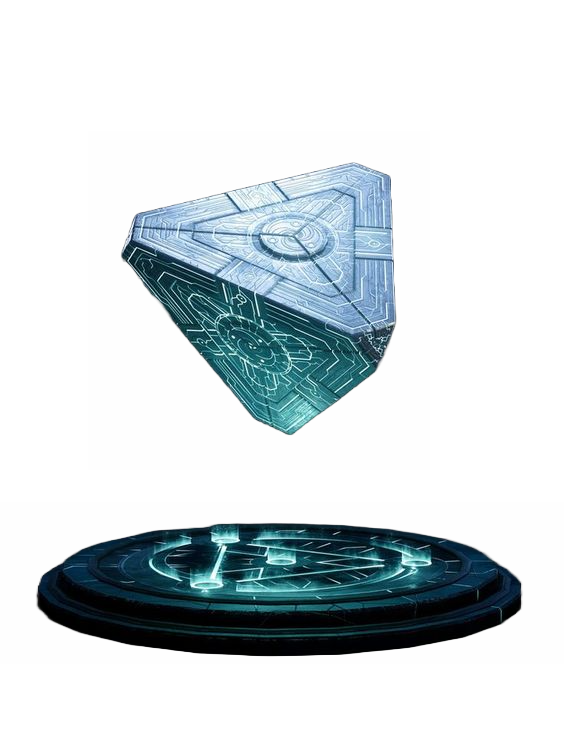
ARCANE RECOVERY
At 1st level, you can regain some of your spent energy through focus and meditative techniques. Once per day, when you finish a short rest, you can recover a small number of talent points. The number of points you can recover is equal to 2 plus half of your Mage level (rounded down).PRIME TALENT VERSATILITY
Whenever you gain a level in this class, you can replace one prime talent you learned from the channeling feature with another prime talent from the mage spell list.MAGE DISCIPLINE
When you reach 2nd level, you choose a discipline, refining your powers into specialized abilities and practices. Your choice grants you features at 2nd level and again at 6th, 10th, and 14th level.PRIME TALENT FAMILIARITY
At 3rd level you are so attuned with the arcane patterns of various prime talents that during a long rest, you can replace one mage prime talent with another prime talent from the mage spell list.ABILITY SCORE IMPROVEMENTS
When you reach 4th level, and again at 8th, 12th, 16th, and 19th level, you can increase one ability score of your choice by 2, or you can increase two ability scores of your choice by 1. As normal, you can’t increase an ability score above 20 using this feature.PROFICIENCY VERSATILITY
When you reach 4th level, and again at 8th, 12th, 16th, and 19th level, When you gain the Ability Score Improvement feature from your class, you can also replace one of your skill proficiencies with a skill proficiency offered by your class at 1st level (the proficiency you replace needn't be from the class). This change represents one of your skills atrophying as you focus on a different skill.ARCANE MASTERY
At 11th level, your mastery of the arcane grants you the ability to channel advanced talents. Choose a rank 6 talent from the mage powers list. You can activate this power once without expending a talent slot. You must finish a long rest before you can do so again. At higher levels, you gain more mage talents of your choice that you can use in this way: One rank 7 at 13th level, one rank 8 at 15th level, and one rank 9 at 17th level. You regain all uses of your Arcane Mastery when you finish a long rest. Additionally, whenever you gain a new level in this class, you can replace one of your mastery talents with another talent of the same rank from the Mage powers list.PRIME CHANNELING
At 18th level, you have achieved such mastery over certain talents that you can use them at will as prime talents. Choose a rank 1 Mage talent and a rank 2 Mage talent that are in your list of known talents. You can activate those talents at their lowest rank without spending any talent points. If you want to use either talent at a higher rank, you must spend the required talent points as normal. By spending 8 hours in meditation, you can exchange one or both of the talents you chose for different talents of the same ranks. This meditation can be performed during a long rest.SIGNATURE TALENTS
When you reach 20th level, you gain mastery over two powerful talents and can activate them with minimal effort. Choose two rank 3 Mage talents in your list of known talents to become your signature talents. You can activate each of them once at rank 3 without expending any talent points. When you do so, you can’t do so again until you finish a short or long rest. If you want to use either talent at a higher rank, you must spend the required talent points as normal.
MAGE DISCIPLINES
- Automancer
- Bladesinger
- Celestian
- Chrono
- Cybermancer
- Defender
- Gravity
- Illusion
- Metakinetic
- Protoweaver
- Psychogenic
AUTOMANCER
The followers of the Automancy discipline seek to enhance their arcane powers with machines. As you train in this discipline, you adapt your arcane powers to charge and drain energy from automatons and build or dismantle all things mechanical.TECH PRIEST
At 2nd level you gain proficiency in the Mechanics skill, Mechanics tools and can use Intelligence instead of Wisdom for mechanical related skill checks.ENERGY SALVAGE
As an action, you can attempt to drain the power source of one mechanical enemy or a powered device within 30 feet of you, and convert it into healing energy. This power has no effect on vehicles. Upon activation of this power, one of two effects occur, depending on the target.-
Enemy AI. When using this power against an automaton or construct, make a ranged forging attack. On a hit, the target takes 1d6 force damage, and you regain hit points equal to the amount of force damage dealt.
Mundane Devices. Choose a Huge or smaller electronic powered electronic device within range that is not being worn or carried. The device must make a saving throw versus your power save DC. The table below lists the bonus to the device’s save roll depending on its size. Forge enhanced devices and devices that are not turned on automatically succeed on their save. On a failed save, the device loses all power and function for 1 minute, and you regain hit points equal to the amount listed on the table. A device affected by this power becomes immune to the effects of this power for the next 24 hours. You may use the feature a number of times equal to your intelligence modifier per long rest.
DEVICE TABLE
| SIZE | SAVE BONUS | HEALING AMOUNT |
|---|---|---|
| Small (handheld device, SSN Unit) | +2 | 1d4 |
| Medium (Small console, Monitor) | +4 | 2d4 |
| Large (Console/Comm Pedestal) | +6 | 3d4 |
| Huge (Power conduit, data server) | +8 | 4d4 |
SERVITORS
At 6th level, you add the Quick Construct talent to your list of known talents and treat it as a mage power. When you activate Quick Construct, you can salvage parts from destroyed automatons and constructs (if there are any), and use those parts to craft another construct. Whenever you create a mechanical entity using an Alteration or Forging talent, it has additional benefits: The machine’s hit point maximum is increased by an amount equal to your mage level. The machine adds your proficiency bonus to its damage rolls.PROCEDURAL SAFEGUARDS
Beginning at 10th level, you have resistance to necrotic damage, and your hit point maximum can’t be reduced. You have spent so much time dealing with constructs and forces that animate them that you have become inured to some of their worst effects.CULT MECHANICUS
At 14th level, you can exert arcane control over constructs and automatons built by anyone. As an action, you can choose one construct or automaton that you can see within 60 feet of you. That machine must make a Charisma saving throw against your power save DC. If it succeeds, you can't use this feature on it again for 24 hours. If it fails, it becomes friendly to you and obeys your commands until you use this feature again. Intelligent machines are harder to control in this way. If the target has an Intelligence of 8 or higher, it has advantage on the saving throw. If it fails the saving throw and has an Intelligence of 12 or higher, it can repeat the saving throw at the end of every hour until it succeeds and breaks free.EXPANDED POWERS
Your subclass also grants you an expanded list of powers as you level. The following powers are added to the mage talents list for you.AUTOMANCY TALENTS TABLE
| MAGE LEVEL | TALENTS |
|---|---|
| 1st | intercept directive, remote connection |
| 3rd | assault drone, quick repair |
| 5th | forge vehicle, quick construct |
| 7th | basic construct, stealth sentry |
| 9th | control matrix, major field repair |
| 11th | forge automaton, virtual navigator |
| 13th | dismantle, enduring design |
| 15th | elite construct, full reconstruction |
BLADESINGER
Elves and half elves are known to train as Bladesingers master a tradition of combat that incorporates swordplay and dance. Originally created by elves, this discipline is a guarded tradition among elves and the practice is yet to be achieved by anyone outside the elven culture or species. In combat, a bladesinger uses a series of intricate, elegant maneuvers that fend off harm and allow the bladesinger to channel arcane energy into devastating attacks and a cunning defense. Many who have observed a bladesinger at work remember the display as one of the more beautiful experiences in their life, a glorious dance accompanied by a singing blade.TRAINING IN WAR AND SONG
When you adopt this tradition at 2nd level, you gain proficiency with light armor, and you gain proficiency with one type of one-handed melee weapon of your choice. You also gain proficiency in the Performance skill if you don't already have it.BLADESONG
Starting at 2nd level, you can invoke a secret elven arcane practice called the Bladesong, provided you aren't wearing medium or heavy armor or using a shield. It graces you with supernatural speed, agility, and focus. You can use a bonus action to start the Bladesong, which lasts for 1 minute. It ends early if you are incapacitated, if you don medium or heavy armor or a shield, or if you use two hands to make an attack with a weapon. You can also dismiss Bladesong at any time you choose (no action required). While your bladesong is active, you gain the following benefits:- You gain a bonus to your AC equal to your Intelligence modifier (minimum of +1).
- Your walking speed increases by 10 feet.
- You have advantage on Dexterity (Acrobatics) checks.
- You gain a bonus to any Constitution saving throws you make to maintain concentration on a talent. The bonus equals your Intelligence modifier (minimum of +1).
- You can use this feature a number of times equal to your proficiency bonus in the mage class, and you regain all expended uses of it when you finish a long rest.
EXTRA ATTACK
Starting at 6th level, you can attack twice, instead of once, whenever you take the Attack action on your turn. Moreover, you can cast one of your prime talents in place of one of those attacks.SONG OF DEFENSE
Beginning at 10th level, you can direct your arcane energy to absorb damage while your bladesong is active. When you take damage, you can use your reaction to expend a number of talent points to activate a shield that absorbs a certain amount of damage. The amount of damage absorbed is determined by the number of talent points expended to activate your shield. You can activate your shield at costs equivalent to the maximum talent rank your mage level has access to. 1 talent point spent is able to absorb 5 points of damage. For example, if you activate a rank 1 shield, it costs 2 talent points and absorbs 10 points of damage. You may not activate a shield greater than the cost of a rank 5 talent.SONG OF VICTORY
Starting at 14th level, you add your Intelligence modifier (minimum of +1) to the damage of your melee weapon attacks while your Bladesong is active.CELESTIAN
Your abilities come from your mastery over space, the stars, and the celestial bodies in between. You have a unique understanding of space-time and its relative cosmic forces. You can see the positive energy that links all living things. Each are different yet the same pieces to a grand cosmic machine.STELLAR EXPERTISE
Starting at 2nd level, your proficiency bonus is doubled for any ability check you make that uses the Astrophysics and Xenobiology skill if you are proficient in that skill. In addition, your alternate view on the concept of time allows you to handle immediate situations with speed of the mind over the body. When you roll for initiative, you can make an Intelligence check instead of a Dexterity check.COSMIC FLUX
At 2nd level, when you hit a creature with a channeling attack, you can use your bonus action to imbue the talent’s damaging effects with a space-time fluctuation. The target must make a Wisdom saving throw versus your Channeling save DC. If failed, the target takes an additional 1d6 radiant damage and it has disadvantage on its next attack roll or ability check. This effect lasts until the end of its next turn. Once you use this feature, you can’t use it again until you finish a short or long rest.SUDDEN SHIFT
Beginning at 6th level, you can fold the space between you and an incoming attack from an enemy. When a creature makes an attack roll against you, you can use your reaction to instantly teleport up to an unoccupied space up to 20 feet away that you can see. The attack automatically misses you. Once you use this feature, you can’t use it again until you finish a short or long rest.FOCUSED PHASE
Beginning at 10th level, when you are concentrating on a metaphase talent, your concentration can’t be broken as a result of taking damage.COSMIC WARD
At 14th level, you are resistant to fire and radiant damage. In addition, when a creature hits you with an attack that deals radiant damage, they take radiant damage equal to half your Mage level.CHRONO
Focusing on the manipulation of time, those who follow the Chrono discipline learn to alter the pace of reality to their liking. Using fields of energy, these mages can bend the flow of time as adroitly as a skilled musician plays an instrument, lending themselves and their allies an advantage in the blink of an eye.CHRONAL REDACT
At 2nd level, you can use your arcane abilities to exert limited control over the flow of time around a creature. As a reaction, after you or a creature you can see within 30 feet of you makes an attack roll, an ability check, or a saving throw, you can force the creature to reroll. You make this decision after you see whether the roll succeeds or fails. The target must use the result of the second roll. You can use this ability twice, and you regain any expended uses when you finish a long rest.SPEED OF THOUGHT
At 2nd level, you can add your Intelligence modifier to your initiative rolls.CHRONO ARREST
At 6th level, as an action, you can use your arcane abilities to force a large or smaller creature you can see within 60 feet of you to make a Constitution saving throw against your power save DC. Unless the saving throw is a success, the creature is encased in a field of arcane energy until the end of your next turn or until the creature takes any damage. While encased in this way, the creature is incapacitated and has a speed of 0. You can use this feature a number of times equal to your Intelligence modifier (a minimum of once). You regain all expended uses when you finish a long rest.SUBVERTING TIME
At 10th level, you can channel a rank 4, or lower talent, and condense the talent’s effect into a mote. The power is frozen in time at the moment of activation and held within a gray bead for 1 hour. This bead is a tiny object with an AC of 15 and 1 hit point, and it is immune to poison and psychic damage. When the duration ends, or if the bead is destroyed, it vanishes in a flash of light, and the power is lost. A creature holding the bead can use its action to release the power within, whereupon the bead disappears. The talent uses your power attack bonus and power save DC, otherwise the talent treats the creature who released it as the caster for all other purposes. Once you create a bead with this feature, you can't do so again until you finish a short or long rest.ALTERNATE TIMELINE
At 14th level, you can peer through possible futures and choose which one happens, ensuring that which should be, is. When you or a creature you can see within 60 feet of you makes an attack roll, an ability check, or a saving throw, you can use your reaction to ignore the die roll and decide whether the number rolled is the minimum needed to succeed or one less than that number (your choice). When you use this feature, you must make a Constitution Saving throw DC 15. On a failure, you gain one level of Exhaustion. Only by finishing a long rest can you remove a level of exhaustion gained in this way.CYBERMANCER
Disciples of Cybermancy concern themselves with how their powers interact with modern technology, particularly through the SSN. They are the mage counterpart to the Cyberunner. They make use of network technology as both a conduit and a battery for a variety of arcane energies.BONUS PROFICIENCY
At 2nd level, you gain proficiency with the Computer skill and Hacker’s Kit.KEYBOARD WARRIOR
At 2nd rank, your mastery of interlaced reality grants you access to the cyberrunner talent list.COMPRESSED ENCRYPTION
At 6th level, as an action, you can construct a personal flash drive and program one of your arcane talents into it. This flash drive has one hit point and an AC of 15, is immune to poison and psychic damage and disintegrates once the power contained is discharged. If the flash drive takes damage it disintegrates and the power is lost, the flash drive also disintegrates after 24 hours if it is not used. You are the only one that can use the datadisk and only one of your datadisks can exist at one time. Activating a talent from the flash drive that requires concentration will override any other prior talent you are concentrating on. Once you use this feature, you can't use it again until you finish a short or long rest. The talent contained in the flash drive uses your power attack bonus and power save DC.CRYPTO CURRENCIES
At 10th level, you can activate talents through networked electronic devices, including cameras, mobile phones, and computers. For example, if a creature is under the observation of a security camera, and you can see the video feed from that camera on a computer, you can funnel your power into the computer and out through the security camera to target that creature.DEUS EX MACHINA
By 14th level, you have learned to imprint vestiges of your consciousness on electronic devices with significant computing power. When you channel a talent that requires concentration, you can use a device whose computing power is equal to or greater than a tablet computer to maintain concentration of the talent on your behalf. The device must be held or worn by you to maintain this effect. If the device is destroyed, taken from you, dropped, or turned off, the concentration ends. Once you use this feature, you can't use it again until you finish a long rest.DEFENDER
You focus your abilities toward facing off against foes in battle and protecting your allies from dangerous threats. You rely on your quick reflexes and your expertise with hurling powerful, destructive energies.COMBAT REFLEXES
When you choose this discipline at 2nd level, your instinctive reflexes allow you to react quickly to incoming threats. You gain a bonus to initiative rolls equal to your Intelligence modifier.FORCE SHIELD
At 2nd level, you can summon an energy shield to defend against incoming attacks. When you are hit by an attack or fail a saving throw, you can use your reaction to roll 1d6 and add the result as a bonus to your AC against that attack or as a bonus to that saving throw. You can use this feature a number of times equal to your Intelligence modifier (minimum of 1). You regain all uses after you finish a long rest.FOCUSED TARGETING
At 6th level, you can focus the energies of your combat talents. Whenever you use a talent that deals acid, cold, fire, force, or lightning damage, you can spend 3 talent points to gain one of the following benefits.- You gain advantage on your channeling attack roll for that talent.
- You can give one target of the power disadvantage on its first saving throw made against the talent’s effects.
EXTENDED SHIELD
Starting at 10th level, you can extend your defensive capabilities to your allies. When a creature that you can see within 60 feet of you is hit by an attack or fails a saving throw, you can use your reaction to grant them the benefit of your Force Shield. Each use of this feature expends one of your uses of Force Shield.REACTIVE SHIELD
At 14th level, your Force Shield leaves behind traces of reactive energy. When you use your Force Shield feature to protect a target, until the end of your next turn, anytime the target is hit with an attack, the attacker takes force damage equal to half your Mage level.GRAVITY
These mages master the physics of forces that draw bodies of matter together or drive them apart. They learn to bend and manipulate the forces of gravity to their benefit, and to the detriment of their enemies.DENSITY FLUX
At 2nd level, as an action, you can use your arcane abilities to alter the weight of one object or creature you can see within 30 feet of you. The object or creature must be large or smaller. The target's weight is halved or doubled for up to 1 minute, or until your concentration ends (as if you were concentrating on a talent). While the weight of a creature is halved by this effect, the creature's speed increases by 10 feet, it can jump twice as far as normal, and it has disadvantage on Strength checks and Strength saving throws. While the weight of a creature is doubled by this effect, the creature's speed is reduced by 10 feet, and it has advantage on Strength checks and Strength saving throws. Upon reaching 10th level in this class, you can target an object or a creature that is huge or smaller.AFTERMATH
At 6th level, you've learned to manipulate gravity around a living being. Whenever you channel a talent on a creature, you can move the target 5 feet to an unoccupied space of your choice if the target is willing to move, if your talent hits the target with an attack, or if the target fails its saving throw against your talent.MOMENTUM
At 10th level, when another creature that you can see within 60 feet of you hits with a weapon attack, you can use your reaction to increase the attack's velocity, causing the attack's target to take an extra 1d10 damage of the weapon's damage type. Alternatively, if a creature within 60 feet of you takes damage from a fall, you can use your reaction to increase the fall's damage by 2d10. You can use this feature a number of times equal to your Intelligence modifier (a minimum of once). You regain all expended uses when you finish a long rest.EVENT HORIZON
At 14th level, as an action, you can use your arcane abilities to emit a powerful field of gravitational pull on other creatures for up to 1 minute or until your concentration ends (as if you were concentrating on a talent). For the duration, whenever a creature hostile to you starts its turn within 30 feet of you, it must make a Strength saving throw against your power save DC. On a failed save, it takes 2d10 force damage, and its speed is reduced to 0 until the start of its next turn. On a successful save, it takes half as much damage, and every foot it moves this turn costs 2 extra feet of movement. Once you use this feature, you can't do so again until you finish a long rest or you can channel it for the talent point cost of a rank 3 talent.ILLUSION
You focus your studies on arcane talents that dazzle the senses, befuddle the mind, and trick even the wisest folk. Your power is subtle, but the illusions crafted by your keen mind make the impossible seem real. Some illusionists—including many gnome mages—are benign tricksters who use their talents to entertain. Others are more sinister masters of deception, using their illusions to frighten and fool others for their personal gain.BONUS PROFICIENCY
At 2nd level, you gain proficiency in the deception skill and apply your intelligence modifier to it rather than charisma. If you already have proficiency in Deception then choose a different skill.IMPROVED ILLUSORY POINT
At 2nd level, you learn the Illusory Point prime talent. If you already know this talent, you learn a different prime talent of your choice. This doesn't count against your number of prime talents known. When you activate Illusory Point, you can create both a sound and an image with a single activation of the talent.MALLEABLE ILLUSIONS
At 6th level, when you activate an illusion talent that has a duration of 1 minute or longer, you can use your action to change the nature of that illusion (using the talent’s normal parameters for the illusion), provided that you can see the illusion.ILLUSORY SELF
At 10th level, you can create an illusory duplicate of yourself as an instant, almost instinctual reaction to danger. When a creature makes an attack roll against you, you can use your reaction to interpose the illusory duplicate between the attacker and yourself. The attack automatically misses you, then the illusion dissipates. Once you use this feature, you can't use it again until you finish a short or long rest.ILLUSORY REALITY
At 14th level, you have mastered the skill of making your illusions semi-tangible. When you activate an illusion talent of 1st rank or higher, you can choose one inanimate, non-arcane object that is part of the illusion and make that object real. You can do this on your turn as a bonus action for the duration of the talent. The object remains tangible for 1 minute. For example, you can create an illusion of a bridge over a chasm and then make it real long enough for your allies to cross. The object can't deal damage or otherwise directly harm anyone.METAKINETIC
As a metakinetic, you specialize in shaping the natural forces and elements that interact with each other to create the fundamental makeup of the universe itself. You possess the ability to see the pattern and flow of prime energies such as fire, wind, light, and gravity, and have mastered merging and redirecting them to your will.TALENT ACCURACY
Beginning at 2nd level, you can create pockets of relative safety within the effects of your kinesis and elemental talents. When you use an elemental or kinesis talent that affects other creatures you can see, you can choose a number of them equal to 1 + the talent’s rank. The chosen creatures automatically succeed on their saving throws against the talent, and they take no damage if they would normally take half damage on a successful save.PRIME BOOSTER
Starting at 6th level, your damaging Prime talents still affect creatures that avoid the brunt of the effect. When a creature succeeds on a saving throw against your Prime talent, the creature takes half the talent’s damage (if any) but suffers no additional effect from the talent.EMPOWERED METAKINETIC
Beginning at 10th level, you can add your Intelligence modifier to one damage roll of any Mage elemental or kinesis talent you use.OVERCHANNEL
Starting at 14th level, you can increase the power of your basic talents. When you use a talent of ranks 1 through 5 that deals damage, you can deal maximum damage with that talent. The first time you do so, you suffer no adverse effect. If you use this feature again before you finish a long rest, you take 2d12 necrotic damage for each talent rank, immediately after you activate it. Each time you use this feature again before finishing a long rest, the necrotic damage per talent rank increases by 1d12. This damage ignores resistance and immunity.PROTOWEAVER
You specialize in shaping the energies you harness into your own design. Through study and training, you’ve learned to visualize all forms of potential energy down to a molecular level, allowing you to mold alterations into existing energy patterns.STUDIED SAVANT
When you select this discipline at 2nd level, your training makes you a learned expert on various scientific subjects. Your proficiency bonus is doubled for any ability check you make that uses the Astrophysics, Lore, or Xenobiology skill if you are proficient in that skill. In addition, whenever you make an Intelligence (Investigation) check to gain information from scientific research records or files, you are considered proficient in Investigation and add double your proficiency bonus to the check, instead of your normal proficiency bonus.ELEMENTAL ALTERIST
At 2nd level, you can splice the energy generated by your talents at a molecular level, altering its final form. When you use talent points to activate a talent that deals acid, cold, fire, lightning, or thunder damage, you can spend an additional 2 talent points to change the damage type of that talent to another damage type from that list. You can change the damage type only once per activation of a talent. When you alter a damage type in this way, until the end of your next turn, you gain a +2 bonus to saving throws against talents and techniques that deal damage of the new damage type. You can use this feature a number of times equal to your Intelligence modifier (minimum of 1). You regain all uses after you finish a long rest.TALENT SPLICER
Starting at 6th level, you can manipulate the base formulae used to power your talents. When you activate a talent, you can use a bonus action and spend an additional 4 talent points to apply one of the following effects.- You can double the range of the talent to a maximum of 1 mile. This has no effect on talents with a range of Self or Touch.
- If the talent forces the target to make a saving throw you can roll a d4 and add the result to the talent’s save DC.
- You can increase the talent’s damage by an amount equal to half your Mage level. If the talent deals damage on subsequent turns, the extra damage only applies on the turn in which you activate the talent.
- You can use this feature a number of times equal to your Intelligence modifier (minimum of 1). You regain all uses after you finish a long rest.
DYNAMIC FOCUS
At 10th level, whenever you make a saving throw to maintain concentration on a talent, you can use your Intelligence instead of your Constitution to make the save.PRIME RESILIENCE
When you reach 14th level, you can ward away the damaging effects of harmful powers. You have resistance against the damage from talents and techniques. In addition, you have advantage on saving throws against talents and techniques. A Mage who specializes in psychogenics strives to master the powers that influence and interact with the minds of others. Telepaths, Clairvoyants, and Enchanters follow the path of the Psychogenic.PSYCHOGENIC
A Mage who specializes in psychogenics strives to master the powers that influence and interact with the minds of others. Telepaths, Clairvoyants, and Enchanters follow the path of the Psychogenic.MESMERIZE
Starting at 2nd level, you can use your talent to charm, immobilize, and stupefy other beings. As an action, you can use this power and select any target within 5 feet of you that can also see and hear you. The target must then succeed on a Wisdom saving throw using your Channeling save DC as the difficulty. If failed, the target cannot move and is considered both dazed and incapacitated until the end of your next turn. This power can be maintained by expending an action each turn. If the target takes damage, moves out of visual or auditory range, or is more than 10 feet away from you, the mesmerize effect ends. If the creature makes their save, or once the effect ends on the creature, the power may not be used on the same target again until you complete a long rest.DAZE AND DISORIENT
At 6th level, you may use this power as an action to confuse and distract another creature. Choose a target that you can see within 30 feet of you. The target must make a Wisdom saving throw versus your Channeling save DC. On a failed save, the target is completely disoriented, no longer able to take reactions until the end of your next turn. In addition, their next attack roll is made at a disadvantage. On a successful save, the target becomes immune to this power until you’ve completed a long rest. Creatures that are immune to mental and charm effects are also immune to this power.SECONDARY MIND
At 10th level, whenever you use a psychogenic power of Rank 1 or higher that affects a single target, you may also choose a secondary target for the same power.MEMORY SCULPTING
At 14th level, you gain the ability to influence a creature’s mind without them ever becoming aware of it. When you use a psychogenic talent to charm one or more creatures, you can alter one creature’s memories so that it never remembers ever being charmed. Additionally, once before the talent expires, you can use your action to attempt to erase additional memories of the time in which they were charmed by you. The creature must succeed on an Intelligence saving throw against your Mage channeling save DC or lose a number of hours of its memories equal to 1 + your Charisma modifier (minimum of 1). You can opt to make the creature forget less than the given time, and the amount of time gained can’t exceed the duration of the psychogenic talent.Remove these ads. Join the Worldbuilders Guild