Sci-fi adventures can take place in a countless variety of fascinating environments. Mysterious planets, derelict starships, sprawling city streets, alien superstructures, stellar anomalies, and underground strongholds are but a few examples. A well planned environment is key to setting the overall tone of an adventure.
This chapter provides a general overview of several types of adventure environments. The first section discusses survival in varying environmental conditions. The following sections cover different scales of environments such as structures, settlements, overland terrain, and outer space. The last section discusses hazards and how to use them in your campaign.
SECTION 1
ENVIRONMENTAL CONDITIONS
Each type of adventure environment has its own features that can be deadly to characters without the right gear and preparation. The following are common conditions that should be considered when creating any galactic environment for your game.
ATMOSPHERE
In Stellar Winds, most spacefaring cultures share similar requirements for environments that can sustain organic life. This enables characters to function without restriction in areas with a suitable atmosphere or adequate life support.
However, many galactic environments don’t have a breathable atmosphere, requiring special equipment to explore the area without suffocating.
These harmful effects can be mitigated with proper equipment or items such as sealed armor or an adaptation mask. Other items and certain arcane powers can also provide similar protections.
CORROSIVE
As the name suggests, a corrosive atmosphere eats away at items. The type and speed of the erosion vary, but the most common use of this term describes atmospheres capable of dissolving most items. A typical corrosive atmosphere deals anywhere from 1 acid damage per minute up to 10d6 acid damage per round to creatures and objects within. Certain metals and treated materials may be immune to the specific atmosphere of a planet, and often the corrosion can be mitigated with dutiful preparation.
NO ATMOSPHERE
A creature on a planet without an atmosphere (or with an atmosphere so thin that it is effectively airless) is exposed to a vacuum.
NORMAL
A normal atmosphere can support the majority of breathing lifeforms. Most such atmospheres are composed of some combination of oxygen, nitrogen, and other non-toxic gasses.
THICK
A nonacclimated creature operating in a thick atmosphere treats it as somewhat harmful, due to the extra chemical compounds in the air and the increased atmospheric pressure. Every hour, such a creature must succeed at a DC 15 Constitution saving throw or become sickened. The DC increases by one every additional hour. This condition ends when the creature returns to a normal atmosphere. Conversely, the increased weight of the air grants advantage on Acrobatics checks to fly or Piloting checks to keep an aircraft in flight.
Severely thick atmospheres are far more dangerous. Every minute, a creature in such an atmosphere must succeed a DC15 Constitution saving throw or begin to suffocate as its lungs cease coping with the density of the oxygen inhaled and lose the strength to keep pumping air into its bloodstream.
THIN
Thinner atmospheres tend to cause a nonacclimated creature to have difficulty breathing and become extremely tired. A typical thin atmosphere requires such a creature to succeed at a DC 15 Constitution saving throw or become fatigued. The fatigue ends when the creature returns to a normal atmosphere.
Severely thin atmospheres can cause long term oxygen deprivation to those affected in addition to the effects of a standard thin atmosphere. The first time a creature in a severely thin atmosphere fails its Constitution save, it must succeed at a DC 25 Constitution save or take 1 damage to all ability scores.
A creature acclimated to high altitude (see Hill and Mountain Terrain) gains advantage on saving throw to resist this effect.
TOXIC
Toxic atmospheres are composed of poisonous compounds and vary radically in their consistencies. Some toxic atmospheres are capable of sustaining oxygen breathing lifeforms, while others immediately suffocate those within them. Regardless of whether or not they allow creatures to breathe, toxic atmospheres are threats to most living creatures, as they act as an inhaled poison. Though the specific type of poison varies, many toxic atmospheres act as existing poisons but with radically different onset times and save DCs. Low level toxic atmospheres can have onset times measured in hours or days, while heavily toxic atmospheres have onset times measured in rounds.
GRAVITY
A planet’s size, mass, distance from other celestial bodies, and various other factors can determine its level of gravity.
Large differences in gravity affect a character’s movement, the weight of their gear, and how they interact with objects around them. Planets and structures with thinner atmospheres tend to have lower levels of gravity, and vice versa.
Rules for movement in low or high gravity can be found in chapter 8 Adventuring In cases of dramatic shifts in gravity, you can adjust the modifiers provided in those rules accordingly.
In addition, if you’re dealing with an extreme level of gravity such as a gravitational pull that is multiple times stronger than that of Earth, consider increasing the difficulty of Strength and Dexterity checks, as well as imposing penalties to combat.
ZERO GRAVITY EFFECTS
Rules for movement in Zero-G can be found in chapter 9 of the Core Manual.
Flying. Most flying creatures can’t fly in Zero-G, but there are some exceptions. For example, the Zero-G pack is designed to grant a flying speed in areas with no gravity. Also, the effects of the fly talent, which enables motion by telekinetics, can function in any environment.
Encumbrance. If you’re using the optional rules for encumbrance, a character’s carrying capacity while in Zero-G is multiplied by 10.
Adaptation. Long-term exposure to Zero-G can cause problems for those unaccustomed to it. A character that returns to an area with normal gravity after spending at least 5 days in a zero-gravity environment must succeed on a DC 15 Constitution saving throw or their Strength score is reduced by 2. This effect lasts for 2d6 days.
WEATHER
Harsh weather conditions play a significant role in travel through an environment. Rain, dust storms, electrical storms, and extreme temperatures are just the more common weather hazards that potentially occur. Even then, none of these are consistent from planet to planet. For example, in many instances, a rainstorm isn’t necessarily made of water. It could be a more volatile liquid such as acid, or even solid forms such as silicate or metallic particles.
HEAVY PRECIPITATION
Everything within an area of heavy rain (which includes snowfall, hail, and other particles) is lightly obscured, and creatures in the area have disadvantage on Wisdom (Perception) checks that rely on sight. Heavy rain also imposes disadvantage on Wisdom (Perception) checks that rely on hearing.
Depending upon the rain’s composition, it may also be harmful to characters who come into contact with it. Use your best judgment when applying damage types to rainfall. For example, toxic rainfall could deal acid or poison damage. Depending upon wind and gravity, harder or sharper solid particles could require a saving throw to avoid bludgeoning or piercing damage.
STRONG WINDS
A strong wind imposes disadvantage on ranged weapon attack rolls and Wisdom (Perception) checks that rely on hearing. A strong wind also disperses smoke and gasses and makes mundane methods of flying nearly impossible. A flying creature in a strong wind must land at the end of its turn or fall. In lower levels of gravity, they may be pushed in a random direction before falling.
Strong winds can also create dust storms that impose disadvantage on Wisdom (Perception) checks that rely on sight.
Whenever the temperature is at or below 0 degrees Fahrenheit, a creature exposed to the cold must succeed on a DC 10 Constitution saving throw at the end of each hour or gain one level of exhaustion. Creatures with resistance or immunity to cold damage automatically succeed on the saving throw, as do creatures wearing environmental gear and creatures naturally adapted to cold climates.
EXTREME HEAT
When the temperature is at or above 100 degrees Fahrenheit, a creature exposed to the heat and without access to drinkable fluids must succeed on a Constitution saving throw at the end of each hour or gain one level of exhaustion. The DC is 5 for the first hour and increases by 1 for each additional hour. Creatures wearing medium or heavy armor, or who are wearing heavy clothing, have disadvantage on the saving throw. Creatures with resistance or immunity to fire damage automatically succeed on the saving throw, as do creatures naturally adapted to hot climates.
RADIATION
Some plants emit high levels of radiation, or blasted with intense radiation from a nearby star. Appendix A. Condition provides rules for applying the effects of radiation exposure.
SECTION 2
STRUCTURES
Structures are environments in which their primary features are within a confined space, often separated into sections by barriers such as walls, doors, hatches, and portals.
A structure’s appearance and features are dependent on its location and purpose. An abandoned outpost, a derelict starship, a secret corporate facility, and the tunnels beneath an alien ruin are all examples of interior environments that can inspire tales of heroic sci-fi adventure.
Running adventures within an interior environment grants the advantage of better predicting where the characters may go next, as the confined area limits exploration options
DESIGNING A STRUCTURE
Use the following guidelines for designing a structure as an adventure location.
CHOSE A CONCEPT
When designing a structure, you should first determine its primary concept, which helps to establish distinctive qualities. For example, a biogenetics lab facility is going to have a different look and feel than a Draconian temple or a xamaron hive.
The Structure Concept table lists some common sci-fi structural concepts. You can choose one on the list, determine one randomly, or use the table entries as inspiration to create your own.
STRUCTURE CONCEPT TABLE
| D12 | CONCEPT |
|---|
| 1 | Alien architecture (unknown origin or lore) |
| 2 | Creature nest or lair |
| 3 | Fortified base or stronghold |
| 4 | Interior of an asteroid or similar body |
| 5 | Mechanical superstructure or machine |
| 6 | Municipal or ceremonial building |
| 7 | Natural caverns or tunnels |
| 8 | Operations facility (research, storage, detention, etc.) |
| 9 | Residential building, tower, or outpost |
| 10 | Ruins (from battle, natural disaster, ancients, etc.) |
| 11 | Starship or space station |
| 12 | Underground complex |
ESTABLISHING A LOCATION
Where the structure is located is as important as its primary concept. Not only does the location define how the characters access the structure, but it also helps you flesh out the structure’s finer details.
An underwater detention facility, for example, may have numerous sectors with thick walls and doors with security checkpoints, while a network of asteroid tunnels is unlikely to have any doors at all (or even gravity, for that matter).
The Structure Location table provides some common ideas for where to place a structure.
STRUCTURE LOCATION TABLE
| D10 | LOCATION |
|---|
| 1 | Aerial (floating) landmass |
| 2 | Dimensional (sub dimension, rift, energy realm, etc.) |
| 3 | Island or similar landmass |
| 4 | Natural formations (mountains, cliffs, outcropping) |
| 5 | Natural wilderness (plains, forest, tundra, etc.) |
| 6 | Outer space (solitary or within a larger structure) |
| 7 | Planetary wastes (badlands, biohazard, etc.) |
| 8 | Subaquatic (underwater) region |
| 9 | Subterranean (underground) |
| 10 | Urban city or colony |
ADDITIONAL DETAILS
Define some additional aspects that may be relevant to the adventure scenario. Who built the structure and why? How long has it been there? What major events occurred before the arrival of the characters?
STRUCTURE INHABITANTS
Once you’ve chosen a structure’s primary features, decide whether it’s inhabited as well as the nature of those potential inhabitants. A research facility, for example, might have one or more NPC scientists or researchers. It could just as well be overrun with threats generated from research has gone awry.
USING NPCS
When placing NPCs, assign them traits necessary to running the adventure scenario. Using the example from above, a random lab technician may not require much detail, but the facility’s head researcher may need an established personality, background, and motivation, especially if they serve as part of the hook for the adventure. See chapter 7 for guidance on creating NPCs.
USING THREATS
You can use the structure’s overall concept and location as a guide to determining which threats the characters may face. A list of galactic environments is provided in the Introduction section of the Threats Database. You can decide which of these matches best with your concept and choose threats accordingly. You can also determine threats randomly using the random encounter tables located at the back of that book.
MAPPING A LAYOUT
Every structure needs an interior layout, usually in the form of a map. The structure’s location, concept, lore, and inhabitants should give you a starting point for mapping its layout. If you need further inspiration, you can find existing maps that have been made freely available online or even use a map of a real world location. Alternatively, you can borrow a map from a published adventure.
Most adventure maps use a square grid, with each square representing an area of 5 feet by 5 feet. For larger structures, you may prefer a scale where each square represents 10 feet. You can then subdivide those squares for use in combat or draw smaller scale combat maps only for areas where you’ve placed combat encounters.
- When mapping your layout, keep the following in mind.
- Unless the concept requires it, avoid creating too many rooms of the same size and shape.
- An asymmetrical layout makes the area less predictable.
- Think in three dimensions. Stairs, lifts, ramps, platforms, catwalks, balconies, and other changes of elevation make a structure more interesting and make encounters in those areas more challenging.
- Flesh out the physical details of the area. Decide what material is used for the walls and doors. Place technological aspects where applicable. Apply features denoting age or damage such as deteriorating walls, collapsed floors, or flooded areas.
- Add multiple entrances and exits, if possible. Nothing gives players a stronger sense of making real decisions than having multiple paths to choose from.
- Add some hidden or secret doors and passages to reward players who take the time to search for them.
STRUCTURE FEATURES
A structure’s features are based upon its primary concept and location. A derelict starship can have numerous passages, conduits, electronic panels, and mechanical doors that vary by deck. A subterranean lair might instead have naturally formed or burrowed tunnels with numerous uneven branches. It may also contain features relating to the creature itself. For example, a breeding nest might contain hanging of spore pods covered in strange mists that emit a foul odor.
WALLS AND CEILINGS
Many structures have walls and ceilings made of common materials such as compounds made from metal or stone. Depending upon its concept, a structure can have walls made from ice, wood, organic creature matter, energy barriers, or hardened chemical composites. Aside from doors, hatches, and portals (some of them hidden), walls and ceilings hold perceptible objects such as light fixtures, panels, signs, and decorations.
Doors
When placing doors, keep the structure’s concept in mind as well as the nature of its primary inhabitants. A door’s material often compliments that of the wall it allows passage through. Metal doors are commonplace on a human starship, but one made from solid oak may seem out of place.
Locked Doors. Characters who don’t have the proper key or codes to a locked door can bypass the lock with a successful Dexterity check (doing so requires an infiltration kit and proficiency in its use). They can also force the door with a successful Strength check, break it down by dealing enough damage to it or use the lock pick power or a similar effect.
Sealed Doors. A sealed door is similar to a locked door, except that there’s no lock or security to bypass on one side, and the door can be opened normally from the other side as an action.
SECRET DOORS
A secret door is a door or hatch that is purposefully camouflaged against the surface that surrounds it, either by constructing it to blend into the surface or by technological means such as a holographic illusion.
Detection. Use the characters’ passive Wisdom (Perception) scores to determine whether anyone in the party notices a secret door without actively searching for it. Characters can also find a secret door by actively searching the location where the door is hidden and succeeding on a Wisdom (Perception) check. To set an appropriate DC for the check, see chapter 1.
Opening the Door. Once a secret door is detected, a successful Intelligence (Investigation) check might be required to determine how to open it if the method isn’t obvious. Or they may discover a hidden security panel that can be bypassed in the same manner as a locked door. Set the DC according to the difficulty guidelines in chapter 1. If adventurers can’t determine how to open a secret door, breaking it down is always an option. Treat it as a locked door made of the same material as the surrounding wall (see chapter 1 to determine appropriate DCs or object statistics).
HIDDEN DOORS
A hidden door is a normal door that is hidden from view. A secret door is carefully camouflaged into its surrounding surface, whereas a hidden door is most often concealed by mundane means. It might be covered by stacked crates, a wall hanging, or (in the case of a concealed hatch) under a grate or floorboard. Normally, no ability check is required to find a hidden door. A character needs only to look in the right place or take the right steps to reveal the door. However, you can use the characters’ passive Wisdom (Perception) scores to determine whether any of them notices signs of the area around the door having been recently disturbed.
LIGHTING
For uninhabited structures, darkness is the default condition within the structure’s interior. dim light may be available depending upon the number of windows and available sunlight. Some structures can have automatic or motion-activated lighting as well. In subterranean or deep space settlements, many creatures that have dark vision may have no need for light. This is often the case for creatures and cultures with limited technology. Characters must use their own light sources to explore derelict ships, underground bunkers without power, rocky caverns, and other places where creatures use darkness as an advantage to hide or hunt. Flares and flashlights help characters see over a short distance but can also attract the attention of other creatures who can see those light sources from far away.
BREATHABLE AIR
Depending upon its location, some structures may not have a breathable atmosphere (see “Atmospheric Conditions”). Some areas that do have breathable air may also be pressure sealed. Without power or life support, these areas have a stifling atmosphere in which the oxygen supply is limited.
SECTION 3
SETTLEMENTS
A settlement such as a city, colony, or station, is a popular environment used in many sci-fi stories and adventures. The characters might be hired to infiltrate a local gang, rescue a kidnapped celebrity, help the police hunt down a cybercriminal, or defend a community under siege.
DESIGNING A SETTLEMENT
Unlike structures, settlements have open areas with fewer spatial constraints. When creating a settlement for your campaign, focus on the locations that are most relevant to the adventure. It isn’t necessary to name every street, building, and resident.
SETTLEMENT CONCEPT
Like structures, define a base concept for your settlement. Is it a small village on a remote planet, or something larger like a city or colony? Perhaps it’s a city-like space station similar to Terra Space Colony or a residential sector of the Citadel Ark.
SOCIETY AND COMMUNITY
After defining your concept, determine the type of society that resides upon the settlement. For example, a metropolis would likely have advanced trade, mass transit, and long-range communication. A fledgling space colony or small town might not have any of these.
Local Authority. Establish a basic form of government. Is the society overseen by elected officials? Do they instead have a ruling body or nobility? These choices also help you determine what form of law enforcement or military is present in the community.
Technology. Decide what forms of technology are available to the inhabitants. The “Tech Levels” section in chapter 9 provides advice on determining a society’s level of advancement.
Lifestyle. Have a basic idea of what an average resident does in their day-to-day life. Larger cities and colonies often have paid employment, entertainment, and travel. Inhabitants in less developed settlements may have to hunt for food and supplies. Perhaps the settlement exists as part of a major project such as mining, military, or manufacturing.
ADDITIONAL TRAITS
You can fill in some additional aspects of the settlement or community that relate to your campaign or storyline. For example, a city’s main center of trade is a mega corporation with its hand on the local government. A space colony may have been built upon the site of a historic conflict or natural disaster. A local village may have a holy sanctuary that secretly holds the remains of an ancient alien archive.
CURRENT EVENTS
You can create some recent events that relate to the concept and aspects of the settlement or community. Examples include local holidays, a recent string of thefts, a looming military conflict, or a revolutionary discovery. You can use these to set the mood and tone of the region, tie them into your adventure, or keep them as potential hooks for side missions.
RANDOM BUILDINGS
Dramatic chase scenes and narrow escapes along the streets of a city or town can sometimes force characters to dash into buildings. When you need to flesh out a building quickly, roll on the Building Type table. Then roll on the table corresponding to that building to add further detail.
If a roll makes no sense considering where the characters are, you can always roll again or simply choose another result. You can also use the rolled result as inspiration to add your own details.
BUILDING TYPE
| 1D6 | TYPE |
|---|
| 1 | Business (roll on the Business table) |
| 2 | Entertainment (roll on the Entertainment table) |
| 3 | Municipal (roll on the Municipal table) |
| 4 | Residential (roll on the Residential table) |
| 5 | Services (roll on the Services table) |
| 6 | Trade (roll on the Trade table) |
BUSINESS
| D6 | TYPE |
|---|
| 1 | Consumer relations center |
| 2 | Corporate office |
| 3 | Distribution/transport center |
| 4 | Factory |
| 5 | Training facility |
| 6 | Warehouse |
ENTERTAINMENT
| D6 | TYPE |
|---|
| 1 | Event/Concert hall |
| 2 | Gaming/Casino |
| 3 | Movie Theater/SSNreal Center |
| 4 | Museum |
| 5 | Nightclub/Bar |
| 6 | Sports Center/Arena |
MUNICIPAL
| D8 | TYPE |
|---|
| 1 | Administration (local government, courthouse, etc.) |
| 2 | Detention center/prison |
| 3 | Education center (school, university, etc.) |
| 4 | Military complex |
| 5 | Police station |
| 6 | Records office (library, local archives) |
| 7 | Spiritual (temple, sanctuary, holy grounds) |
| 8 | Utilities (electricity, water, life support) |
RESIDENTIAL
| D8 | TYPE |
|---|
| 1 | Abandoned building/house |
| 2 | Apartment complex/tenement |
| 3 | Assisted living facility |
| 4 | Illegal trade/gang hideout |
| 5 | Orphanage |
| 6 | Private mansion |
| 7 | Shelter |
| 8 | Single family home |
SERVICES
| D8 | TYPE |
|---|
| 1 | Banking facility |
| 2 | Communications centers (postal, telecom, SIM) |
| 3 | Legal/law office |
| 4 | Local transit (tram, taxi, shuttle) |
| 5 | Lodging (hotel, inn, resort) |
| 6 | Mechanic/repair center |
| 7 | Medical facility/hospital |
| 8 | Travel (airport, spacedock, train terminal) |
TRADE
| D6 | TYPE |
|---|
| 1 | Grocery/marketplace |
| 2 | Large retailer (chain store, superstore) |
| 3 | Local artisan/manufacturer |
| 4 | Real estate/rental office |
| 5 | Restaurant/food services |
| 6 | Small business retailer (local shop, outlet) |
MAPPING SETTLEMENT
When you draw a map for a settlement in your game, don’t worry about the placement of every building, and concentrate instead on the major features.
For a small colony or village, sketch out the roads and pathways, including transit routes or tracks that lead to other settlements. Note the major points of interest on your settlement’s map. If the characters visit specific places in the village, mark those spots on your map as well.
For cities and metroplexes, note major roads, bridges, and waterways as well as the surrounding terrain. Outline the city’s borders and mark the locations of features you know will be important for the adventure. You may wish to divide larger cities into sectors or districts, providing unique traits to each one. Give the names of the sectors reflecting their personalities, which also identify the kinds of buildings that dominate the neighborhood (Trade District, Downtown, Capitol Square, The Docks, etc.).
URBAN ENCOUNTERS
Cities and towns hold their own dangers. Sinister NPCs and threats hide in plain sight or around dark corners. Sewers, shadowy alleys, slums, derelict buildings, tram tunnels, and crowded squares can quickly turn into battlegrounds. On top of that, characters must adhere to the local laws, lest they attract unwanted attention from the authorities
LAW AND ORDER
Whether a settlement has a police force depends on its size and concept. A prosperous city might have a well-staffed police department to maintain order and investigators that specialize in different types of crime. Smaller settlements might have their own citizen’s militia or receive military aid. Some may have no security at all, relying upon themselves or mercenaries to defend them.
Legal Issues. In most settlements, legal proceedings are overseen by a local court or a government official. Some allow trials and attorneys to argue precedent and present evidence until the judge comes to a decision. Other societies are decided with a simple hearing overseen by those in authority.
A person found guilty of a crime is usually fined, incarcerated for a period of several months or years, exiled, or executed, depending on the aspects of the community and the magnitude of the crime.
SECTION 4
OVERLAND
Most terrestrial planets in the galaxy have vast stretches of land. Some are spheres of dust and rock, while others have one or more terrain types such as forests, aquatic regions, mountains, and wastelands. While these regions bear little resemblance to those found on Earth, they share the same structural nature from which explorers can apply those terms.
Many of these regions lie between the locations where your adventures take place. Traveling across them can turn into long, arduous journeys spanning great distances. When resolving travel across an overland expanse, you can use one of the following methods.
CUTSCENE TRAVEL SEQUENCE
If the primary purpose of the overland travel is to get the characters where they need to go, you can describe the travel as a cutscene. You can use a few sentences to describe the journey, pointing out specific details or events that occur during the trek. If you have a map, you can use it as a guide to voicing a travel montage such as the ones used in movies. You can also make it a visual aid similar to the “world map” style of travel in video games.
Keep your destination in mind when describing the journey. If getting there is what matters, sticking to only a few details keeps the momentum moving forward.
If you wish to extend the descriptive sequence of the journey, you can provide details on unusual weather or terrain features. Describe various sights and sounds that are unique to the area, bringing more life and lore to the area and helping you set the mood and tone of the adventure.
Allow the players to roleplay conversations during travel, especially if it contributes to the adventure storyline or their own character development. Just make sure not to get too off-topic to where it slows down the game.
EVENTUAL TRAVEL
If the journey is as important as the destination, you may want a more descriptive overview of the region and its locations. If the characters are on foot, determine a marching order (see chapter 8 of the Core Manual). If the characters are on one or more vehicles, determine a formation for those and make sure to define their vehicle’s statistics.
Overland travel often features a combination of planned encounters and random encounters Your planned encounters should be tied either to a specific map location or a scheduled event.
When characters are searching an area during travel, you can reward them by placing distinctive objects or features for them to find. A strange obelisk, vehicle tracks, the creature remains, and other discoveries can add flavor to the region, foreshadow future encounters or events, or provide hooks for further adventures.
DIRECTION AND DESTINATIONS
Unlike structures or settlements, the options for exploring overland terrain can be limitless. Unless you want your adventure to become an exercise in random exploration, the characters should have an idea in mind for a destination. Even if they don’t quite know how to get there, you can plan encounters or events that lead in one or more important directions.
If your planned encounters have a predetermined location, you can choose to relocate them to an area the characters choose to explore. This keeps the adventure moving and prevents the players from feeling as if they’re lost or wandering aimlessly.
MAPPING AN OVERLAND
Overland maps are often designed using a hex grid. Chapter 1 discusses the basics of creating a travel map at multiple scales to help you design an overland area. Depending on your scale, think about paths of travel. At a smaller scale (such as district/region), consider defining roads, bridges, land elevation, and so on. At a wider scale (nation or continent), define borders and travel boundaries such as mountains, rivers, and chasms.
OVERLAND MOVEMENT
Narrate travel at a level of detail appropriate to the map you’re using. If you’re tracking hour-by-hour movement on a district-scale map (1 hex = 1 mile), you can describe each area the characters pass through. At this scale, you can assume that the characters find a noteworthy location when they enter its hex unless the site is specifically hidden. The characters might not arrive directly at the site but can find marked paths, lighting, or other signs of its presence in the area.
When traveling on a larger scale, small details become unnecessary. Instead, it’s enough to inform the players when they’ve reached major markers such as a body of water or an elevated landmass. Details become even less notable when traveling in planetary vehicles.
OVERLAND FEATURES
An overland map should have a few points of interest such as a few settlements, important sites, creature lairs, and other locations worthy of discovery.
Ruins. Monuments and Historical Sites. In places where a civilization thrives or once thrived, characters might come across monuments built to honor important figures, events, and cultures. Examples include ruined structures, technological remains, marked obelisks, statues, ancient vehicles, or scarred battle sites.
Lairs. An overland area approximately 50 miles across can support roughly a half-dozen creature or threat lairs. Within that range, there is likely to be only one apex predator.
If you expect the characters to explore a threat’s lair, you’ll need to find or create an appropriate map for the lair and populate it as you would a structure.
Settlements. Settlements exist in places where travel and resources are abundant. Depending on the planet, a 50-mile area could have a series of interconnecting cities and towns or just a couple of small colonies with a nearby shuttle platform and comm tower. An uncivilized area might have a single outpost or research encampment, but few larger settlements.
OVERLAND WILDERNESS SURVIVAL
Even if the characters can endure an area’s environmental conditions, unexpected circumstances can still cause them significant peril.
ELECTRONIC DEVICES
In the Stellar Sigma, electronics with Solorium power cells can last for years. In some settings, however, these objects need to be recharged or refueled.
Recharging Electronics. Use the Digital Device Lifespan table to determine the average length of time in which a device has battery power and how long it takes to recharge it to full capacity. Each device is defined by its rating (see chapter 3 for information on device ratings). Note a device doesn’t need to be fully recharged in order to operate.
Depending upon the device, you should also consider whether there is an adequate power supply or connection if called for. A character might have to make an Intelligence check using a set of digital technician’s tools if they wish to convert an available power source into a charging station.
DIGITAL DEVICE LIFESPAN
| RATING | LIFESPAN | CHARGE TIME |
|---|
| 0 | 24 hours | 2 hours |
| 1 | 2 days | 1 hour |
| 2 | 10 days | 0.5 hours |
| 3 | 1 month | 15 minutes |
| 4 | 6 months | 10 minutes |
FORAGING
Characters can gather food and water as the party travels at a normal or slow pace. A foraging character makes a Wisdom (Survival) check whenever you call for it, with the DC determined by the abundance of food and water in the region. Adjust the DC for the check accordingly for characters that have specialized survival gear such as purifier tablets.
FORAGING DCS
| Food and Water Availability | DC |
|---|
| Abundant food and water sources | 10 |
| Limited food and water sources | 15 |
| Very little, if any, food and water sources | 20 |
FOOD AND WATER
Food and water requirements for characters can be found in chapter 8 of the Core Manual. Beast mounts and animal companions require different quantities of food and water per day based on their size. Water needs are doubled if the weather is hot.
FOOD AND WATER NEEDS
| Creature Size | Food Per Day | Water Per Day |
|---|
| Tiny | 1/4 pound | 1/4 gallon |
| Small | 1 pound | 1 gallon |
| Medium | 1 pound | 1 gallon |
| Large | 4 pounds | 4 gallons |
| Huge | 16 pounds | 16 gallons |
| Gargantuan | 64 pounds | 64 gallons |
FUEL
In some campaigns, vehicles require fuel cells to continue operating. The Fuel Consumption table defines an easy-to-use standard for how far a vehicle of a certain size can travel before requiring additional fuel. Tailor these to your campaign as you see fit.
FUEL CONSUMPTION
| Vehicle Size | Max Travel Distance | Refuel Cost |
|---|
| Medium | 1,500 Miles | 45cu |
| Large | 850 Miles | 60cu |
| Huge | 750 Miles | 190cu |
| Gargantuan | 450 Miles | 300cu |
OVERLAND NAVIGATION
| Terrain | DC |
|---|
| Dense terrain with overcast skies and no land in sight | 15 |
| Arctic, barren, hills or open waters with clear skies and no land in sight | 10 |
| Unobstructed terrain and visibility | 5 |
SECTION 5
OUTERSPACE
Between planets, star systems, and galactic sectors lie infinite stretches of unexplored space. While such vast distances often carry the illusion of emptiness, characters can find plenty of outer space regions that hold unique wonders and unexpected dangers.
JOURNEYS THROUGH SPACE
A character’s primary method for traveling through space is by starship or a similar space vessel. Any other mundane method would make it nearly impossible to travel a significant distance within a reasonable amount of time. As with overland terrain, the size and openness of any region of space are so massive as to provide an infinite choice of paths to travel. This concept is taken to an exponential scale when dealing with outer space. A journey through space can take on the same narrative aspects as that of overland travel. As defined in that section, you can choose between using a cutscene travel sequence or opting for a more eventful journey.
OUTERSPACE SURIVAL
When exposed to an outer space environment, characters without proper equipment suffer the effects of being in an outer space vacuum (see chapter 1). Using sealed armor and garments such as a vac suit allows characters to survive without enduring the harsh conditions of the great expanse.
MAPPING OUTERSPACE
When creating an outer space map, determine a scale based upon the area where your campaign is taking place. Your map should focus only upon the important locations and planets in that area.
If your campaign takes place in multiple areas of the galaxy, consider creating a map using the galaxy scale and mark the location of each area of significance. If necessary, maps for each of those areas can be made at a scale more appropriate for your scenarios such as the system or sector scale.
MOVEMENT IN SPACE
Narrating space travel is dependent upon the scale of the map you’re using. Starships traveling longer distances tend to resort to faster speeds, limiting the scope of detail the characters may come across. If you’re tracking movement on a system-scale map (1 hex = 1 AU), you can describe each planet or celestial body the characters run into. On a sector-scale map (1 hex = 1 parsec), details of individual planets become amorphous, instead of becoming clusters of passing star systems.
LOST IN SPACE
Faulty sensors or a miscalculated course trajectory increases the risk of the characters becoming lost during travel. The Celestial Navigation section guides navigation mishaps.
Should a navigational mishap occur, the party’s navigator must determine their location and plot a new course by making a new navigation check (see chapter 4). Access to relevant star charts that show the party’s current location can increase the familiarity of the area by one or more steps, which reduces the DC.
SPACE ENCOUNTERS
You should plan most of your space encounters to keep your game on track. If you have no planned events or destinations in mind, wandering aimlessly through space can often feel like a slog and can cause your game to a halt. If you need to drop in a quick encounter during space travel, you can choose one or determine one randomly using the Random Space Encounters table.
Reroll the result if the encounter doesn’t fit in with your adventure. You can also modify the table to your preference or use the table as inspiration to create your own.
SPACE HAZARDS
Some results on the table are marked as space hazards in parentheses. These are special types of hazards that can impair or damage a starship.
RANDOM SPACE ENCOUNTERS

SECTION 6
AIRBORNE ENVIRONMENTS
An entire biome of airborne civilizations is unlike the world's many terrestrial creatures are used to. Some are gas giants with no terrestrial surfaces, consisting only of various gasses. Even in the absence of solid ground, these planets inner atmosphere layers are usually impossible to access since pressure and temperature increases closer to the core further into a gas giant, where the gasses become more liquid, native species swim instead of fly.
In these worlds, weather patterns replace terrestrial geographic features for navigation. Some gas giant species are adept hunters, though others derive nutrition in unusual ways by humanoid standards, such as absorbing nutrients through physical contact with other organisms. An environment lacking ground provides less encouragement to build permanent settlements, and many gas giant species are nomadic, floating through the atmosphere unaided or in vehicles, although “rest stop” structures are often built by species who require them. Outside immigration is limited without artificial assistance, as non native species lack the capabilities to survive in such an environment. Inhabitants of gas giants can be very insular as a result. Conversely, they are extremely curious about other worlds, especially if their world hasn’t seen much outside exploration. Sometimes, permanent platform stations and bubble cities are built within a gas giant’s atmosphere to accommodate other species, providing excellent jumping-off points for those not native to these environments.
Some airborne biomes might have land, but that land is uninhabitable or dangerous—perhaps due to low-hanging smog, dangerous predators, or geological instability—that prompts the world’s prior ground-based inhabitants to move into the air. If these species don’t have natural flight, they likely rely on magic or technology to keep their settlements aloft.
These civilizations face greater challenges with supplies than species of gas giants adapted to such environments, and engineering reliable sources of food and water are often paramount. Even large floating cities with terraformed farms might encourage citizens to avoid overpopulation since they can’t easily expand their territory. Some groups expand up rather than out, creating multi tiered structures that ascend further into the sky.
AIRBORNE TRAVEL
haracters traveling by aircraft move in the same way as if traveling overland by vehicle. Movement is continuous so long as the vehicle doesn’t run out of fuel.
FLYING
Flying characters can move from one place to another in a relatively straight line, ignoring terrain and creatures that can’t fly or attack at range.
Flying using enhanced items or arcane powers works the same as travel on foot, as described in the Player’s Handbook. Flying vehicles have their own speed and no time limit on movement so long as it has fuel (see the Fuel Consumption table earlier in this chapter).
When outside of an aircraft, a character with flying speed can fly for a limited period. After each hour of flying, a character must succeed on DC 10 Constitution saving throw or gain one level of Exhaustion.
A creature that has a flying speed - including one gained through enhanced items or power - can fly all day without penalty and uses the normal forced march rules in the Player’s Handbook. Depending on your setting, you can create specialized gear such as a propulsion pack to increase fly speed.
NAVIGATION AIRBORNE
If the characters are within sight of land/structure or if they can digitally pinpoint their location, there is no chance of them becoming lost.
Otherwise, they must rely on tracking the direction and their vehicle’s travel distance or rely on the position of the planet’s sun and the stars.
Use the Overland Navigation table earlier in this chapter to determine whether the characters veer off course. Several additional factors may apply to a navigation check such as harsh weather conditions and limited visibility (see “Environmental Conditions”).
AERIAL TERRAIN
On worlds where the atmosphere expands high above the physical boundaries of the surface, there exists a region of open air. Similarly, gas giants are made up of nothing more than a vast atmosphere, held in place by a starlike core. The most common rules sections to reference when using aerial terrain are Falling, Gravity, Suffocation and Drowning, and Weather. The rules for flying with the Acrobatics skill are also critical for many creatures operating in an aerial environment.
CLOUDS
Most clouds are little more than condensed gas that obfuscates vision. Some of the clouds may lightly observe vision, others will heavily obscure vision. Some cloud types are corrosive or toxic clouds, which operate in the same manner as those types of atmospheres.
STEALTH AND DETECTION IN AERIAL TERRAIN
How far a character can see in the air depends on the presence or absence of clouds. Creatures can usually see 5d8×100 feet if the sky is completely clear, with minimal clouds (or other aerial objects) blocking their views. Clouds generally provide enough concealment to hide within (though the hiding creature might have difficulty seeing out from its hiding place).
AIRBORNE ENCOUNTERS
If you need a random encounter to drop in between your planned encounters, the Aerial Random Encounter provides a list you can choose from or determine one randomly. At your discretion, any of these encounter locations may be searched for loot or gear.
RANDOM AIRBORNE ENCOUNTERS
| Roll | Encounter |
|---|
| 1 | High Winds |
| 2 | Gas Harvester |
| 3 | Thick Cloud (Heavily Obscures Vision) |
| 4 | Thin Cloud (Lightly Obscures Vision) |
| 5 | Turbine Electric Mill |
| 6 | Precipitation |
| 7 | Aerial Colony or Dwelling |
| 8 | Traveling Aircraft |
| 9 | Crashing Aircraft |
| 10 | Ball of Liquid with Sunken Craft |
SECTION 7
AQUATIC ENVIRONMENTS
Characters may find themselves on a trek across a sea between landmasses. They may also discover a hidden world hidden beneath an ocean’s surface.
AQUATICSURFACE TRAVEL
Characters traveling by watercraft move in the same way as if traveling overland by vehicle. Movement is continuous so long as the vehicle doesn’t run out of fuel.
If the characters must travel manually such as on a rowboat or raft, they can row for 8 hours per day or can row longer at the risk of exhaustion (as per the rules for a forced march in chapter 8 of the Player's Handbook).
SWIMMING
When outside of watercraft, a character can swim for a limited period. After each hour of swimming, a character must succeed on a DC 10 Constitution saving throw or gain one level of exhaustion.
A creature that has a swimming speed — including one gained through enhanced items or powers — can swim all day without penalty and uses the normal forced march rules in the Core Manual. Depending on your setting, you can create specialized gear such as scuba fins or propulsion packs that increase swim speeds.
Swimming through deep water is similar to traveling at high altitudes. This is due to the water’s pressure and cold temperature. For a creature without a swimming speed, each hour spent swimming at a depth greater than 100 feet counts as 2 hours to determine exhaustion. Swimming for an hour at a depth greater than 200 feet counts as 4 hours.
NAUTICAL NAVIGATION
If the characters are within sight of land, or if they can digitally pinpoint their location, there is no chance of them becoming lost. Otherwise, they must rely on tracking the direction and their vehicle’s travel distance or rely on the position of the planet’s sun and the stars.
Use the Overland Navigation table earlier in this chapter to determine whether the characters veer off course. Several additional factors may apply to a navigation check such as harsh weather conditions and limited visibility (see “Environmental Conditions”).
AQUATIC TERRAIN
Aquatic terrain can be one of the least hospitable to PCs because most can’t breathe underwater. The ocean floor holds many marvels, including undersea analogs of any of the other terrain elements described in this chapter, but if characters find themselves in the water because they were rushed off the back of a transport ship, the kelp beds or volcanic vents hundreds of feet below them don’t matter. The most common rules sections to reference when using aquatic terrain are Suffocation and Drowning and Underwater Combat. The rules for swimming with the Athletics skill are also critical for many creatures operating in an aquatic environment.
SUBAQUATIC TRAVEL
Most watercraft are built to travel above and below the surface. While surface travel can link to an overland map, you may wish to create a separate map for an underwater environment using the same map scale. As with an overland map, include locations and landmarks that can be discovered by the characters.
UNDERWATER MOVEMENT
Watercraft with underwater capabilities move at the same speed as they would on the surface. Characters that swim underwater use the swimming rules defined above for surface swimming. Unless they can breathe underwater, they must also hold their breath or suffocate (chapter 8 PHB) quipping an aquatic breather or similar item eliminates a character’s need to hold their breath.
STEALTH AND DETECTION UNDERWATER
How far a character can see underwater depends on the water’s clarity. As a guideline, creatures can see 4d8×100 feet if the water is clear and 1d8×10 feet in murky water. Running water is always murky unless it’s in a particularly large, slow-moving river. It is hard to find cover or concealment to hide underwater (except along the seafloor).
UNDERWATER VISIBILITY
Visibility underwater depends on water clarity and the available light. Unless the characters are in a vehicle with headlamps, or they have their own light sources, use the Underwater Encounter Distance table to determine the distance at which characters underwater become aware of a possible encounter.
RANDOM SUBAQUATIC ENCOUNTERS
| Roll | Encounter |
|---|
| 1 | Ancient statue or monolith |
| 2 | Buried cargo container |
| 3 | Deep water fissure |
| 4 | Giant bed of underwater flora |
| 5 | Hydroelectric machinery |
| 6 | Remains of an underwater battle |
| 7 | Subaquatic colony or dwelling |
| 8 | Sunken ruins |
| 9 | Sunken watercraft |
| 10 | Underwater cave |
SECTION 8
DESERT ENVIRONMENTS
Desert biomes are commonly found on planets that orbit closer to their suns. A degrading atmosphere, an aging star, or stranger factors can cause deserts to continuously spread on nearly any terrestrial world. For some planets, the ecosystem’s decline is starkly evident. On the oldest of desert worlds, a complete lack of stored surface water exposes the ghosts of their oceans and reveals deep reliefs of steep mountain ranges and channels. Despite this, these planets can experience short, thick muddy rainstorms and flash flooding. In their polar regions, this rain can freeze to form heavy, dirty flakes up to a foot in diameter. Major wind events occur with great regularity, eroding even the most colossal mountains into dappled purple and bright white dunes.
Younger worlds may still maintain seasonal seas able to support gentle elephantine land mammals. The hub of such a planet might be a shielded oasis that resembles something like a typical tropical island, serving as a vacation destination for affluent residents and visitors. Alternatively, civilization could be in the middle of transition after a planet wide dust storm devastated the above ground infrastructure, forcing residents to flee to other planets and leaving those with fewer resources behind to fend for themselves and forge a new way of life. When winter falls on such a planet, the thick atmosphere casts deep burgundy light onto the skeletons of former palaces, museums, apartments, schools, and markets, where creatures displaced by the storm begin to take up residence.
Though water is universally lacking on desert planets, deep underground aquifers might still rest under bygone forests, cities, and volcanic mountain ranges, allowing the world’s ecosystems to flourish. Where a reef once filled fishers’ nets, leathery terrestrial descendants of octopi might now flex their tentacles to hide among blighted coral, searching for prey to snap up with their razor sharp beaks.
The exposed bones of an ancient city could become overrun by innumerable brightly colored succulents, their roots running deep into unused sewer systems. A desert within a desert, large swaths of equatorial land may form into pools of slick, holographic glass that creates hallucinogenic refractions and audibly sizzles from miles away, often interfering with any technology that comes within range.
DESERT SURFACE TRAVEL
Characters traveling by land vehicle must be adaptable to this terrain or be an all terrain vehicle. Vehicles that are not adaptable travel at a slow pace as if it is difficult terrain and in continuous movement so long the vehicle doesn't run out of fuel. Traveling across desert biomes on foot is considered to be difficult terrain, and all movement is halved.
DESERT VISIBILITY
In general, the maximum distance in desert terrain at which a creature can succeed at a Perception check to detect the presence of others is 6d6×20 feet; beyond this distance, elevation changes and heat distortion in warm deserts makes sight-based Perception checks impossible. The presence of dunes in sandy deserts limits the spotting distance to 6d6×10 feet. The scarcity of undergrowth or other elements that offer concealment or cover causes stealth checks to be done at a disadvantage.
DESERT ENCOUNTERS
If you need a random encounter to drop in between your planned encounters, the Random Desert Encounters provides a list you can choose from or determine one randomly. At your discretion, any of these encounter locations may be searched for loot or gear.
You may wish to introduce threats into some of the encounters such as a cave or dwelling. These could also be used as creature lairs. The random encounter tables in the Threats Database provides a list of desert threat encounters.
RANDOM DESERT ENCOUNTERS
| Roll | Encounter |
|---|
| 1 | Ancient Monolith |
| 2 | Burial chamber |
| 3 | Desert River |
| 4 | Oasis with some trees |
| 5 | Moisture farm |
| 6 | Remains of a battle |
| 7 | Desert colony or dwelling |
| 8 | Sunken ruins |
| 9 | Buried landcraft |
| 10 | Crag Cav |
SECTION 9
FOREST ENVIRONMENTS
It’s not uncommon for terrestrial worlds to have land masses predominantly covered in forests, that is until native societies reach a phase of rapid industrialization. But a forest planet isn’t necessarily a monoculture of the same trees for countless thousands of miles. Boreal forests, temperate forests, and tropical forests are capable of hosting a multitude of different lifeforms and thrive in different environments.
A forested planet doesn’t have to consist of only land masses. Forests of kelp or other underwater plants serve as havens for all sorts of life. Forests in tropical environments are the most ecologically diverse, with thick canopies and nutrient poor soil, and typically stay the same temperature all year. Temperate forests are more likely to experience seasonal cycles, such as leaves changing color and falling off in autumn and winter and regrowing in the spring. Because of this cycle, creatures typically use the plentiful warmer months to stock up and prepare for the colder, sparser months. The flora and fauna of boreal forests have adapted to extremely cold temperatures; the trees are typically evergreens with needle-like leaves, and the animals have thick coats of fur, feathers, or layers of insulating fat.
Areas that experience a dry season can be at risk of forest fires. While devastating in the short term, these fires serve a purpose by leaving behind fertile soil from which new life can grow. Sapient beings might even utilize this by burning swathes of land to make room for crops. MHM!
Large fauna can also have a significant impact on the environment, their movement clearing trails on the forest floor that last for generations and are used by many other species. Large creatures might also uproot entire trees, making room for new growth.
FOREST SURFACE TRAVEL
Traveling through a forest is considered difficult terrain unless on a road, or with an All Terrain Vehicle. Characters traveling by Land Vehicle move in the same way as if traveling overland by vehicle only at half the speed. Movement is continuous so long as the vehicle doesn’t run out of fuel.
FOREST TERRAIN
A forest can be composed of more than trees. On some worlds, vast fungal growths tower into the sky, while on others metallic veins rise from the ground and connect in spidery canopies. Common rules sections to reference for forests are Catching on Fire, Falling Objects, Smoke Effects, and Vision and Light.
TREES
Most forests are filled with trees, or something akin to trees, which provide half cover to those standing in the same square as a tree. An average tree has an AC of 12 and 150 HP.
A successful DC 15 Athletics check is enough to climb most trees, without counting movement as difficult.
UNDERGROWTH
Fungal blooms, vines, roots, and short bushes cover much of the ground in a forest. Undergrowth counts as difficult terrain, lightly obscuring vision and provides a good hiding spot as well as offers 1/2 cover. Squares with undergrowth are often clustered together. Undergrowth and trees aren’t mutually exclusive; it’s common for a 5-foot square to have both a tree and undergrowth.
FOREST VISIBILITY
In a sparse forest, the maximum distance at which a creature can succeed at a Perception check to detect the presence of others is 3d6×10 feet. In a medium forest, this distance is 2d8×10 feet, and in a dense forest, it is 2d6×10 feet.
Because any square with undergrowth provides light obscurity, it’s usually easy for a creature to use the Stealth skill to hide. Logs and massive trees provide cover, which also makes hiding possible.
The background noise of a forest makes Perception checks that rely on sound more difficult, giving disadvantage to Perception checks relying on hearing.
FOREST ENCOUNTERS
| Roll | Encounter |
|---|
| 1 | Ancient Monolith |
| 2 | Lost Transport |
| 3 | Giant Trees |
| 4 | Fallen Trees |
| 5 | Observation Tower |
| 6 | Forested Lake |
| 7 | Forest Colony Dwelling |
| 8 | Overgrown ruins |
| 9 | Crashed air craft |
| 10 | Forest Cave |
SECTION 10
MOUNTAIN ENVIORMENTS
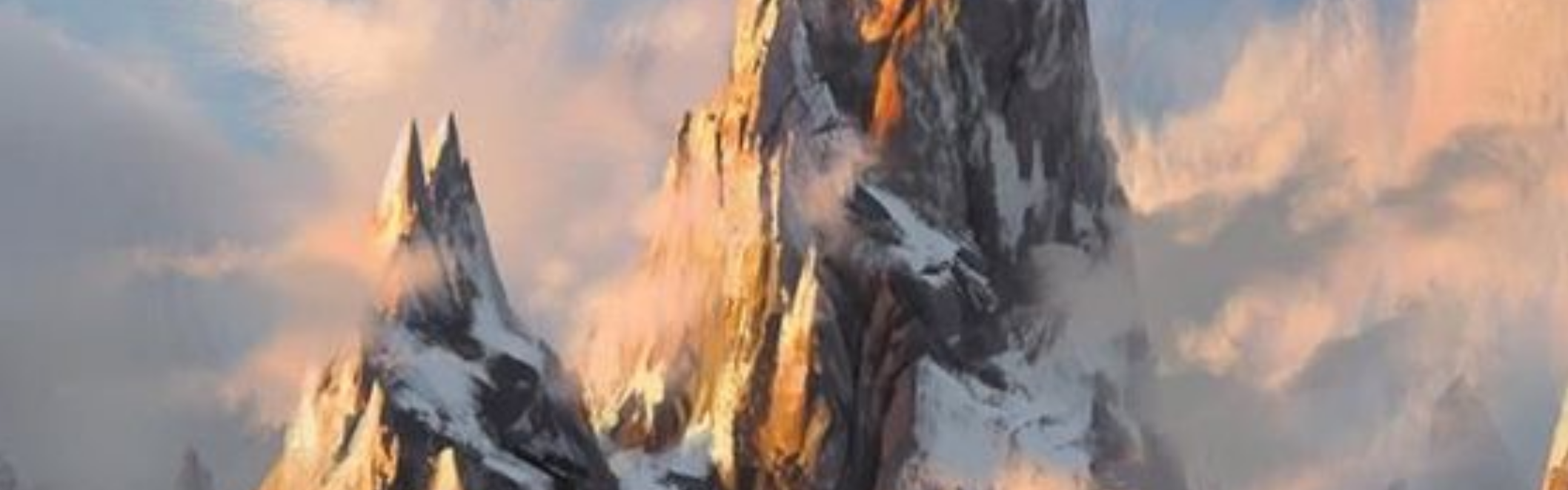
The vast majority of terrestrial planets have some kind of mountainous region, though the diversity of their wildlife and landscapes may obscure the common thread which links them. Planets composed entirely of mountains are often lightly populated, usually with small settlements scattered across peaks and valleys, and feature a great range of environments. The valley floor might be hot and extremely wet, while the mountain itself might be fully iced over and dry enough to crack skin. Desert mountains might be the inverse of this, with higher altitudes providing wetter conditions than the valleys.
A diversity of flora and fauna can evolve to withstand many unique hurdles. Creatures accustomed to wetlands in other regions prefer to explore higher, drier areas, and many light preferring animals have become accustomed to longer bouts of shady weather. All inhabitants have learned to live with big earthquakes and small aftershocks.
A commonality among most mountain worlds is a lack of moisture. Whether such planets are covered in a dusty desert or bone chilling ice, the air is dry and difficult to breathe. Face coverings and breathing apparatuses are necessary to avoid long days of upward crawls that slowly turn lethargic as throats crack and brains starve for oxygen.
Mountain worlds often experience outsized tectonic activity, rock slides, and avalanches. The damage caused by even small tremors can be catastrophic for valley cities or hillside homes. Mountainsides can be riddled with the bodies of fallen travelers, climbers, and prospectors. Due to the remoteness and danger of collecting these bodies, they are often left behind without burial, and it is not uncommon for the undead to roam these vast ranges.
MOUNTAIN TRAVEL
Characters traveling overland by hover vehicle move in the same way as if they are traveling overland by vehicle. Movement is continuous so long as the vehicle doesn’t run out of fuel. The mountainous terrain is considered to be difficult terrain.
CLIMBING
When outside of a landcraft, a character can climb for a limited period of time. After each hour of climbing a character must succeed on a DC 10 Constitution saving throw or gain one level of exhaustion.
A creature that has a climbing speed including one gained through enhanced items or powers can climb all day without penalty and uses the normal forced march rules in the Player’s Handbook depending on your setting, you can create specialized gear such as scuba fins or propulsion packs that increase swim speeds.
Climbing through high altitudes subjects the character to a thin atmosphere, and cold temperatures.
HILL AND MOUNTAIN TERRAINS
Hill terrain describes rises in the immediate area, often multiple hills spread over miles. This type of terrain can occur in any other biome. Mountains are steeply rising rock, metal, or even the organic crust of the planet.
The most common rules sections to reference when using hill and mountain terrain are Cold Dangers, Falling, and Weather.
CHASMS
Usually formed by natural geological processes, chasms are common dangers in mountainous areas. Chasms aren’t hidden, so characters won’t (usually) fall into them by accident. A typical chasm is 2d4×10 feet deep, at least 20 feet long, and anywhere from 5 to 20 feet wide. It usually requires a successful DC 15 Strength (Athletics) check to climb the wall of a chasm. In mountain terrain, chasms are typically 2d8×10 feet deep.
ROCK WALL
A vertical plane of stone, a rock wall requires one or more successful DC 25 Strength (Athletics) checks to ascend. A typical rock wall is from 2d4×10 feet tall to 2d8×10 feet tall.
HIGH ALTITUIDE
At particularly high altitudes, the thinning atmosphere poses a challenge for many creatures, with the same effects as a thin atmosphere. A creature residing at a high altitude for 1 month becomes acclimated and no longer takes these penalties, but it loses this benefit if it spends more than 2 months away from high altitude terrain and must acclimatize upon returning.
VISIBILITY OF HILLS AND MOUNTAINS
As a guideline, the maximum distance in mountain terrain at which a creature can succeed at a Perception check to detect the presence of others is 4d10×10 feet. In hill terrain, the maximum distance is 2d10×10 feet. It’s easier to hear distant sounds in the mountains and perception checks have advantage on these checks.
MOUNTAIN ENCOUNTERS
| Roll | Encounter |
|---|
| 1 | Ancient Monolith |
| 2 | Steep Crag |
| 3 | Deep Chasm |
| 4 | Rocky Talislope |
| 5 | Radio Tower |
| 6 | Weather Observation Unit |
| 7 | Hermit’s Dwelling |
| 8 | Buried Ruins |
| 9 | Crashed Aircraft |
| 10 | Mountain Cave |
SECTION 11
MARSH ENVIRONMENTS
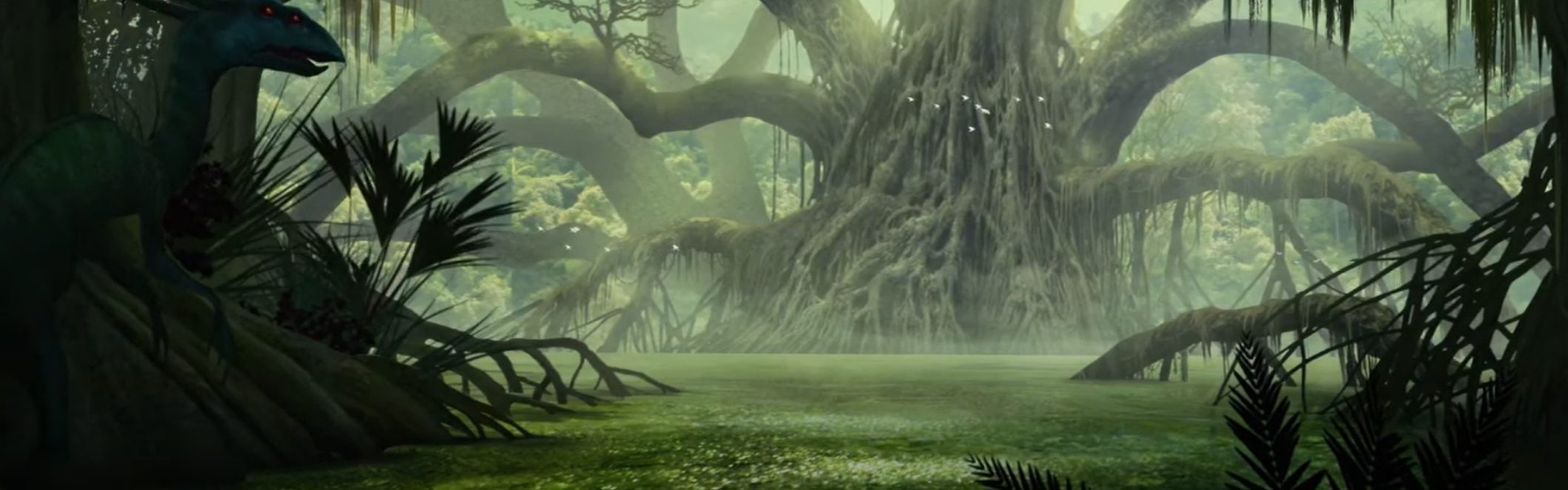
Wetlands are common on terrestrial worlds, yet only a rare few planets are covered entirely by this terrain. Such planets often have flat topography that’s conducive to supporting standing water and spongy soils kept inundated either by consistent precipitation, powerful tides that draw water over vast estuaries, or both. On such worlds, even the rare mountain chains are low, creating rain shadows that channel water into low-lying areas while valleys accumulate steep fens. Because of the diverse range of wetlands, a single-biome planet can support countless varieties of life based on the nuances of drainage, elevation, and soil type, with regional boundaries defined by where bog transitions into swamp, lagoon, or river. Conventional continents might not exist, with dry land instead consisting of peat accumulations a hundred feet thick or greater.
While sapient beings might clear and manage vast aquaculture fields, some animals might dam key waterways and create lakes, while others tear game trails through thick swamps that are then used by countless other organisms. Where societies rise, the combination of perishable materials and unstable foundations means that ruins swiftly disappear. On tectonically active planets covered by peat and other fuel, lava could spark subsurface fires that slowly burn their way across the world, creating smoldering underground hellscapes that burst upward to consume an entire region before dying out, making way for new growth.
MARSH TERRAIN
Two categories of marsh exist, relatively dry moors and watery swamps. Both are often bordered by a lake which is effectively the third category of terrain found in marshes. The most common rules sections to reference for marshes and swamps are Suffocation and Drowning Underwater Combat, and Weather.
BOGS
If a square is part of a shallow bog, it has deep mud or standing water of about 1 foot in depth. It counts as difficult terrain.
A square that is part of a deep bog has roughly 4 feet of standing water. It counts as difficult terrain, and Medium or larger creatures must spend 4 squares of movement to move into a square with a deep bog, or characters can swim if they wish. Small or smaller creatures must swim to move through a deep bog. Tumbling is impossible in a deep bog.
The water in a deep bog provides cover for Medium or larger creatures half cover. Smaller creatures have three quarters of cover. Medium or larger creatures can crouch as a move action to gain this improved cover. A creature attacking a target with improved cover has a disadvantage on attack rolls.
Deep bog squares are usually clustered together and surrounded by an irregular ring of shallow bog squares.
VISIBILITY IN A MARSH
In a moor, the maximum distance at which a creature can succeed at a Perception check to detect the presence of others is 6d6×10 feet. In a swamp, this distance is 2d8×10 feet. Vegetation and deep bogs provide plentiful concealment granting disadvantage on targets being attacked by ranged weapons, so it is possible to use Stealth to hide in a marsh.
MARSH ENCOUNTERS
| Roll | Encounter |
|---|
| 1 | Shallow Bog |
| 2 | Deep Bog |
| 3 | Hermit’s Hut |
| 4 | Undergrowth |
| 5 | Quick Sand |
| 6 | Hedgerows |
| 7 | Primitive Colony or Dwelling |
| 8 | Sunken Ruins |
| 9 | Sunken Watercraft |
| 10 | Grotto |
SECTION 12
PLAINS ENVIRONMENTS
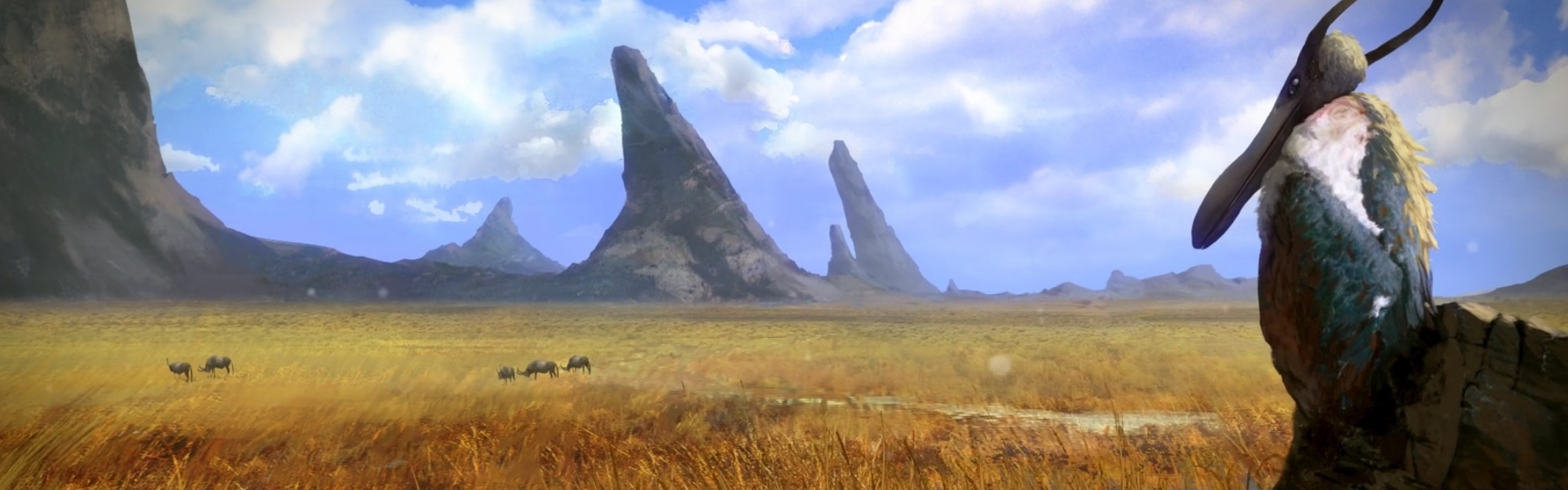
Many plains worlds are likely created by the same forces that form typical plains but on a global scale. A planet’s molten core may have vented long ago, covering the surface in smooth layers of lava rock, or an atmospheric anomaly might have evaporated a formerly oceanic world’s surface water. Perhaps melt or glaciation from polar ice caps takes the places of alluvial plains. Origins might be stranger still, such as a rhizome hive mind that shapes the world to its needs or an extraplanetary gravitational force that flattened great portions of a world.
Shared origin doesn’t have to mean a uniform surface. Uninterrupted wind currents are likely a large part of plains world ecology, carrying seeds, soil, or even fauna across the globe.
These might leave clear physical markers, such as windborne seeds that take root in colossal rivers of plant life that in turn attract migrating herds. The same winds likely interact withthe planet’s axial tilt and temperature bands to produce diverse regions; it’s perfectly feasible for arid grasslands, tree studded savannas, and tundras of bioluminescent lichens to exist on the same largely flat world. Lakes, rivers, and underwater aquifers likewise influence surrounding regions. For instance, subterranean water or a reservoir of homogeneous biomass would enable lush surface growth.
PLAINS TRAVEL
Overland by vehicles travels as normal. Movement is continuous so long as the vehicle doesn’t run out of fuel.
PLAINS TERRAIN
River erosion can hide aquatic dangers or create chasms through long erosion, and alpine plains and plateaus might have high altitude conditions; with wide open spaces and relatively few features, the storm and wind rules.
UNDERGROWTH
Whether they’re crops or natural vegetation, the tall grasses of the plains function like light undergrowth in a forest. Particularly thick bushes form patches of heavy undergrowth that dot the landscape in grasslands. Undergrowth counts as difficult terrain and provides advantage to stealth rolls.
LIGHT RUBBLE
On the battlefield, light rubble usually represents something that was destroyed: the ruins of a building or the scattered remnants of a stone wall, for example.
TRENCH
Often dug before a battle to protect soldiers, trenches function as a low wall, except that it provides no cover against adjacent foes. Trenches count as difficult terrain when moving across them. Creatures outside the trench who engage in combat with creatures fortified in trenches have disadvantage to attack rolls. Additionally, creatures in trenches have 1/2 cover and increase against range weaponry.
OTHER PLAINS FEATURES
Occasional trees or rock outcroppings dot the landscape in many plains. Streams generally 5 to 20 feet wide and 5 to 10 feet deep, are commonplace. Some planets' streams are water, others could be lava.
PLAINS VISIBILITY
In plains terrain, the maximum distance at which a perception check for detecting the nearby presence of others can succeed is 6d6×40 feet, although the specifics of your map may restrict line of sight. Cover and concealment are not uncommon, so a good place of refuge is often nearby, if not right at hand.
PLAINS ENCOUNTERS
| Roll | Encounter |
|---|
| 1 | Light Rubble |
| 2 | Undergrowth |
| 3 | Lake |
| 4 | Undergrowth |
| 5 | River |
| 6 | Hedgerows |
| 7 | Farm or Dwelling |
| 8 | Sunken Ruins |
| 9 | Abandoned Landcraft |
| 10 | Grotto |
SECTION 13
URBAN TERRAIN
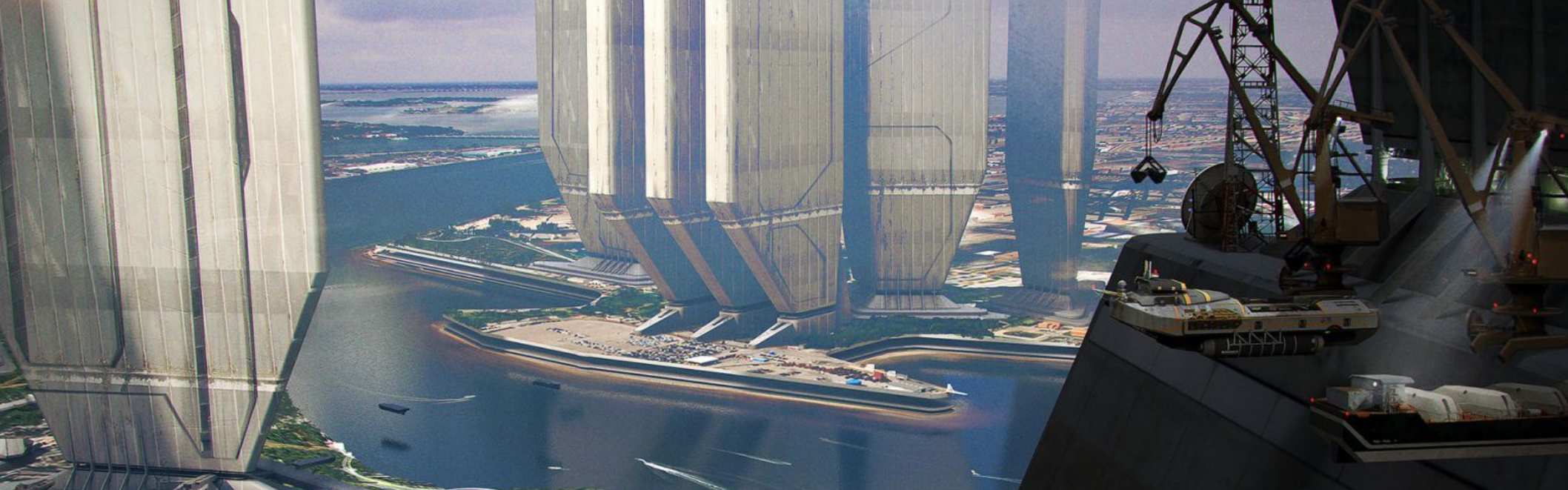
Urban terrain can be found in most settlements where the people have greatly exerted their influence over the surrounding environment, constructing buildings where they can live and work in comfort and laying well-defined roads, usually paved. This type of terrain can occur in just about any biome, and it often supersedes the environmental effects of that biome. Urban terrain can include space stations, and it is often replete with technology. The most common rules sections to reference when using urban terrain are Settlements, Structures, and Vehicles as well as Breaking Objects, and sometimes Radiation.
URBAN ENVIRONMENTS
Most inhabited planets contain at least one or two pockets of truly urban areas, but some settlements or even entire worlds consist entirely of this sapient constructed biome. The most common fully urban worlds are those built in the harshest reaches of space, where a manufactured atmosphere and metal walls provide the only livable refuge in deep space or orbiting other celestial bodies. An otherwise unlivable chunk of rock can become a thriving metropolis with enough applied ingenuity.
URBAN TERRAIN
Larger worlds entirely consumed by sprawling urban landscapes typically reflect a populace’s technological advancement and preference for the comforts of society over the planet’s rough natural environment. Such technological dominance can interfere with the world’s natural resources, weather, and habitats, possibly leaving a world in a dire situation if they still rely on those resources but haven’t adapted ways to compensate for their absence.
The natural environment may fight back against urban development, resulting in swaths of urban areas suffering floods, blizzards, earthquakes, and sandstorms—or simply being overtaken by the constant, rampant growth of flora. Urban worlds may exist purely due to the creative tenacity of the universe’s cultures as their technology expands to be able to create terraformed planetoids set into rotation around a sun.
SURFACE TRAVEL
Urban terrain can be found in most settlements where the people have greatly exerted their influence over the surrounding environment, constructing buildings where they can live and work in comfort and laying well-defined roads, usually paved. This type of terrain can occur in just about any biome, and it often supersedes the environmental effects of that biome. Urban terrain can include space stations, and it is often replete with technology. The most common rules sections to reference when using urban terrain are Settlements, Structures, and Vehicles as well as Breaking Objects and sometimes Radiation.
BUILDINGS
Buildings become obstacles while moving about a city. They can be climbed on with proper gear or if the character has climbing speed. Buildings can be of any kind of structure, or type, usually to fill a specific role in the city such as hospital, warehouse, storefront, and so on.
TRAFFIC
Urban areas are often crowded with people and movement throughout the city. A character could experience traffic slowing their movement through the city. When a character is facing traffic, treat the distractions they are traveling through as difficult terrain. Traffic can come in the form of vehicle congestion, crowded train stations where everyone is trying to squeeze on the train, or intersections where thousands of people are crossing the street at any given time.
URBAN TERRAIN VISIBILITY
In a settlement with wide, open streets, the maximum distance at which a creature can succeed at a Perception check to detect the presence of others is 2d6×10 feet. In a settlement where
the buildings are standing close together, this distance is 1d6×10 feet. The presence of crowds might reduce this distance.
Twisting side streets and vehicles that can provide cover, it’s usually easy for a creature to use Stealth to hide in a settlement. In addition, settlements are often noisy, making Perception checks that rely on sound at a disadvantage.
URBAN ENCOUNTERS
| Roll | Encounter |
|---|
| 1 | Crowded Intersection |
| 2 | Narrow Alleyways |
| 3 | Construction Site |
| 4 | Random Building |
| 5 | Utility Building |
| 6 | Hedgerows |
| 7 | Mini-Mall |
| 8 | Abandoned Building |
| 9 | Land Vehicle Wreck |
| 10 | Sewer Opening |
SECTION 14
HAZARDS
Hazards can be encountered almost anywhere. One wrong move in a secure facility might trigger a web of high-powered lasers, which cut right through armor and bone. The innocuous panel that hangs over a room entrance might be a sensor that seals the room shut after entry. A seemingly stable ship ramp may collapse under too much weight, sending characters falling into the reactor below. In a sci-fi game, unwary characters can fall to their deaths, be fatally electrocuted, become contaminated by radiation, or be sucked out into space.
HAZARD TYPES
This section covers three types of hazards—direct, indirect, and patterned. There are also hazards specific to starships called space hazards.
Direct hazards are the most common and have an interactive or mechanical trigger. These include trapdoors, tripwire explosives, security laser grids, poison gas traps, electroshock keypads, or anything else that depends on a triggered mechanism to operate. Some mechanisms can also be natural such as a crumbling balcony or loose floor grates.
Indirect hazards don’t require direct interaction, instead triggering due to an indirect effect or a timed reaction. Some examples include explosive decompression due to onboard gunfire, a bomb with a countdown timer, a station blackout that also shuts down life support, or natural disasters such as an earthquake or avalanches.
Patterned hazards contain the pattern of an arcane power and are triggered by the use of a forge enhanced item or meeting the conditions of an activated power. The baneful trigger and programmed trigger powers are examples of patterned hazards.
USING HAZARD IN PLAY
When characters come across a hazard, you need to define how the hazard is triggered and what it does, as well as the possibility for the characters to detect the hazard and to disable or avoid it.
TRIGGERED HAZARD
Most direct hazards are triggered when a creature moves somewhere or touches something that prompts the hazard’s effects. Common triggers include passing through a motion sensor, pulling a tripwire, entering a failed security code, or moving into a contaminated area. Patterned hazards are often set to go off when a creature enters an area or touches an object. Some patterned hazards (such as the programmed trigger power) have more complicated conditions, including a password that prevents the hazard from being triggered.
DETECTING AND AVOIDING HAZARDS
Usually, some element of a potential hazard is visible to careful inspection. Characters might notice a seam in a doorway that conceals a motion sensor, spot the gleam of light off a tripwire, notice loose supports holding up an unstable catwalk, or otherwise detect something that points to a potential hazard.
A hazard’s description specifies the DC check needed to detect it, disable it, avoid it. These are dependent upon the type of hazard. Many indirect hazards, for example, can’t be disabled and must instead be avoided. A character actively looking for a hazard can attempt a Wisdom (Perception) check against the hazards DC. You can also compare the DC to detect the hazard with each character’s passive Wisdom (Perception) score to determine whether anyone in the party notices the hazard in passing. If the characters detect a hazard before triggering it, they might be able to disable it, either permanently or long enough to move past it. You might call for an Intelligence (Investigation) check for a character to deduce what needs to be done, followed by a Dexterity or Wisdom check using the appropriate tools to perform the necessary work.
Any character can attempt an Intelligence (Lore) check to detect or disarm a patterned hazard, in addition to any other checks noted in the hazard’s description. The DCs are the same regardless of the check used. In addition, the unravel effect has a chance of disabling most patterned hazards. A patterned hazard’s description provides the DC for the ability check made when you unravel the effect.
In most cases, a hazard’s description is clear enough that you can adjudicate whether a character’s actions identify or avoid the hazard. As with many situations, you shouldn’t allow dying rolling to override clever play and good planning. Use your common sense, drawing on the hazard’s description to determine what happens. No hazard’s design can anticipate every possible action that the characters might attempt.
You should allow a character to discover a hazard without making an ability check if an action would reveal the hazard’s presence. For example, if a character accesses a security panel that marks the location of the a motion sensor, the character has found the trigger and no check is required.
Security Devices. Hazards set up as security measures are often designed with mechanisms that allow them to be disarmed or bypassed. Intelligent monsters that place hazards in or around an area need ways to get past those hazards without harming themselves. Such hazards might have a security code that disables their triggers, or a secret door might conceal a passage that bypasses a sensor.
Noticing Indirect Hazards. Indirect hazards can be a little more complicated to detect. The party might not notice several unsecured containers that can crush them once they turn on the artificial gravity. They may not detect the rising level of radiation seeping from a collapsing reactor core. When designing these hazards, you should include at least one narrative clue that indicates to the characters that the hazard may exist. It’s no fun for the players to be caught off guard by a situation they had no chance of avoiding.
HAZARD EFFECTS
The effects of hazards can range from inconvenient to deadly, making use of elements such as bullets, blades, poison, toxic gas, laser fire, and unexpected falls. The deadliest hazards combine multiple elements that may kill, injure, contain, or lockout any creature unfortunate enough to trigger them. A hazard’s description specifies what happens when it is triggered.
The attack bonus of a hazard, the save DC to resist its effects, and the damage it deals with can vary depending on the hazard’s severity. Use the Hazard Save DCs and Attack Bonuses table and the Damage Severity by Level table for suggestions based on three levels of hazard severity.
A hazard intended to be a setback is unlikely to kill or seriously harm characters of the indicated levels, whereas a dangerous hazard is likely to seriously injure (and potentially kill) characters of the indicated levels. A deadly hazard is likely to kill characters of the indicated levels.
HAZARD SAVE DC & ATTACK BONUS
| Hazard Danger | Save DC | Attack Bonus |
|---|
| Setback | 10-11 | +3 to +5 |
| Dangerous | 12-15 | +6 to +8 |
| Deadly | 16-20 | +9 to +12 |
DAMAGE SEVERITY BY LEVEL
| Character Level | Setback | Dangerous | Deadly |
|---|
| 1st - 4th | 1d10 | 2d10 | 4d10 |
| 5th - 10th | 2d10 | 4d10 | 10d10 |
| 11th - 16th | 4d10 | 10d10 | 18d10 |
| 17th - 20th | 10d10 | 18d10 | 24d10 |
COMPLEX HAZARDS
Complex hazards work like normal hazards, except once activated they execute a series of actions each round. A complex hazard turns the process of dealing with a hazard into something more like a combat encounter.
When a complex hazard activates, it rolls initiative. The hazard’s description includes an initiative bonus. On its turn, the hazard activates again, often taking an action. It might make successive attacks against intruders, create an effect that changes over time, or otherwise produce a dynamic challenge. Otherwise, the complex hazard can be detected and disabled or bypassed in the usual ways.
For example, a hazard that causes a room to slowly flood works best as a complex hazard. On the hazards turn, the water level rises. After several rounds, the room is completely flooded.
SAMPLE HAZARDS
The direct and indirect hazards presented here vary in deadliness and are presented in alphabetical order.
SECTION 15
SPACE HAZARDS
Hazards are dangerous environmental situations that can be detrimental to those that come across them. Space hazards, specifically, are extraordinary phenomena that can be encountered by a starship during space travel. These hazards can come in many forms, often as hidden dangers that could drastically alter the survivability of any scenario.
RUNNING A SPACE HAZARD
Space travel can be unpredictably deadly. Even with state of the art sensors, a pilot and crew must remain ever-vigilant against the unknown. An interstellar storm, an unstable anomaly, or even a random ship malfunction can bring major consequences.
DETECTING A SPACE HAZARD
The difficulty of detecting a hazard is determined by the GM. You can use the passive Perception score of the ship's crew members to determine if they notice the hazard. The GM may also decide that the hazard can only be detected by certain crewmembers, such as the pilot or Technician.
Alternatively, if you're using the expanded starship rules in the Master Technician's Guide, you can use the ship's passive Perception rating, which is equal to 10 + the ship's sensor rating + the crew modifier.
SPACE HAZARD DIFICULTY
Each space hazard has a threat level and DC associated with it. A hazard check is a check made against the DC to avoid the hazard's effects. The DC can be set by the GM or chosen at random using the following table. The numbers in parentheses next to the DC is an optional range the GM can use to change the DC from the one Provided.
SPACE HAZARD THREAT LEVEL & DC
| D10 | Threat Level | Ability Check DC |
|---|
| 1-2 | Minor | 10 (10-13) |
| 3-5 | Moderate | 15 (14-17) |
| 6-8 | Severe | 20 (18-21) |
| 9-10 | Critical | 25 (22-25) |
HAZARD CHECK & CREW ASSISTANCE
When introducing a space hazard, one or more crewmembers are required to either make saving throws or use their reactions to make a hazard check, which is a specific ability check made against the hazard's DC. The details of the hazard are defined as follows.
Hazard Check. This is the ability check required to avoid the effects of the hazard.
Assigned Roles. This defines which crewmember can make the hazard check. If multiple roles are listed, the crew determines who makes the check.
Crew Assistance (Standard Scale Ships). During the ship's turn, another crewmember can provide assistance by making their own ability check against the hazard's difficulty. If the check is successful, the crewmember assigned to the hazard gains advantage on their hazard check. Crew assistance must be provided before the hazard check is made.
A pilot on a single-person ship can expend a bonus action to provide crew assistance to themselves.
Command Assistance (Grand Scale Ships). The captain or first officer can make a Wisdom (Insight) check versus the DC of the hazard. If the check is successful, the crewmember gains advantage to their hazard check.
Hazard Description and Effects. The description provides the specific details of the hazard, as well as its effects on the ship and the ship's crew.
HAZARD CHECK DURING COMBAT
Combat If the crew encounters a space hazard during combat they must use their maneuver during the ship's turn to make a hazard check. Crewmembers providing crew or command assistance must also use their maneuver during the ship's turn to do so.
OTHER TYPES OF HAZARDS
Hazards play a major role in exploration and survival in a dangerous environment. Where space hazards specifically affect starships, other hazards affect creatures individually.
SPACE HAZARD DESCRIPTIONS
Hazards of this type have an immediate and instantaneous effect on a starship and its crew members. They can be placed at any point while traveling in space on a starship.