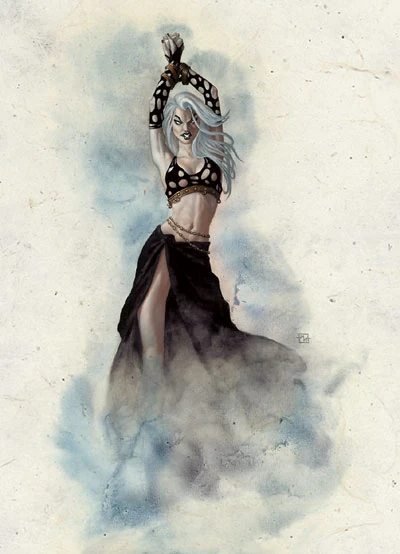
Beshaba
In Faerûn, we live with the understanding that fate can be cruel, and none embody this cruel twist of fortune more than Beshaba, the Maid of Misfortune. Known to many as the Lady of Doom, Beshaba is the goddess of bad luck, accidents, and disaster. Where her sister Tymora brings luck and fortune, Beshaba is her opposite, spreading misfortune and calamity wherever her influence reaches. Many in Faerûn offer prayers and sacrifices to Beshaba, not out of love, but out of fear—hoping to appease her and avoid her ruinous touch.
The Nature of Beshaba
Beshaba’s very essence is chaos and unpredictability. She revels in disaster, feeding on the fear and anxiety that misfortune causes. While other gods offer blessings and rewards to their followers, Beshaba offers only calamity. Her followers don’t pray for favors or guidance—they pray to keep her at bay. To most people, Beshaba is a deity best kept distant, a looming threat that can strike at any time, whether through a sudden injury, a failed business venture, or the collapse of a well-laid plan.
Unlike other gods who might show mercy or compassion, Beshaba delights in the suffering her bad luck brings. Her power lies in the random misfortunes of life, and she ensures that no one, no matter how powerful or wise, is free from the threat of ill fate. Beshaba’s nature is capricious—one moment all may seem well, but in the next, her cruel hand can turn the tide, bringing ruin to even the most carefully crafted endeavors.
Worship of Beshaba
Worshipping Beshaba is more an act of fear than devotion. Few love the Lady of Doom, but many respect her power. Across Faerûn, it is common for people to leave offerings or perform rituals to ward off her influence. Sailors, for instance, may spill wine overboard or make a quick prayer before setting sail, hoping to avoid a storm or shipwreck. Adventurers may whisper her name before entering a dangerous dungeon, pleading that her attention passes them by.
Her followers, often called Doombringers, are typically feared and mistrusted. They wear her symbol—a set of black antlers—proudly, invoking her name to remind others that misfortune can strike at any time. These priests often live on the fringes of society, collecting offerings from those desperate to avoid her wrath. They do not spread Beshaba’s influence through grand temples, but rather through fear, convincing people that unless they honor her, they are bound to suffer.
In times of festivals or important events, it is common for those celebrating to leave a seat or offering for Beshaba, hoping that this small token of respect will keep her from ruining the day. In some regions, Beshaba's name is invoked as a curse, and people believe that even speaking it can bring about bad luck.
Beshaba's Influence in Faerûn
Beshaba’s influence is widespread, for misfortune knows no borders. From the grand cities of the Sword Coast to the small villages of the Dalelands, her presence can be felt. It is said that the more someone tries to avoid her gaze, the more likely they are to catch it. Her followers claim that when disasters strike—whether it be a failed harvest, a sudden illness, or the collapse of a powerful kingdom—it is Beshaba’s hand at work.
In Faerûn, those who ignore Beshaba do so at their peril. While the faithful of Tymora may bask in good fortune, those who anger the Maid of Misfortune find their luck turning sour. The wisest among us know that luck is fleeting, and it is often better to placate Beshaba with small offerings than to risk drawing her ire.
The Legacy of Beshaba
Beshaba’s legacy is one of fear and respect. Few worship her out of admiration, but her power over fate is undeniable. Even the most devout followers of Tymora know that her darker sister is always lurking in the shadows, waiting for the right moment to strike. In Faerûn, to live without acknowledging Beshaba is to court disaster. And so, with each passing day, her name is whispered in fear, her symbol left on altars, and her wrath kept at bay—at least for now.
In Faerûn, where gods walk among us and influence our lives in myriad ways, Beshaba is the reminder that fortune is fickle, and bad luck can befall anyone, anywhere, at any time.