Available to all Guild subscription tiers. Upgrade here.
The Notebook feature is a great way to keep track of notes, ideas, meta information and even snippets of CSS or tags you want to use in your world.
Contents
How to access the notebook
Click the Notebook icon in the right sidebar—the notebook will slide down on top of everything else.
Your notebooks are connected to your account. Only you can see them and they can't be shared with your co-authors or subscribers. You can access them anytime no matter which world you have active.
Structure of a notebook
There are three levels of hierarchy in Notebooks:
- Notebooks: You can have multiple separate notebooks (for example, for different creative projects).
- Sections: Each notebook can contain multiple sections. Think of them like folders for your notes.
- Notes: This is where you'll write the contents of your notebook! All notes have to be inside of a section.
If you just need a quick notepad, you can have a single note in a single notebook. But these three levels give you options to organize larger notebooks!
How to create a note
To quickly create a new note from anywhere:
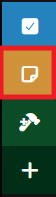
- Click the yellow Note button at the bottom of the right sidebar.
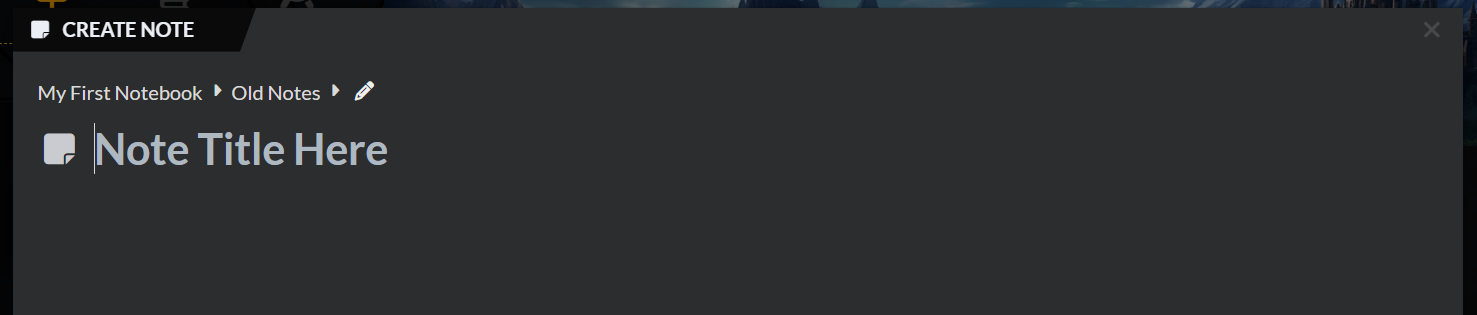
- At the top, click on the pencil button to change the note's location.
- Give the note a title.
- Write your note!
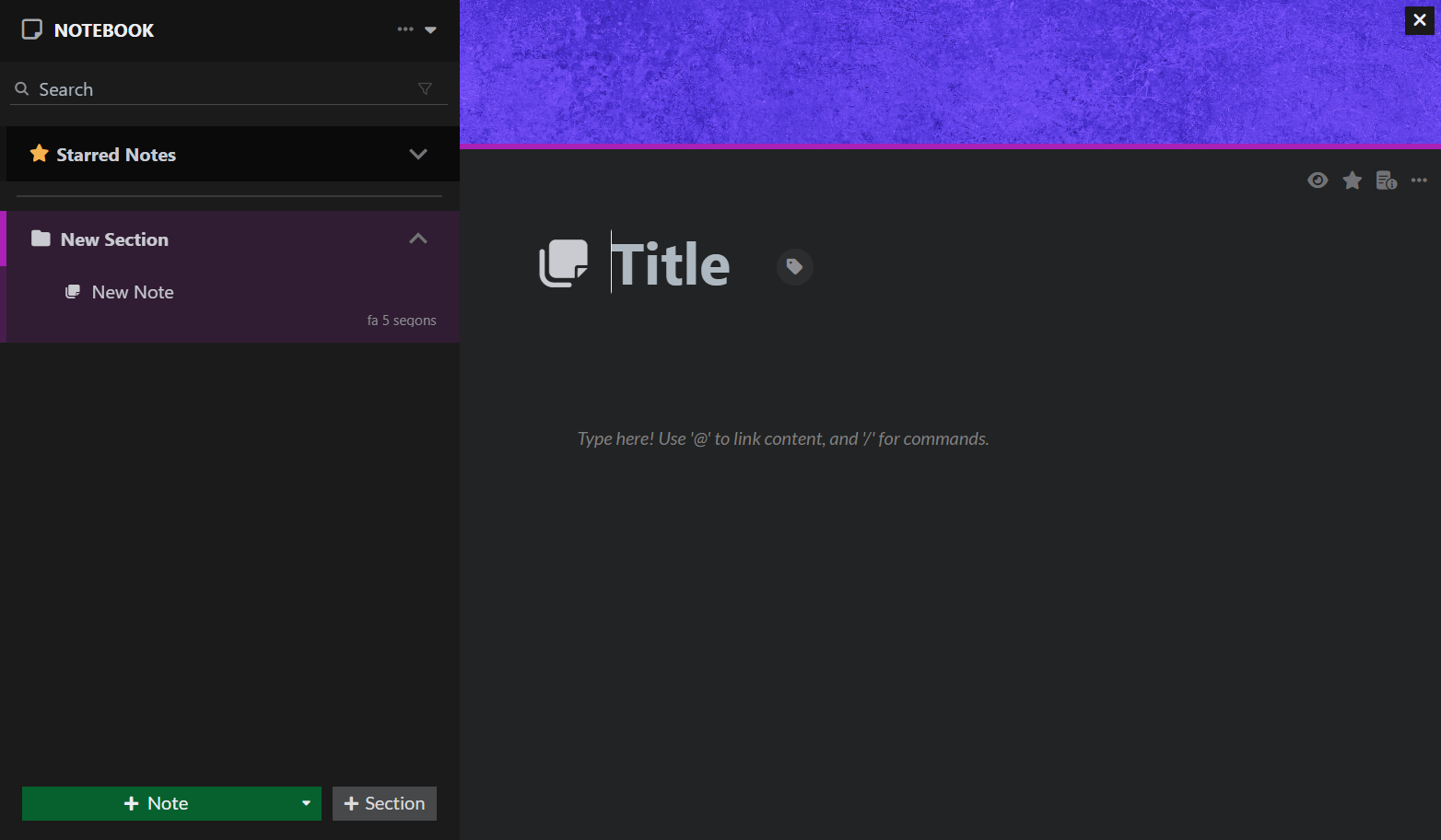
Notebook interface overview
This is what your notebook will look like:
Notebooks
Click on the name of notebook at the top to switch to a different notebook. To create a new notebook:
- Click on the name of the notebook at the top.
- Click on the green + Notebook button.
- Give it a name and click "create".
By default, notebooks use the Visual Editor, but you can switch to the Advanced Editor in the "Text Editor Settings" section:
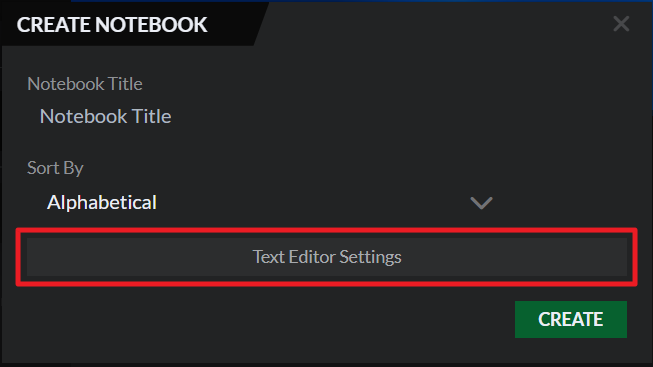
To edit a notebook's settings after creating it, click on the ellipsis icon at the top, next to the notebook title.
Sections
Think of sections like folders for your notes. You can pick different colors for each one and they are great for organizing your notebooks. To create a new section in your current notebook:
- Click on the + Section button at the bottom.
- Give it a name.
- If you want to, customize it with an icon and a color.
- Click on the green create button to create it.
Once a section is created, you can change its settings by hovering over the section name and clicking the ellipsis icon.
Notes
Your notes are where you'll actuallywrite your notes. Beside the process explained here, you can create notes (or notes) in full notebook interface as well. To create a new page:
- Select the notebook and the section you want your page to be under
- Click on the green + Note button
- The note will be created! Make sure to give it a title so you can find it later.
New notes are created using the default notebook editor (Visual Editor by default). If you want to use the other editor instead, click on the ellipsis menu and then Set Text Editor.
You can click on a note's header image to change it (or drag and drop one into that area to upload it). New notes have a default cover image that matches the color of the section they're in.
Additional note options
Here are some additional features to make the notebook even more powerful!
Tags & starring
Both of these features will help you quickly find your notes. These features are available after you click a note to edit it:
- Starring: Click the star icon on a note to add it to starred notes. All starred notes are always available from the "Starred notes" section at the top.
- Tags: Set up tags by using the tag button. The search bar in the notebook matches tags by default, so you can use this as a parallel organization system when sections aren't enough.
Note metadata
The metadata lets you add key-value fields to your notes, which will appear as a sidebar when viewing or editing the note. Additionally, metadata values have these properties:
- Keys and values can be re-used: When adding metadata to a different note, you'll get a list of previous keys and values you've used in the same notebook to stay consistent.
- Note metadata is searchable: If you want your note search to match metadata fields, click the filter icon in the search field and select "Show matching metadata".
The note metadata is completely free-form, and you can use it for anything! For example, if you have a brainstorming section, you could use a metadata field to indicate what type of brainstorm it is (character brainstorm, plot brainstorm, etc). If you keep a creative journal, you can have metadata fields for the creative works each entry relates to.
Check How to use notebook metadata for more information.
Note templates
Note templates let you re-use note settings to speed up your note creation. A note template includes tags, the icon, the background image, and the metadata fields. To create a new template:
- Edit a note and set up its tags, icon, background image, and metadata fields as you want them for the template.
- In the top right, click on the ellipsis button and select Manage Templates.
- In the template manager, click on Save As New Template.
- Give the template a name, and click the "save as new template" button.
Once you create your first template, the + Note button will get a little arrow on its right. Click it to select a template rather than creating a blank note.
Check How to use notebook templates for more information.