
Aurelian Emperor
The Aurelian Emperor is the supreme ruler of the Aurelian Empire, holding absolute authority over its territories, military, and laws. The title was first claimed by Aure in 270 AC, marking the foundation of the empire and solidifying the concept of a central imperial figure with divine and political legitimacy.
Origins and Role
The title of Aurelian Emperor was established as a reflection of Aure's vision for a unified and disciplined empire. Initially, the emperor was considered the ultimate arbiter of justice, an enlightened leader tasked with maintaining the empire’s expansion and internal order. As the empire grew, so did the role of the emperor, evolving into an absolute autocracy where the ruler’s word was law.
The Aurelian Emperor is responsible for:
- Overseeing military campaigns and defending the empire’s borders.
- Establishing laws and issuing decrees that shape imperial policy.
- Maintaining control over the nobility and ensuring loyalty from vassals.
- Strengthening the empire’s infrastructure, economy, and cultural identity.
- Managing relations with external powers, including resistance movements like the Alliance.
While originally seen as a protector of elven and human interests, the Aurelian Emperor also upheld the empire’s rigid class system, reinforcing the dominance of the ruling races over others.
Imperial Legitimacy and the Divine Right
The Aurelian Emperor has historically been seen as ruling with divine favor. Under Aure’s reign, it was believed that the emperor governed with the blessings of the Magisters and the will of The Seven. This ideology was used to justify the empire’s expansion, reinforcing the belief that the emperor was destined to bring order to the world.
However, under Lucian Mordrake, the nature of imperial legitimacy shifted dramatically. Mordrake claimed his right to rule not through divine favor, but through power and conquest, utilizing the devastating abilities of an Eternal Shard to seize the throne in 476 AC. His rule marked a turning point where might became the new basis for imperial authority, replacing the divine justifications of previous emperors.
The Transition of Power
The transfer of the title of Aurelian Emperor has historically followed a structured process of succession, typically passing to a designated heir from the imperial bloodline. However, this tradition was shattered during the Second Imperial Civil War, when Lucian Mordrake usurped the throne by force, ending Aure’s lineage.
Today, the Aurelian Emperor retains power through sheer dominance, with Mordrake ensuring his rule through fear, sorcery, and an iron grip over the empire’s institutions. His lack of an heir leaves the question of succession uncertain, raising concerns over the empire’s long-term stability.
Symbols of Authority
The Aurelian Emperor wields several symbols of power that reinforce their rule:
- The Imperial Crown – A golden circlet imbued with enchantments, signifying the emperor’s supreme status.
- The Aurelian Scepter – A staff of authority traditionally held by ruling emperors, once a conduit for ceremonial magic but now wielded as a sign of Mordrake’s personal rule.
- The Eternal Shard – Mordrake’s possession of an Eternal Shard has cemented his dominion, making him the most powerful ruler the empire has ever known.
- The Imperial Throne – The seat of power in Heartspire, from which the emperor governs.
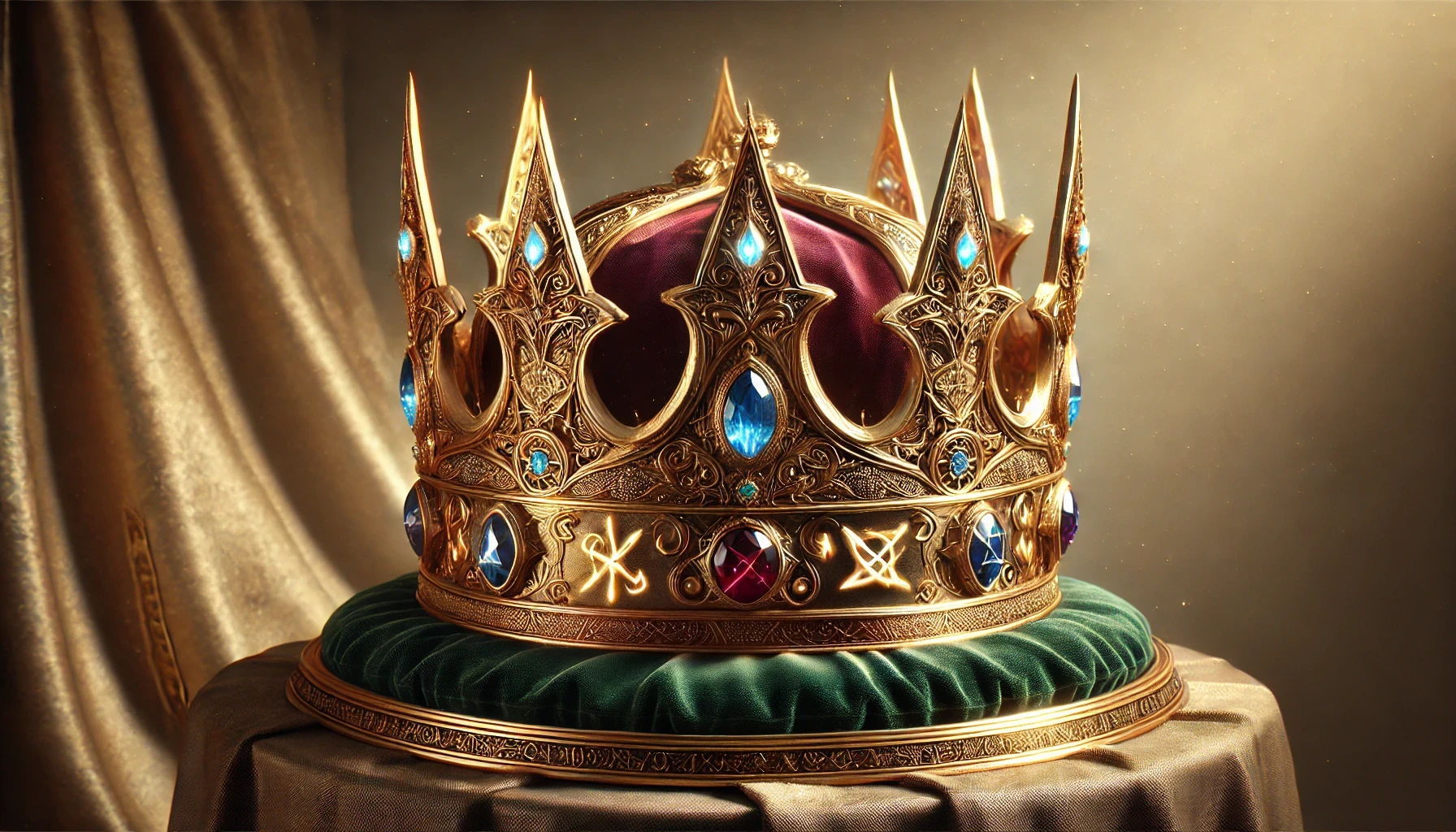
The Imperial crown.
Remove these ads. Join the Worldbuilders Guild


Comments