
First Imperial Civil War
The First Imperial Civil War was a devastating conflict that erupted within the Aurelian Empire between 395 AC and 401 AC. It arose from deep-seated tensions between the ruling class, which upheld a rigid hierarchy favoring elves and humans, and the oppressed races, who had long suffered under systemic discrimination and enslavement. The war marked a turning point in the empire’s history, reshaping its social structure and political landscape.
Causes
The conflict stemmed from the empire’s reliance on forced labor, particularly among orcs, dwarves, and other so-called "lesser races." Since the reign of Emperor Aure, non-human races had been relegated to servitude, denied the rights and privileges afforded to elves and humans. Despite some reforms aimed at allowing the enslaved to earn their freedom, resentment continued to fester.
By the late 4th century AC, an underground resistance movement began taking shape, driven by escaped slaves and sympathetic factions within the empire. As tensions mounted, several noble houses, particularly those with more progressive views, began to advocate for the abolition of slavery, fearing that continued oppression would lead to full-scale rebellion. Their warnings went unheeded by the imperial court, which remained steadfast in preserving the status quo.
The Outbreak of War
The war began in 395 AC when a coordinated uprising took place in multiple cities across the empire. Slaves, bolstered by support from rebel factions, seized control of key fortresses and trade hubs, disrupting imperial supply lines. The rebellion’s leadership, composed of both freed slaves and noble defectors, quickly rallied support, forming a loosely organized militia known as the Coalition of the Free.
The imperial response was swift and brutal. Legions loyal to Emperor Aure were dispatched to crush the uprising, leading to prolonged and bloody battles. Urban centers became flashpoints of conflict, as rebel forces dug in and fought fiercely for their independence. The war saw widespread destruction, with entire cities reduced to rubble in the ensuing battles.
Turning Point and Conclusion
By 399 AC, the rebels had gained substantial ground, particularly in the western territories. The empire, stretched thin and facing mounting logistical challenges, struggled to maintain control. Recognizing the unsustainable cost of the conflict, Emperor Aure reluctantly agreed to negotiations.
In 401 AC, the war officially ended with the signing of the Concord of Liberation, a treaty that granted freedom to many formerly enslaved peoples and established a legal pathway for emancipation. While the empire retained its hierarchical structure, the war forced significant reforms, allowing non-human races to earn citizenship and protection under imperial law.
Aftermath
The First Imperial Civil War fundamentally altered the empire’s social fabric. Though the ruling class remained predominantly elven and human, the war’s outcome marked the beginning of a slow but steady shift toward inclusivity. Many freed slaves relocated westward, where they established settlements that would later grow into independent cities, such as Drak, a stronghold of former rebels and exiles.
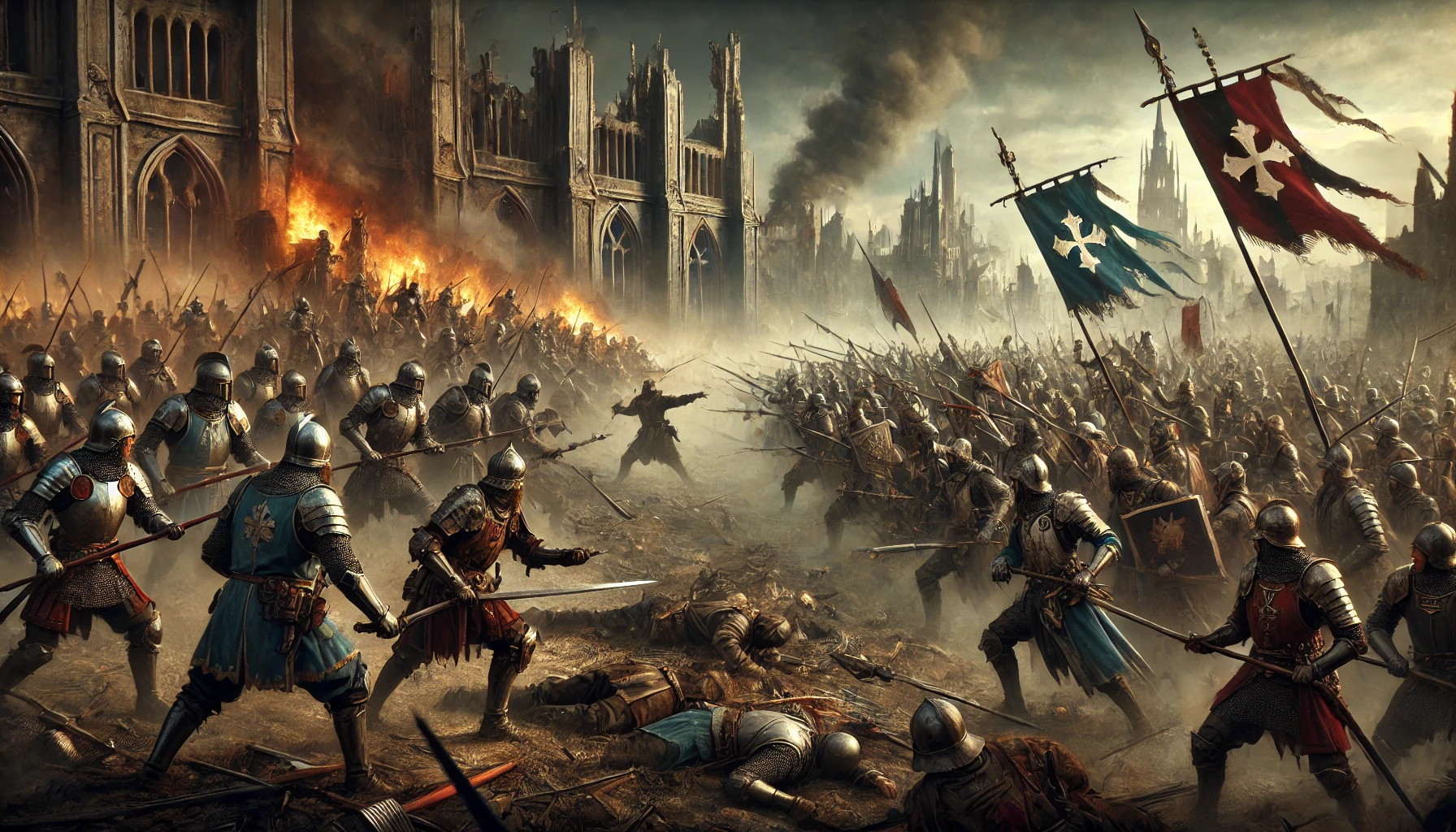
A battle between imperialists and rebels during the First Imperial Civil War.
Remove these ads. Join the Worldbuilders Guild


Comments