
Coalition of the Free
The Coalition of the Free was a revolutionary alliance formed during the First Imperial Civil War (395 AC - 401 AC) to oppose the oppressive rule of the Aurelian Empire. Comprised of freed slaves, defecting noble houses, and rebellious factions, the Coalition played a crucial role in challenging the empire’s deeply ingrained system of racial hierarchy and forced servitude.
Origins and Formation
The roots of the Coalition can be traced to the growing unrest among the empire’s oppressed races, particularly orcs, dwarves, and other enslaved peoples who had been subjected to generations of servitude, such as goblins and gnomes. Though Emperor Aure had implemented limited reforms allowing some enslaved individuals to earn their freedom, the system remained rigid and overwhelmingly unjust.
By the early 390s AC, a network of underground resistance movements had begun to take shape. These groups, initially scattered and disorganized, began to unite under a common cause: the complete abolition of slavery and the recognition of equal rights for all races within the empire. The decisive moment came in 395 AC, when several key leaders—including former gladiators, military defectors, and sympathetic nobles—gathered in secret to forge an official alliance, thus forming the Coalition of the Free.
Goals and Ideology
The Coalition’s primary goal was the dismantling of the empire’s caste system and the establishment of an egalitarian society where all races could coexist as equals. They believed that the empire’s rigid hierarchical structure was not only unjust but also unsustainable, as it bred unrest and rebellion.
Despite its noble ideals, the Coalition was not a monolithic entity. It was composed of various factions, each with its own vision for the future. Some sought peaceful reform, hoping to negotiate with the empire for better treatment, while others, particularly the more radical elements, saw violent revolution as the only viable path to freedom.
Symbolism and Emblem
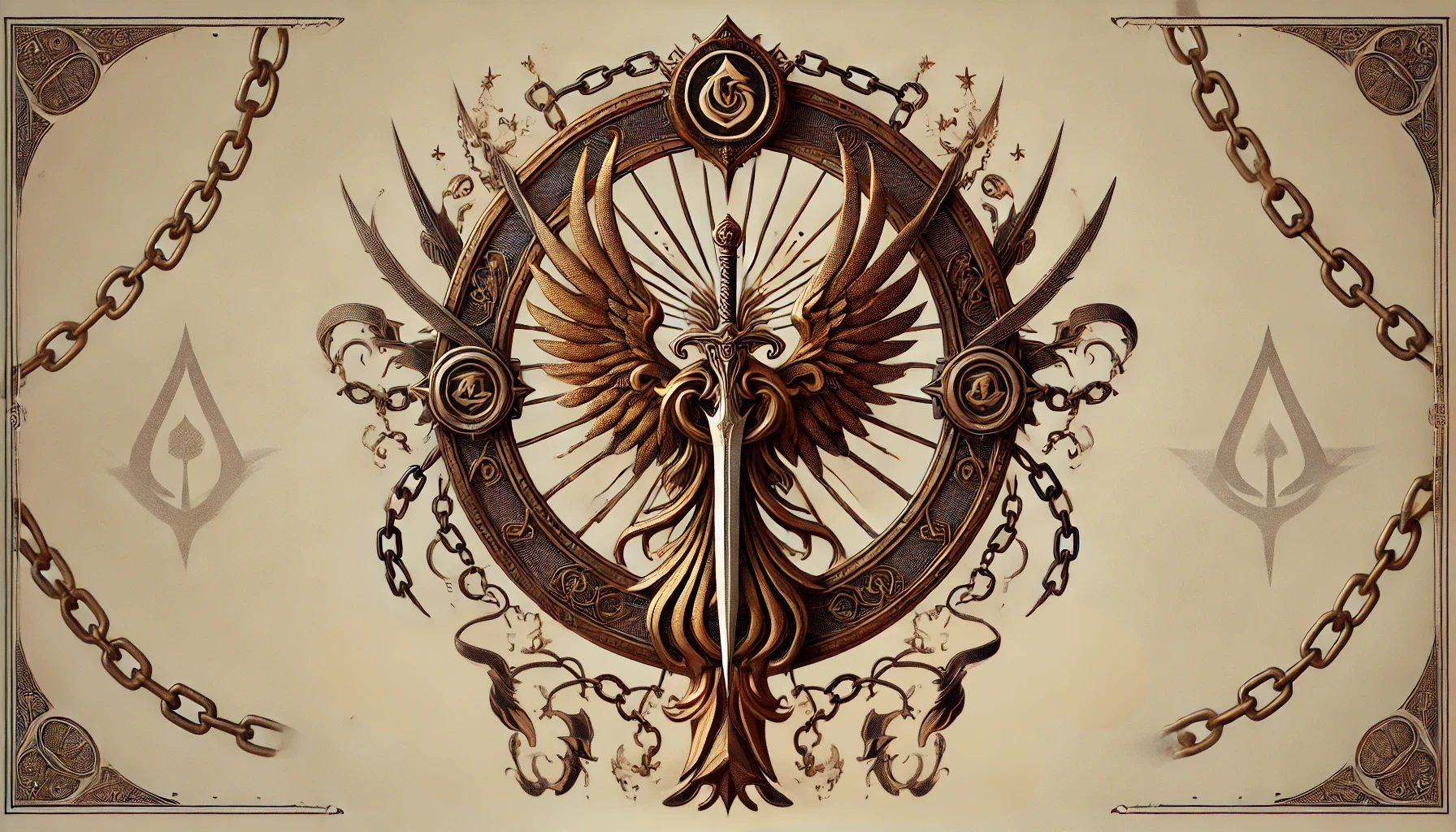
The Coalition of the Free adopted a striking emblem that embodied their struggle for liberation. The symbol prominently features a shattered chain encircling a rising phoenix, representing the breaking of oppression and the rebirth of those who fought for freedom. A sword piercing through the center signifies both the strength and determination of the coalition, as well as the conflict necessary to achieve their goals. This emblem was displayed on banners and armor during the war and remains a revered symbol in regions where the coalition's influence endures.
Legacy and Impact
The war concluded in 401 AC with the signing of the Concord of Liberation, a treaty that granted freedom to many enslaved peoples and provided a legal framework for emancipation. While the empire retained much of its power, the war forced significant reforms, opening pathways to citizenship for non-human races and weakening the rigid social hierarchy.
Following the war, many members of the Coalition of the Free migrated westward, settling in what would later become the independent city of Drak, a stronghold for former rebels and their descendants. Others remained within the empire, continuing to advocate for the rights of those still living under imperial rule.
Though the Coalition of the Free formally disbanded after the war, its ideals and influence lived on. Its legacy is still felt in the empire’s ongoing struggles with inequality, as well as in the independent communities that arose from the war’s aftermath. To this day, the coalition is remembered as a symbol of resilience and the unyielding fight for freedom against tyranny.


Comments