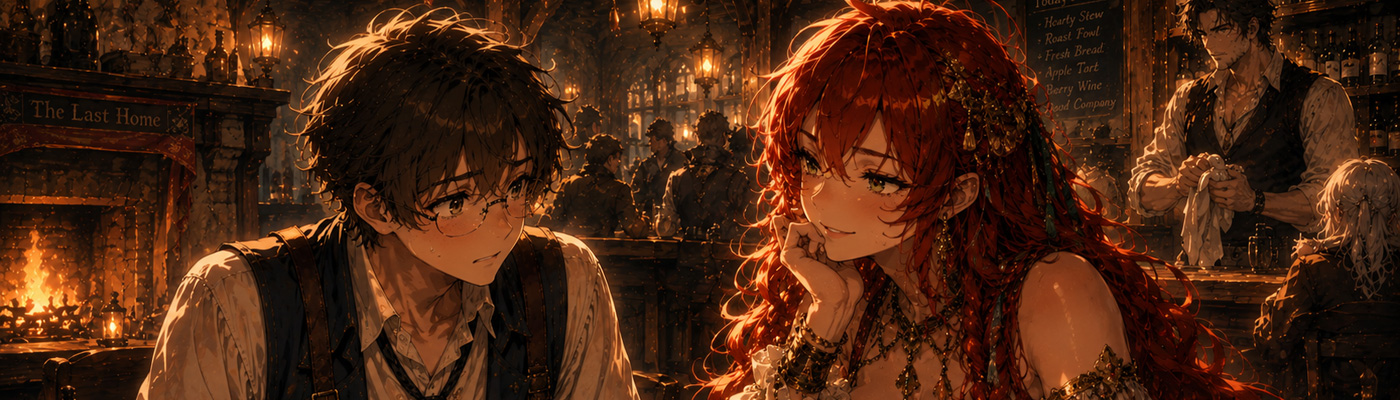
How Did I End Up Here?
Reading Note: This guide may contain spoilers for Volume 1 of the Light Novels. Start there if you wish to meet the Inn through Norrin’s eyes.
A companion guide to The Last Home for newly arrived Patrons and curious readers: practical warnings, household advice, and Seraphis-approved records for those ready to ask sensible questions.
Now That You Have Stopped Screaming
If you are reading this, you have arrived at The Last Home, survived your first few minutes, and calmed down enough to focus on written words.
That is a good start.
If you screamed, fainted, prayed, hid behind furniture, tried to explain Rika as a festival performer, or asked whether Lars was "in charge of the dream", please do not worry. You were not the first, and you will not be the last.
This page exists to answer the first questions most new arrivals ask once the room stops spinning.
How did I end up here? Where am I? What is this thing I have been handed? And how much trouble am I in?
The answer to the last one depends very much on what you do next.
How Did I End Up Here?
There are several honest answers. None of them are complete.
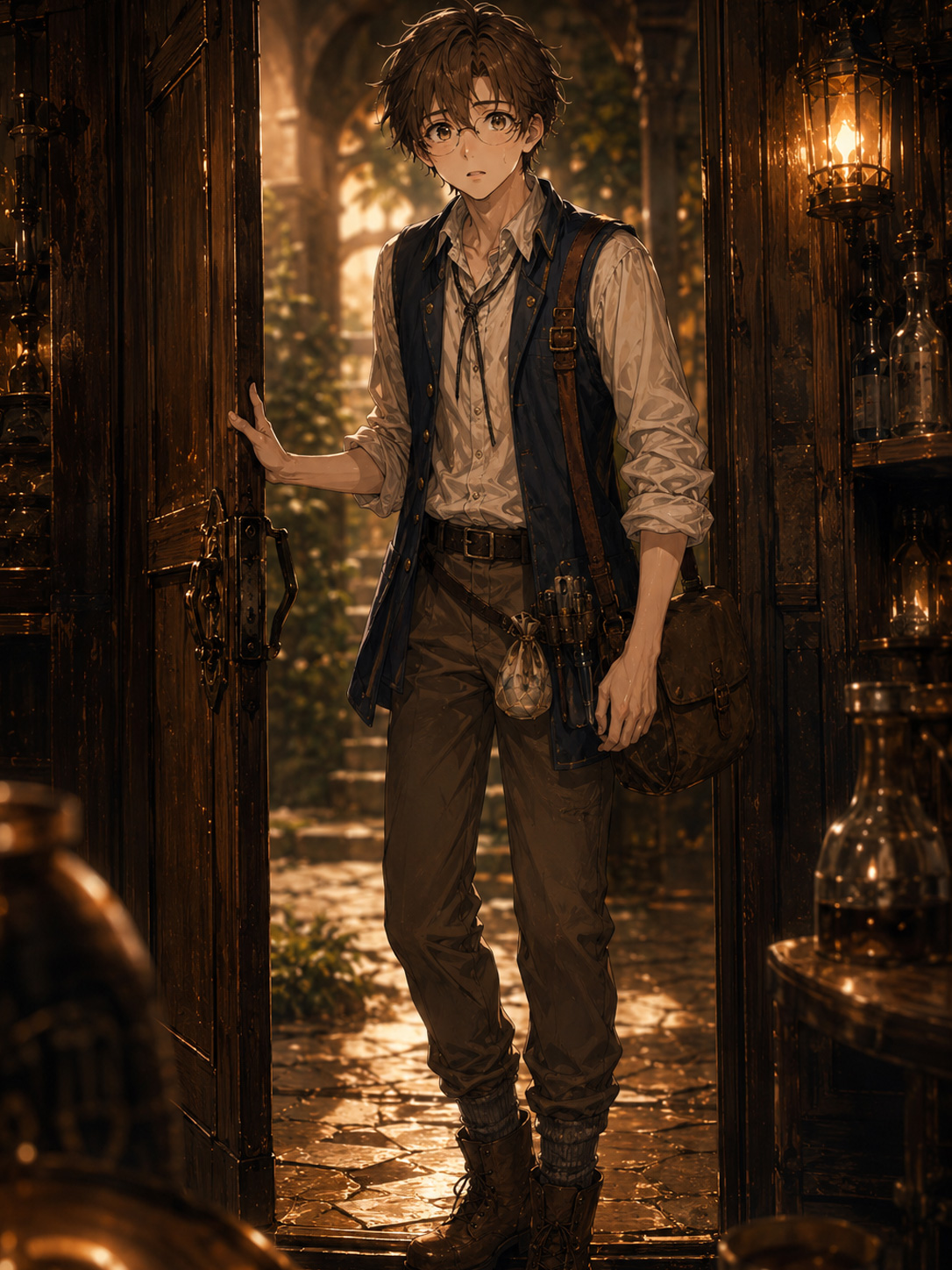
Perhaps you saw an inn at the end of a road that was not there yesterday. Perhaps the village remembered it before you did. Perhaps the rain grew warmer, the lanterns brighter, and suddenly there was a door where no door should have been.
Or perhaps you stepped through something that was not a door until the moment it opened.
An archway. A wardrobe. A garden gate. Two trees standing too close together. A curtain at the back of a festival tent. A shadow between buildings.
Once, a brightly lit metal box that accepted coins and dispensed sweet drinks.
I am told this is ordinary somewhere. Rika still thinks it was funny.
You may also have been brought here. Carried, dragged, rescued, invited, chased, misdirected, or swept along in the sort of accident that only becomes funny once everyone survives it.
The method matters less than you think. You are here now, and that is the part worth holding onto.
That does not necessarily mean prophecy, destiny, ancient bloodlines, divine summons, or a heroic quest waiting politely beside breakfast. Sometimes it only means you were tired. Or lost, or afraid, or running, or grieving, or searching. Or standing at the point where your story had become too heavy to carry alone.
The Last Home may have noticed. That is not always comforting. But it is not nothing.
Where Am I?
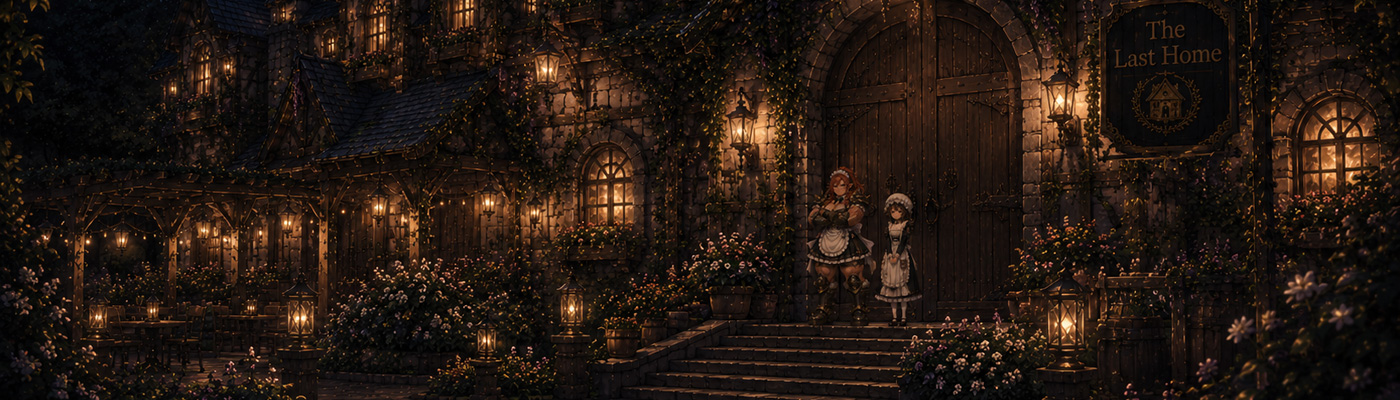
You are in The Last Home. That is the simple answer.
The less simple answer is that The Last Home is an inn, a refuge, a crossroads, a household, a problem, a promise, and occasionally a very rude interruption to local geography.
It appears where it should not. It leaves when it chooses. It contains more rooms than any building has a right to contain, more guests than sense would recommend, and more rules than most people learn before they regret it.
It is not a kingdom or a temple, and it is not a tavern pretending at mystery for atmosphere. It is an inn. That matters.
You can eat here. Sleep here. Work here. Argue here. Recover here. Make terrible decisions here, though I would not recommend making a hobby of it.
You may see gods drinking beside farmers, demons arguing over soup, ghosts losing at cards, and people with no polite category sitting quietly by the fire. This is normal.
Not harmless. Normal.
Under this roof, what matters first is not what you are. It is how you behave.
Why Is Everyone So Calm?
They may not be. They may simply have had more practice.
Most new arrivals look around, see the impossible, and wait for someone sensible to panic first. Then they notice the room.
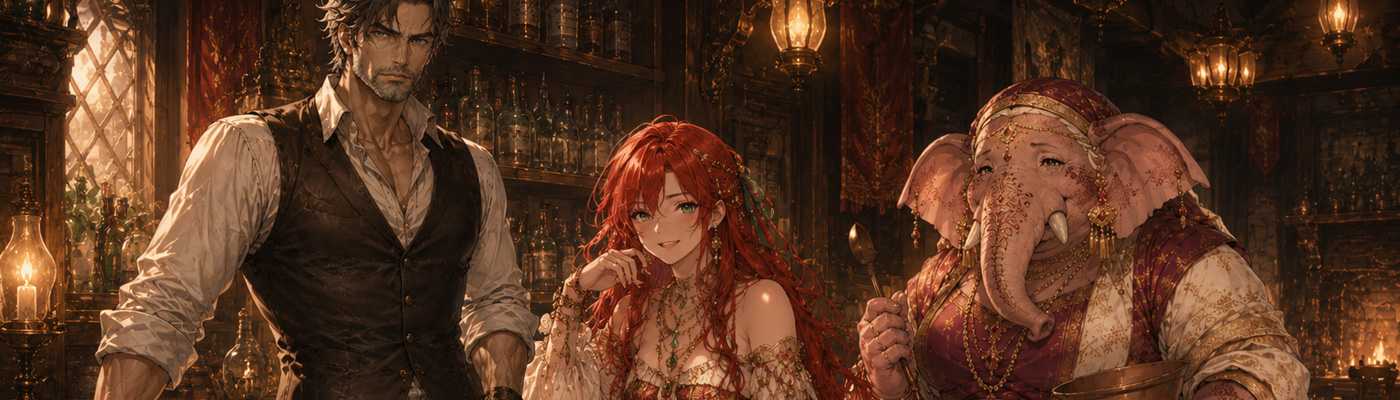
The demon is eating soup. The god is complaining about the ale. The ghost is losing at cards. Rika has apologised to a ceiling beam and continued with her day. Freya is annoyed about wet boots. Marie has already noticed what everyone is carrying. Sylvie is smiling in a way that suggests certainty has become optional. Carmella appears to have turned breathing into theatre.
And behind the bar, Lars is wiping a glass.
He is not startled. He has seen you arrive, measured the room, and decided that the world has not ended.
This has a calming effect. Not comfort, exactly — more the sudden understanding that if screaming were useful, someone more experienced would already be doing it.
Fear is allowed here. Panic is expected. Screaming is inconvenient but survivable. Fainting is common enough that no one will make a formal record unless you do it somewhere impressive.
Violence is different.
If your first response to the impossible is to draw a weapon, cast at the room, threaten the Staff, or decide that the person opposite you cannot possibly be allowed to keep eating soup because they have horns, wings, teeth, scales, smoke, or too many eyes, you have stopped being frightened and started becoming an incident.
Incidents are handled. Usually by the Maids. Sometimes by Lars looking up from the bar. Occasionally by the Inn itself, which has been known to decide you would be more useful somewhere else, holding nothing sharp and reconsidering your manners.
You will not be harmed for being afraid. You may, however, be detained until you discover a better relationship with politeness.
What Is This Thing I'm Reading?
This is The Patron's Primer.
It is not a complete explanation of The Last Home. A complete explanation does not exist. Seraphis has several shelves devoted to the question, and some of them are safer than others.
This Primer is a starting point. It is a collection of warnings, introductions, practical advice, half-safe explanations, staff-approved uncertainty, and the sort of information that might prevent you from embarrassing yourself in front of something ancient before dessert.
It will not tell you everything. Partly because no one knows everything. Partly because some truths are dangerous when introduced too early. And partly because you have had a difficult day, and should not be expected to understand the full shape of reality before tea.
The pages gathered here will point you towards the rooms, rules, people, habits, warnings, and oddities most likely to matter first.
They will not make the Inn harmless. Nothing could. They may, however, help you understand why this place can still be called safe. That distinction may save you a great deal of trouble.
Read what you can. Ask when you must. Do not assume silence means permission.
What Should I Do Now?
For now?
Breathe.
If you are injured, tell someone. If you are hungry, accept food. If you are lost, ask Staff. If you are being followed, say so clearly, and do not attempt to solve the matter alone in a corridor.
If you arrived through a Door, do not assume you can return through the same one. If you see another Door, do not test it.
There is an article on that. Read it before experimenting. Preferably before touching anything with a handle, hinge, curtain, glowing symbol, suspicious archway, polite chime, or sign promising shortcuts.
Do not wander into private corridors. Do not threaten anyone under this roof. Do not touch the sword behind the bar. And if Mama Jori puts food in front of you, eat.
You can ask why the Inn arrived later. For now, it arrived. You are here.
That may be enough.
Contents

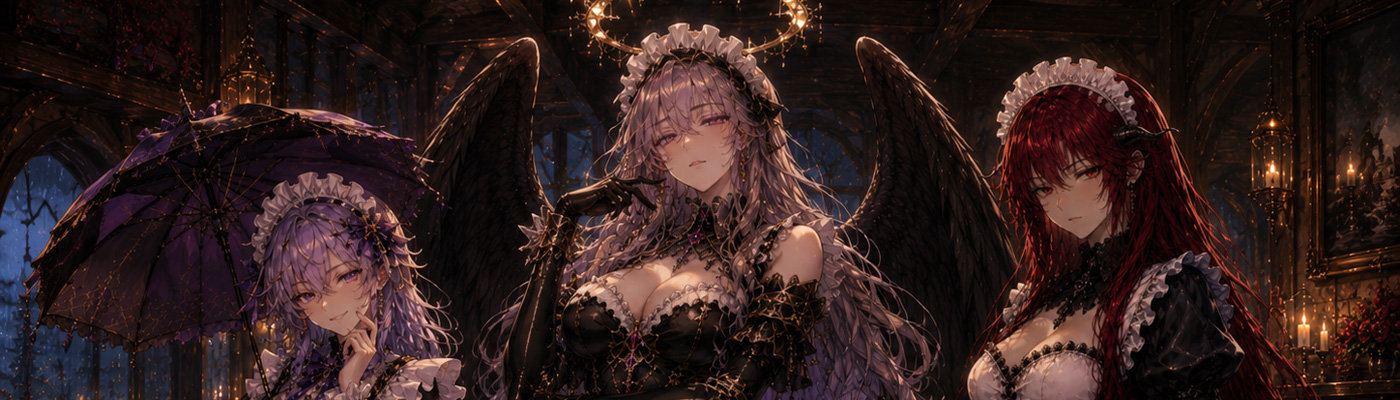

Your First Few Minutes
Breathe first. Questions work better when your lungs are involved.
Accept tea, soup, a blanket, or whatever harmless object has been placed in front of you. Someone probably noticed you needed it.
Do not run. Do not draw a weapon. Do not test the nearest Door.
If you are lost, injured, frightened, or being followed, tell Staff clearly and early.
If Mama Jori feeds you, eat. This is not a metaphor.
Archivist’s Note
This Primer is accurate enough to be useful, incomplete enough to be survivable, and deliberately silent in several places where curiosity has historically proved expensive.
If you believe something important has been omitted, you are probably correct.
That does not mean it was omitted by accident.

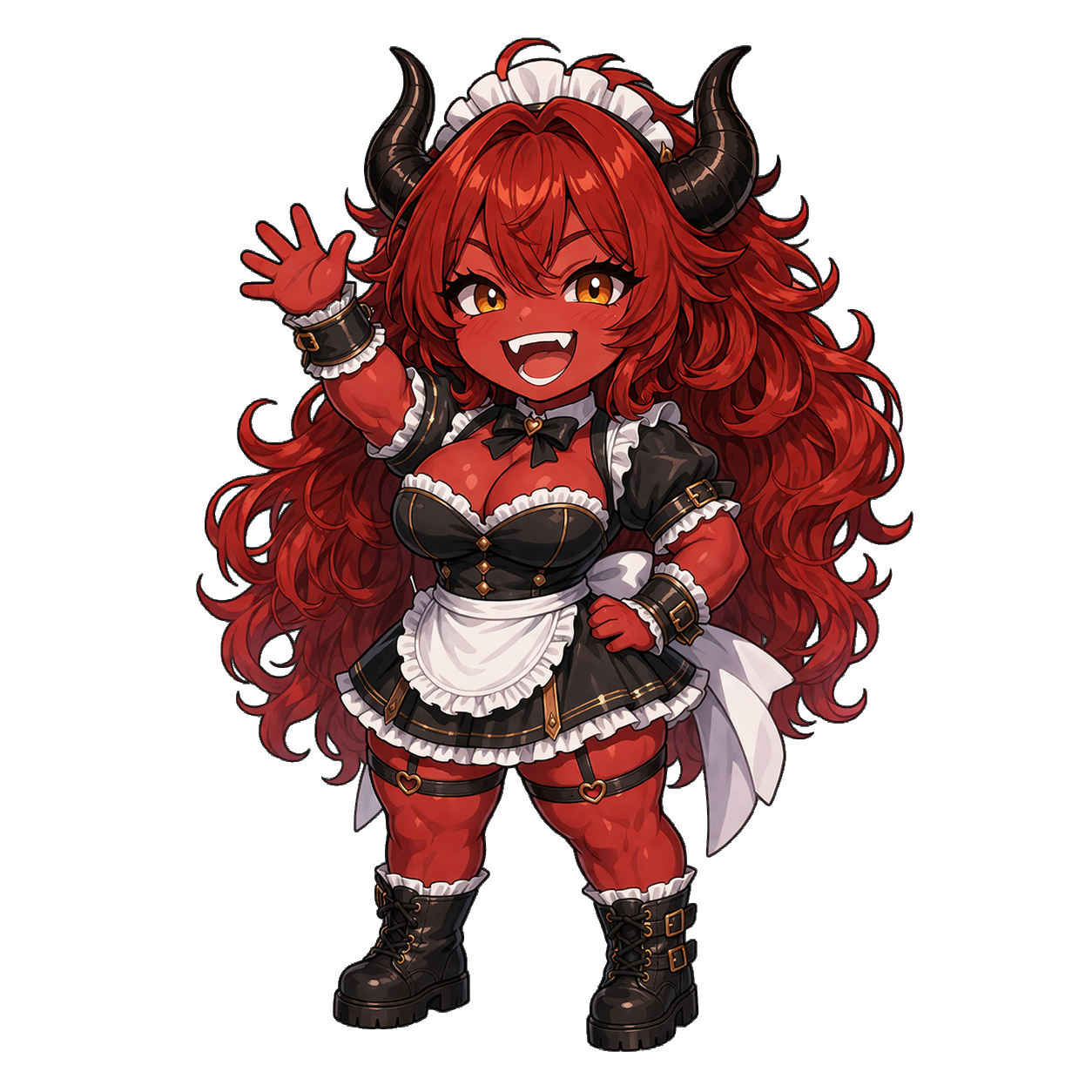

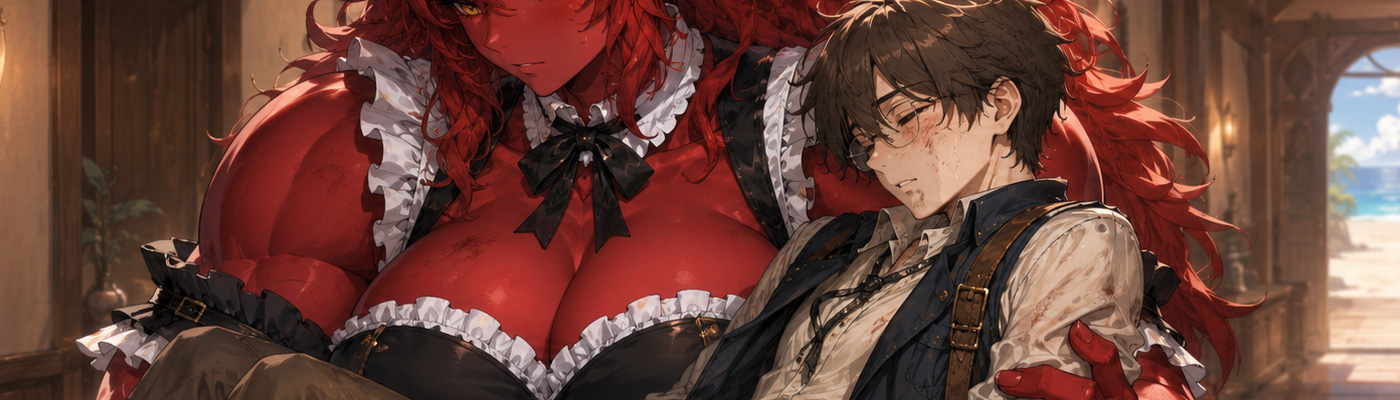
A certain iron demon caravan owner repairs a chair and sits down on a couch :P