

Protocol Weapons
Chambert's Guide to Defense - Episode 15
Historically, the classification of Protocol weaponry has been a rather mutable one.
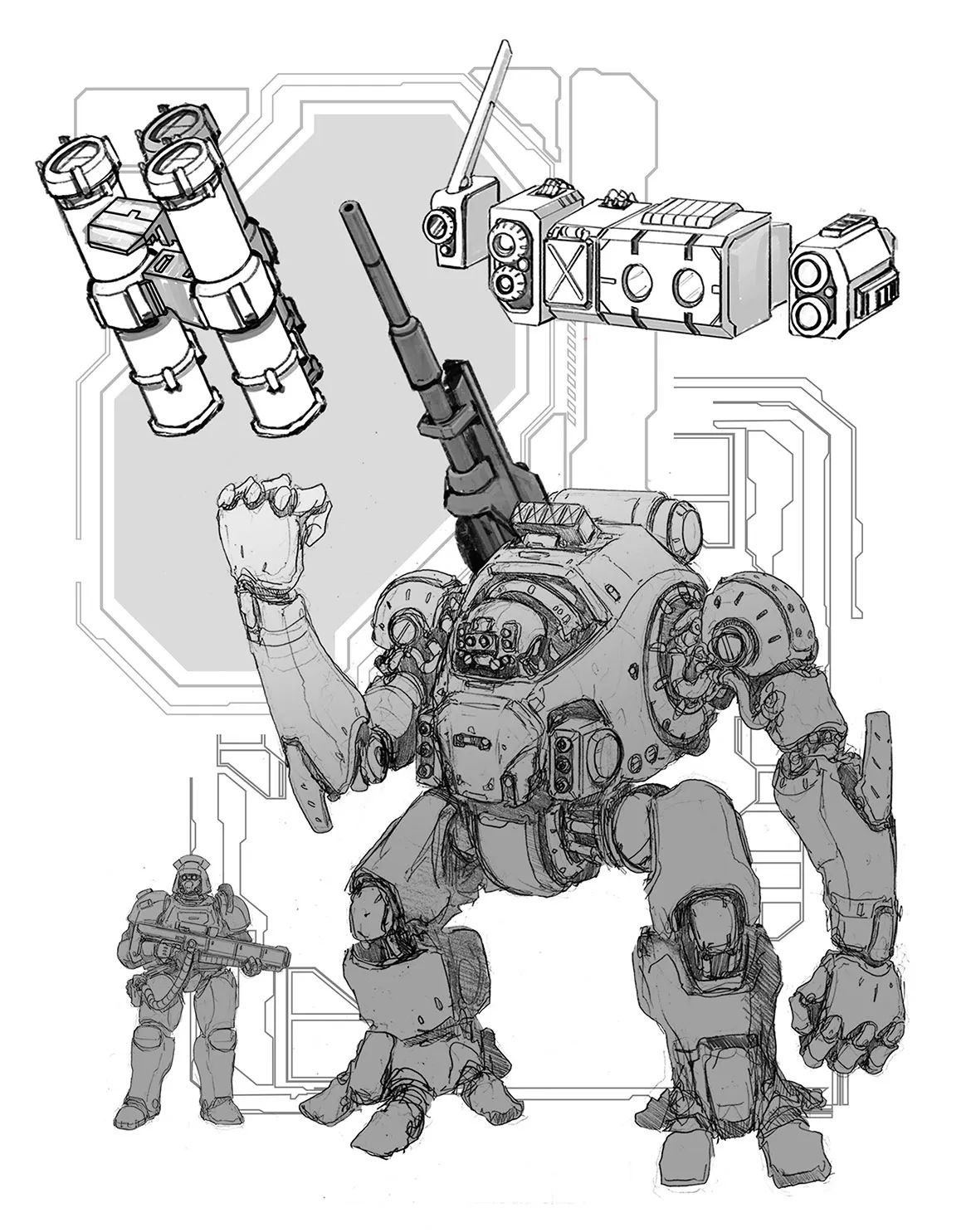
At one time the GuardCorp’s selection of humble Tactical Combat Launchers like the Fusi and Boomer could have been considered Protocol weapons, and the Pact’s hive weapons would absolutely cross that threshold. Put simply, the term “Protocol weapon” derives from a rare show of universal acceptance of principle between belligerents at the Ells Valley Conference.
Several joint resolutions on warfare and escalation ethics were agreed, most notably “Protocol One,” which puts prohibitions in place on the use of:
“indiscriminate or environmentally hazardous attack forms exceeding permitted protocol for the current level of combat intensity.”
Interpretations of just what those attack forms may consist of have loosened and tightened over time as each new conflict tested the boundaries of what will or will not draw censure, sanction, or retaliation from the Ells Conference signatories.

Broadly, Protocol One was an admonition to play nice, and not imperil civilian populations, facilities, or biospheres without fair cause or prior warning.
With all sides more invested in capture and control than outright destruction, it has proven a robust agreement, with only fourteen suspected instances of direct retaliation over Protocol Weapon breaches, along with some five hundred and twenty eight alleged measures of censure being exacted.
Legal scholars agree that the vague language of the original resolution is purposeful, with an intent of forcing antagonists to examine, morally and ethically, whether the advantage of using Protocol Weapons is warranted for the conflict at hand. In the sense of acting as a counterbalance to escalation and widespread destruction, the Ells Valley Resolution has largely been a success, but it has produced many interesting examples of weapons that probe the boundaries of the letter of the original resolution versus the spirit.


