


Baleful Siphon
Sickness Lingers
“They said it was only a fragment, nothing that could live on its own. But I watched it in the glass. It watched me back. Not like a creature… like a memory that knew it had been taken.”
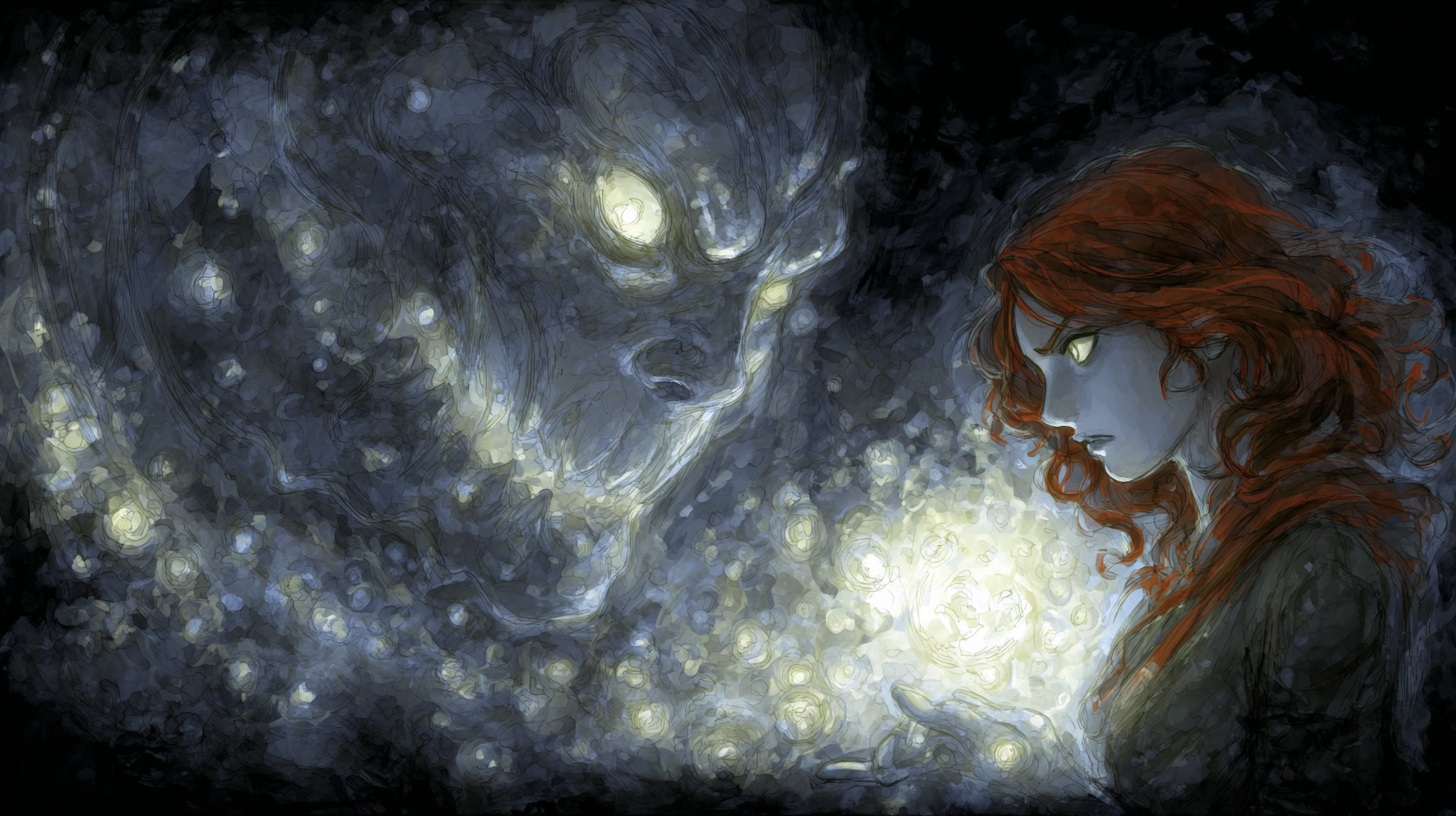
Baleful Siphon is not a spell of healing, no matter how often it is described that way by those who do not understand it. It does not cure. It does not cleanse. It reaches into something living, finds the part that should not be there, and drags a piece of it out into the open.
The ritual begins simply enough. A touch, deliberate and steady, the caster’s hand resting against flesh that carries more than it was meant to bear. The materials involved suggest sterility, control, a clinical precision that gives the illusion of safety. That illusion does not survive the first breath of the incantation.
What is drawn out is not blood, nor tissue, nor anything that can be named so easily. It is an echo. A concentrated fragment of the affliction itself, something that exists between states, neither fully part of the host nor entirely separate from it. When the spell takes hold, that fragment resists.
The body reacts first. Muscles seize. Breath falters. The afflicted feels something being pulled from within them that was never meant to be handled directly. It is not like losing a wound or shedding a sickness. It is like being forced to acknowledge a second presence inside the self, and then feeling that presence grasped, compressed, and extracted through force of will alone.
Witnesses rarely forget the moment of emergence.
The affliction does not leave quietly. It manifests, briefly, in a form that reflects its nature. A distortion in the air. A shape that should not exist outside a body. A suggestion of teeth, or hunger, or something older than either. It writhes, unstable, as though it resents its separation, as though it knows it has been made into something smaller than it once was. Then, just as quickly, it is sealed away, forced into the confines of glass where it settles into a dim, shifting presence that never quite becomes still.
The host survives this.
That is the first and most important truth.
The affliction remains.
That is the second.
Baleful Siphon does not remove the curse of blood or hunger or transformation. It does not weaken it. It does not grant relief. What it takes is a fragment, a distilled expression of the condition, something that can be held, studied, or used. The original remains rooted where it was, unchanged and very much alive.
This is why the act is remembered.
Those subjected to the spell do not experience it as treatment. They experience it as violation. Something intimate is exposed, handled, and taken without the comfort of resolution. They feel the presence inside them made visible, made real in a way it was never meant to be. Even when the moment passes, the memory lingers with a clarity that does not fade. They know what was inside them, and they know it can be reached again.
For the caster, the experience is not without consequence.
To draw out such a fragment is to brush against the affliction itself, to feel its nature in a way that cannot be entirely contained. The echo does not remain solely within the vial. A trace of it lingers, clinging to thought, coloring perception, introducing a subtle distortion that persists long after the ritual ends. It is not enough to claim the caster, but it is enough to remind them that what they handled was never inert.
The vial itself is a quiet horror.
Contained within it is not a full affliction, but a shadow of one. It moves in ways that suggest intent without ever forming it. It reacts to presence, to heat, to proximity, as though it is aware of the world beyond the glass but unable to reach it. It is sterile, incapable of spreading itself naturally, and yet it carries enough of the original nature to impose that nature upon another.
Administering such a thing is not an act of transfer. It is an imposition.
The recipient does not become what the original host is. They become something lesser, something incomplete. The traits that emerge are inconsistent, shaped by the fragment’s instability. A hint of heightened sense. A flicker of unnatural resilience. Alongside these come the burdens, the compulsions, the weaknesses that define the affliction’s darker side. The balance is never fair. It was never meant to be.
There is a cruelty in this half-state that experienced practitioners rarely speak about openly. The afflicted individual cannot pass the condition on. They are cut off from the cycle that defines the original curse. What they carry is theirs alone, a closed loop of transformation that offers no release through transmission. They are marked, altered, and isolated in a way that mirrors the affliction while denying it its full expression.
Time does not favor these creations.
The vial decays. Its contents lose coherence, fading into inert nothing if not preserved by deliberate effort. What was once a captured echo becomes a memory trapped in glass, then less than that. Yet while it endures, it remains dangerous, not because it is powerful, but because it is wrong.
Baleful Siphon exists in a space that unsettles even those accustomed to necromancy. It is not the animation of the dead, nor the manipulation of life force in familiar forms. It is the extraction of something that should not exist independently, forced into a state where it can be observed and used.
There are those who pursue it for study, convinced that understanding these fragments will lead to mastery over the afflictions themselves. Others use it as a weapon, a way to impose controlled suffering without granting the target the full, terrible inheritance of the original condition. Both approaches share a common assumption.
That what is taken can be contained.
That assumption is not always correct.
Because what the spell creates is not simply a tool. It is a piece of something that was never meant to be divided, and even in its diminished state, it remembers what it once was.
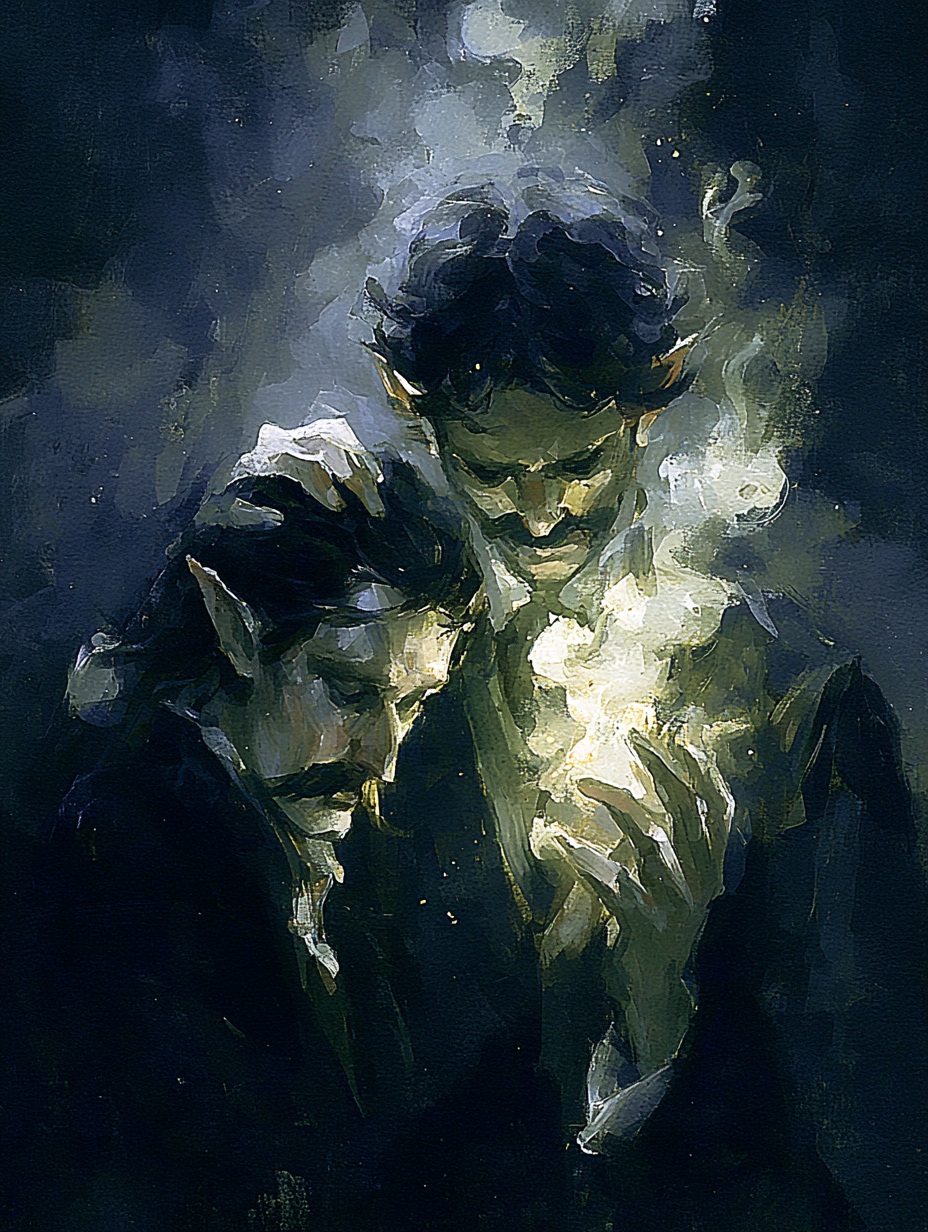
“You do not understand what you have done. You did not remove it. You taught it how to exist outside the body. And now it waits, smaller… quieter… but patient in ways the living never are.”
Related Discipline
Necromancy
Level



Comments