Scope
The motivation behind building Koina
Koina began as a question that wouldn’t leave me alone: what if Rome had never risen to dominate the Mediterranean, and with it, never spread its model of colonization, assimilation, and conquest? My motivation is to explore how different values — cooperation instead of domination, philosophy instead of theology, plurality instead of empire — might have reshaped the trajectory of human history.
Framing Note: Deconstruction Before Construction
This project began with a deeper question: how did we get here? Looking at today’s polarized politics, cultural contention, and sense of inevitability, I wanted to know if our present state was inevitable — or simply one possible path. The starting point, then, was deconstruction: pulling apart the scaffolding of faith, empire, and governance that shaped our world. Only after dismantling those assumptions did I begin construction — imagining a possible divergence where history unfolded differently.
Koina is not about “better or worse.” It is about different. A world with more reasonable expectations, less fixation on conquest, and fewer world-ending tensions baked into its structure. It is not a utopia, but a reminder that what feels inevitable may not have been inevitable at all.
The goal of the project
Two things: to create a coherent, lived-in alternate modernity that feels real; and to highlight how much of our own present is built on Rome’s shadow. By showing another path, Koina reminds us that history is not fixed, but contingent.
Koina's Unique Selling point
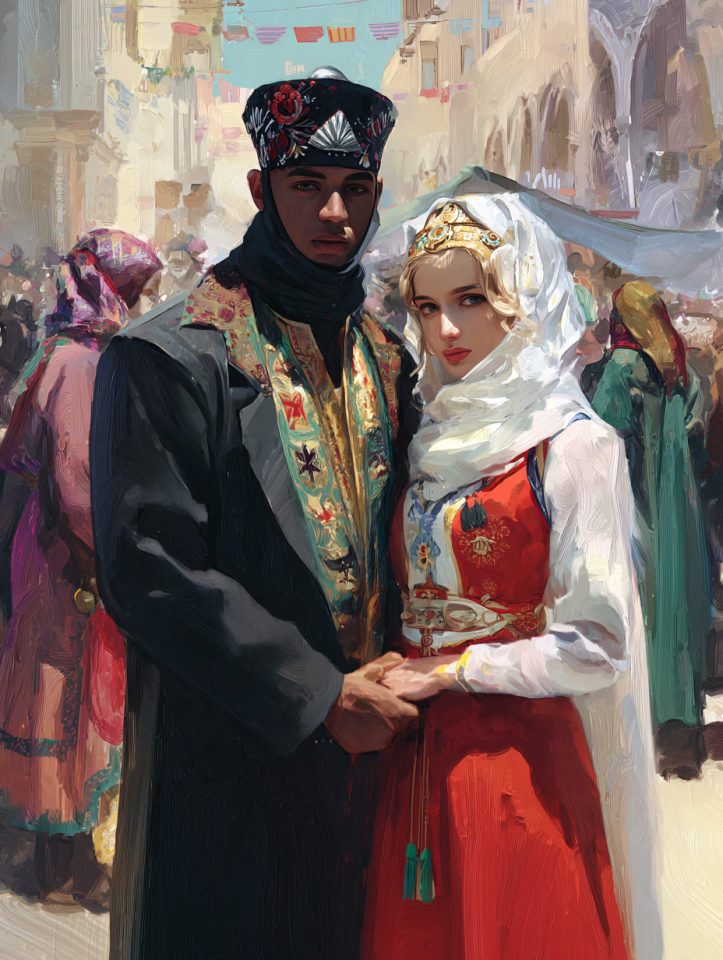
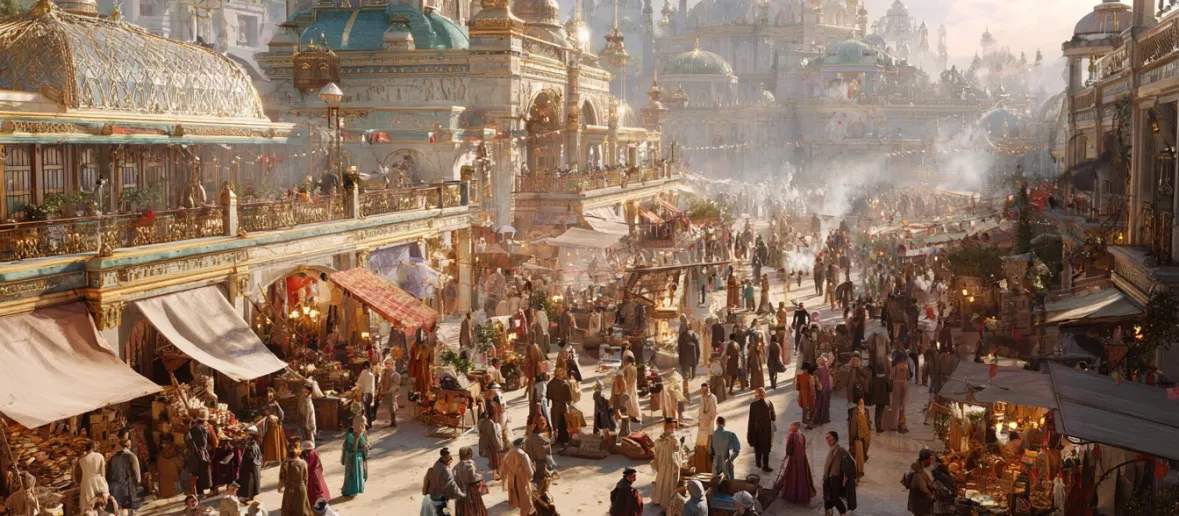
Koina isn’t empire-driven or theology-dominated. Persia’s federative model flourished, philosophy became the shared ethical language, and technology advanced in balance with ecology. The result is a world that is calmer and steadier than ours, where freedom is lived as fact, not granted by decree.
Theme
Genre
Analytical alternate history — a counterfactual modernity. It reads with narrative color but is grounded in historical plausibility, more cultural exploration than fantasy.
Reader Experience
Plural, rational, and ecological. Instead of the tension of conquest and empire, Koina moves at a steadier rhythm, dialogic rather than imperial. It feels alive and participatory, but calm.
Reader Tone
Measured and cooperative. Rivalries and corruption exist, but plurality is treated as normal and freedom as lived experience. The tone is one of balance rather than domination.
Recurring Themes
Pluralism as the norm.
Philosophy as glue.
Justice as restoration, not punishment.
Cooperative governance.
Ecological balance.
Memory and continuity.
Character Agency
High, but collective. No single hero changes the world — instead, every citizen shapes it through councils, guilds, and assemblies. Leadership rotates, accountability is constant, and agency is woven into civic life.
Focus
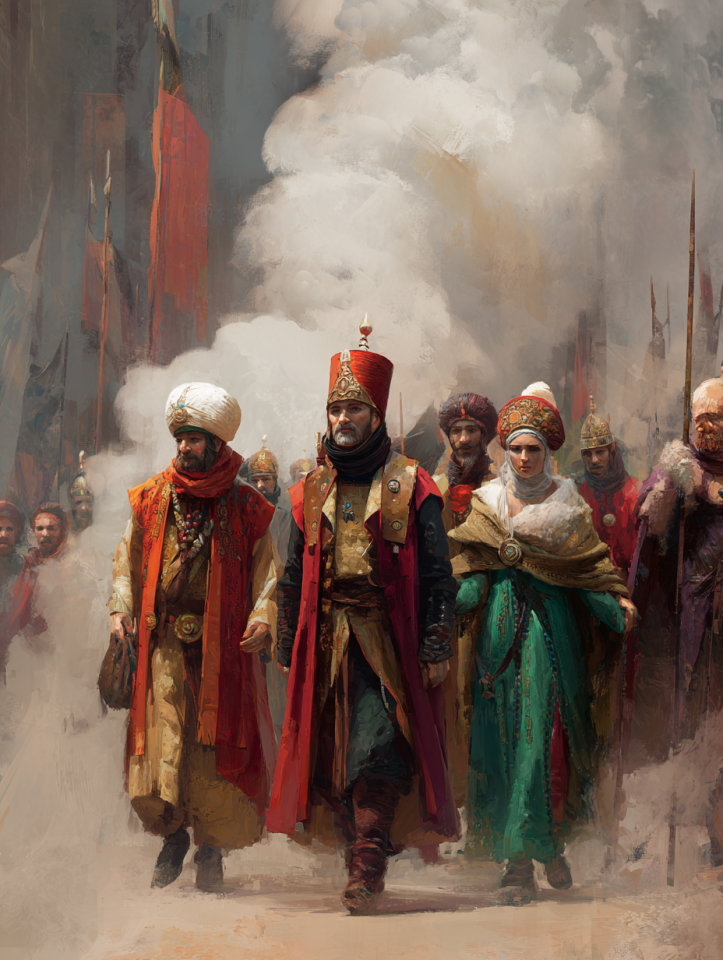
The first focus is the political and cultural scaffolding of the Cooperative Federations. These structures are what set Koina apart from our own history: instead of empires demanding assimilation, federations, leagues, and councils evolved to preserve diversity while maintaining shared governance. Voices and Whispers anchor leadership, guilds mediate daily life, and federations balance power without demanding conquest.
The second focus is philosophy as the universal ethical language. In Koina, philosophy takes the place that theology held in our world — serving as the grammar of law, science, and daily conduct. Stoic reason, Buddhist compassion, Aristotelian logic, and Indic dharmic traditions weave together to provide a shared frame of reference across regions, while local religions remain as cultural expressions.
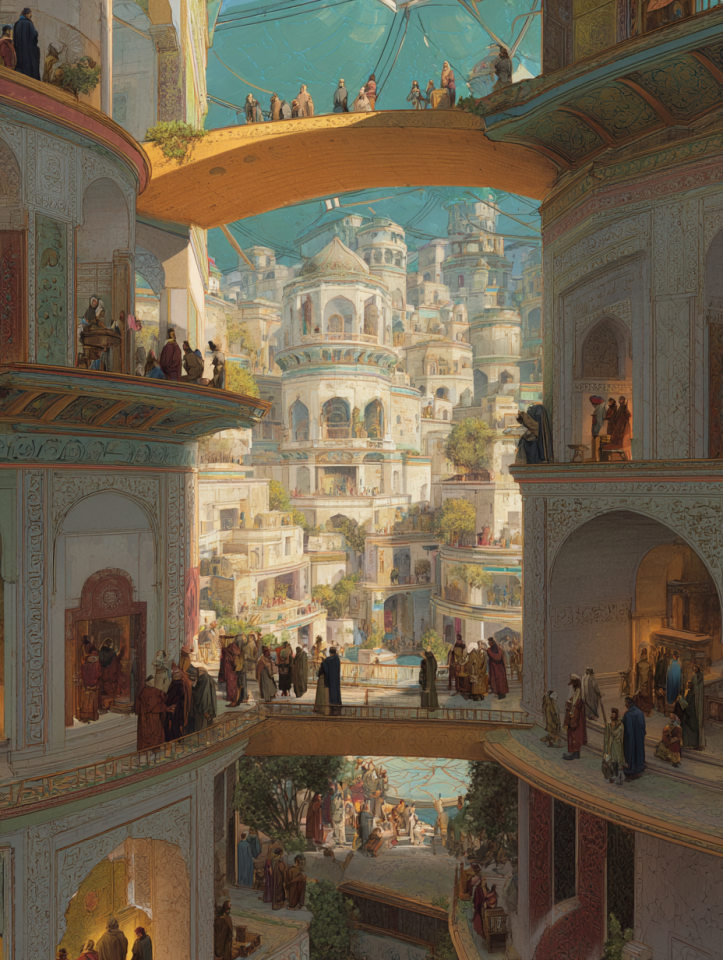
The third focus is technology and ecology as intertwined. Innovation here is measured not by its capacity for conquest, but by its harmony with the natural world and its ability to strengthen community. Wireless resonance energy, cooperative transport, and repair culture define the technological landscape. Ecology is never treated as secondary — it is always seen as part of the same balance that sustains people and societies.
Social and cultural life shaped by cooperative families, unions, and festivals.
Law and justice reframed around transgression and restoration rather than sin and punishment.
Memory as a shared civic resource, embodied in the Net of Voices, which preserves debates, genealogies, and knowledge as commons.
Global institutions like the Assembly of Concord and the League of Healers, which coordinate cooperation without empire.
Drama
Consensus vs. Urgency
Koina thrives on deliberation — councils, guilds, and federations debating until balance is found. Yet in moments of crisis, that same slow pace can be a liability. How do societies that prize consensus respond when the world demands speed?
Prestige vs. Equality
Guilds and councils are meant to be cooperative, but prestige accumulates. Certain guilds, cities, or federations gain outsized influence. The tension between prestige and equality is never fully resolved, only managed.
Tradition vs. Innovation
Philosophy grounds the world in continuity. But tradition can also weigh heavily, slowing ecological reforms or resisting disruptive science. The balance between honoring heritage and embracing change is a constant negotiation.
Local vs. Global
Citizens belong first to households, guilds, and local councils. Yet global institutions — the Assembly of Concord, the League of Healers — demand cooperation across borders. Local loyalty and global responsibility sometimes pull in opposite directions.
Pluralism vs. Cohesion
Pluralism is Koina’s strength, but it can also strain unity. With layered identities and countless traditions, the challenge is ensuring that plurality does not fracture into isolation. The cooperative system relies on constant effort to hold diversity together.
Justice vs. Leniency:
Restorative law reduces cycles of violence, but some exploit it, testing the patience of their communities.
Voice vs. Whisper:
Leadership rotates and is shared, but rivalries within the Whisper cohorts can erupt, threatening cohesion.
Commons vs. Scarcity:
Resources like water, forests, and resonance energy grids are treated as commons. Yet scarcity forces negotiation — and sometimes sharp conflict.
Memory vs. Noise:
The Net of Voices preserves everything, but abundance can overwhelm dialogue. What happens when memory itself becomes too vast?
Ecology vs. Growth:
Ecological stewardship is prized, yet federations still seek prestige through grand projects. Negotiating scale without imbalance is a recurring challenge.