
Orcish
The Orcish language is the primary tongue spoken by the Drakhor clans and other orcish communities across Drakthar and beyond. Rooted in ancient warrior traditions, Orcish is a harsh, guttural language designed for clarity, efficiency, and command. It is not a language of poetry or diplomacy but of orders, oaths, and battle cries, perfectly suited to the culture that speaks it.
Origins and Evolution
Orcish is believed to have originated from the first warbands that roamed Drakthar long before recorded history. As orcish society developed into structured clans, their language evolved to accommodate not just war, but leadership, craftsmanship, and trade. While still dominated by strong consonants and simple yet forceful grammar, it has incorporated words from neighboring cultures over the centuries, particularly from the Aurelian tongue and Magister lexicons.
Despite external influences, Orcish has resisted major changes, remaining a language of tradition. The Drakhor consider their tongue a sacred link to their ancestors, and altering it unnecessarily is often frowned upon.
Phonetics and Structure
Orcish is defined by its deep, resonant sounds, favoring short, direct words over complex sentence structures. Key characteristics include:
- Guttural Pronunciation – Many words rely on deep, throaty sounds, making it distinct from smoother languages like Elven or Aurelian.
- Aggressive Emphasis – Words are often spoken with sharp force, making even casual conversation sound commanding.
- Short, Direct Sentences – Orcish rarely uses elaborate phrasing. Statements are given in direct commands or factual declarations.
- Limited Use of Articles – Unlike Aurelian or Elven, Orcish omits articles like “the” or “a” in most cases.
Writing System
Orcish was originally an oral language, passed down through storytelling and war chants. However, as interactions with other civilizations increased, the need for a written form emerged. The Drakhor Runes were developed—a system of angular, carved symbols designed to be etched into stone, metal, and wood. These runes are still used in war banners, clan markings, and sacred relics, though some modern orcs also use adapted Aurelian script for trade and diplomacy.
Cultural Significance
To the orcs of Drakthar, language is more than just communication—it is heritage, identity, and power. Speaking fluent Orcish is a mark of honor among the Drakhor, and those who abandon the language entirely are often seen as clanless wanderers. Some traditions tied to language include:
- Blood Oaths – Formal vows made in Orcish are considered unbreakable.
- War Chants – Entire battle strategies are encoded in Orcish war cries, ensuring only trained warriors understand them.
- Naming Ceremonies – Newborn orcs receive their first name in a sacred ritual, often based on ancestral Orcish words.
Modern Usage and Influence
While Orcish remains the dominant language in Drakthar, it is also spoken in regions where Drakhor mercenaries and traders have traveled. Some humans and dwarves along the borders have learned basic Orcish for trade, and a few Magisters study the language for historical purposes. However, many orcs refuse to teach their full language to outsiders, believing it should only be spoken by those who understand its weight and meaning.
Despite its rugged and battle-worn nature, Orcish remains a language of strength, tradition, and unyielding spirit—a reflection of the people who speak it.
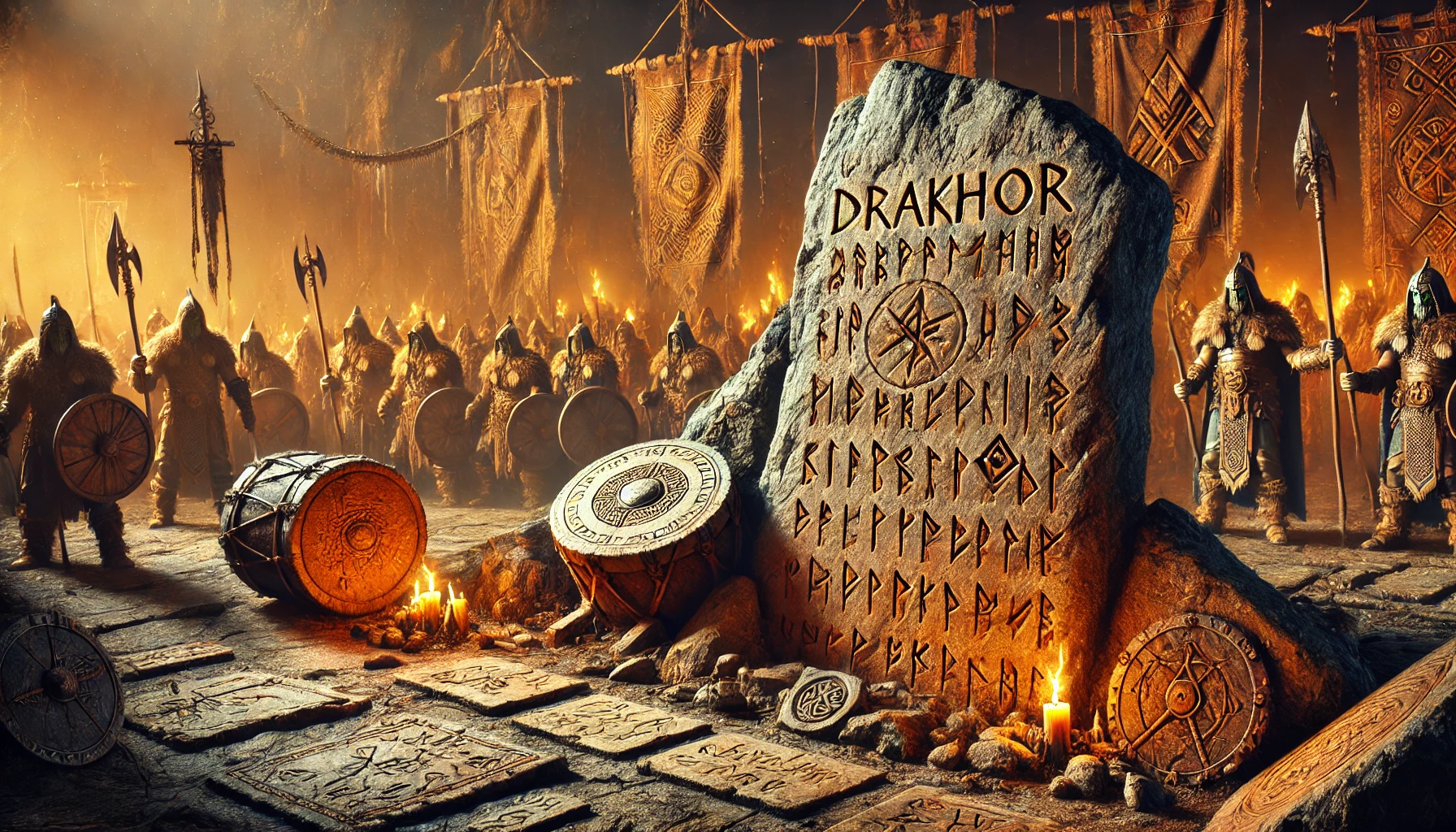
The Drakhorian tablet of law, written in orcish.
Remove these ads. Join the Worldbuilders Guild


Comments