
Elven
The Elven language, often referred to as Elvarin by scholars and native speakers, is an ancient and refined tongue spoken by the elves of the Eternal Universe. It is known for its melodic quality, intricate grammar, and deep connection to magic and nature.
Origins and History
Elvarin is believed to be one of the oldest languages still in use, tracing its origins to the earliest elven civilizations. According to elven tradition, the language was gifted to them by The Dreamweaver, one of The Seven, who sought to provide the elves with a means of expressing their dreams, artistry, and deep understanding of the world.
Unlike other languages that evolved from practical necessity, Elvarin developed as an extension of elven culture, emphasizing harmony, beauty, and poetic expression. For centuries, it was the dominant language across many regions, influencing the tongues of other races, particularly humans. Even today, many arcane incantations and scholarly texts are written in Elvarin due to its strong connection to magic.
Linguistic Features
Phonetics and Pronunciation
Elvarin is a highly phonetic language with fluid, flowing sounds. Consonants are often softened, and vowels are elongated, giving it a song-like quality. Native speakers tend to enunciate clearly, with an almost musical rhythm to their speech.
Grammar and Structure
Elvarin grammar is intricate, with a strong reliance on prefixes and suffixes to convey meaning. Nouns are classified into three primary categories—living beings, natural elements, and conceptual ideas—each of which influences verb conjugation and sentence structure. Unlike the Common language, Elvarin places verbs at the end of a sentence, reinforcing a poetic cadence.
The language also employs honorifics and formality markers, distinguishing between casual, respectful, and reverential tones when addressing different individuals.
Written Script
The elven script is a series of elegant, flowing characters often resembling vines and leaves intertwining. It is written in a cursive-like manner, with letters seamlessly connecting in an unbroken flow. Many inscriptions found in ancient ruins and enchanted artifacts are written in this script, often glowing with residual magic when activated.
Magical Significance
Elvarin is not only a language but a key component of elven spellcraft. Due to its intricate structure and tonal precision, it is often used in powerful enchantments and ancient rituals. Many non-elven mages study Elvarin to better understand the complexities of arcane magic, believing that the language itself enhances spell potency.
Modern Usage
Despite the dominance of the Common language in trade and politics, Elvarin remains the primary language of elven communities. It is spoken fluently by most elves and is often used in formal settings, ceremonies, and literary works. Among scholars and mages, proficiency in Elvarin is highly respected, as many of the oldest texts on history and magic remain untranslated from their original form.
While some younger elves have adopted the Common language for convenience, many elven elders consider the decline of Elvarin’s widespread use a sign of cultural erosion. Efforts have been made to preserve the language through dedicated schools, magical inscriptions, and traditional storytelling.
Notable Phrases
Here are a few common phrases in Elvarin, along with their meanings:
- "Luthariel en'dari" – "May the stars guide you."
- "Velora na'amin" – "The forest is Eternal."
- "Sila vëa thilion" – "Shine like the moon’s light."
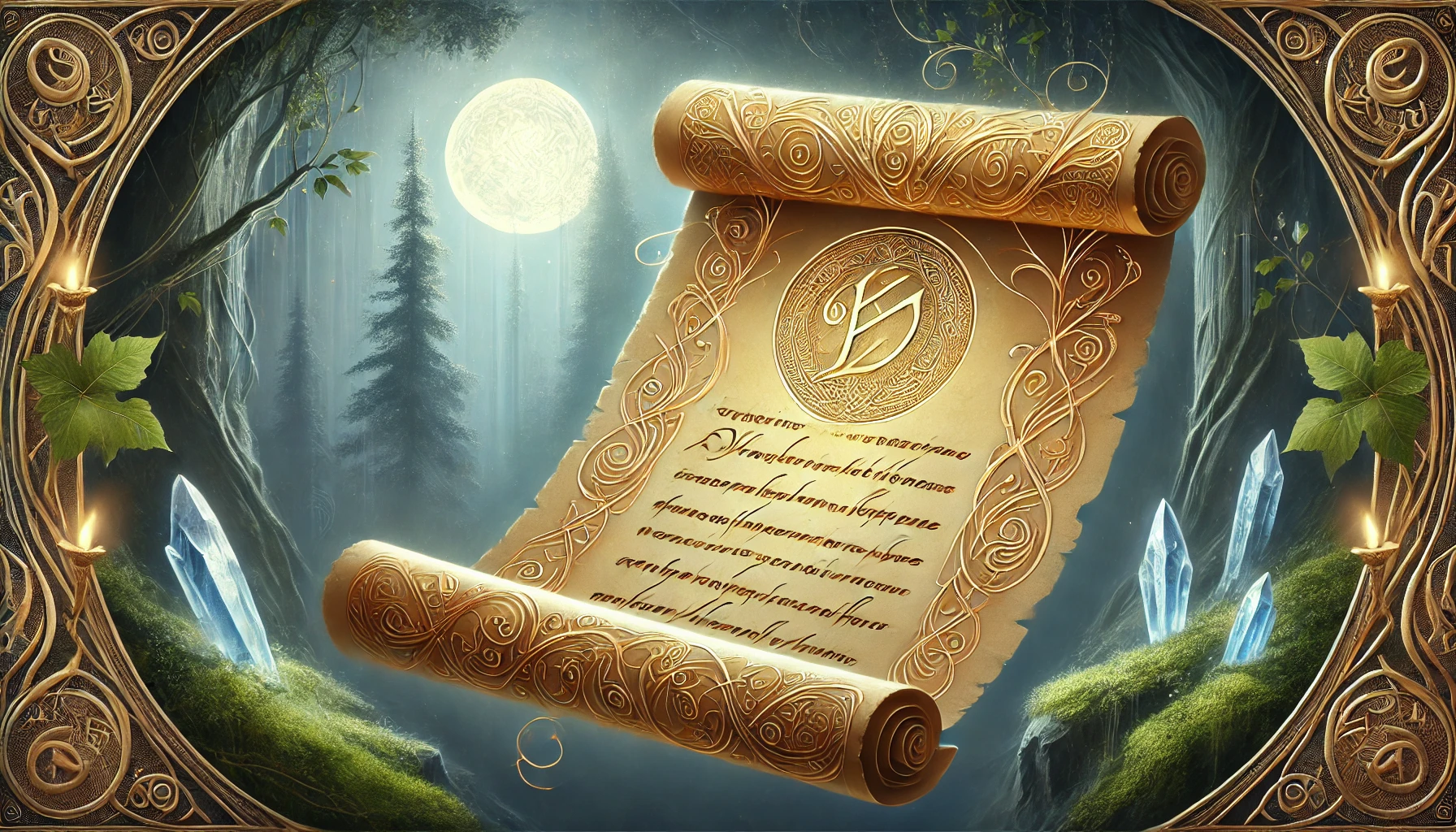
An elven scroll, witten in Elvarin.
Remove these ads. Join the Worldbuilders Guild


Comments