

Languages
in Everyday Life"Words survive what we cannot. When they change, they prove that the world still listens."
The languages of Aerith are the echoes of its history. Each word, script, and tone carries the memory of an age when the world was still deciding what it meant to speak. The Shattering scattered tongues as it scattered realms, leaving behind fragments of old lexicons that evolved in isolation or merged into something new. To study language in Aerith is to trace the paths of migration, conquest, survival, and adaptation that shaped the living world.
Speech is as varied as the lands that hold it. Some languages remain tied to the elements that birthed them, their words carrying rhythm or resonance that affects the weave itself. Others developed from trade and diplomacy, built to bridge distances and distrust. Across the continents, dialects flourish where travel is slow, each valley or city shaping its own way of naming the same truths. To the untrained ear they sound separate. To the scholar, they reveal the shared ancestry of the world’s many voices.
Every culture holds a different relationship to its tongue. Among the learned, language is treated as knowledge, a tool for precision. Among the devout, it is treated as devotion, the means through which prayer becomes power. To the common traveler, language is neither sacred nor strategic. It is survival. The ability to understand and be understood is what keeps roads open and trade alive. In Aerith, to speak is to connect, but to listen is to endure.
The oldest tongues are those that predate the age of nations. These languages are carved into stone, whispered in rituals, or embedded in magic itself. They were not designed for communication alone but for command. The first mages believed that to name something was to define it, and that mastery of the world required mastery of its vocabulary. Many of these words have been lost or deliberately hidden, their misuse capable of altering reality in unpredictable ways. The remnants live on as root syllables in common speech, faint reminders of the power once contained within sound.
When the weave broke, so too did the universality of language. Isolation reshaped meaning. Words once shared between peoples drifted apart, taking on new forms and contradictions. In one region a word might mean creation, in another, destruction. The effort to unify these meanings became the work of linguists, priests, and travelers who believed that rebuilding the common tongue could restore the world’s balance. Their efforts created the modern lingua, a flexible trade speech spoken in cities and across most ports. It is simple to learn but imperfect, unable to capture the precision or poetry of older dialects.
Many tongues now exist in layers, where multiple meanings occupy the same space. The same phrase may carry affection, insult, or invocation depending on who speaks it and how it is said. This ambiguity shapes the politics of the world as much as any law. Treaties written in one tongue and translated into another often lose their intended force. A single misinterpreted word has started wars and ended alliances. For this reason, interpreters and scribes hold quiet power in every court. They decide how history is recorded and how it will be understood.
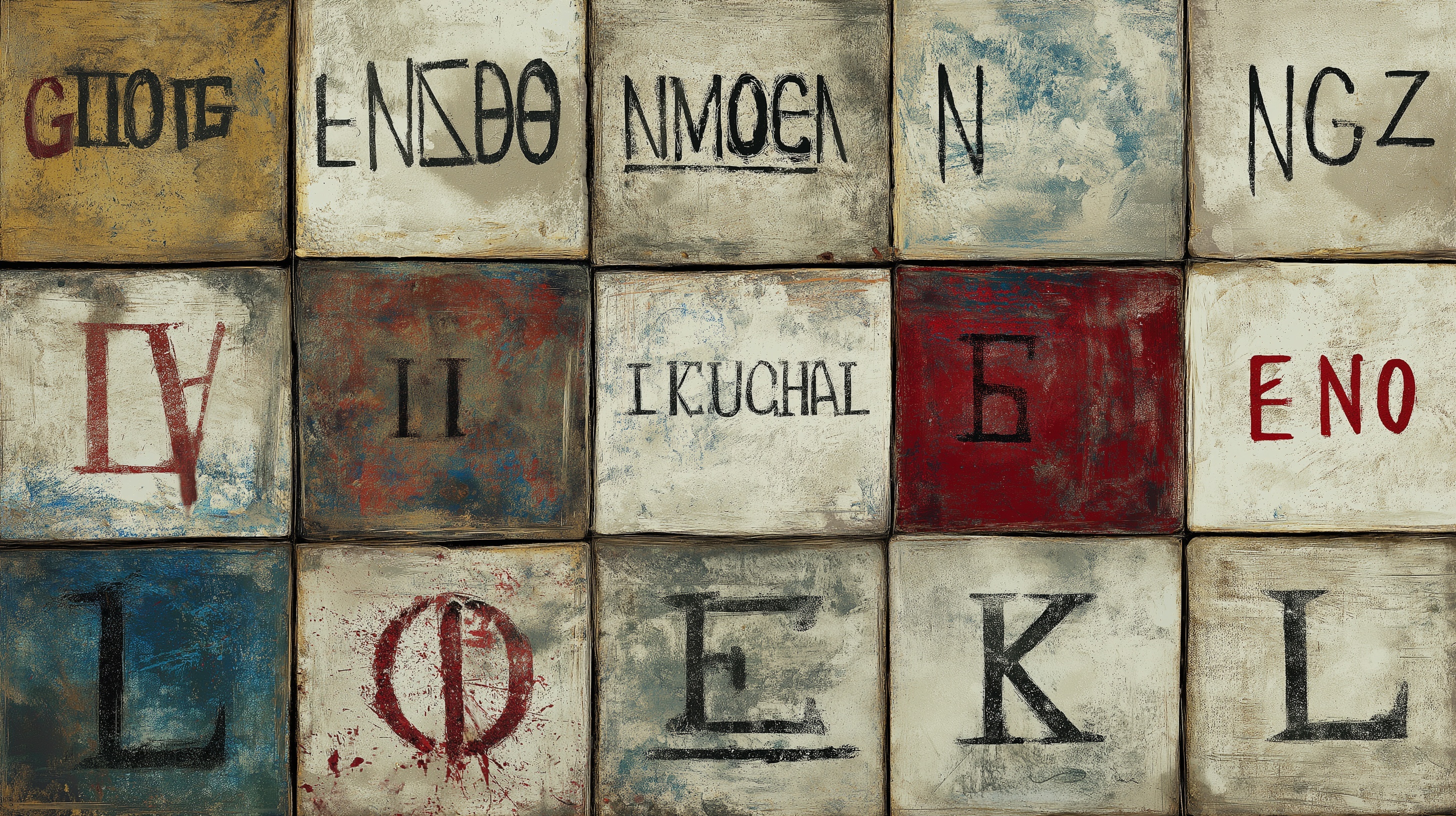
Written language varies as widely as speech. Some cultures use alphabets carved from ancient glyphs, others paint ideograms or inscribe patterns that shift with magical influence. In many parts of Aerith, literacy itself is treated as an art, blending visual design with philosophy. A written sentence may function as both text and charm, its meaning layered between what is seen and what is implied. Scholars debate whether writing evolved from spellwork or whether spells were the first form of writing. The truth is lost, but both remain intertwined.
Beyond the mortal languages lie the tongues of the planes. Elemental speech flows like song, its meanings carried through tone and vibration rather than structure. Celestial and infernal languages act as reflections of will, shaped by emotion more than grammar. The languages of dreams and spirits defy categorization, understood not through sound but through shared intent. Each reveals something about the nature of its speakers, offering insight into how the planes themselves communicate with the living.
Some claim that all languages are fragments of a single origin. They call it the First Tongue, a language that once bound creation together and allowed the gods to speak directly to reality. If such a language ever existed, it would have been shattered long ago, its syllables scattered across every other form of speech. The few who pursue this theory are often philosophers as much as linguists, searching for meaning more than mastery. They believe that rediscovering the First Tongue is not about regaining power but about remembering that the world was once unified in understanding.
For the peoples of Aerith, language is both inheritance and invention. It holds the past but also shapes what the world becomes next. Every new phrase, every borrowed word, every act of translation is another step in the long negotiation between memory and change. Whether sung, whispered, carved, or written, each word carries the same quiet defiance. It insists that meaning can still be made, even after everything else has been broken.
World Codex
Unless otherwise noted and displayed here here, all "art" is the creation of SolomonJack through Dall-E, Midjourney, Stable Diffusion & LeonardoAI
© Brian Laliberte 1993 - 2026. All rights reserved.
Unknown Shores is an original fantasy setting. Unauthorized reproduction, distribution, or adaptation without permission is prohibited.
This work includes material from the System Reference Document 5.2.1 (“SRD 5.2.1”) by Wizards of the Coast LLC, available at D&D Beyond