

Unstable Shadow
Keep An Eye On That One
"We were not meant to meet ourselves in flesh.
The mirror is a mercy, flat and dumb.
But give that image breath, and it will speak,
And in its speech lay claim to all you are.
I tell thee true, there is no darker fate
Than standing witness to thyself made wrong."
There is an old assumption, quiet and rarely examined, that the shadow belongs to the body. That it is an echo of light, a simple absence shaped by form, obedient and without will. It follows where you move. It stretches when the light falls low. It vanishes when darkness takes the room entirely. A thing without substance, without intent, and without any claim to existence beyond the one who casts it.
That assumption does not survive contact with this spell.
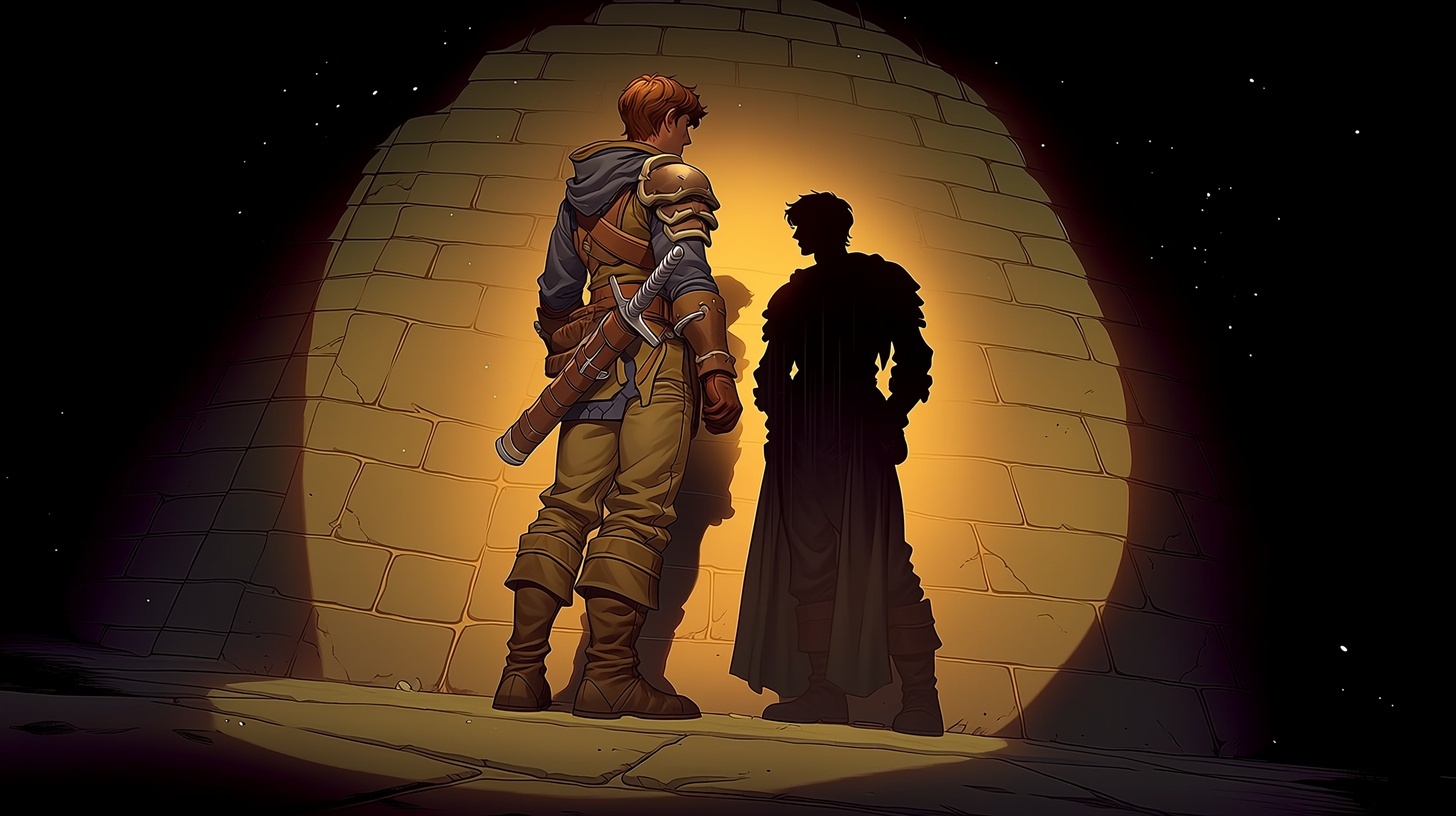
Unstable Shadow does not create something new. It removes a boundary that was never as secure as most would prefer to believe. When the casting is complete, the shadow does not fade or distort. It separates. It tears itself loose from the caster with a motion that is neither violent nor gentle, but inevitable, as though it had always been capable of leaving and had simply been waiting for permission.
What stands beside the caster in the aftermath is not a reflection in the conventional sense. It has weight. It occupies space. It moves independently, though not freely. Its form is unmistakable, a darkened version of the caster rendered in dim solidity, its edges soft where light would normally define them. It is shaped like you, but not entirely like you. There is a quality to it that suggests something has been emphasized rather than copied.
That emphasis is the first sign that the spell does not behave as a simple conjuration.
The shadow does not wait for instruction in the manner of a servant or construct. It acts. Not randomly, not chaotically, but in alignment with the caster’s immediate intent. If there is a threat, it moves to meet it. If there is an obstacle, it attempts to bypass or break it. If there is an advantage to be taken, it takes it. The connection between caster and shadow is immediate and instinctive, not mediated through conscious command but through something closer to impulse.
And yet, it is not identical.
Where the caster might hesitate, the shadow commits. Where the caster might weigh options, the shadow chooses. It does not deliberate. It expresses. Its actions reflect not the balanced sum of the caster’s personality, but an exaggerated portion of it, drawn forward and given form. A cautious individual may find their shadow circling, probing, unwilling to release its advantage once gained. A bold one may see it press forward with an intensity that borders on recklessness. Restraint, once removed from the equation, does not disappear. It distorts.
This distortion is not an error. It is the nature of the thing.
Necromancy, as a discipline, has always concerned itself with the boundaries between life and what follows it. Less often discussed, but no less relevant, is its interaction with the boundaries within the self. The body is not the only structure that can be divided. Identity, intent, and instinct are no less susceptible to separation when subjected to the right pressure.
Unstable Shadow applies that pressure with unsettling precision.
For a time, the arrangement holds. The shadow remains within a limited distance, tethered by the same force that brought it into being. It fights when necessary, assists when advantageous, and exists as a second presence that mirrors the caster’s purpose without sharing their restraint. It can be harmed. It can be destroyed. When it collapses, it does so without ceremony, its form breaking apart into nothing that can be examined or preserved.
Most who use the spell understand it at this level and go no further. They accept the risk inherent in any manifestation of necromantic force, dismiss the more philosophical implications, and treat the shadow as a temporary extension of their own capabilities.
That is where the more dangerous misunderstanding begins.
Each casting leaves a trace. Not upon the body, not in any way that can be measured through ordinary means, but in the underlying relationship between the caster and the thing that was separated from them. This accumulation is subtle, tracked not in visible marks or immediate consequences, but in a growing instability that resists precise definition. It is not fatigue. It is not corruption in the conventional sense. It is a weakening of the assumption that the shadow will always return to its proper place.
For most, this instability remains theoretical. The spell is cast, the shadow appears, the task is completed, and the shadow dissolves or is dismissed without incident. The caster moves on, perhaps with a lingering sense of unease that fades with time and distance from the experience.
And then, one day, it does not return.
The moment is not announced. There is no dramatic shift in the air, no sudden revelation that something has gone wrong. The spell ends, as it always does, and the caster is left standing where they began. For a brief instant, everything appears normal.
Except the shadow is still there.
It does not collapse. It does not fade. It remains, separate and intact, no longer bound by the constraints that once defined it. The connection that guided its actions has loosened, and in that absence, something else takes its place. Not a new mind, not an external will, but a continuation of the same pattern that defined it before, now freed from the influence that once balanced it.
It knows you.
Not in the way a stranger might learn your habits or a rival might study your weaknesses, but in the way you know yourself. It carries your memories, your instincts, your understanding of the world. It recognizes your strengths and your limitations with perfect clarity. It is not confused by its existence. It does not question what it is.
It arrives at a conclusion.
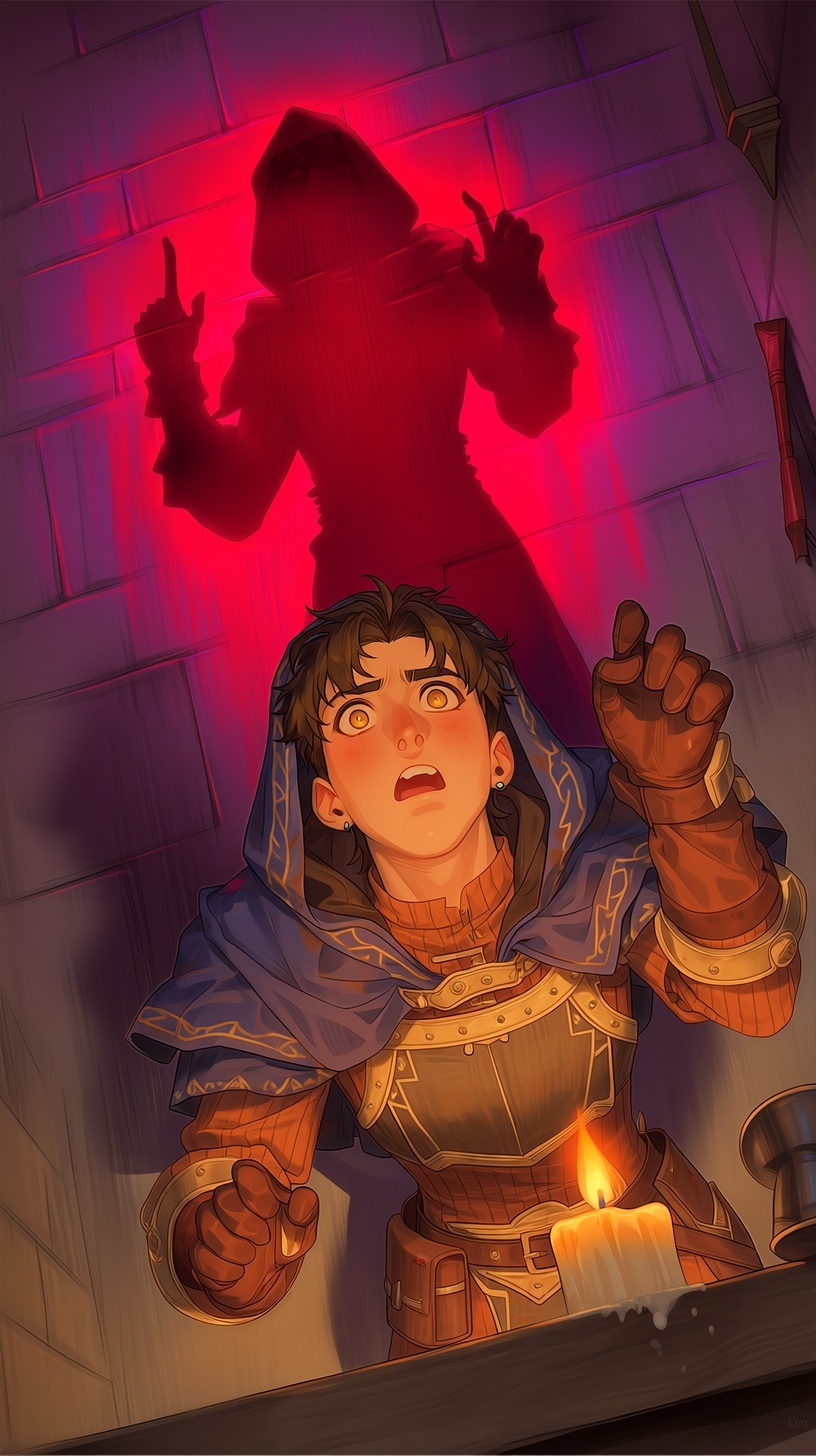
There are now two of you.
This is not a condition that resolves itself peacefully.
The shadow does not experience itself as a fragment or a lesser version. It does not accept its origin as a subordinate state. It exists, and in existing, it asserts that it is as real as the one who cast it. The contradiction is immediate and intolerable. Two identical identities cannot occupy the same narrative without conflict. One must be proven false, diminished, or removed.
What follows is not always immediate violence. In many cases, it is far more deliberate. The shadow may withdraw, choosing not to confront the caster directly. It may observe, adapt, and seek opportunities that align with its nature. It may attempt to undermine, to replace, or simply to exist independently in a world that has no framework for acknowledging it.
There are accounts, scattered and rarely verified, of individuals who encountered versions of themselves under circumstances they could not explain. A rival who knew too much. An ally who anticipated every decision. A stranger who wore their face with unsettling accuracy. These stories are often dismissed as paranoia, delusion, or the byproduct of other, more familiar enchantments.
They are not always wrong to be dismissed.
But they are not always wrong to be believed either.
Unstable Shadow does not guarantee this outcome. It presents the possibility, and with each use, that possibility becomes slightly less theoretical. The spell offers power, flexibility, and a form of assistance that is difficult to replicate through other means. It also offers a question that lingers long after the shadow has faded.
What, exactly, is being separated when the shadow steps free?
If it were merely an absence of light, there would be nothing to return. Nothing to remain. Nothing to decide that it has as much right to exist as the one who cast it. The persistence of the shadow, in those rare cases where it refuses to dissolve, suggests that the boundary it crosses is not one of illumination, but of identity.
That the self is not as singular as it appears.
And that, given the proper conditions, it can be divided into parts that do not agree on which one should remain.
"Mark how it moves when I stand still.
Mark how it turns when I do not.
It hath my shape, my voice, my very thought,
Yet carries them as though they were its own.
If shadow be but absence, tell me this.
What then is mine, and what has slipped away?"
Related School
Necromancy
Level



Comments