
Sculpt Form
The Flesh Shall Yield
“I stood beside him as the change took hold, and I tell you plain, it was no miracle. His voice never wavered, not once, though his face forgot him piece by piece. When it was done, he thanked me with the same eyes, just set in a stranger’s skull.”
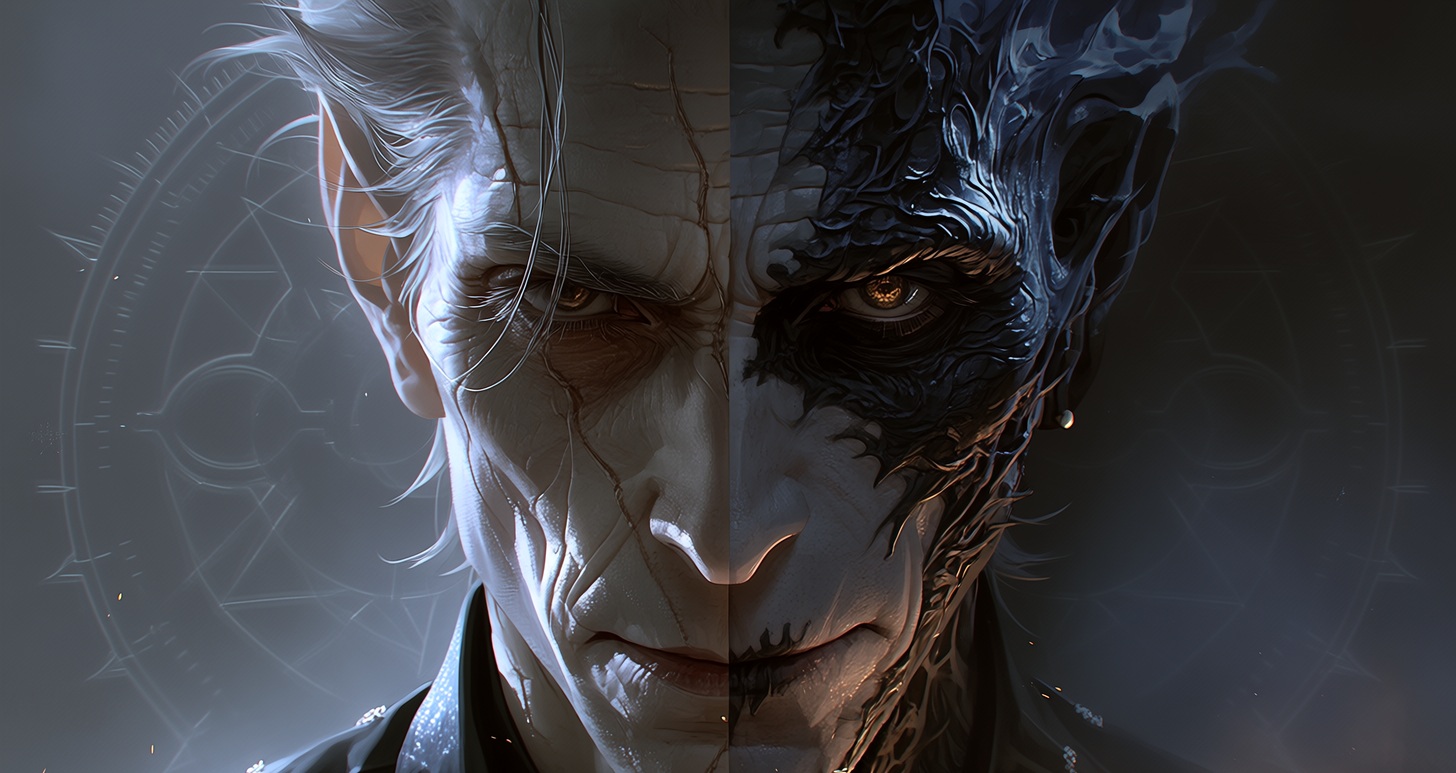
Sculpt Form is not a spell of disguise, nor is it an illusion meant to deceive the eye. It is an act of rewriting made deliberate, a patient and irreversible reshaping of what a person is in the most literal sense. Where lesser magic bends appearance or overlays falsehood, this spell works slowly and with intention, carving away one identity and setting another in its place with a precision that leaves no seam to follow.
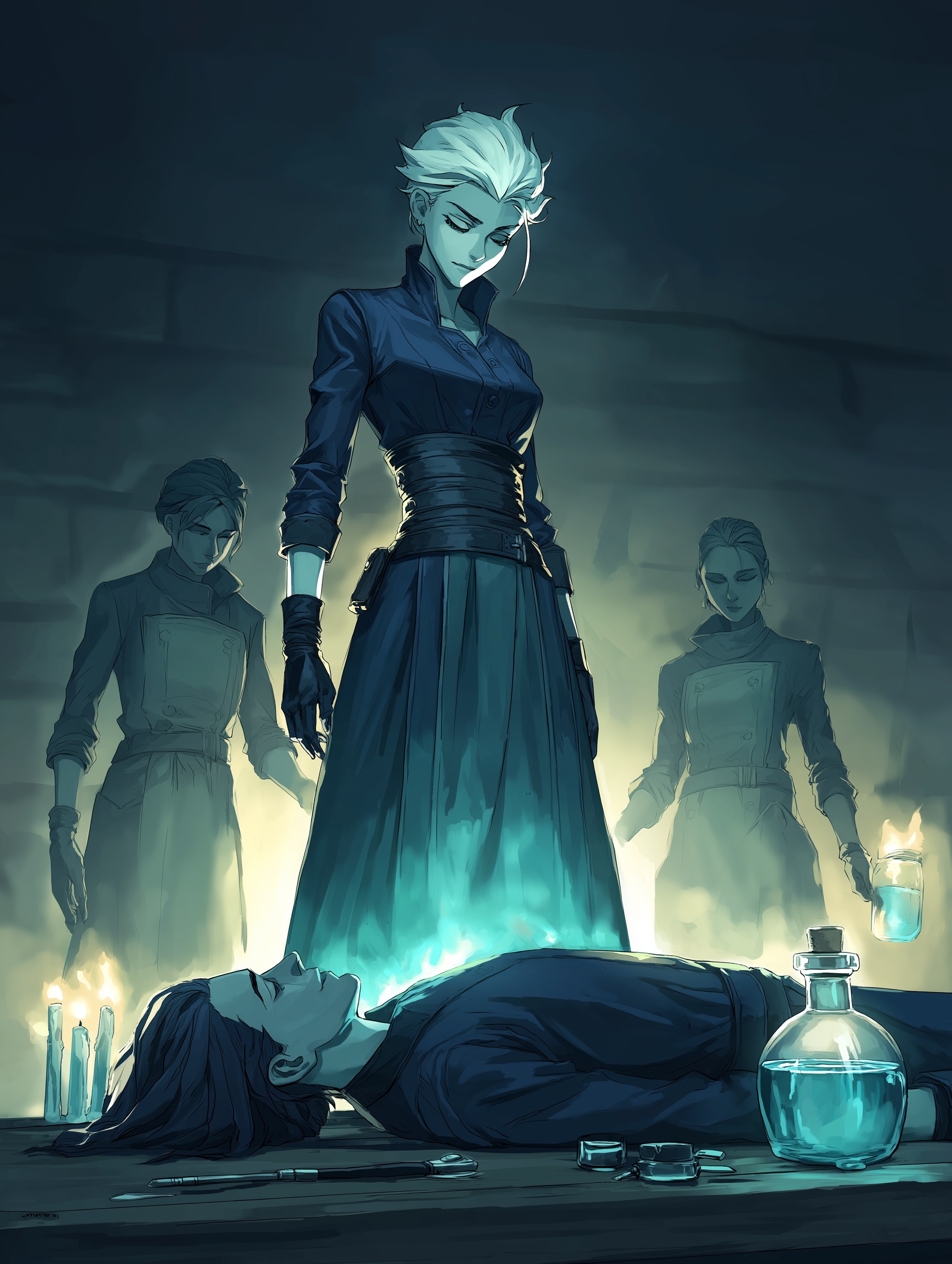
The ritual cannot be rushed. An hour is required, not for the complexity of motion, but for the weight of what is being done. The caster does not simply invoke power. They guide it, shaping flesh, bone, and the unseen patterns beneath them into something entirely new. The materials demanded by the spell speak plainly to its nature. A preserved heart, once the center of another life, and a fragment taken from the form to be assumed are brought together and consumed, as though the spell insists on proof that both endings and beginnings are understood before it will proceed.
When the transformation begins, it is not violent. There is no tearing or sudden collapse of the body into something unrecognizable. Instead, the change unfolds with an unsettling calm. Features shift in quiet increments. Bone structure adjusts beneath the skin. Height, build, and proportion alter as if guided by an unseen hand that knows exactly where each change must occur. It is not painless, but the discomfort is steady rather than sharp, a pressure that builds and releases in waves as the body is coaxed into alignment with its new form.
To those who witness it, the experience can be deeply unnerving. They watch someone they know remain present, speaking, breathing, aware, while their physical reality changes piece by piece. There is no moment where the old form disappears and the new one replaces it. Both seem to exist at once for a time, overlapping in a way that resists easy understanding until, at last, only the new remains.
What endures through all of this is the self.
The mind does not fracture or fade. Memory holds. Personality remains intact. The person who entered the ritual is still there when it concludes, carrying every experience, every belief, every piece of history forward into a body that no longer reflects where those things began. This is not a rebirth. It is a continuation placed into unfamiliar shape.
That unfamiliarity is not easily dismissed.
Even when the transformation is complete, there is an adjustment that cannot be avoided. The body responds differently. Balance shifts. Strength settles in new places. The senses themselves may carry subtle differences, altering the way the world is experienced in ways both small and profound. Habits formed over a lifetime must be relearned. Movements that once required no thought now demand attention. The simplest actions become reminders that something fundamental has changed.
Over time, most adapt. The body becomes familiar. The reflection in still water or polished metal no longer surprises. Yet the knowledge remains, quiet and persistent. This form was chosen. It was not given by birth or shaped by time. It was taken on deliberately, and that fact does not fade.
There is also a permanence to Sculpt Form that sets it apart from nearly every other transformation. The spell does not end. It does not wear off or unravel with neglect. What it creates is stable, fixed in a way that resists casual reversal. To undo it requires power of the highest order, intervention that reaches beyond ordinary practice. This finality is not an accident. It is the foundation upon which the spell is built.
Because of this, the decision to undergo Sculpt Form is rarely made without careful consideration. It is used to escape, to belong, to infiltrate, to survive. It has been sought by those who feel misaligned with their own form and by those who need to become something else entirely to achieve their aims. In each case, the outcome is the same. The past remains, but the body that carried it does not.
There are those who view the spell with suspicion. To them, the ability to alter one’s form so completely challenges the idea that identity is something fixed or inherited. If a person can change their species and remain themselves, then what defines them in the first place. Flesh becomes a variable rather than a constant, and that uncertainty unsettles those who prefer clear boundaries.
Others see it differently. They regard Sculpt Form as one of the purest expressions of agency available in a world shaped by forces often beyond individual control. Where birth, circumstance, and history impose limits, this spell offers a way to step beyond them, not by pretending, but by becoming.
The truth lies somewhere between those views.
Sculpt Form does not create a new person. It does not erase the old one. It bridges the two in a way that cannot be undone without consequence. What emerges is not a replacement, but a continuation that carries both the weight of what was and the reality of what now is.
It is not transformation for its own sake.
It is a decision made permanent, written into flesh with the understanding that once it is done, there is no returning to what came before without paying an even greater price.
“You think the horror is in the breaking of the body. It is not. It is in the stillness of the mind that watches it happen and does not leave. To remain yourself while becoming someone else is a cruelty I would not wish on the damned.”
Related Discipline
Level



Comments