


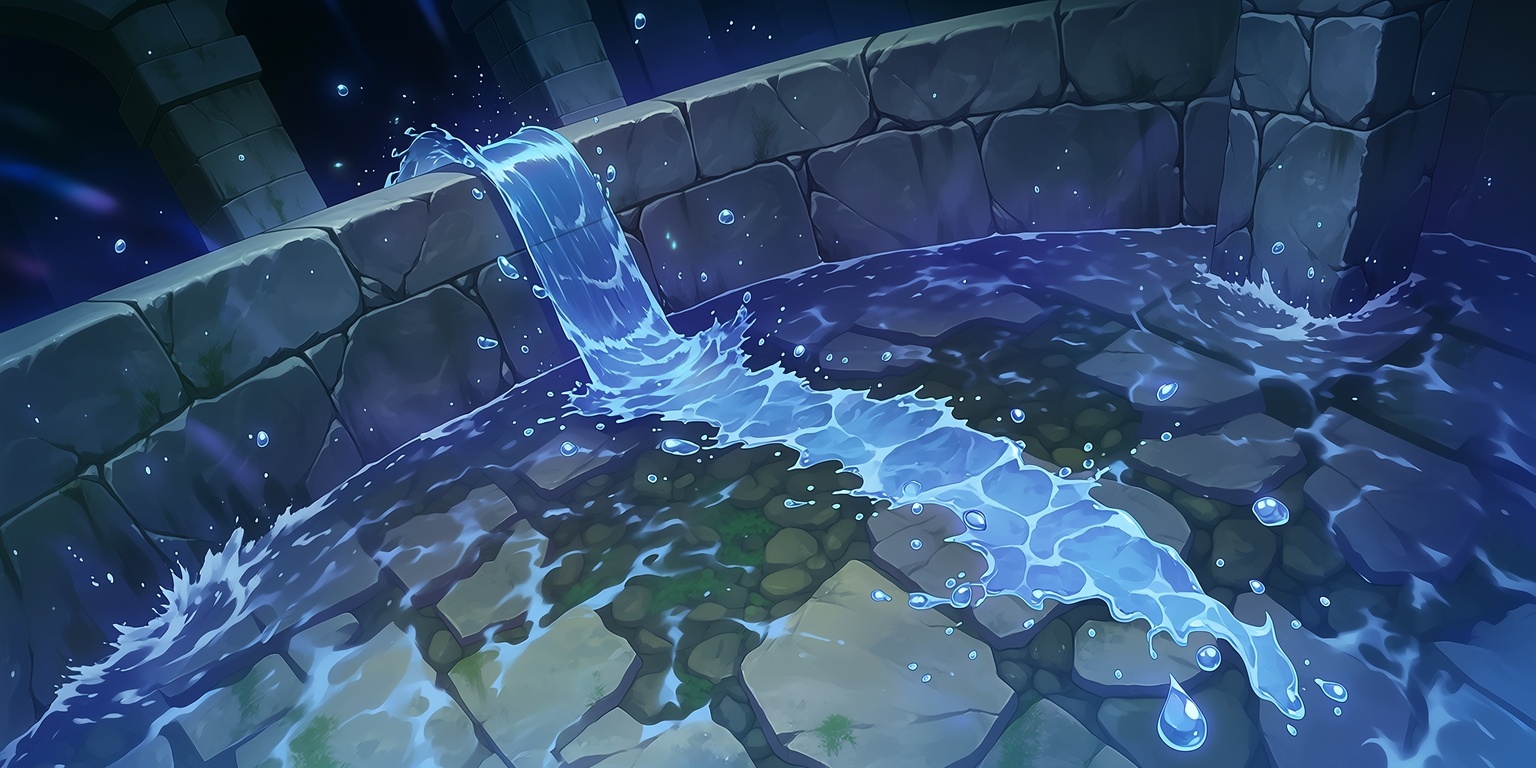
Redirect Flow
Fluid Dynamics
"Hold your footing there," she warned, nodding toward the turned flow. "It’s not stronger than before. It’s just not where you expect it."
Water moves according to pressure, gravity, and the shape of the space it occupies. It does not resist direction. It follows it. Redirect Flow is a transmutation that interferes with that behavior at a single point, forcing a moving liquid to change direction without altering the conditions that produced the flow in the first place. It does not create motion, and it does not sustain control beyond a limited area. It imposes a momentary deviation and allows the system to continue.
The spell requires an existing, visible stream of liquid that is already in motion. The flow must be continuous and of sufficient size to be meaningfully redirected. The caster selects a point within that flow and establishes a confined space in which the liquid’s path is forcibly altered. Within that space, the liquid bends at a sharp angle, departing from its original course before continuing onward once it exits the affected area. Outside of that space, the liquid behaves normally, as though the interruption had not occurred.
This interaction is immediate and consistent. The liquid does not slow, pool, or hesitate when its direction is changed. Its speed and volume remain constant as it passes through the affected area. The only alteration is the imposed change in trajectory. Once beyond that boundary, the influence of the spell ends, and the flow resumes its original behavior according to the surrounding environment.
The effect is strictly localized. Redirect Flow does not extend its influence upstream or downstream beyond the defined space. It does not increase pressure or amplify the force of the liquid. It does not pull additional material into motion. It operates only on what is already moving through the chosen point. This limitation ensures that the spell remains predictable and does not produce unintended escalation.
Despite its limited scope, the redirection of flow can have practical and immediate consequences. A stream of water forced into a new direction can strike with enough force to disrupt movement. Creatures entering or remaining within the affected space may be caught off guard by the redirected current. The impact can interfere with footing, balance, and positioning, particularly in environments where stability is already uncertain. The spell does not rely on overwhelming force, but on the unexpected nature of the change.
In natural settings, Redirect Flow is used to manipulate small-scale water movement for practical purposes. It can divert runoff away from a vulnerable position, redirect a stream to clear debris, or create a temporary channel to control how water interacts with terrain. These uses are situational and depend on the presence of existing flow, but they provide a degree of control that would otherwise require physical alteration of the environment.
In confined or constructed environments, the spell has more controlled applications. It can be used to redirect leaking water away from sensitive materials, alter the path of drainage, or create temporary barriers by forcing flow into specific areas. These applications rely on careful placement and awareness of how the liquid will behave once it leaves the affected space.
The spell cannot generate flow where none exists. It does not draw water from still sources or create movement in contained liquid. If the liquid is not already in motion, the spell has no effect. Similarly, it cannot influence liquids that are fully enclosed within a sealed vessel. The presence of containment prevents the interaction required for the spell to function.
Among transmutation practices, Redirect Flow is considered a controlled and narrowly defined manipulation. It does not attempt to dominate the environment or override natural systems. It introduces a single, deliberate change and allows the existing conditions to carry that change forward. Its effectiveness depends on the caster’s understanding of how liquid behaves and where a change in direction will have meaningful impact.
The spell is most useful when applied with precision. A poorly chosen point may produce little or no result, while a well-placed redirection can alter movement, disrupt actions, or protect a vulnerable position. It rewards awareness of surroundings and an understanding of cause and effect rather than reliance on raw power.
Redirect Flow does not command water. It interrupts it briefly and leaves the rest to follow.
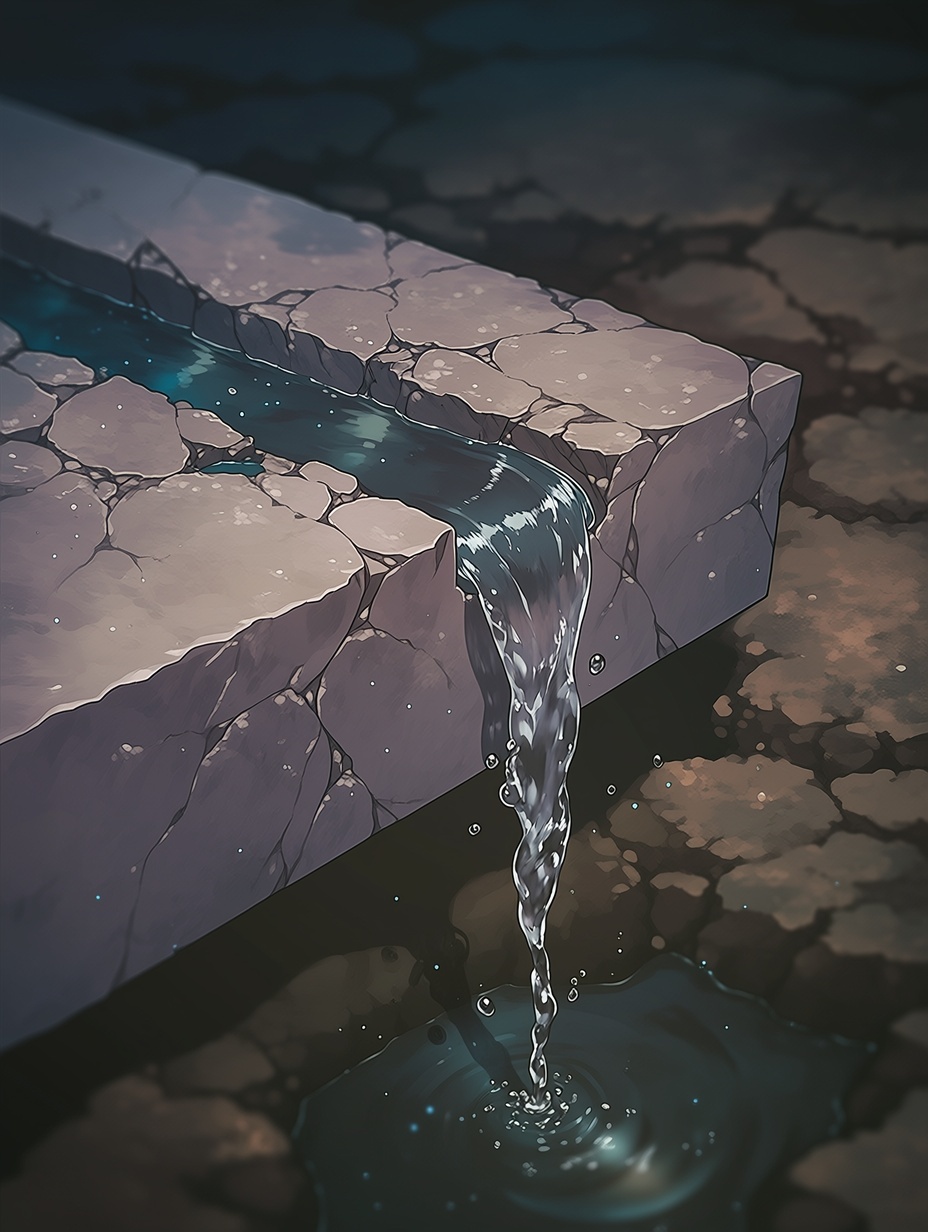
"You don’t stop a river," the old mason said, watching the line bend clean off its course. "You give it a better mistake to make."



Comments