


Mocking Choir
You Fool!
"The audience never remembers the hundred perfect performances. They remember the one forgotten line. Pride spends a lifetime building a monument that embarrassment can topple in a single breath."
Laughter echoes differently when no one is happy.
The sound surrounding a Mocking Choir is not joyful, triumphant, or even particularly loud. It resembles the restrained laughter heard after a performer forgets a line, the quiet chuckle exchanged between strangers after a public embarrassment, or the cruel amusement that follows a mistake everyone witnessed except the person making it. Those who hear it often find themselves instinctively checking their clothing, their footing, or the words they have just spoken, suddenly convinced they have overlooked some obvious error.
That reaction is precisely what the Choir desires.
The Mocking Choir is formed from souls whose final defining memory was humiliation. Some were celebrated heroes whose greatest defeat erased decades of accomplishment. Others were scholars whose life's work collapsed under scrutiny, rulers publicly exposed as frauds, priests whose certainty abandoned them at the altar, or performers who became infamous for a single disastrous moment. The circumstances differ endlessly, but every spirit carries the same wound. They did not merely fail. They failed while others watched.
Death preserved that moment with terrible clarity.
As more such spirits gathered, their individual identities gradually dissolved into a collective consciousness united by a single conviction. Confidence is temporary. Reputation is fragile. Every accomplishment survives only until the next mistake. The Choir no longer remembers the names of the people it once was, only the certainty each possessed immediately before that certainty shattered forever.
Unlike many undead, the Mocking Choir rarely seeks to kill as quickly as possible. It hungers for something far more satisfying. It wishes to witness confidence collapse. Every warrior believes they cannot miss. Every wizard believes they have mastered their craft. Every priest trusts their faith. Every thief trusts their hands. The Choir exists to demonstrate that such certainty is always misplaced.
Its presence affects the living long before combat begins. Experienced adventurers have described forgetting techniques they have practiced for years, stumbling over simple words, fumbling equipment they have used their entire lives, or hesitating at precisely the wrong moment. These mistakes are often small, but the Choir understands how easily a single doubt gives rise to another. Confidence rarely vanishes all at once. More often it fractures quietly, each mistake making the next one slightly more likely.
Communities haunted by a Mocking Choir undergo similar changes. Public speeches become disasters. Skilled craftsmen begin producing inexplicable flaws. Actors forget familiar performances. Judges question obvious decisions. Soldiers lose confidence in their commanders, while commanders begin doubting themselves. None of these failures appear supernatural in isolation, yet together they create an atmosphere where success itself begins to feel suspiciously temporary.
The Choir delights in places where reputation matters as much as survival. Ancient arenas, abandoned theaters, ruined courts, tournament grounds, academies, temples, and battlefields where legendary defeats occurred all serve as common resting places. Such locations are steeped in memories of public triumph and public disgrace, making them fertile ground for spirits unable to release the moment their certainty failed them.
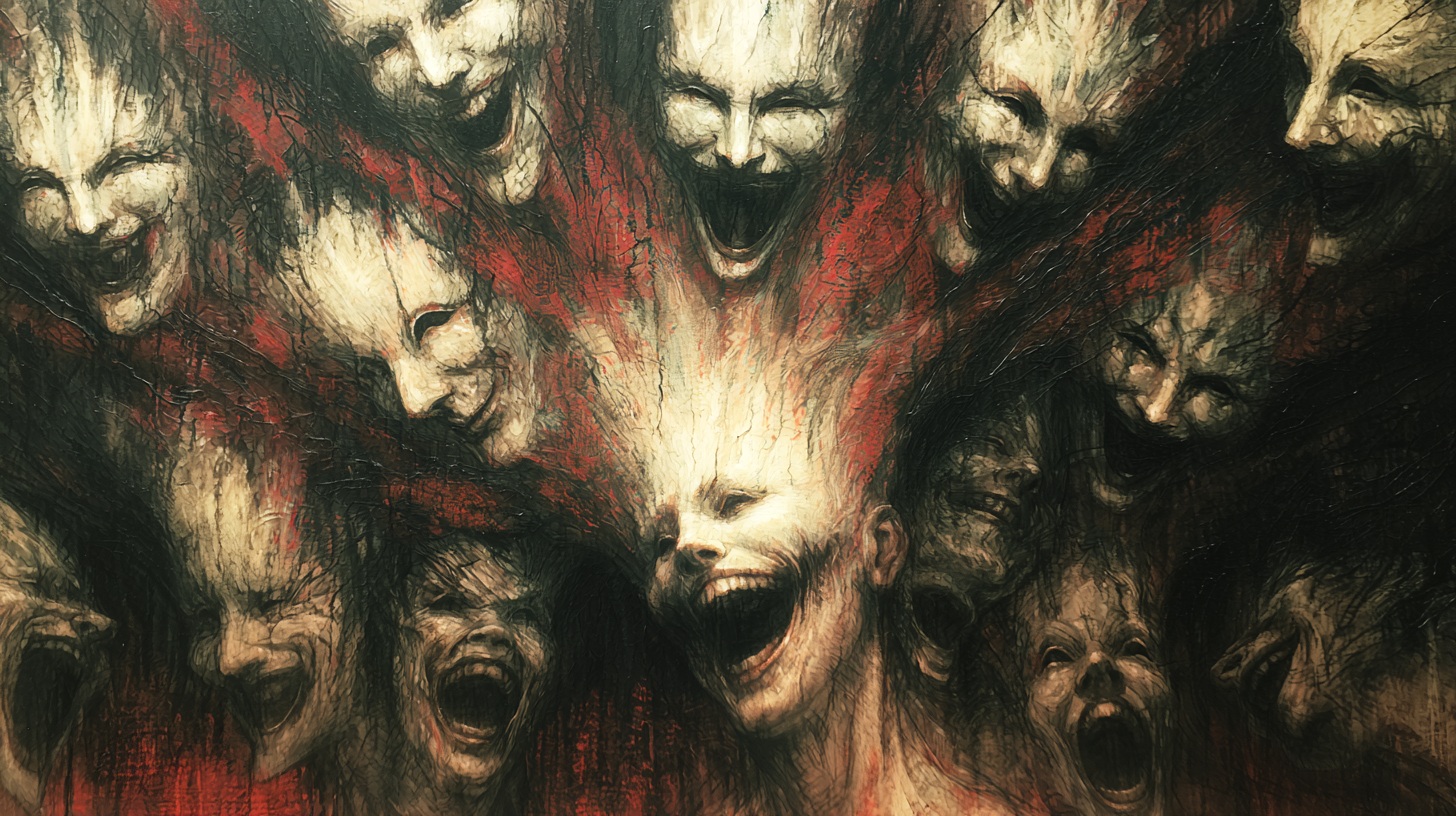
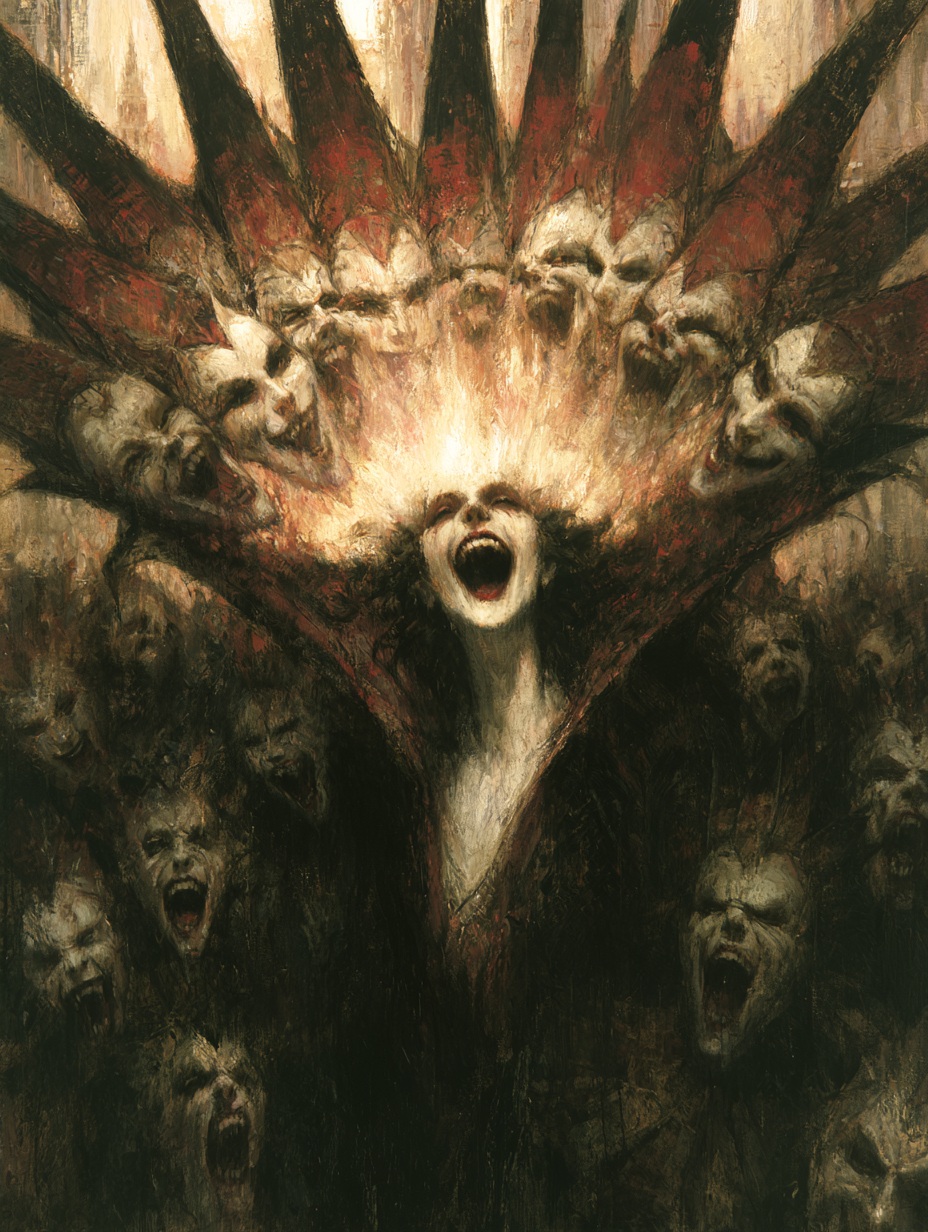
Witnesses describe the creature as a storm of pale violet fire filled with countless laughing faces. Few appear twisted by hatred. Instead, they wear expressions of recognition, as though each has already seen the same story unfold countless times before. Many observers report the unsettling impression that the laughter begins moments before anyone actually makes a mistake, giving the impression that the Choir already knows exactly how events will unfold.
This reputation has inspired countless superstitions among soldiers, performers, duelists, and scholars alike. Some refuse to boast before an important challenge. Others avoid celebrating victory until safely home, believing excessive pride attracts unwanted attention. Stage actors in several cities still perform small rituals before opening night, insisting they are meant to keep the laughter outside the theater. Whether such customs possess any genuine power remains uncertain, but few professionals are eager to test the alternative.
Occult scholars often distinguish the Mocking Choir from undead born of anger or despair. It does not hate achievement. In many ways it admires excellence. What it cannot tolerate is the belief that excellence makes someone immune to failure. Every accomplishment, every title, every hard-earned reputation eventually encounters a moment when certainty falters. The Choir exists to witness that moment, nurture it, and remind the living that humiliation is never as distant as they would like to believe.
For those unfortunate enough to encounter one, the creature leaves behind an unsettling realization that often lingers long after the haunting has ended. The greatest danger was never the laughter itself.
It was the brief moment when the victim began wondering whether the Choir might be right.
"Listen closely. They are not laughing because you failed. They are laughing because, until this moment, you believed you couldn't."
Genetic Ancestor(s)



Comments