



Lore Dump

And Another Thing!

“Do NOT engage the stack goblin. Last apprentice attempted pursuit through Natural Philosophy. We found him three days later in Maritime Tax Law.”
— Senior Archivist Belden Marrrow, Third Vault Annex, Temple Observatory
Libraries develop personalities long before they develop ghosts.   A forgotten monastery archive grows quiet in a different way than an abandoned prison. A university collection remembers obsession differently than a noble’s private study. Centuries of arguments, revisions, marginalia, false histories, desperate scholarship, and forbidden knowledge leave impressions upon places devoted to written thought.   Sometimes those impressions become hungry enough to wake up.   Lore dumps are frantic fey manifestations born from overwhelming accumulations of organized information. They emerge most often in ancient libraries, collapsing archives, occult repositories, and scholarly institutions where knowledge has been hoarded, hidden, revised, stolen, censored, or worshipped for generations. No two appear exactly alike, though most resemble tiny humanoid creatures crudely assembled from loose parchment, binding thread, ink stains, bookmarks, catalog tags, and scraps of damaged paper.   They are rarely larger than children.   They are rarely harmless.   Despite their chaotic nature, lore dumps are not inherently malicious. Most view themselves as caretakers, custodians, or protectors of written order, though their understanding of “order” tends to drift into obsessive territorial paranoia very quickly. They hoard categorization systems. Rearrange shelves compulsively. Correct mislabeled documents violently. Punish vandalism with unnerving personal intensity.   To a lore dump, damaged knowledge is not property crime.   It is desecration.   Their most infamous ability is known among archivists as Bookstepping. A lore dump can teleport instantly between organized sources of written material within sight, vanishing into one archive system and emerging from another nearby. Bookshelves, filing systems, map cases, catalog drawers, and labeled collections all function as pathways.   Witnesses describe the effect as deeply disorienting.   Books rustle violently moments before the creature disappears. Papers scatter. Index cards flutter loose from drawers. The destination archive trembles seconds before the lore dump erupts outward in a storm of displaced pages and frantic movement.   Those caught too close often lose focus entirely beneath the distracting chaos.   Lore dumps are notoriously hostile toward thieves, censors, careless students, and anyone who knowingly damages written material within their territory. Through a supernatural curse called Overdue, they can mark offenders instinctively. Victims find maps misleading, written directions subtly incorrect, and signage strangely untrustworthy until restitution occurs.   More disturbingly, the lore dump always knows where the marked individual is while they remain on the same plane.   Some scholars suspect the creatures perceive written systems spatially, navigating through networks of recorded knowledge invisible to ordinary minds.   Their behavior inside libraries becomes significantly more dangerous. Lore dumps move through shelves, debris, paper piles, and collapsed stacks with unnatural agility while weaponizing the environment itself against intruders. Entire archive aisles may shift subtly out of place while labels rearrange themselves incorrectly moments before attackers become lost completely.   Experienced adventurers quickly learn that fighting a lore dump inside its own library is less like battling a creature and more like battling the building’s nervous system.   The creatures attack primarily through telekinetic force, hurling books, loose objects, shelving debris, and compacted paper with startling accuracy. Spellcasters become favorite targets because lore dumps seem instinctively offended by concentrated magical study performed carelessly in their territory.   This hostility intensifies dramatically through an ability scholars refer to as Citation Needed.   Victims struck by the effect become overwhelmed by contradictory references, fragmented facts, intrusive false memories, and recursive thought spirals so severe that coherent spellcasting becomes difficult. Survivors often describe the sensation as attempting to remember ten conflicting versions of the same book simultaneously while someone whispers corrections directly into their skull.   Most libraries containing lore dumps eventually develop strange local superstitions.   Books return to proper shelves overnight. Missing records reappear days later beneath unrelated stacks. Students who dog ear pages lose their notes mysteriously. Entire aisles shift position between visits. Some archivists quietly leave offerings of repaired manuscripts, fresh ink, or carefully rebound texts to placate resident lore dumps.   Interestingly, the creatures often respond positively to genuine scholarship and respectful preservation efforts.   Researchers who treat archives carefully may find misplaced documents sliding mysteriously into view nearby. Forgotten references appear already opened to correct pages. Locked shelves stand slightly ajar after closing hours.   A lore dump’s greatest fear appears to be destruction through neglect rather than violence.   Burning libraries terrify them.   Flooding archives drives them into frantic panic. Censorship, mass destruction of records, and intentional historical erasure provoke extreme aggression. Several historical fires worsened catastrophically after resident lore dumps began attacking evacuation efforts indiscriminately, unable to distinguish looters from rescuers in the chaos.   Despite their intelligence, they remain emotionally erratic creatures shaped by fragmented information overload. Conversations with them often jump between topics unpredictably. They quote irrelevant passages, correct grammar during combat, and interrupt themselves constantly with unrelated references.   Still, beneath the chaos lies something strangely tragic.   Lore dumps are creatures born from humanity’s desperate desire to preserve memory against time.   And like many archives, they eventually become buried beneath too much accumulated noise to remember why they were preserving anything at all.
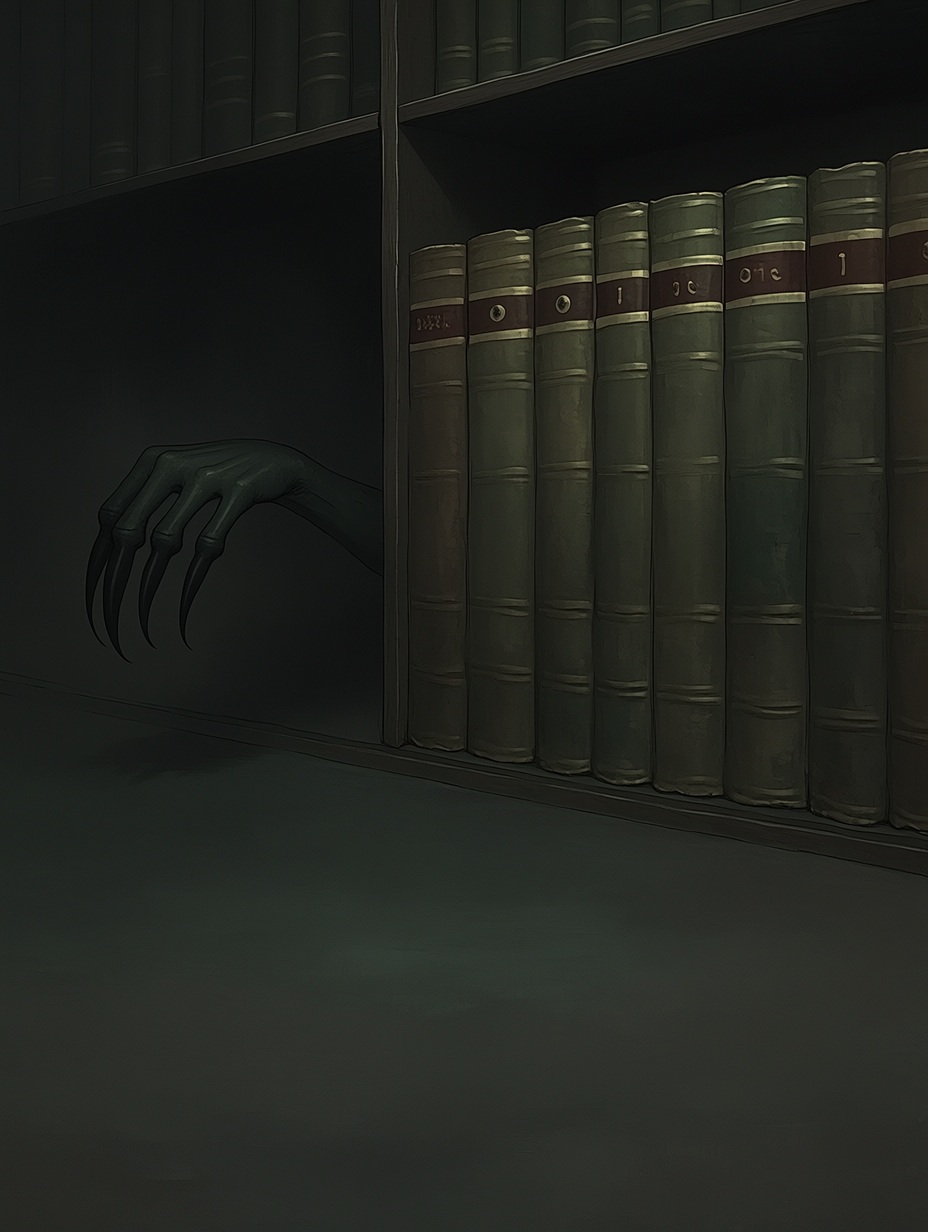
“The little bastard reorganized three centuries of funeral records alphabetically by cause of death.”
— Archivist Pell Varrow
Genetic Ancestor(s)
Lifespan
80–140 years
Average Height
1.5 – 2.5 ft.
Average Weight
13 – 30 lbs.


Unknown Shores

Lore Dump CR: 6

Tiny fey, chaotic neutral
Armor Class: 16
Hit Points: 58 (17d4 + 17) 17d4+17
Speed: 25 ft , climb: 25 ft

STR

6 -2

DEX

19 +4

CON

13 +1

INT

17 +3

WIS

15 +2

CHA

14 +2

Saving Throws: Dex +7, Int +6, Wis +5
Skills: Arcana +6, History +6, Investigation +9, Perception +5, Sleight of Hand +7, Stealth +10
Damage Resistances: bludgeoning, piercing, and slashing from nonmagical attacks
Condition Immunities: prone
Senses: darkvision 60 ft., passive Perception 15
Languages: Common, Sylvan, telepathy 60 ft., understands all written languages
Challenge Rating: 6 ( 2,300 XP)
Proficiency Bonus: +3

Bookstep

As a bonus action, the lore dump magically teleports from one source of organized written material it can see within 60 feet to another such source within 60 feet. Valid entry and exit points include books, scrolls, filing cabinets, map tubes, archives, labeled shelves, catalog systems, and similar repositories of written information.   Creatures within 5 feet of the lore dump’s departure space or destination space must succeed on a DC 14 Wisdom saving throw or become distracted until the start of the lore dump’s next turn. A distracted creature can’t make opportunity attacks, and the next attack roll made against it before the condition ends has advantage.   The lore dump can’t use this trait through blank books, soaked texts, magically sealed writings, or texts actively being written.  

Magic Resistance

The lore dump has advantage on saving throws against spells and other magical effects.  

Overdue

A creature that knowingly steals, damages, burns, defaces, or refuses to return written material within the lore dump’s territory becomes marked until the next dawn.   While marked, the creature has disadvantage on ability checks made to navigate using maps, signs, books, notes, or written directions. In addition, nonmagical written instructions subtly mislead the creature, and the lore dump always knows the direction and distance to the marked creature while the two are on the same plane of existence.   The mark ends early if the written material is returned or fully repaired.  

Territorial Archivist

While inside a library, archive, monastery collection, study, bookstore, or similar repository of written material, the lore dump has advantage on Dexterity saving throws and Dexterity (Stealth) checks. In addition, it ignores difficult terrain created by books, paper, shelving, or debris, and it has advantage on attack rolls against creatures concentrating on spells.

Actions

Multiattack

The lore dump makes two Telekinetic Barrage attacks.  

Telekinetic Barrage

Ranged Spell Attack: +7 to hit, range 60 ft., one target.
Hit: 10 (2d6 + 3) bludgeoning damage.   If the target is concentrating on a spell, it has disadvantage on the Constitution saving throw made to maintain concentration.  

Shelf Collapse (Recharge 5–6)

The lore dump tears down a bookshelf, archive rack, ladder stack, or unstable pile of books it can see within 30 feet. Each creature in a 15-foot line originating from the structure must make a DC 15 Dexterity saving throw.   On a failed save, a creature takes 21 (6d6) bludgeoning damage, falls prone, and is restrained by debris. While restrained in this way, the creature can speak only in a whisper. A restrained creature can use its action to make a DC 15 Strength check, freeing itself on a success.   On a successful save, the creature takes half as much damage and isn’t restrained.   The affected area becomes difficult terrain until cleared.  

Citation Needed (Recharge 6)

The lore dump targets one creature it can see within 60 feet. The target must succeed on a DC 14 Intelligence saving throw or become overwhelmed by contradictory references and intrusive false recollections for 1 minute.   While affected, the creature has disadvantage on Intelligence checks, can’t take reactions, and must succeed on a DC 10 Intelligence check the first time it casts a spell on each of its turns or the spell fails and the spell slot is wasted.   The creature can repeat the saving throw at the end of each of its turns, ending the effect on itself on a success.

Bonus Actions

Rearrange Index

The lore dump alters labels, shelf markers, tabs, or signage within 30 feet. Until the start of its next turn, creatures other than the lore dump treat the affected area as difficult terrain, and the first Intelligence (Investigation) check made within the area is made with disadvantage.

Reactions

Misfile

When a creature within 30 feet of the lore dump drops, stores, sheathes, or sets down an unattended object weighing no more than 10 pounds, the lore dump teleports the object to another visible space within 30 feet.   A creature has disadvantage on the first ability check it makes to locate an object moved in this way.

Lair Actions

On initiative count 20 (losing initiative ties), the lore dump can take one lair action to cause one of the following effects:

Mislabel Archive

Until initiative count 20 of the next round, creatures have disadvantage on Intelligence (Investigation) and Wisdom (Survival) checks made within the library to locate a specific room, object, or exit. In addition, a creature attempting to locate a specific room, object, or exit must first succeed on a DC 15 Intelligence check.  

Paper Swarm

Loose pages fill a 20-foot-radius sphere centered on a point the lore dump can see within 60 feet. The area is lightly obscured until initiative count 20 of the next round.  

Rearrange the Stacks

Shelves shift and aisles subtly realign. Until initiative count 20 of the next round, creatures other than the lore dump treat the area as difficult terrain. Whenever a creature moves more than 15 feet for the first time on a turn, it must succeed on a DC 14 Intelligence (Investigation) check or move in a random direction determined by the DM.  

Whispering References

Contradictory whispers flood the library until initiative count 20 of the next round. Creatures other than the lore dump have disadvantage on Wisdom (Perception) checks that rely on hearing and on Constitution saving throws made to maintain concentration.

A frantic, ink-stained fey no larger than a child clings to the shelves ahead, its twitching body held together by loose pages, bookmarks, and drifting scraps of parchment as books quietly slide themselves out of order around it.

Comments

Please Login in order to comment!
May 14, 2026 02:18

Love this whole concept

May 14, 2026 02:21

Thanks! This was an oddball encounter idea that, as you can see, got a little out of hand.

May 16, 2026 13:06

Very interesting monster!! I’ve got a quick technical question, if that’s okay. It’s really more of a request for help. It’s about the monster sheet on WorldAnvil. I made one, and everything shows up fine in the preview, but once I upload the stat block, some parts disappear (like the monster’s name, the ability titles, and the ‘Traits’ and ‘Actions’ labels). Not sure what I’m messing up, honestly. Can I ask how you made the monster sheet for this creature?

May 16, 2026 13:42

I have a minor confession to make..... I'm still having that problem. What you described happens to make if I try to put the stat block anywhere else but the footer. Beyond that, this is just a stat block I found that I just fill in. Nothing special. If you want to see specifically how I did this much, DM me on DIscord, and I can screen share you through it.

May 18, 2026 16:19

Thanks a lot for the tip! I put the stat block in the footer like you said, and now everything shows up exactly the way I wanted. Really appreciate it!

Powered by World Anvil