



Last Sight
Vision Of The End
“Memory fades, distorts, reshapes itself to comfort the mind. Death does not grant that mercy. It preserves exactly what was feared, exactly what was believed.”
Last Sight is a refined and unsettling divination practiced by those who deal in truth rather than comfort. Unlike magic that compels the dead to answer, this spell bypasses will entirely, drawing instead upon the final sensory imprint left within a creature’s remains. It does not question. It does not interpret. It simply reveals.
To cast Last Sight is to surrender one’s own perspective and inhabit the final moments of another. The caster does not observe from a distance but experiences directly, seeing, hearing, and feeling exactly what the deceased perceived in the last thirty seconds of life. Fear, confusion, pain, or even false certainty are all carried intact. If the creature was deceived by illusion or disguise, so too is the caster.
Because of this, the spell is valued as much for what it cannot do as for what it can. It offers no truth beyond perception. It does not distinguish reality from deception, nor does it provide context beyond the creature’s awareness. What it reveals is not what happened, but what was believed to be happening in those final moments.
Among investigators, magistrates, and certain religious orders, Last Sight has become an indispensable tool. It is used to reconstruct crimes, identify attackers, and uncover hidden circumstances surrounding a death. In more disciplined circles, its use is tightly controlled, as the experience can be deeply unsettling. Reliving another’s final seconds, especially violent or chaotic ones, leaves a lasting impression even on seasoned practitioners.
Arcane scholars regard the spell as evidence that memory and sensation leave a residual imprint within the physical body, persisting briefly after death before fading entirely. This fragile echo is what the spell seizes upon. Once it dissipates, nothing remains to be read.
Despite its utility, many cultures view Last Sight with suspicion or outright condemnation. To intrude upon the final moments of the dead is seen by some as a violation of dignity, an act that reduces a life to its end alone. Others argue that truth, especially in matters of death, outweighs such concerns.
In practice, the spell demands precision and restraint. The caster must accept the experience as it is presented, without interference or control. There is no rewinding, no clarification, and no second attempt. The vision comes once, in full, and is gone.
Last Sight does not grant closure. It does not offer justice. It provides only a single, unfiltered glimpse into the moment where everything ended. What is done with that knowledge is left entirely to the living.
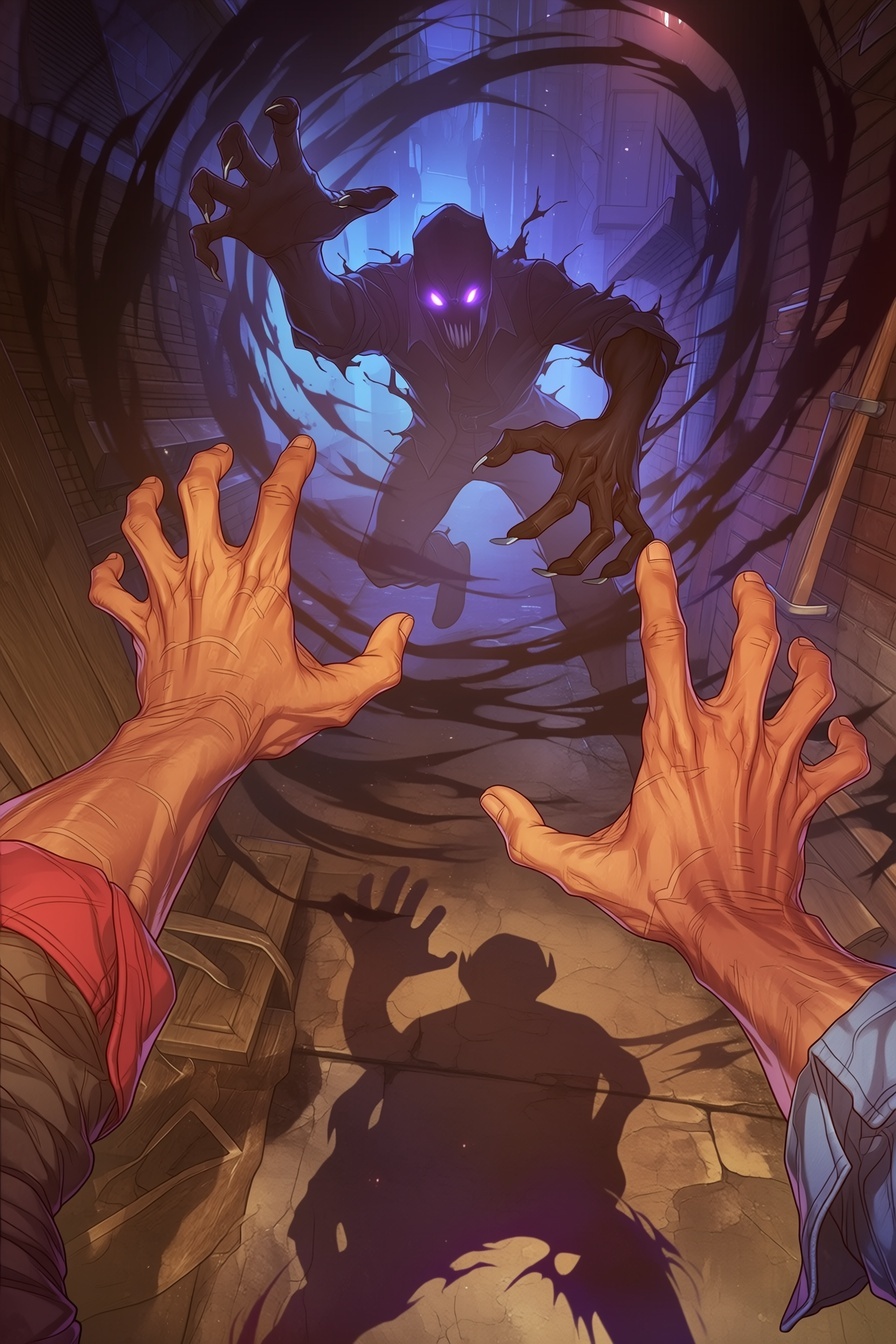
“You can lie to the living. You can even lie to yourself. But the last thing you see before death? That tends to be honest.”



Gloomy, it can be traumatizing for the thrower if he does not have a strong will...