


Fathom’s Grip
“The sea does not hate us, my son, no. It simply doesn't notice when we stop breathing.”
Sailors fear drowning because it is slow, intimate, and impossible to ignore. Fathom’s Grip weaponizes that fear without requiring a single drop of real water.
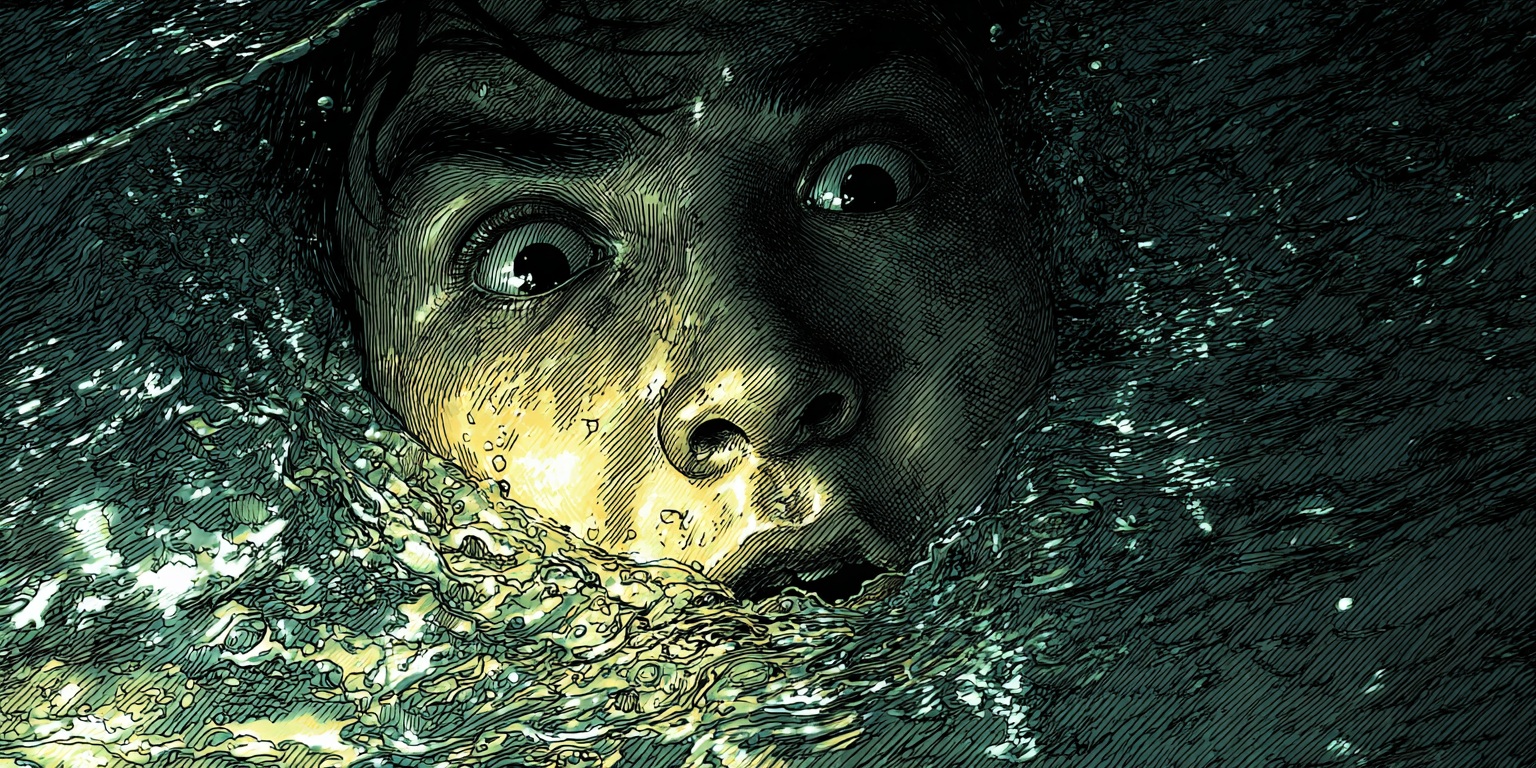
The spell fills the victim’s lungs with the sensation of phantom seawater, forcing the body to react as though it is suffocating beneath crushing depths. Every breath becomes wet and painful. Speech collapses into ragged whispers between choking spasms. The target coughs violently, struggles to steady itself, and feels mounting panic as invisible pressure tightens around the chest.
Unlike many necromantic afflictions, Fathom’s Grip rarely leaves visible wounds. To outside observers, the victim appears to be suffering some sudden catastrophic respiratory failure. Their breathing becomes uneven. Their face pales or darkens with strain. Blood vessels burst in the eyes. Some claw desperately at their own throat despite knowing rationally that nothing physical blocks the airway.
The magic’s connection to the deep sea is more than poetic metaphor. Arcane scholars believe the spell draws upon mortal terror associated with deep water, isolation, and pressure. Victims often report hearing distant whale calls, rushing currents, creaking ship hulls, or muffled underwater echoes while affected. Those who have genuinely drowned and later been revived describe the sensation with alarming consistency.
Warlocks tied to abyssal or oceanic entities favor the spell heavily, particularly those whose patrons embody storms, shipwrecks, drowned civilizations, or deep water horrors. Certain maritime cults even use Fathom’s Grip ceremonially, forcing initiates to experience controlled suffocation as part of devotion rites intended to symbolize surrender to the sea.
Naval forces despise the spell for obvious reasons. A sailor struggling to breathe becomes a danger not only to themselves but to everyone nearby. Rigging crews lose coordination. Officers cannot issue commands clearly. Spellcasters choke through incantations. Panic spreads quickly aboard ships where everyone already understands how easily water kills.
The material component, a knotted cord, reflects old maritime superstitions surrounding ropes and drowning. Some traditions claim the knots symbolize lungs tightening shut. Others believe they represent the invisible pull of the depths dragging victims downward. Veteran necromancers often soak the cord in saltwater before casting, though scholars debate whether this strengthens the spell or merely satisfies ritual habit.
Because the affliction mimics drowning rather than physically causing it, creatures capable of breathing underwater resist the spell naturally. The magic depends entirely upon triggering the body’s instinctive terror response associated with suffocation. Creatures that do not breathe at all remain unaffected for the same reason. There is nothing for the spell to seize.
Healers consider the spell unusually cruel because it combines physical pain with escalating panic. Victims frequently exhaust themselves fighting an enemy their senses insist is real despite seeing no water. Even after surviving the spell, many develop lingering fears tied to enclosed spaces, deep water, or interrupted breathing. Some wake gasping from sleep convinced their lungs are filling again.
Pirates and assassins sometimes favor Fathom’s Grip because of how subtle it appears during chaotic environments. A target collapsing into coughing spasms aboard a storm tossed vessel attracts far less immediate suspicion than obvious offensive magic. By the time witnesses realize sorcery is involved, the caster has often vanished into the confusion.
Among practitioners of darkker magic, the spell is regarded as a refinement of suffering rather than brute force. It does not tear flesh apart or rot the body visibly. It turns one of the oldest mortal fears inward and lets instinct do the rest.



Comments