


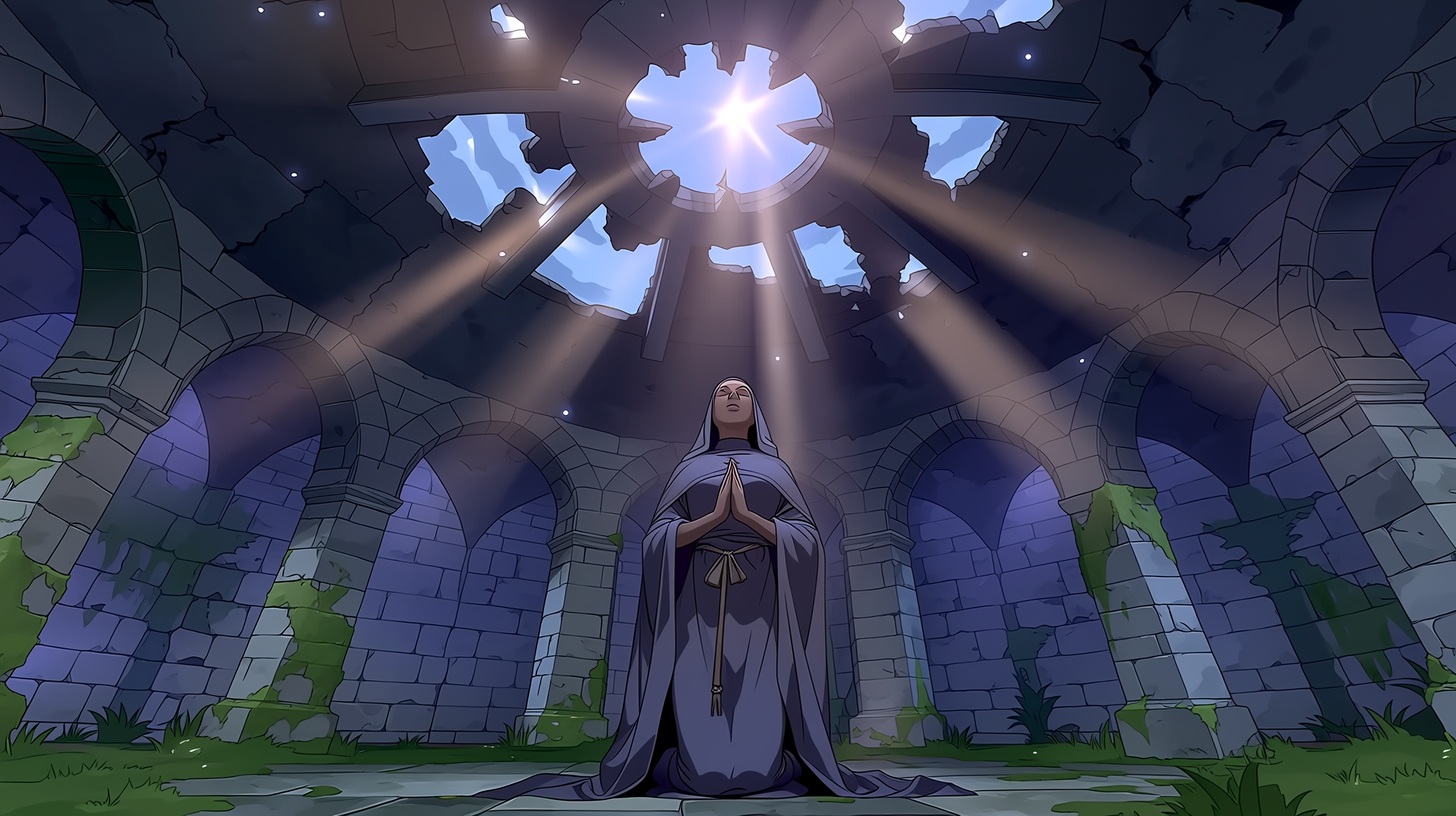
Divine Audience
Divine Eminence
“We stood before the throne for only minutes, yet afterward the memory of ordinary sunlight seemed strangely small.”
Most prayers disappear into silence.
Not unanswered necessarily. Simply distant. Mortals speak upward constantly through ritual, desperation, gratitude, terror, and hope, while the divine answers indirectly through omens, coincidence, doctrine, miracles, or catastrophe. Even the greatest clerics rarely experience true proximity to the powers they worship.
Divine Audience destroys that distance briefly.
The spell does not summon a god.
It allows mortals to enter the threshold of divine presence willingly and survive the experience imperfectly.
Upon completion of the ritual, the caster and chosen companions are drawn into a symbolic realm shaped entirely by the nature of the transcendent power being addressed. These places are not necessarily literal homes of the gods. Most theologians describe them instead as conceptual spaces where mortal minds can endure contact with divine existence without collapsing entirely.
Even then, survival is not guaranteed psychologically.
Every recorded audience differs.
War gods receive petitioners upon endless battlefields beneath black storms where armies march forever beyond the horizon. Deities of death welcome visitors into silent mausoleums filled with impossible stars reflected in polished stone floors. Sea powers hold court within storms suspended motionless above drowning oceans. Gods of justice may appear within colossal courtrooms where every spoken word echoes twice, once truthful and once as intended.
No mortal architect could construct these places.
They feel too large for thought itself.
Importantly, the spell grants audience, not obedience.
The divine power addressed may appear directly, speak through servants, ignore the visitors entirely, answer only partially, lie intentionally, communicate through symbols rather than language, or simply permit the petitioners to stand within sacred presence without acknowledgment. Entire castings have reportedly passed in complete silence except for the sound of distant waves or marching armies.
Participants still emerged changed afterward.
Because proximity alone matters.
Within the Audience, ordinary mortal violence becomes meaningless. Lesser magic fails entirely. Weapons cannot strike true. Creatures reduced to mortal injury stabilize immediately as though the realm itself rejects accidental death during sacred discourse.
This protection is not mercy.
It is insignificance.
Mortal conflict becomes irrelevant beside divine presence.
The suppression of lesser spellcasting reflects a similar principle. Gods do not permit ordinary magic to compete meaningfully with the overwhelming metaphysical authority saturating the Audience. Even archmages often describe feeling stripped bare inside these realms, reduced from masters of arcane law to frightened animals standing before cosmic inevitability.
Concentration becomes difficult for the same reason.
The mind struggles simply to remain coherent.
Witnesses report impossible sensory experiences constantly during the spell. Hearing prayers spoken centuries ago echo faintly through distant corridors. Seeing stars move incorrectly across unmoving skies. Feeling emotions not entirely belonging to themselves. Some claim the divine realms perceive them more completely than they perceive themselves.
That sensation alone has shattered people permanently.
Clerical traditions treat the spell with enormous reverence and fear. Entire churches may spend generations preparing worthy petitioners before attempting a single Audience. The required offering is not merely payment but symbolic proof that the request justifies mortal intrusion upon transcendent attention.
Cheap prayers do not earn cosmic audiences.
The aftermath is often worse than the experience itself.
Those overwhelmed by revelation afterward struggle to reconnect with ordinary mortal concerns. Inspiration feels hollow. Focus drifts. Sleep becomes troubled by impossible imagery and lingering emotional residue from standing too near something vast enough to redefine reality accidentally.
Some never fully recover.
A few become saints.
Others become heretics.
Many simply spend the remainder of their lives unable to look at the night sky comfortably ever again.
Theologians debate endlessly whether the divine truly resemble the symbolic manifestations encountered during the spell. Some insist the visions are merely protective metaphors generated for mortal comprehension. Others argue symbols are the only true language gods possess.
Neither explanation reassures anyone who has survived the experience.
Among high clergy, one warning accompanies every attempted casting.
People pray constantly to be noticed by the gods.
Very few understand how terrifying success would actually feel.
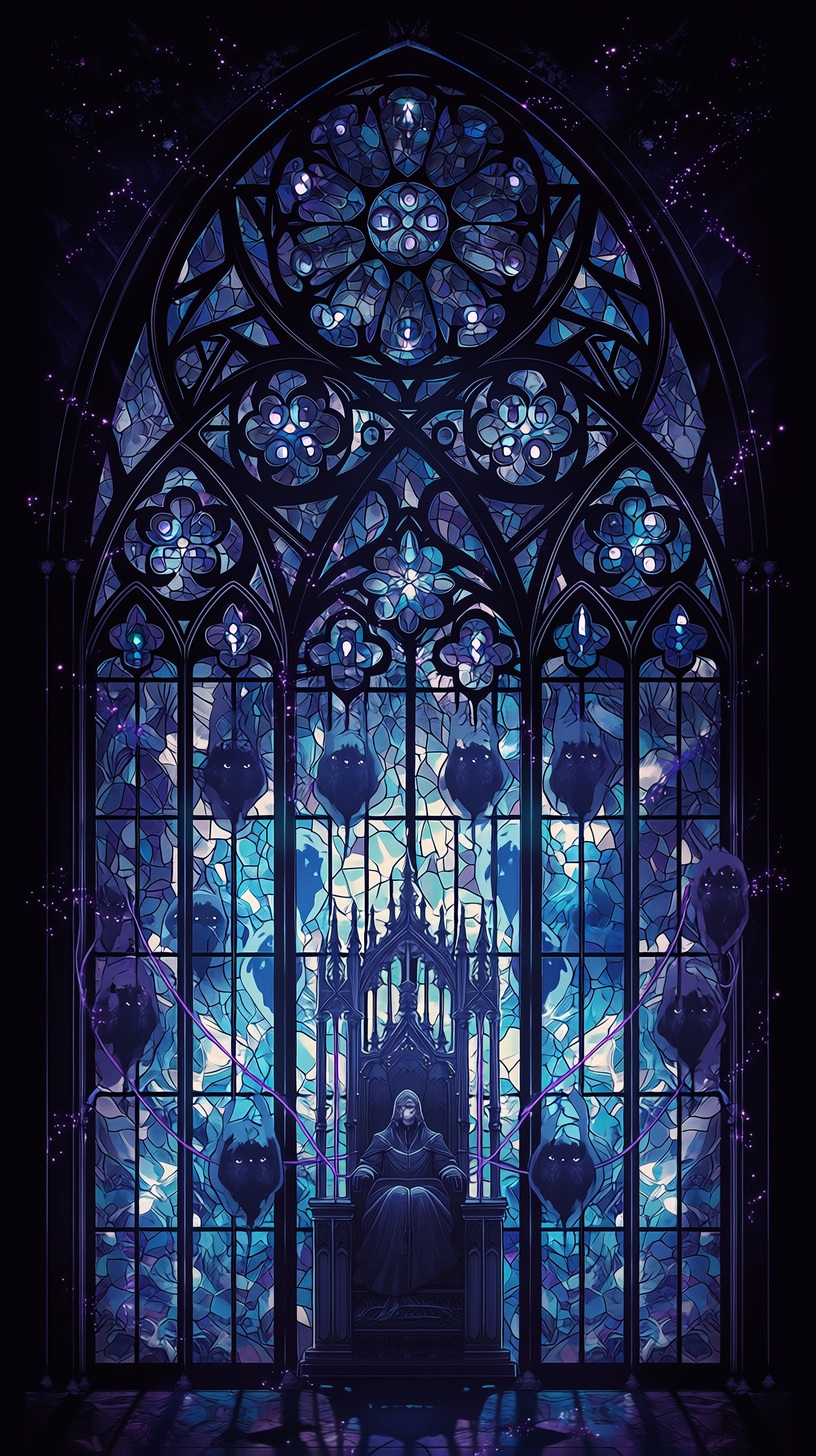
“We begged the heavens for an answer, and when at last the gate stood open before us, none possessed the courage to cross the threshold first.”
Related Discipline
Level



Comments