
Bone Weapon
Bones Of Contention
“I have seen blades of every make and temper, wounds clean, jagged, poisoned, enchanted. These are none of those. The bone tells the story if you know how to listen. It remembers where it came from. And in this case, it is pointing back at the hand that held it.”
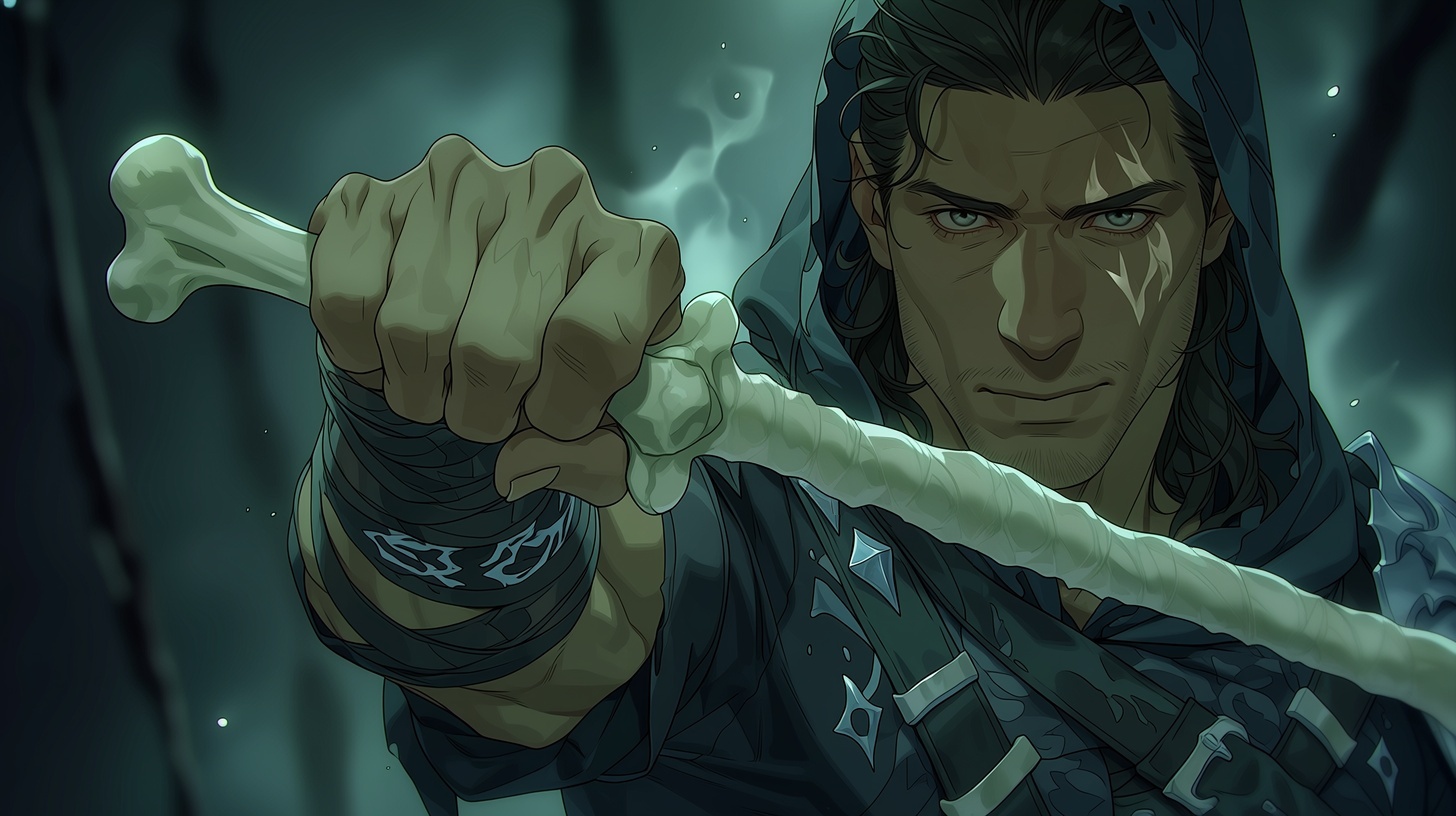
Bone Weapon is not the kind of spell that emerges from careful study or disciplined tradition. It has none of the refinement one expects from established schools of necromancy, no lineage of masters refining its form over generations. It is the product of experimentation pushed past restraint, the sort of idea that begins as a theory and ends as a demonstration no one present forgets.
Its premise is simple in a way that makes it immediately unsettling. The body is treated not as a vessel to be preserved, but as material to be used. Bone becomes resource. Structure becomes supply. The spell does not summon, shape, or borrow from an external source. It takes directly from the caster, converting part of their own physical form into something immediate and violent.
The act itself is not subtle. There is no illusion to soften it, no clean transformation that hides the cost. The weapon is torn free in a way that makes its origin undeniable. It appears already formed in the caster’s hand, but the moment of creation leaves no question as to where it came from. Pain is not a side effect. It is part of the process, unavoidable and unmitigated.
What follows is a strange kind of control.
The weapon behaves as any other of its type would, balanced, usable, and responsive in the hand of its creator. There is no awkwardness, no period of adjustment. The caster understands it instinctively because, in a very literal sense, it is part of them. This familiarity is what makes the spell effective despite its brutality. It does not create something foreign. It creates something intimate.
That intimacy carries through in its use.
Each strike has the potential to draw more from the same source that formed it. The additional force the weapon can exert is not free. It is paid for in the same currency as its creation. The caster chooses, moment by moment, whether to push further, whether to extract more from themselves to inflict greater harm. The exchange is immediate and unavoidable. There is no way to separate the damage dealt from the damage received.
This creates a rhythm that is difficult to ignore. Power is available, but it is never without consequence. The caster is forced to measure their own endurance against the demands of the moment, to decide how much of themselves they are willing to spend. In prolonged use, that decision becomes less theoretical and more urgent.
The instability of the weapon reinforces its nature. It does not persist beyond the caster’s grasp, nor does it survive the end of the spell. Once the connection is broken, it collapses into nothing. There is no artifact left behind, no evidence that can be studied or repurposed. The act exists only in the moment it is performed and the cost it extracts from the one who performed it.
Among more established practitioners, the spell is regarded with a mix of curiosity and quiet disapproval. It demonstrates a certain ingenuity, a willingness to explore the boundaries between body and magic that necromancy has always circled but rarely embraced so directly. At the same time, it lacks the discipline that typically defines the field. It does not preserve, control, or repurpose death. It simply uses the living body as a convenient source of material and accepts the damage that follows.
Where it has found traction is in less regulated circles.
Those willing to trade stability for immediacy see value in a spell that requires no external components and produces a weapon that cannot be easily disarmed or taken. It offers a kind of reliability that more conventional methods cannot match, provided the user is willing to accept the cost. In environments where preparation is limited and survival is uncertain, that trade becomes easier to justify.
The broader concern is not the spell itself, but what it represents.
It reflects a shift in thinking, a willingness to treat the body as expendable in pursuit of power, to accept harm not as a risk but as a resource. That mindset does not remain confined to a single working. Once it takes hold, it tends to produce more of the same. More spells that draw from the self. More techniques that blur the line between endurance and expenditure.
Bone Weapon is not the end of that path. It is an early step, one that makes its nature clear to anyone willing to look at it honestly.
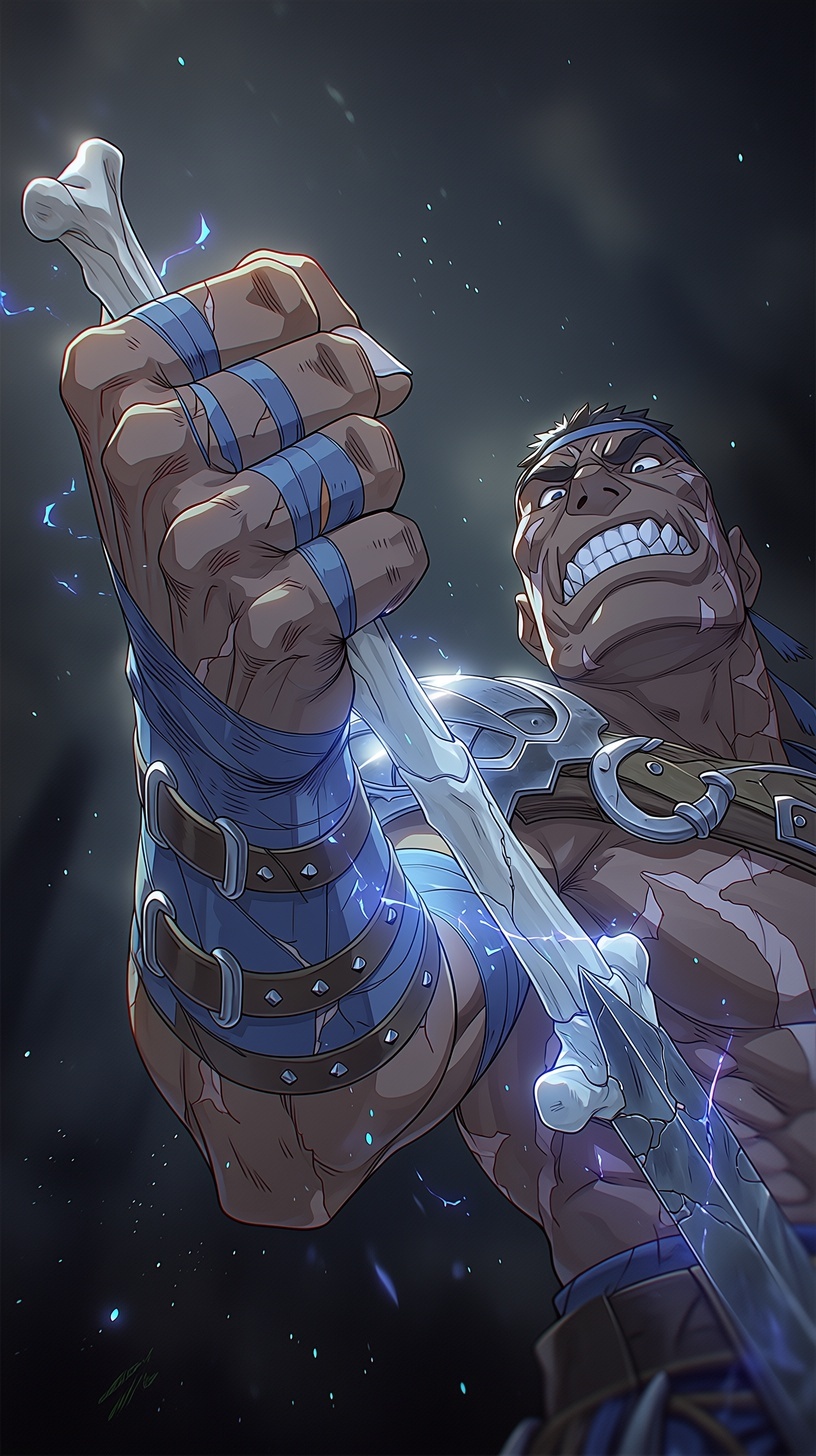
“Whoever did this did not bring a weapon with them. They became it. That narrows the list in ways I do not enjoy, because it means we are not looking for a killer who prepares, but one who is always ready.”
Related Discipline
Necromancy
Level



Comments