


Arcane Criticality
Runaway Power
“There is, in every age, a quiet temptation to believe that power is only dangerous in the hands of the unworthy. That the learned, the disciplined, the careful will somehow be exempt from its final cost. But power does not recognize intent. It does not weigh justification. It only answers the question of how far one is willing to go, and whether anything remains when the answer is given.”
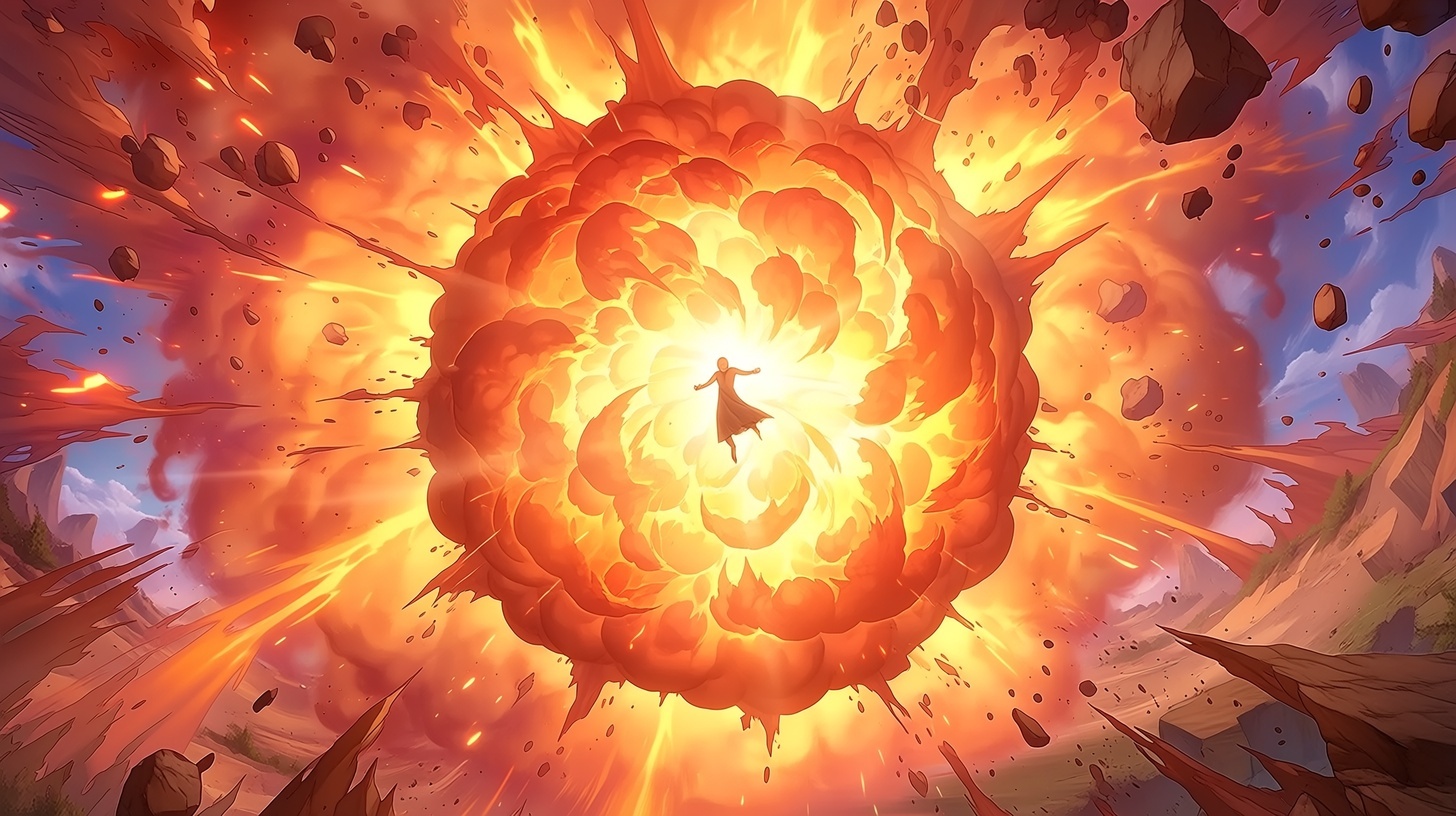
Arcane Criticality exists at the far edge of what can reasonably be called spellcasting. It is not an evolution of destructive magic, nor a refinement of power. It is a failure state made intentional. Where most practitioners spend a lifetime learning how to shape, distribute, and contain arcane force, this spell abandons all such discipline in a single, deliberate act. It is the moment a caster stops asking how much power they can wield and instead asks what happens when they remove the limits entirely.
The mechanism is as simple as it is catastrophic. The caster draws inward, compressing every reserve of arcane energy into a single point within their own body. This is not a gradual buildup or a controlled channeling. It is a forced convergence, an act of will that collapses structure into instability. For a brief and immeasurable instant, the caster becomes something no living form is meant to be. The body holds, not because it is capable of doing so, but because the spell demands it long enough for the next step to occur.
That step is detonation. The stored energy does not release in a direction or along a path. It erupts outward in all directions at once, expanding through the surrounding space with overwhelming force. The effect is not precise. It does not discriminate. Everything within range is subjected to the same violent expansion, whether it stands in opposition to the caster or beside them. Flesh, stone, steel, and spell alike are treated as equal participants in the outcome.
The nature of the damage reflects the caster’s final choice. The arcane surge can manifest through elemental force, psychic rupture, radiant discharge, or other forms of destructive energy, but this distinction is superficial compared to the underlying event. The true damage comes from the collapse itself, from the sudden release of something that was never meant to be contained in the first place. The additional energy type is not a refinement. It is a signature, the last imprint of intent before the caster ceases to exist.
Structures do not withstand this event. They are not tested or worn down. They are overcome. Reinforced walls, arcane barriers, and engineered defenses fail under the pressure of the expanding force. The environment does not resist in any meaningful way. It yields, reshaped in the span of a heartbeat by something that does not negotiate.
At the center of this event, there is no survival. The caster’s body does not burn, break, or fall. It is reduced to nothing that can be meaningfully recovered. The transformation is total, the cost paid in full at the moment of release. No reflexive magic intervenes. No contingency triggers. The spell is constructed to bypass the very systems that would normally preserve life in the face of catastrophic damage. This is not an oversight. It is the point.
What remains after such an act is not a body, not even in ruin, but a residue of spent force and the absence where a person once stood. Restoration becomes a question not of healing, but of reversal. The conditions that produced this end are so complete that lesser magic cannot reach them. Only the most profound interventions, those that rewrite reality or draw directly upon divine authority, have any hope of undoing what has been done. Even then, success is not assured, because the spell does not simply end a life. It expends it.
There is a reason this knowledge is not widely circulated among responsible circles. Not because it is misunderstood, but because it is understood too well. Every generation produces at least a few individuals who look at the boundaries of magic and see them as obstacles rather than safeguards. They ask whether those limits are necessary. They wonder what might be achieved by ignoring them. Arcane Criticality is the answer waiting at the end of that line of thought.
It presents itself as a solution in moments of desperation. When defeat is certain and the consequences of failure are unacceptable, the spell offers a way to ensure that nothing within its reach survives to see the outcome. It does not promise victory. It promises finality. That distinction matters, though it is often lost on those who consider using it.
There is a particular danger in how the spell frames itself to the mind that contemplates it. It suggests control at the very moment control is being abandoned. It implies that the caster is choosing the outcome, when in truth they are only choosing the moment at which they are removed from it. Everything that follows is no longer theirs to shape or influence. The decision is absolute, but its consequences extend beyond the one who makes it.
Those who study the spell in academic settings tend to speak of it in detached terms, analyzing its structure, its energy requirements, and its implications for the limits of arcane theory. This distance creates a false sense of safety. It allows the spell to be treated as an abstract concept rather than a real possibility. That abstraction breaks down the moment someone stands in a position where the choice becomes tangible.
There are places where the ground still carries the mark of such decisions. Not always obvious, not always dramatic, but present in the way the environment fails to align with expectation. A stretch of land where nothing quite grows as it should. A ruin where the damage does not follow the pattern of siege or decay. These are the quiet reminders that someone, at some point, decided that the cost was acceptable.
Arcane Criticality is not a spell that improves with mastery. It does not become safer, more efficient, or more controlled. It remains exactly what it is, regardless of who casts it. The only variable is the context in which it is used, and the reasons that lead someone to believe that there is no other path worth taking.
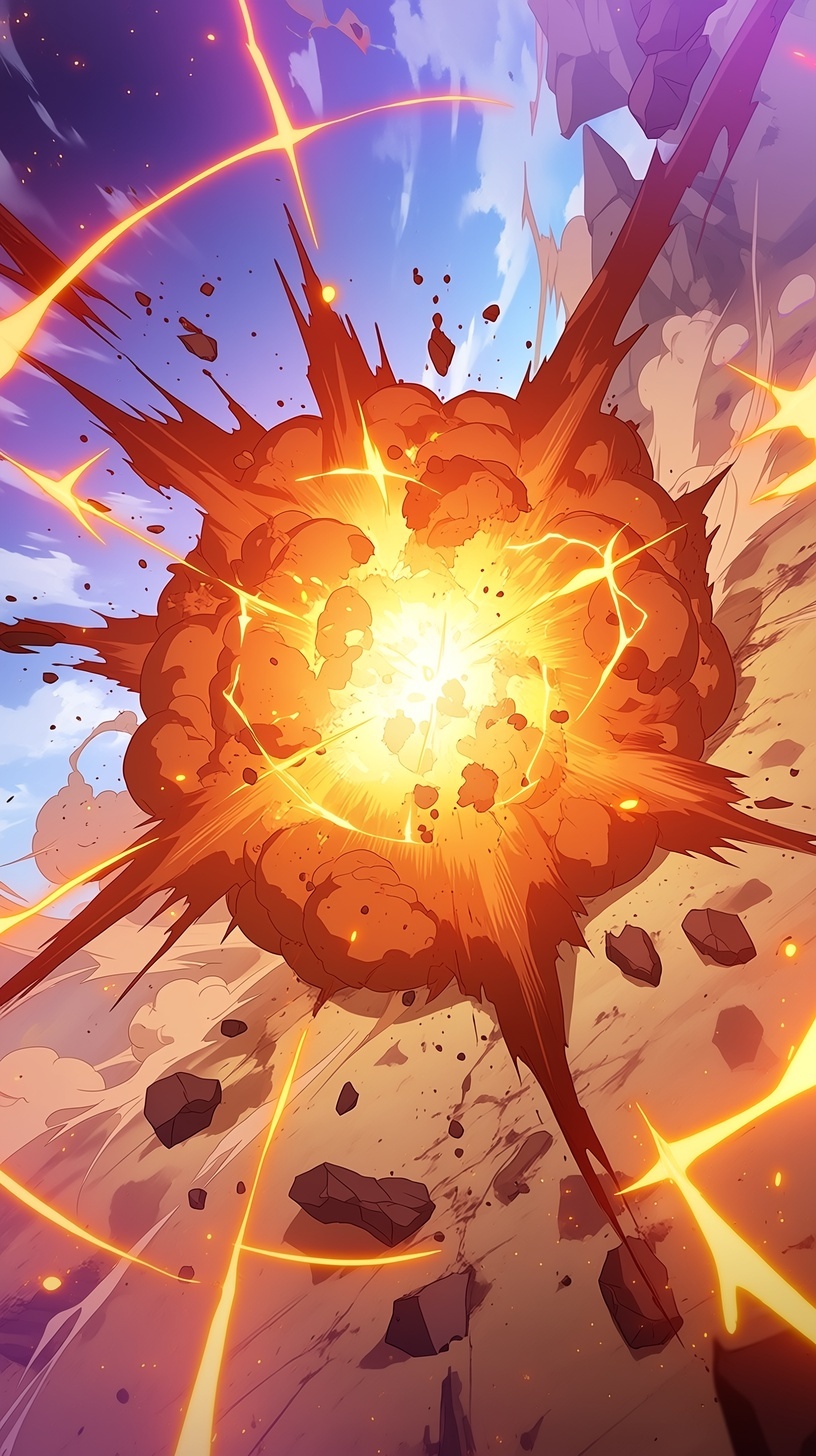
“We did not find a weapon. We found evidence of a decision. Entire districts reduced to a pattern that no siege could produce, no natural disaster could explain. At first, we thought it was collapse. Then we understood it was control, taken to its absolute end. That was the moment the work stopped being exciting and started being something else entirely.”



Comments