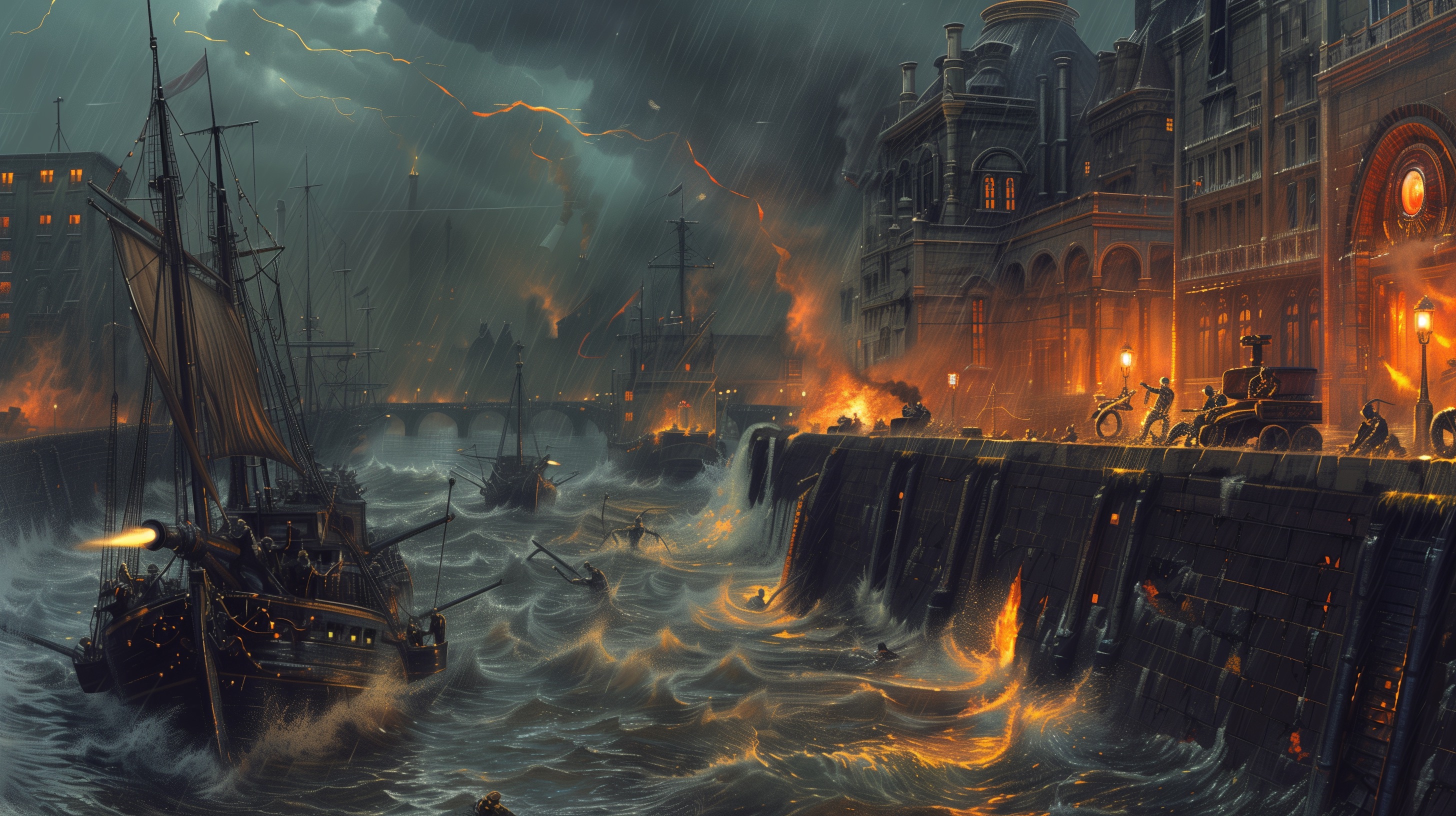
The Breach of the Edison Water Wall
The moment the Black Tower fired, the Wall District of Edison ceased to be a bulwark and became a wound.
A column of searing light punched through the ancient flood-defense wall with brutal precision. Stone vitrified, cracked, and collapsed inward, and the sea answered immediately. Water thundered through the breach, racing down the Wall District’s streets in a churning surge of debris, ironwork, and shattered masonry. Ground floors vanished first, then entire avenues, as people fled upward—onto rooftops, balconies, factory walkways, and crane gantries—where they huddled together, watching the city drown beneath them.
What spared Edison from total catastrophe were systems many had long dismissed as excessive. The great flood pipes beneath the district roared to life, siphoning away immense volumes of water and redirecting it into overflow channels and holding basins. At the same time, interim district walls—temporary barriers raised after earlier emergencies—were sealed and reinforced. The Wall District was inundated, but the lower city held. Instead of a cascading collapse, the flood was slowed, compartmentalized, and contained.
Through the breach, the invasion followed.
Kelean Mandate launches forced their way into the flooded streets, engines snarling as hulls scraped stone and wreckage. These were not desperate raiders but troops prepared for urban inundation warfare. Heavy machine guns were already mounted on reinforced swivels, their firing arcs calculated for narrow streets and elevated firing positions. Soldiers wore amphibious assault gear—sealed rebreathers, weighted harnesses, and hybrid Armor—allowing them to swim submerged beneath fire, dive from their boats, and surface behind cover. Their intent was clear: exploit the flood, move fast, and encircle the city’s defenders before order could be restored.
Instead, they met resistance.
Marines of the Eldwell Navy, already braced for an assault, established firing lines from upper floors and industrial gantries. Fighting beside them were the Espen Knights, who rushed to the city’s defense under old compacts and sworn obligation. Kill zones formed above the waterline, and counter-charges broke the Mandate’s attempts at swift encirclement.
The weakness
The invasion’s true weakness revealed itself only hours later. Days before the breach, the Stargazer Exploration Company "SEC" , aided by Lantern Society agents, had destroyed the Mandate’s ammunition depot at Terrorbush Island . Magazines ran dry. Machine-gun fire shortened, reloads became frantic, and squads began rationing shots as the Eldwell Navy severed their withdrawal routes.
By nightfall, the Wall District was a drowned battlefield of rooftops, wreckage, and drifting smoke. Edison stood flooded and scarred—but alive—while the invaders learned that even the best-planned assault falters when a city is prepared to endure, and its defenders refuse to yield.

Comments