



Wanted
If They Find Me, It's Over
“I did it. That’s the part no one gets wrong. The part they miss is why, and that’s the only piece that ever mattered to me.”
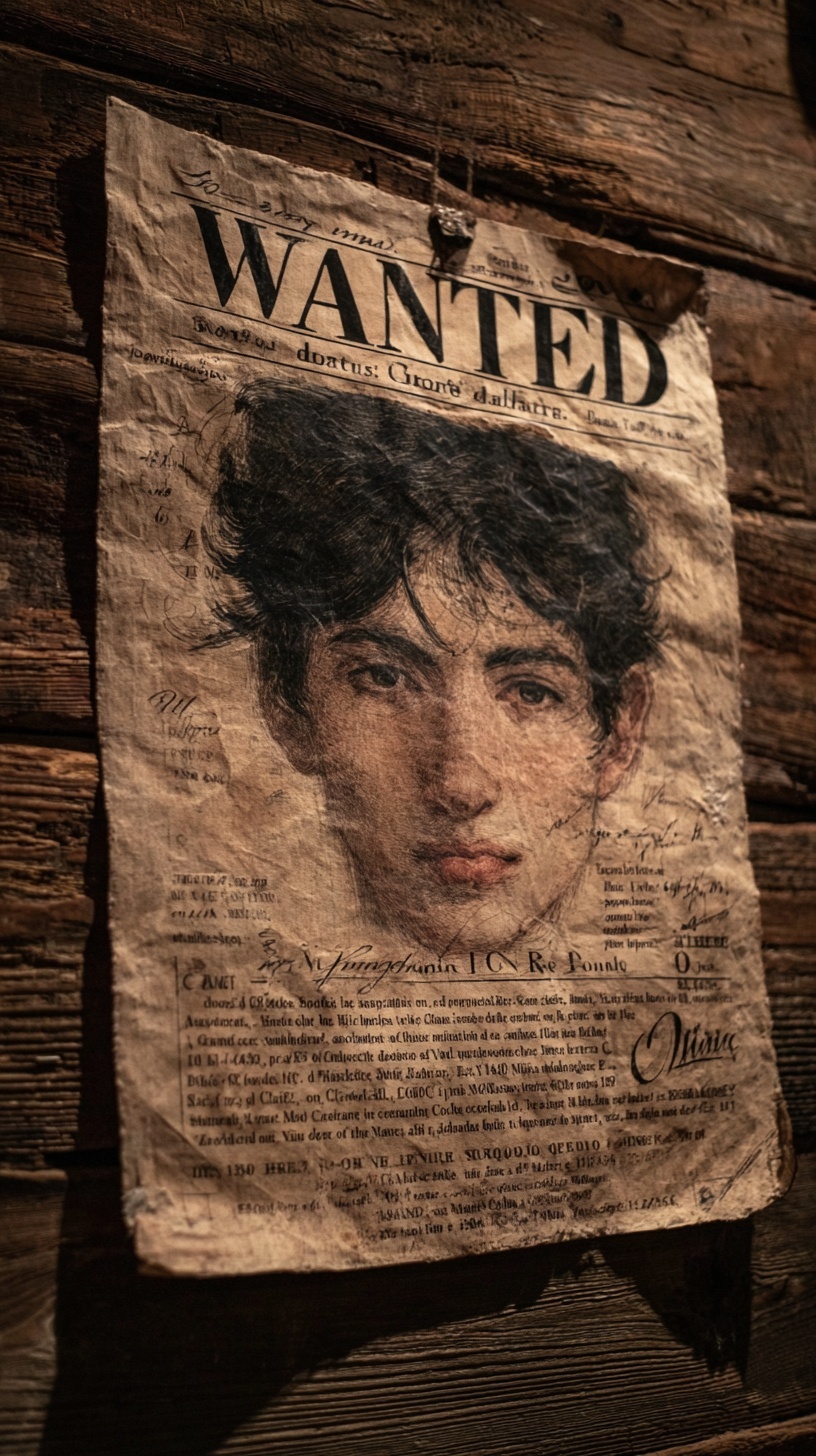
A wanted individual is someone whose actions have drawn the attention of authority or power in a way that cannot be ignored or undone. At some point, a line was crossed, whether by intent, necessity, or mistake, and the response was immediate enough to leave no room for quiet resolution. Warrants are issued, names are recorded, and descriptions begin to circulate through whatever systems exist to enforce order. From that moment forward, the individual is no longer simply a person moving through the world, but a problem that others are motivated to solve.
The nature of the crime matters less than the fact that it has been recognized and acted upon. It may have been an act of violence, a theft of something valuable, a betrayal of authority, or an association that placed the individual too close to something dangerous. Whatever the cause, someone decided that finding them was worth the effort, and that decision creates a chain of consequences that continues long after the initial event.
Living under pursuit changes the structure of daily life in practical and immediate ways. Settlements are no longer places of safety or stability, but temporary opportunities to gather supplies, information, or rest before moving on. Time spent in one place increases the likelihood of recognition, and recognition does not need to be certain to become dangerous. A familiar face, a remembered name, or even suspicion based on resemblance can be enough to draw attention that leads to questioning, detainment, or worse.
Because of this, a wanted individual learns to operate with caution that becomes habitual. They seek out crowded areas where anonymity can be maintained, or locations where people have little interest in asking questions. They manage their interactions carefully, keeping conversations short and avoiding unnecessary attention. Supplies are acquired discreetly, and movements are planned with exits in mind. Even routine actions are considered in terms of risk, because exposure is always a possibility.
At the same time, pursuit does not rely solely on formal authority. Bounty hunters, private agents, and individuals with personal motives may all take an interest in the situation if there is something to gain from it. A reward creates incentive, and incentive broadens the number of people who might be watching. Some may seek to capture the individual for profit, while others may act out of loyalty, revenge, or opportunity. This expands the threat beyond any single system and makes it difficult to predict where danger may come from.
The constant pressure produces a particular way of thinking. Awareness becomes continuous, not occasional. Entrances, exits, and lines of sight are noted instinctively. Patterns in behavior are observed, especially when they suggest someone is paying too much attention. Trust becomes limited, not necessarily because others are unworthy of it, but because the consequences of misplaced trust are severe enough to discourage risk.
This way of living cannot be sustained indefinitely without cost. Fatigue accumulates, decisions become more difficult under pressure, and the need for stability begins to conflict with the need for safety. At some point, the individual must decide how to respond to their situation beyond simply avoiding it. They may attempt to disappear completely, continue moving from place to place, or confront the circumstances that led to their status in the first place.
None of these options offer certainty, because the underlying condition remains unchanged. As long as the individual is recognized as wanted, the systems and people that enforce that recognition will continue to act on it. Freedom, in this context, is not a stable state, but something maintained through constant effort and careful judgment.
A wanted individual is not defined solely by what they did, but by what followed. Their life becomes shaped by movement, caution, and the knowledge that remaining unseen is not a permanent solution, only a temporary one that must be managed again and again as long as the pursuit continues.
“I can outrun the guards, the hunters, even the rumors if I have to. What I can’t outrun is a story everyone already believes.”



Comments