


Uncanny Twin
There's Two Of You?
“Good sir, I swear by all that’s sensible, I have not been in your house, nor kissed your wife, nor borrowed your coin. Yet if my face has done all three, then I must beg forgiveness for a man I’ve never met.”
There are people in the world who live singular lives, defined by their choices and remembered for their actions. And then there are those who share their face with someone else entirely.
An uncanny twin is not a sibling, not a distant cousin, and not the result of any natural lineage that can be easily explained. Somewhere in the world, another person walks with your exact features, your voice, your mannerisms. The resemblance is not approximate. It is exact enough to fool those who know only one of you and to unsettle those who know better.
For most, the discovery comes slowly. A stranger greets you by the wrong name. A shopkeeper insists you have already paid. A guard recalls a conversation that never happened. At first it is dismissed as error or coincidence. Then it happens again, and again, until denial becomes harder to maintain.
Life under these conditions demands adaptation. Some learn to resist the confusion, correcting every mistake and keeping careful distance from situations where identity matters. Others recognize the advantage and begin to use it, stepping into roles not meant for them, testing how far resemblance can carry them before the illusion breaks. Both paths carry risk.
The world does not treat mistaken identity as a curiosity for long. It becomes a liability. A crime committed by your double may find its consequences laid at your feet. A favor owed to them may be demanded of you. Doors may open without question, and just as quickly close when expectations are not met. In time, it becomes difficult to know whether people are reacting to you, or to the life your double has built.
In structured societies, where documents like passmarks define identity and movement, such confusion becomes more than social inconvenience. It becomes a problem of record and authority. A name tied to the wrong face can disrupt trade, travel, and law in ways that are difficult to untangle once they begin.
What lies behind the existence of an uncanny twin is rarely clear. Some insist it is coincidence, an improbable but natural occurrence. Others claim deeper forces at work, echoes of magic, fractured realities, or deliberate manipulation by unseen hands. In a world already shaped by catastrophe and lingering instability, such explanations are not easily dismissed.
Regardless of the cause, the effect is the same. Your identity is no longer entirely your own.
Even those who embrace the advantage find it difficult to maintain control. Impersonation requires precision. Small inconsistencies reveal themselves quickly to those who know what to look for. A misplaced detail, a forgotten habit, a difference in tone, and the illusion collapses. What follows is rarely forgiving.
For those who reject the resemblance, the struggle takes a different form. Proving who you are becomes a constant effort. Trust must be earned repeatedly. Reputation becomes fragile, subject to actions taken by someone you have never met. The need to separate yourself from your double can become consuming, shaping decisions and limiting opportunities that might otherwise have been taken without hesitation.
Eventually, the question becomes unavoidable. Who is the original, and does it matter?
Some spend their lives searching for their double, convinced that confronting them will bring clarity or closure. Others avoid the encounter entirely, fearing that meeting the other version of themselves will only deepen the uncertainty. A few have crossed that line and found no resolution at all, only the unsettling confirmation that both lives are equally real and equally valid.
There is no standard ending to such a story. Some pairs never meet. Some destroy each other. Some come to an understanding that benefits them both. And some leave behind a trail of confusion so complete that no one can say with certainty which of them was ever which.
In the end, an uncanny twin is not just a mirror. It is a question made flesh.
And sooner or later, that question demands an answer.
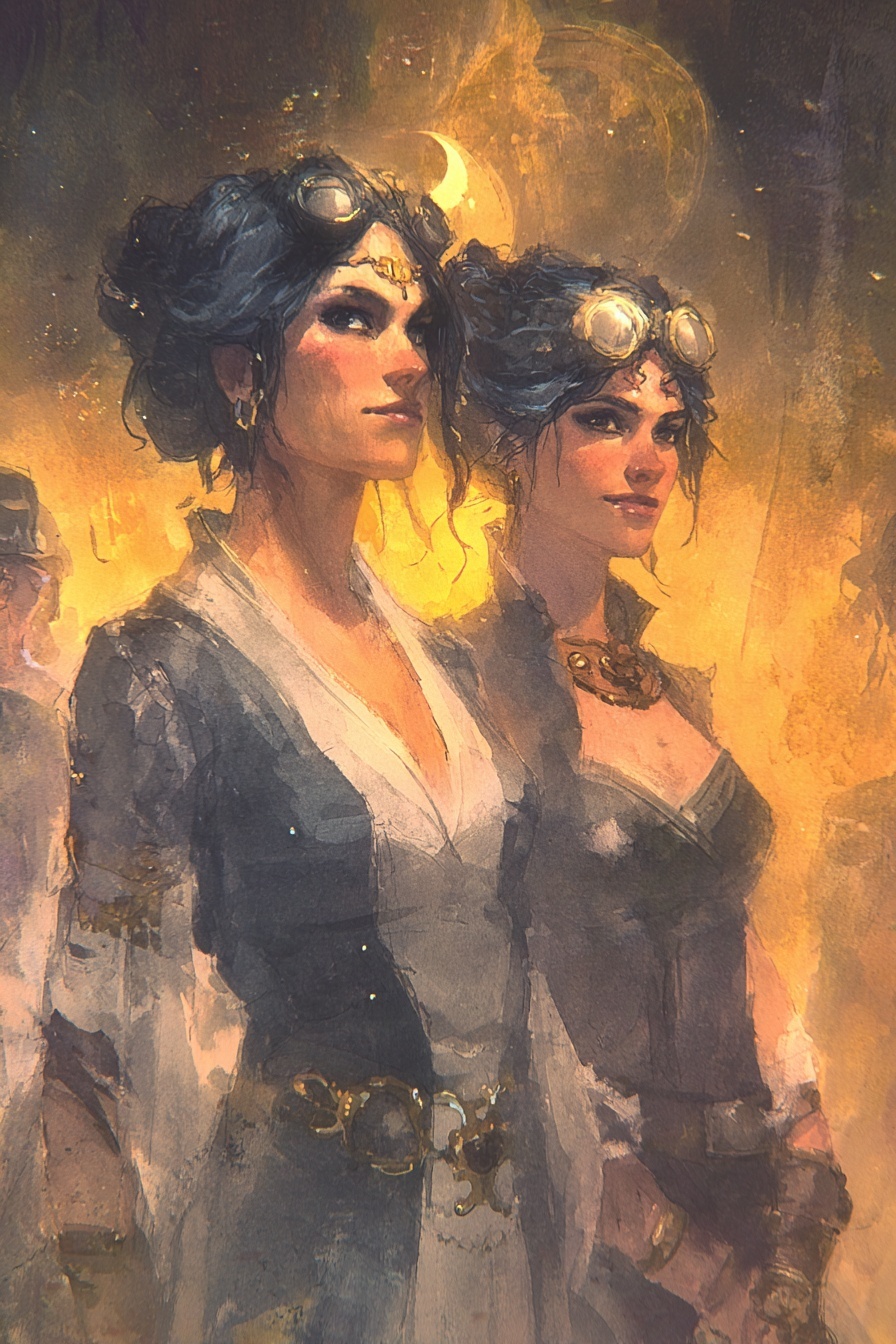
“If I am myself, then who is he that spends my purse, wins my friends, and earns my scolding? Either I am twice the fool, or the world has taken to casting me in duplicate for its own amusement.”



Comments