


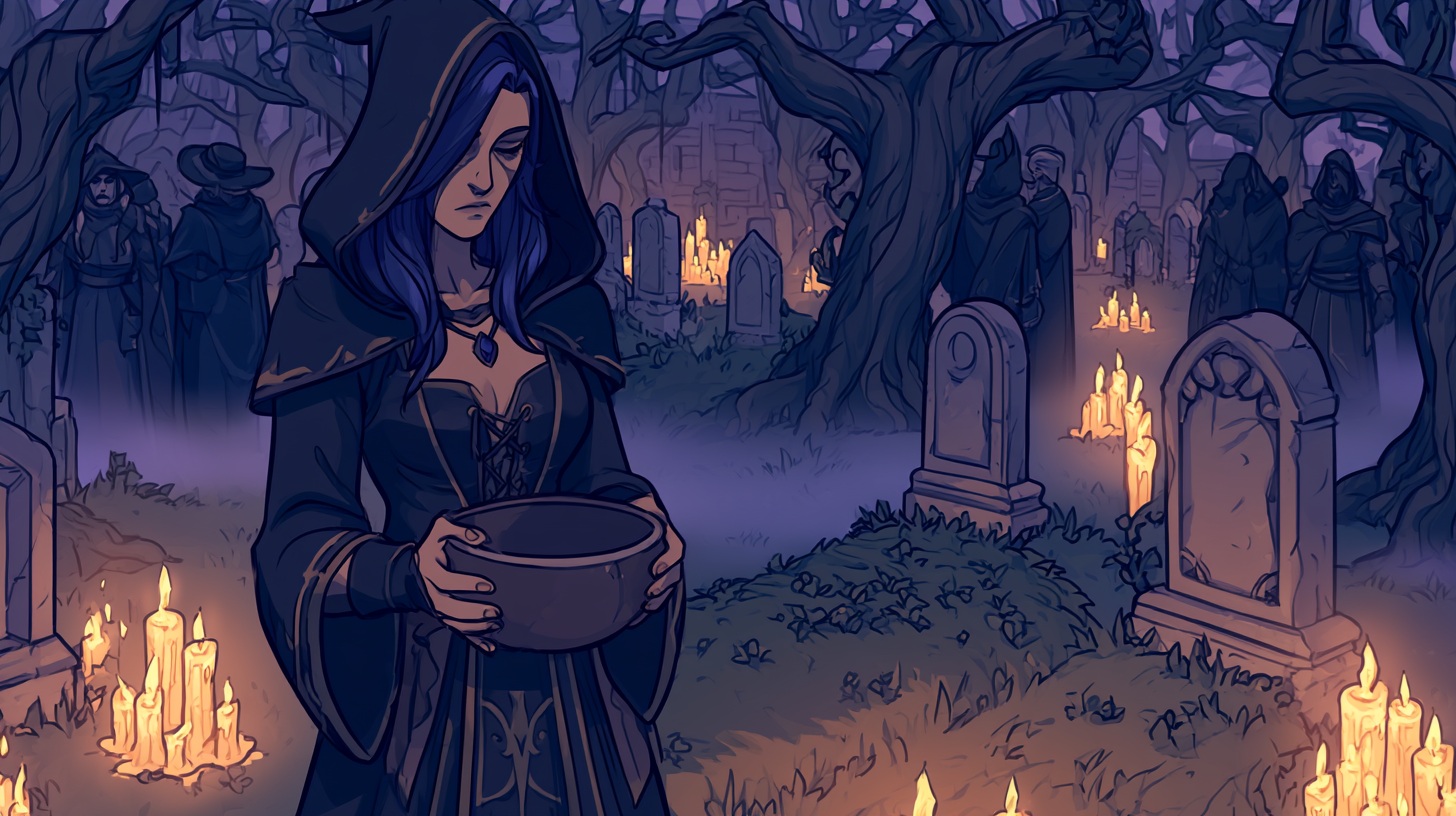
Sin Eater
Consuming Guilt
"Every funeral asks the same question. Not whether the dead were good, but whether those left behind can forgive them for being human."
Every culture develops rituals for the dead.
Some build tombs. Some burn funeral pyres. Some preserve the body. Some return it to the earth. Others commit the dead to sea, sky, stone, or sacred ground. Beneath these differences lies a shared concern that has existed for as long as people have contemplated mortality.
What becomes of the burdens a person leaves behind?
The profession of the Sin Eater emerged from one answer to that question.
In communities that practice the tradition, death is rarely viewed as a clean ending. Regrets remain unresolved. Guilt lingers. Secrets survive. Grudges endure. Unspoken confessions weigh upon both the dead and the living. Many believe that such burdens can prevent a peaceful passage into whatever lies beyond.
The Sin Eater exists to address this problem.
Though customs vary from region to region, the profession generally centers upon ritual acts intended to symbolically absorb, accept, or carry away the spiritual burdens of the deceased. These ceremonies may involve prayers, sacred meals, ritual offerings, invocations, confessions, blessings, or traditions unique to a particular culture. The precise methods differ. The purpose remains remarkably consistent.
The dead should not carry their troubles alone.
As a result, Sin Eaters occupy an unusual position within society. They are neither priests nor mourners, though they often work alongside both. They are not judges, despite hearing confessions that would astonish magistrates and kings. Their role is not to determine innocence or guilt.
Their role is to listen.
Over the course of a career, a Sin Eater hears countless stories.
Some are tragic.
Some are mundane.
Some are terrible.
A respected elder admits to a hidden crime. A parent reveals a lifelong regret. A merchant confesses a deception that enriched an entire family. A soldier finally speaks of actions taken during war. A spouse reveals feelings never expressed during life. The dying often share truths they spent decades concealing from everyone else.
The profession therefore develops a reputation for discretion unlike almost any other.
Communities trust Sin Eaters with secrets because the tradition itself depends upon trust. Families invite them into homes during moments of profound grief and vulnerability. The dying speak openly because they believe their words will not be used against them. Entire ceremonies can lose their meaning if participants fear judgment or betrayal.
For this reason, many Sin Eaters become known for patience, restraint, and exceptional listening skills.
Their work frequently extends beyond ritual alone.
Death affects far more than the deceased. Families struggle with grief. Communities wrestle with loss. Old conflicts resurface. Questions arise regarding forgiveness, inheritance, responsibility, and memory. Sin Eaters often find themselves serving as counselors, mediators, and sources of comfort during these difficult periods.
Many possess no formal authority.
Nevertheless, people seek their advice.
Few professions provide such extensive exposure to human nature. Sin Eaters witness individuals at moments when pretense becomes difficult to maintain. Wealth, status, reputation, and pride often lose significance in the presence of mortality. The result is a perspective shaped by countless encounters with honesty, regret, fear, hope, and acceptance.
This perspective frequently alters how Sin Eaters view morality.
Most come to understand that human lives rarely divide neatly into categories of virtue and wickedness. Good people commit harmful acts. Cruel people occasionally demonstrate unexpected kindness. Many of the darkest secrets originate not from malice but from fear, weakness, desperation, or love.
The profession does not necessarily encourage forgiveness.
It does encourage understanding.
Public attitudes toward Sin Eaters vary considerably.
Some communities regard them as sacred figures performing essential spiritual duties. They are welcomed into homes, honored during ceremonies, and treated with deep respect. Their presence reassures mourners that proper rites have been observed and that loved ones may rest peacefully.
Other communities regard them with suspicion.
The idea of accepting another person's sins, regrets, or spiritual burdens unsettles many people. Folklore often portrays Sin Eaters as individuals marked by the dead. Stories describe them carrying fragments of countless lives within themselves. Some legends claim they can hear voices others cannot. Others suggest they accumulate misfortune, sorrow, or hidden knowledge over time.
Whether such tales contain truth depends largely upon whom one asks.
The profession's association with death has naturally produced a rich body of folklore. Ghost stories, funeral traditions, ancestor rites, and local legends frequently feature Sin Eaters. They appear as guides for wandering spirits, keepers of forgotten secrets, witnesses to supernatural events, and custodians of memories that might otherwise vanish forever.
These stories reflect an important reality.
Every society must decide what to do with grief.
Every family must decide how to remember the dead.
Every individual eventually leaves unfinished things behind.
The Sin Eater exists because communities recognized that these burdens become easier to bear when shared.
At its heart, the profession rests upon a simple belief.
No life is free of mistakes.
No death is free of sorrow.
And no one, living or dead, should be forced to carry every burden alone.
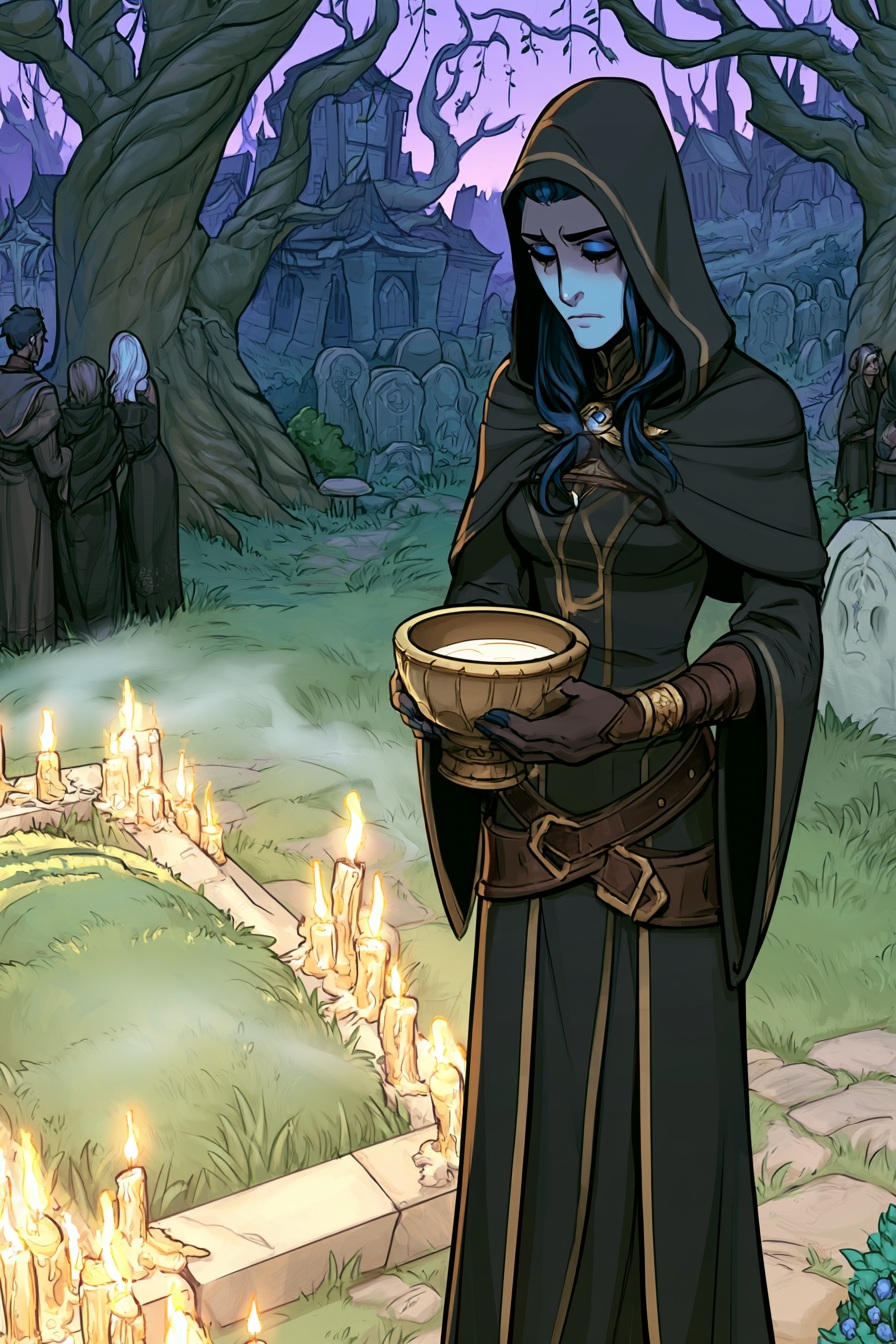
"The dead rarely frighten me. The living spend their lives hiding things. The dead finally stop."
Type
Religious



Comments